Which Is Better, Earbuds or Headphones? (2026 Guide)

You need new audio gear. Your old pair died, or never quite fit, and now every shop page asks the same question: earbuds or headphones? Both promise great sound. Both promise comfort. Neither warns you where it will hurt.
Here's the thing: most guides answer "it depends" and stop there. That is true, but it is not useful. This guide gives you a rule you can actually use, then walks through sound, comfort, battery, noise cancelling and ear health so you can check the rule against your own day.
The short version: Pick by your longest weekly listening session. If that session is seated and lasts an hour or more — desk work, gaming, films — headphones usually win on comfort, sound and battery. If your listening happens while moving — commuting, workouts, errands — earbuds win on size, weight and staying put. If you can only own one pair and you sit for a living, buy headphones first.
What Is the Difference Between Earbuds and Headphones?
Earbuds are small speakers that sit in or just outside your ear canal. Headphones are larger speakers held by a headband, resting on your ears or wrapping around them. That one difference in placement drives almost every other difference.
Which is better, earbuds or headphones, depends on where you listen: earbuds are small in-ear devices for moving around, while headphones sit on or around your ears for longer, seated listening. Neither wins everywhere — your longest weekly session usually decides it.
Whether earbuds or headphones are better comes down to how and where you listen most. According to HP, earbuds suit commuting, workouts and quick sessions because they are lighter and easier to carry. Headphones suit long desk sessions, gaming and work calls, where comfort and a fuller sound matter more than size.
Earbuds and headphones differ mainly in where they sit on your ear. According to What Hi-Fi, headphones use larger drivers for a bigger, more dynamic sound, while earbuds place sound right in the ear canal for strong clarity. That placement also decides fit, battery size, controls and how easy each pair is to carry.
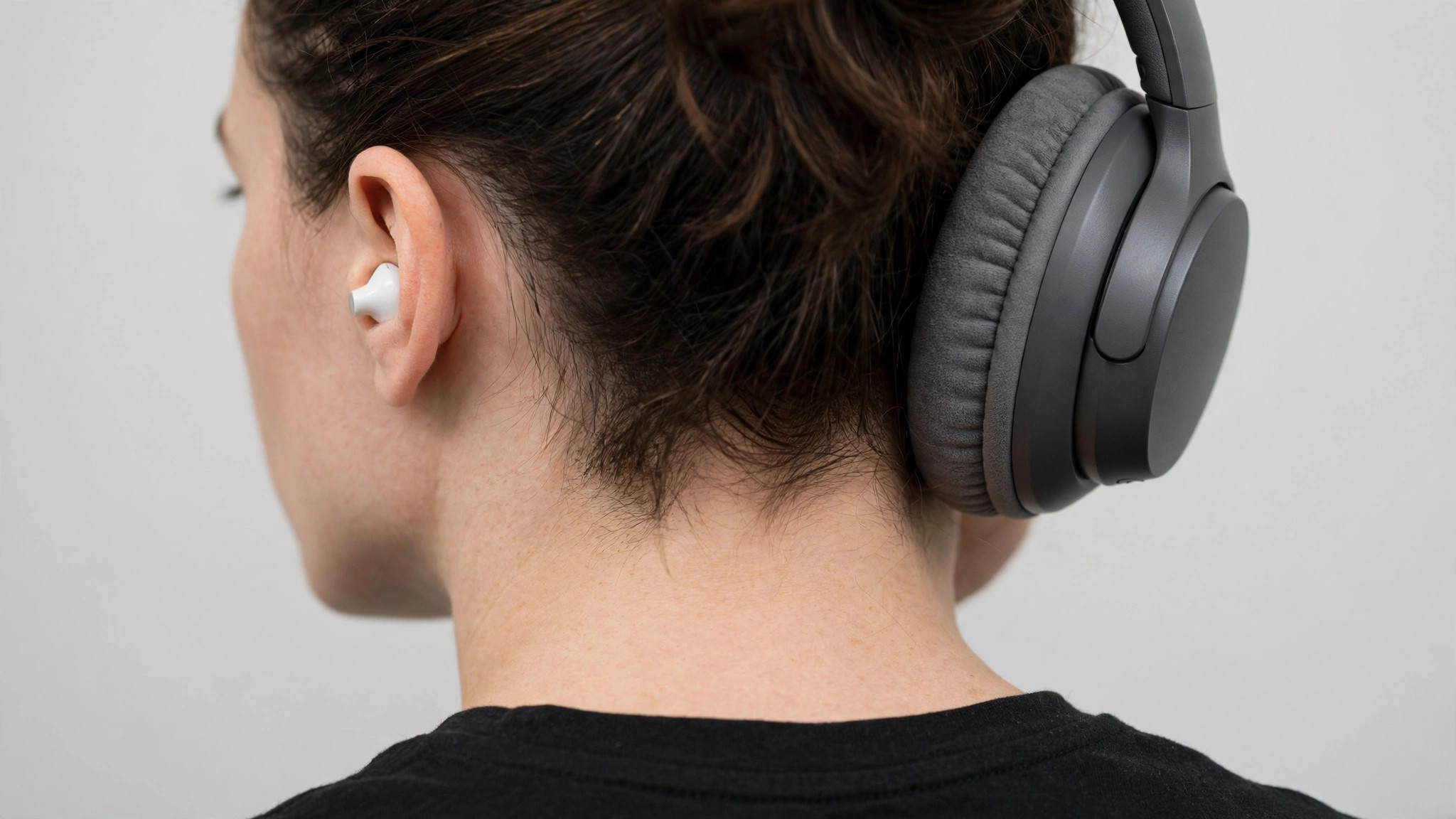
Size gives headphones room for bigger drivers, bigger batteries and bigger buttons. It also makes them bulky. Earbuds give up that room and gain a pocket-sized case instead. If you've ever lost a single bud down a train seat, you'll know the trade runs both ways — small is handy, and small is losable.
Placement decides it.
Which Sounds Better, Earbuds or Headphones?
Headphones usually sound bigger. Earbuds can sound clearer. Headphones use larger drivers, so bass hits harder and music feels wider and more spread out. Earbuds play sound straight into your ear canal, so detail can feel sharp and close.
The better choice between earbuds and headphones is the one that fits your longest regular listening session without hurting. Earbuds press inside the ear canal, so a poor tip fit can ache within an hour. Headphones spread pressure around the ear, so most people wear them longer, though heat and glasses can still cause problems.
Earbuds vs headphones: earbuds are better suited for commuting, exercise and short listening bursts because they are small, light and pocket-sized. Headphones work better when you sit still for hours and want fuller sound, stronger noise cancelling and longer battery life. The key difference is where the pressure lands.
Fit matters more for earbuds than for any spec on the box. A good ear tip seal keeps bass in and noise out. A loose seal leaks both, and the same pair suddenly sounds thin. Headphones are more forgiving: the cups seal around your ear, so the sound changes less from person to person.
Soundstage is the word reviewers use for how wide music feels. Or maybe I should say it this way: headphones can make a song feel like a room, while earbuds make it feel like a voice right next to you. Films and games reward the room. Podcasts and calls often reward the close voice.
Neither style wins on sound alone. A well-fitted earbud beats a cheap, loose headphone, and a good over-ear pair beats a bargain bud with a poor seal. If sound is your top reason to buy, read our true wireless earbuds guide and our guide to choosing Bluetooth headphones before you spend.
Which Is More Comfortable for Long Listening?
Headphones, for most people, once a session passes an hour. Earbuds press outward inside your ear canal. Over-ear headphones spread their squeeze around your ear instead, so the load lands on a wider, tougher area.
Earbuds can feel great at first. The ache tends to arrive later, once the tip has pressed on the same spot for a while. Tip size changes everything: too big hurts, too small slips and loses bass. If buds always ache for you, our small-ears guide covers smaller tips, wings and shapes that stay in without pain.
Headphones have their own failure points. Tight clamp force squeezes your head. Sealed cups trap heat in summer. Glasses arms turn a gentle squeeze into two narrow pressure lines. Our on-ear vs over-ear comparison breaks down those trade-offs in detail.
Look — if you wear audio gear through a full workday, here's what actually works: over-ear headphones with deep, soft pads, worn in stretches with short breaks. If your sessions run 20 minutes at a time, earbuds will feel lighter and cooler, and the canal pressure rarely gets time to matter.
Comfort has a clock.
Which Is Better for Workouts, Commuting and Travel?
Earbuds win for workouts and daily commuting. Headphones win for long flights. Earbuds stay put while you move, resist sweat, and vanish into a pocket. Headphones cancel engine drone better and stay comfortable through a long film, but they eat bag space.
Running with over-ear headphones is a losing game. They shift, bounce and trap heat, and most carry no water rating at all. Sport earbuds use wings, hooks or a tight seal to stay in place, and many are rated for sweat and rain. Our sport earbuds guide ranks the secure-fit options.
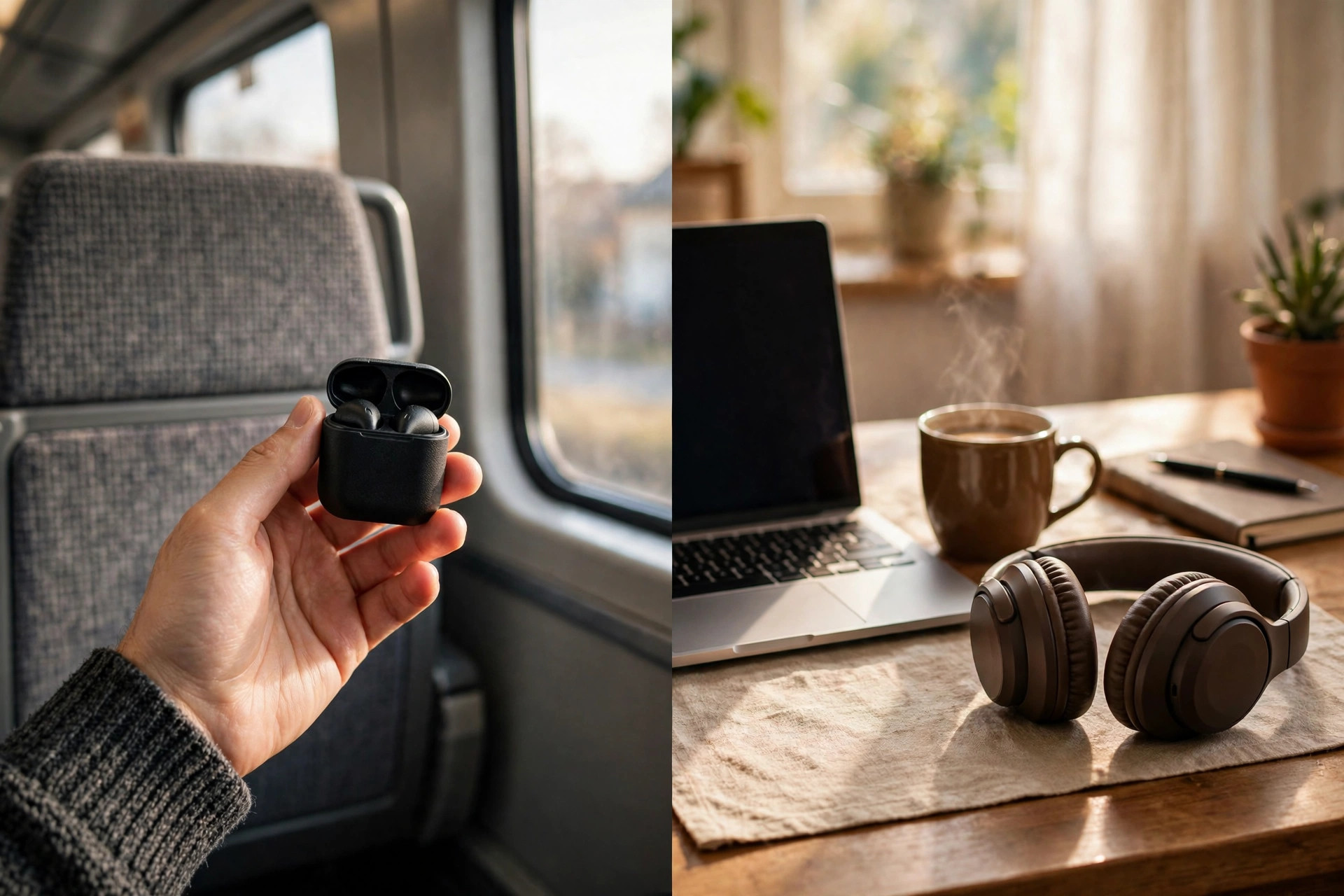
Commuting splits the same way. Earbuds are quick: case out, buds in, one bud out to hear a platform announcement. Headphones are slower to stow but harder to lose, and the cups block more train noise before noise cancelling even starts.
Travel light and earbuds win. Fly long-haul and headphones earn their bulk — stronger noise cancelling, longer battery, and no tip ache at hour five. Many frequent flyers own both and pack by trip length, which is a fair answer if your budget allows it.
Which Is Better for Work Calls and Gaming?
Headphones usually win for work calls and gaming at a desk. Their microphones sit closer to your mouth, the cups block room noise, and the wider sound helps you place footsteps and voices in games. Earbuds suit short calls and mobile gaming.
Call quality varies more than the spec sheets admit. Earbud microphones sit far from your mouth, so wind and street noise can swamp your voice. Headphone boom microphones fix that by putting the mic near your lips. Our wireless headset for work guide covers the call-first options.
Gaming adds one more factor: delay. Standard Bluetooth adds a small lag between picture and sound. At a desk, many gaming headphones use a faster wireless link or a cable to cut that lag. On a phone, earbuds are fine for casual games. Our guide on using Bluetooth headphones for gaming on PC explains where the lag shows up.
Sitting still favours headphones.
Which Has Better Battery Life?
Headphones, per charge — and it is not close. Wireless headphones typically run 15 to 30 hours on one charge. Wireless earbuds run about 5 to 10 hours per charge, then borrow extra hours from their case.
Watch the trap in the numbers. Headphone boxes quote hours per charge. Earbud boxes often quote hours including the case. A "30-hour" earbud and a "30-hour" headphone are not offering the same thing: the headphone plays 30 hours straight, while the earbud plays a few hours, then needs a rest in its case to refill.
That refill habit suits short bursts. It fails during a long flight, a full workday of calls, or a marathon gaming session, where stopping to recharge breaks the flow. Our headphone battery life guide explains how the two numbers are measured and how to compare them fairly.
Compare per charge.
Which Is Better for Noise Cancelling?
Over-ear headphones usually cancel noise best. Their cups block sound before the electronics start, then active noise cancelling (ANC) removes steady rumble like engines and air conditioning. Earbuds rely on the tip seal plus ANC, so fit decides how well they work.
ANC is a rumble specialist. It flattens engine drone and fan noise, and does far less against a voice three feet away. That limit applies to both styles. Our explainer on how active noise cancellation works covers what ANC can and cannot remove, and our ANC meaning guide keeps the terms straight.
Top earbuds now cancel noise very well — well enough that the gap matters mostly on planes and trains. If quiet is your main goal, our noise cancelling earbuds guide lists the strongest in-ear options, and over-ear flagships remain the ceiling.
Seal first, electronics second.
Are Earbuds Worse for Your Ears Than Headphones?
Not by themselves. Hearing damage comes from volume and time, not from the shape of the device. Earbuds do add two canal-specific risks — irritation and pushed-in earwax — that headphones mostly avoid.
I've seen conflicting data on this — some sources say earbuds are the riskier choice, others say the device shape does not matter. GoodRx states that earbuds are not more dangerous than headphones, because both cause hearing loss the same way: sound that is too loud, for too long. An audiologist writing for the Hearing Health Foundation cautions that earbuds deliver sound directly into the canal and can push wax deeper, which can block hearing and tempt you to raise the volume. My read is that both can be right: volume and time drive hearing damage, while wax and irritation are real extra risks for some earbud users.
The safe habit is the same either way. Keep volume moderate, take breaks during long sessions, and let noise cancelling or a good seal do the work instead of turning the sound up. Our guide on whether Bluetooth headphones cause hearing loss covers safe levels in plain terms.
If your ears ache, itch or feel blocked after earbud use, that is your answer for your ears, whatever the averages say. Switch to headphones or open-ear designs, and get persistent symptoms checked.
How Do I Choose Between Earbuds and Headphones?
Start with your longest weekly session, not your average one. If that session is seated and long, choose headphones. If it involves movement, sweat or a small bag, choose earbuds. Then test fit before you judge sound.
To choose between earbuds and headphones, follow these steps: 1. Name your longest weekly listening session. 2. Check whether you listen while moving or seated. 3. Test earbud tips or headphone clamp for comfort. 4. Compare battery per charge, not case totals. 5. Pick the style you will still enjoy after one hour.
- Name your longest session. A three-hour desk stretch, a long flight, a daily run — the longest regular session exposes comfort and battery limits that short bursts hide.
- Check movement and weather. Running, lifting and hot commutes favour earbuds with a secure fit and a sweat rating. Seated work favours headphones.
- Test the fit for real. Wear earbuds with each tip size for 15 minutes, or headphones with your glasses on. Ache in the shop becomes misery at hour two.
- Compare battery per charge. Ignore case totals when comparing against headphones. Match the per-charge number to your longest session.
- Decide what you will still enjoy at hour one. The best pair is the one you keep wearing. A mid-priced pair that fits beats a flagship that pinches.
Here is the side-by-side view:
| What matters | Earbuds | Headphones |
|---|---|---|
| Sound feel | Close and clear, depends on tip seal | Wider and fuller, stronger bass |
| Long sessions | Canal pressure can ache after an hour | Pressure spreads around the ear |
| Battery per charge | About 5–10 hours, case adds refills | About 15–30 hours |
| Noise cancelling | Good to strong, seal-dependent | Usually strongest, cups help first |
| Workouts | Secure fit, sweat ratings common | Shift and trap heat, ratings rare |
| Work calls | Mic quality varies, wind hurts | Boom mics give clearer voice pickup |
| Carrying | Pocket-sized case | Needs bag space or a neck rest |
| Losing them | Easy to misplace one bud | Hard to lose, easy to spot |
| Typical price range | Roughly $20–$300+ | Roughly $20–$500+ |
One honest opinion: most people buy earbuds first because they look modern, then buy headphones a year later for the desk. Buying in the other order — headphones for the long seated hours, earbuds later for movement — wastes less money for anyone who works at a screen.
Your longest session knows.
Frequently Asked Questions
What's better, earbuds or headphones?
It depends on your longest session. Headphones suit long, seated listening with fuller sound. Earbuds suit moving, commuting and workouts, where small size and a secure fit matter more.
Which sounds better, earbuds or headphones?
Headphones usually sound wider with stronger bass, thanks to larger drivers. Earbuds can sound very clear, but their bass and detail depend heavily on a good ear tip seal.
Are earbuds worse for your ears than headphones?
Not by themselves — hearing damage comes from volume and time. Earbuds can irritate the ear canal or push wax deeper, so headphones suit people with sensitive ears.
Which is better for workouts, earbuds or headphones?
Earbuds. They stay put, resist sweat and feel cooler while you move. Headphones shift during hard exercise, trap heat, and rarely carry a water rating.
Which has better battery life?
Headphones, per charge — roughly 15 to 30 hours. Earbuds run about 5 to 10 hours per charge, with the case adding refills between sessions.
Should I buy earbuds or headphones for work calls?
Headphones, if calls fill your day — boom microphones pick up your voice more clearly. Earbuds suit short calls and days when you move between rooms.
Can I just buy both?
Yes, and many people do. Use earbuds for commuting and exercise, headphones for desk work and long flights. Buy the pair for your longest session first.