Best True Wireless Earbuds in 2026: 6 Picks

Every "best earbuds" list names a different winner. One crowns Sony, the next crowns Apple, a third still lists last year's models as if nothing changed. Half the pairs on those lists have already been replaced. That's what this guide fixes.
They're small, they're fiddly, and they're the easiest thing in your bag to lose. Yet they are also the headphones most people actually live in — on the train, at the gym, on calls, in bed. So the question is not which pair is best in a lab. It's which pair is best for your phone and your day.
All six picks below are current 2026 models, verified against manufacturer pages and independent lab tests on 18 November 2026. Every price is a real list or street price, checked the same day. No discontinued flagship, no mystery brand, no paid placement.
Quick Comparison
| Product | Key Specs | ||
|---|---|---|---|
| #1 | Sony WF-1000XM6Best Overall | 8h buds (ANC on) · 24h with case · 88% noise reduction · LDAC · IPX4 · multipoint · $299.99 | Check Price |
| #2 | Apple AirPods Pro 3Best for iPhone | 8h buds (ANC on) · 24h with case · 90% noise reduction · IP57 buds + case · no multipoint · $249 | Check Price |
| #3 | Samsung Galaxy Buds 4 ProBest for Galaxy | 6h buds (ANC on) · 26h with case · 84% noise reduction · Bluetooth 6.1 · IP57 · $249.99 | Check Price |
| #4 | Bose QuietComfort Ultra Earbuds (2nd Gen)Best Noise Cancelling | 6h buds (ANC on) · 24h with case · best in-ear ANC · aptX Adaptive · IPX4 · $299 | Check Price |
| #5 | Technics EAH-AZ100Best Sound | 10h buds (ANC on) · 28h with case · LDAC · 3-device multipoint · IPX4 · $299.99 | Check Price |
| #6 | EarFun Air Pro 4Best Under $100 | 7.5h buds (ANC on) · 35h with case · aptX Lossless + LDAC · IPX5 · multipoint · $89.99 | Check Price |
Sony WF-1000XM6 vs Apple AirPods Pro 3: the Sony suits Android users and anyone who wants hi-res LDAC audio, because it plays LDAC and connects to two devices at once. The AirPods work better when you live inside Apple's world. The key difference is the phone in your pocket.
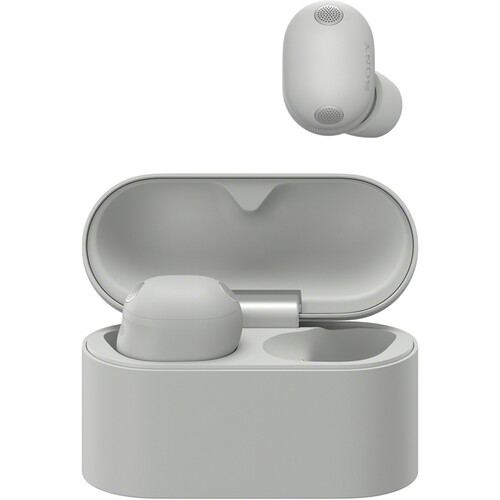
Sony WF-1000XM6
Best OverallBuy if: you want the best all-round pair — the strongest mix of noise cancelling, sound and call quality, on either phone
Don't buy if: you work out hard — IPX4 handles sweat, but rivals at this price survive a dunk, and the Sony doesn't
The XM6 is the pair RTINGS named the best wireless earbud overall in its October 2026 update, and the reason is balance. Nothing about it is the single best in this guide — the AirPods cancel more noise, the Technics play longer — but nothing about it is weak either. It is the only flagship here that is genuinely good at everything.
The new QN3e chip is the heart of it. Sony says it cancels noise 25% better than the XM5's chip, and SoundGuys measured 88% average noise reduction in the lab — second only to the AirPods Pro 3. The call quality is the best Sony has shipped in an earbud: four microphones per bud plus a bone-conduction sensor that picks up your voice through your jawbone, so callers hear you over a windy street.
Battery is honest, not headline-grabbing. Eight hours with noise cancelling on, twelve with it off, and the case adds two more full charges for 24 hours total. SoundGuys measured 9 hours 41 minutes with ANC on — better than Sony's own rating, which almost never happens.
Two limits to know. First, the codec list is LDAC, LC3, AAC and SBC — no aptX, so Snapdragon Sound phones get nothing special. Second, LDAC means nothing on an iPhone, which plays AAC only. If you stream Spotify on an iPhone, the XM6 sounds no better than a cheaper pair. Its edge lives on Android, with hi-res files.
Pros
- Best all-round mix of ANC, sound and call quality here
- SoundGuys measured 9h 41m battery — beats Sony's own 8h rating
- LDAC hi-res audio and two-device multipoint
- Best call quality Sony has put in an earbud
Cons
- IPX4 only — rivals at this price offer IP57
- No aptX, so no Snapdragon Sound support
- LDAC advantage disappears entirely on iPhone
- $329.99 list is the joint-priciest here (on sale at $299.99 on Sony's store)
Price $299.99 on Sony's store (list $329.99), checked 18 Nov 2026. Check the price before buying, as prices change.
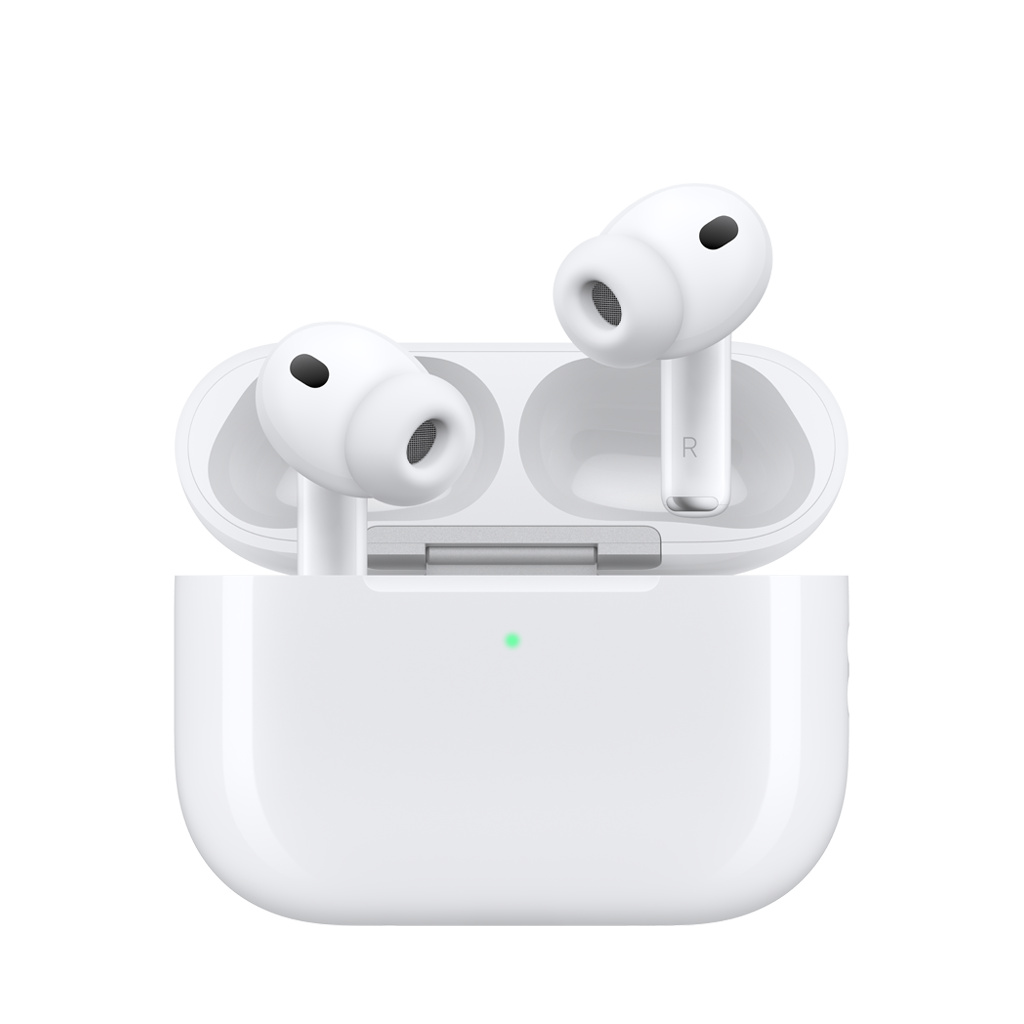
Apple AirPods Pro 3
Best for iPhoneBuy if: you own an iPhone and want the strongest noise cancelling ever measured in an earbud
Don't buy if: you use Android — the extras need an iPhone, and there's no multipoint at all
Apple claims the Pro 3 removes twice as much noise as the Pro 2. SoundGuys went further: their lab measured 90% average noise reduction, the best figure they have ever recorded from any earbud. On a plane, that gap is the difference between hearing the engine and forgetting it exists.
The rest of the package is just as strong. Eight hours with ANC on, 24 hours with the case, and SoundGuys measured 8 hours 42 minutes — right on the rating. IP57 covers the buds and the case, the only pair here where both survive a dunk. Five tip sizes, from XXS to large, with foam-infused tips that seal better than the old silicone ones.
Then the extras. Heart-rate sensing during workouts. Live Translation that turns a foreign conversation into English in your ear. An FDA-authorized Hearing Aid mode with a hearing test built into the phone. No other earbud in this guide does any of that.
Here's the thing: almost all of it needs an iPhone running iOS 26. On Android the Pro 3 plays music and takes calls, and that is about it. No multipoint either — you cannot stay connected to a laptop and a phone at once. And there is no USB-C cable in the box, which stings at $249.
Pros
- Best measured noise cancelling of any earbud SoundGuys has tested (90%)
- IP57 on buds and case — best water and dust protection here
- Heart-rate sensing, Live Translation and Hearing Aid mode
- Five tip sizes for a better seal
Cons
- AAC only — no LDAC or aptX, so no hi-res audio on any phone
- No multipoint — one device at a time
- Most features need an iPhone on iOS 26
- No USB-C cable in the box
Price $249 list; street $179–$199 at Amazon, checked 16 Nov 2026. Check the price before buying, as prices change.
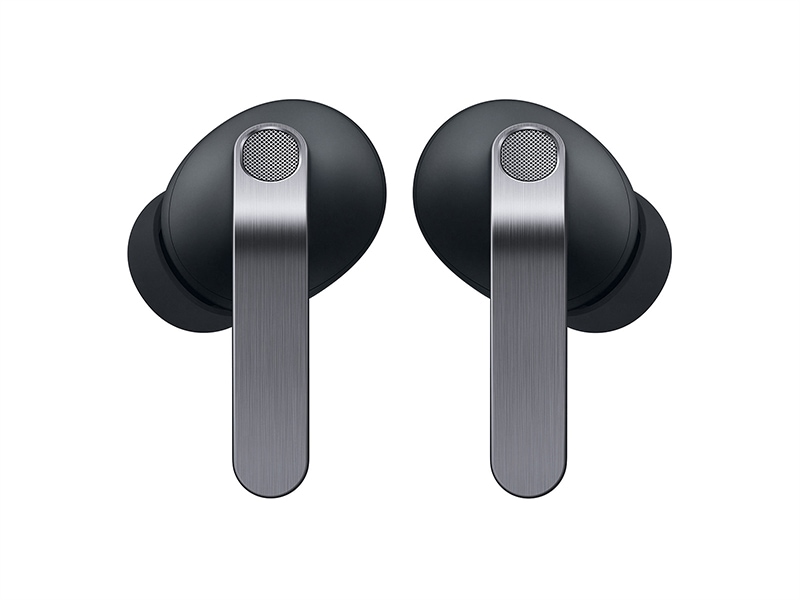
Samsung Galaxy Buds 4 Pro
Best for GalaxyBuy if: you own a Galaxy phone and want the pair built for it — UHQ audio, Galaxy AI and head gestures included
Don't buy if: you use an iPhone — there's no app, no UHQ audio, and the buds are Bluetooth-only
The Buds 4 Pro launched on 11 March 2026 and replaced the Buds 3 Pro outright. On a Galaxy phone they are the most complete pair Samsung has made: an 11mm woofer plus a 5.5mm planar tweeter, each with its own amplifier, Bluetooth 6.1 with LE Audio and Auracast, and Samsung's Seamless Codec at up to 24-bit/96kHz.
Noise cancelling is strong without being the best. SoundGuys measured 84% average reduction — behind the AirPods and the Sony, ahead of the Technics. Battery is the weak spot: six hours with ANC on is the shortest buds-only figure among the flagships here, though SoundGuys measured 6 hours 17 minutes, so the rating is honest. The case stretches the total to 26 hours.
IP57 protects the buds from dust and a dunk. The case is not rated, so keep it dry. Bone-conduction microphones clean up calls, and Galaxy AI adds live translation and head gestures — nod to answer, shake to decline.
Or maybe I should say it this way: the Buds 4 Pro are two different products depending on your phone. On a Galaxy running One UI 8.5 or newer, they are the obvious pick. On an iPhone, there is no app at all — no EQ, no firmware updates, no UHQ audio, just basic Bluetooth. Buy them for the phone you have, not the phone you might get.
Pros
- Best sound Samsung has shipped — two-way drivers, dual amps, UHQ audio
- Bluetooth 6.1 with LE Audio and Auracast
- IP57 buds, bone-conduction mics, Galaxy AI features
- Head gestures and live translation on Galaxy phones
Cons
- 6h ANC battery is the shortest among the flagships
- Best features need a Galaxy phone on One UI 8.5+
- No app and no UHQ audio on iPhone
- No LDAC or aptX
Price $249.99 list, checked 18 Nov 2026. Check the price before buying, as prices change.
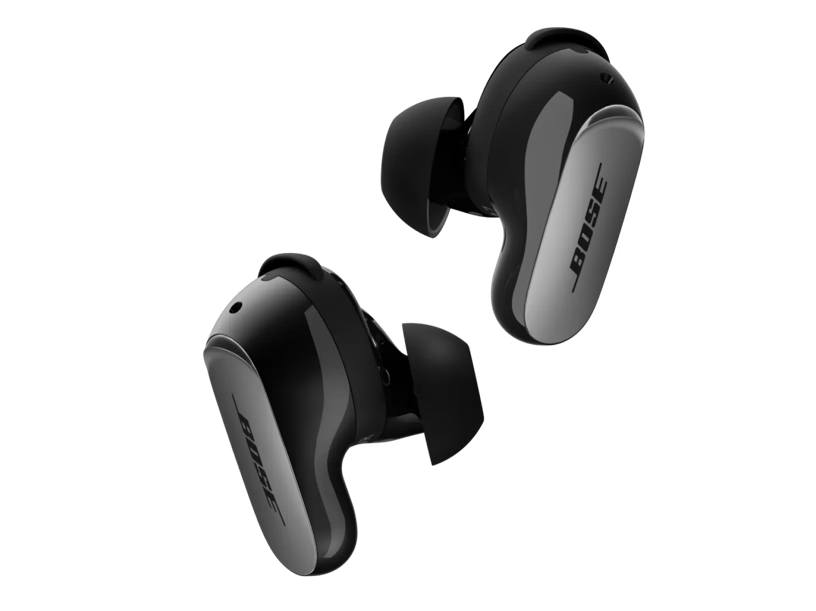
Bose QuietComfort Ultra Earbuds (2nd Gen)
Best Noise CancellingBuy if: silence is the whole point — the strongest in-ear noise cancelling you can buy, with CustomTune calibration for your ears
Don't buy if: you fly long-haul — 6 hours barely covers a cross-country flight, and Immersive Audio cuts it to 4
Bose has owned the noise-cancelling conversation for years, and the 2nd Gen keeps that crown. CustomTune plays a short tone when you put the buds in and shapes the cancelling to your ear canal. Immersive Audio adds head-tracked spatial sound that places instruments around you instead of inside your head.
I've seen conflicting data on the release date — TechRadar's dated review puts it at June 2025, while other coverage says September. My read is June, from the dated review, but either way it is the current model, and the wireless-charging case that cost $50 extra on the original now comes standard.
The battery is the price of that silence. Six hours with ANC on, and SoundGuys measured 5 hours 34 minutes — slightly under the rating, the only flagship here that missed it. Turn on Immersive Audio and you get 4 hours. Android Central put it plainly: that barely covers a Phoenix-to-New York flight.
Fit is the other trade-off. The buds are bulky, and TechGearLab found them uncomfortable after five or six hours. SoundGuys called the update "boring" — modest changes over the original. Fair. But if you want the quietest ears in this guide, this is still the pair.
Pros
- Widely considered the best in-ear noise cancelling available
- CustomTune calibrates the ANC to your own ears
- Wireless-charging case now standard
- aptX Adaptive with Snapdragon Sound support
Cons
- 6h battery is joint-shortest here; 4h with Immersive Audio
- Bulky buds — uncomfortable after 5–6 hours for some people
- Modest upgrade over the original — SoundGuys called it "boring"
- No LDAC; IPX4 only
Price $299, checked 18 Nov 2026. Check the price before buying, as prices change.
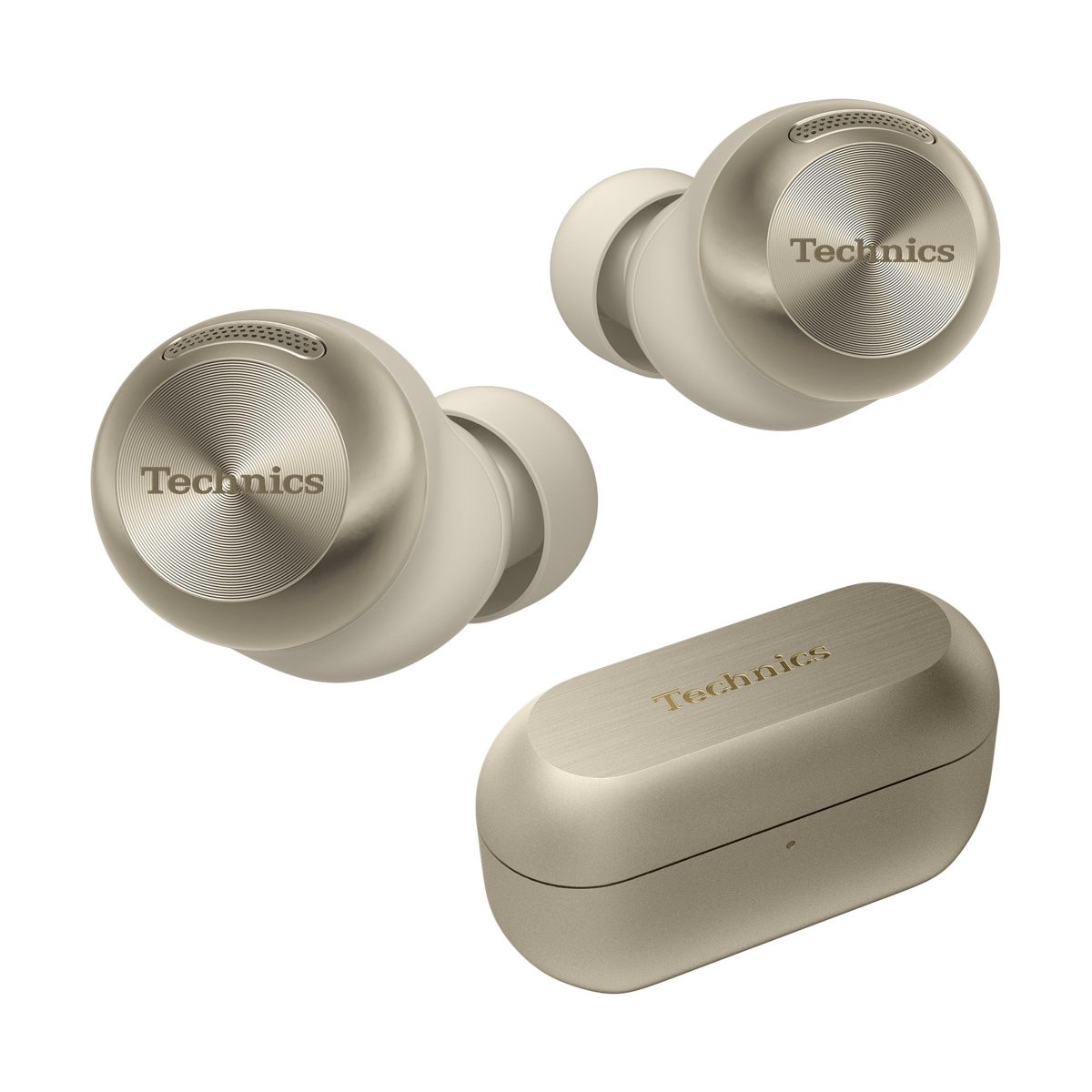
Technics EAH-AZ100
Best SoundBuy if: sound quality comes first and you listen on Android — the 10mm Magnetic Fluid Driver is the real deal
Don't buy if: you take a lot of calls — call quality is inconsistent, and the ANC trails Sony, Bose and Apple
TechRadar made the AZ100 its overall pick in its August 2026 guide, and What Hi-Fi? and Trusted Reviews both gave it five stars. The reason is the driver: a 10mm Magnetic Fluid unit that keeps the diaphragm steady at high volume, so bass stays tight instead of muddy.
Battery is the headline here. Ten hours with ANC on is the longest buds-only figure in this guide, and SoundGuys measured 10 hours 40 minutes. The case stretches the total to 28 hours. There is a catch, though — switch to LDAC and the buds drop to 7 hours. Hi-res audio costs battery on every pair; the AZ100 just hides it better in the headline number.
Multipoint connects three devices at once, the most here. But LDAC does not work with three devices connected — turn multipoint off to get LDAC back. It is a small trade-off that nobody mentions on the box, and it decides which setting you actually live with.
Two more honest notes. Call quality is inconsistent across reviewers — some love it, some don't. And the black model has no wireless charging; the silver one does, for $30 more. Buy the colour that charges the way you want, not the colour you like.
Pros
- Longest buds-only battery here: 10h ANC on (SoundGuys measured 10h 40m)
- Best sound in this guide — 10mm Magnetic Fluid Driver, 5-star reviews
- LDAC hi-res audio plus 3-device multipoint
- LE Audio and Auracast support
Cons
- ANC trails Sony, Bose and Apple
- Call quality is inconsistent across reviewers
- LDAC cuts battery to 7h and doesn't work with 3-device multipoint
- Black model has no wireless charging — silver costs $30 more
Price $299.99 list; street ~$249.99, checked 18 Nov 2026. Check the price before buying, as prices change.
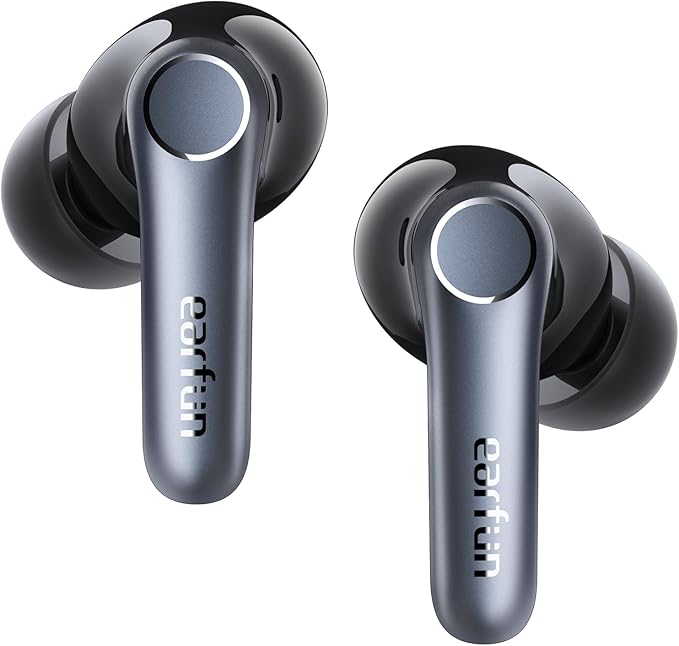
EarFun Air Pro 4
Best Under $100Buy if: you want flagship features — LDAC, aptX Lossless, multipoint — for under $100
Don't buy if: you have small or sensitive ears — the round tips can press uncomfortably over long sessions
Look — if you're replacing a pair that died after two years, here's what actually works: spend $90, not $300. The Air Pro 4 is SoundGuys' best-value pick, and the spec sheet reads like a flagship. aptX Lossless and LDAC. Bluetooth 5.4. Multipoint. IPX5. A wireless-charging case. A 10-band EQ with 30 presets in the app.
Battery embarrasses the flagships. Seven and a half hours with ANC on, 35 hours with the case — and SoundGuys measured about 8 hours 44 minutes per charge. LDAC cuts it to 6 hours, the same trade-off as the expensive pairs.
Noise cancelling is good, not great. SoundGuys measured roughly 75% perceived-loudness reduction — a clear step behind the Sony and the AirPods, and a clear step ahead of every other pair under $100. EarFun's "up to 50 dB" claim has no independent test behind it, so don't buy on that number.
One naming trap: the newer Air Pro 4+ launched in November 2025 at $99.99 with Bluetooth 6.0. It is SoundGuys' current under-$100 top pick. The older Air Pro 4 stays in this guide because it has the longer battery and the lower street price, around $53 to $65 on sale. Either is a fine buy — just know which one is in your cart.
Pros
- Broadest codec support under $100 — aptX Lossless and LDAC
- 35h total battery; SoundGuys measured ~8h 44m per charge
- IPX5, multipoint, wireless-charging case, 10-band EQ
- Street price often $53–$65 — a third of the flagships
Cons
- ANC is good, but clearly behind the flagships
- Round ear tips can press on small or sensitive ears
- Upper-treble dip around 8–11kHz in SoundGuys' measurements
- "Up to 50 dB" ANC claim is not independently verified
Price $89.99 MSRP; street ~$53–$65, checked 18 Nov 2026. Check the price before buying, as prices change.
What Makes Earbuds "True Wireless"?
True wireless earbuds are two separate earbuds with no wire between them. Each bud carries its own battery, Bluetooth radio and speaker, and the charging case tops them up between uses. If a wire still joins the two buds, they are wireless — not true wireless.
The best true wireless earbuds in 2026 depend on the phone in your pocket. According to SoundGuys' lab measurements, the AirPods Pro 3 block 90% of outside noise on average — the strongest result they have recorded from any earbud. Sony's WF-1000XM6 follows at 88%, so the real choice is ecosystem, not quality.
True wireless earbuds are worth buying when you want pocket-sized sound with no wires at all. According to Sony's own specifications, the WF-1000XM6 runs 8 hours with noise cancelling on, and the case adds two more full charges. That is enough for a working week of commutes before the case itself needs a cable.
That case is the part people forget. It is a charger, a pocket and a lost-and-found box in one. A pair with a dead case is a pair with dead buds, so the case battery matters as much as the buds. The EarFun at #6 carries the biggest case total here at 35 hours. The Bose at #4 carries the smallest at 24.
One more thing the name hides: "true wireless" says nothing about sound quality. A $50 pair and a $300 pair are both true wireless. The difference is the driver, the chip and the tuning — the parts you cannot see on the box.
Which True Wireless Earbuds Last Longest on One Charge?
Wireless earbuds with long battery life start at 8 hours per charge with noise cancelling on. The Technics EAH-AZ100 leads this guide at 10 hours, and SoundGuys measured 10 hours 40 minutes in their lab test. The case adds roughly two more charges, so the buds-only number is the one that decides a long flight.
Read the box the way a sceptic would. "30 hours" almost always means the case total with noise cancelling off. The number that matters is the buds-only figure with ANC on, because that is how you actually use them. Here is that number for every pick: Technics 10 hours, Sony 8, Apple 8, EarFun 7.5, Samsung 6, Bose 6.
Two of those numbers come with a footnote. Switch the Technics to LDAC and 10 hours becomes 7. Switch the EarFun to LDAC and 7.5 becomes 6. Hi-res audio costs battery on every pair that offers it. If you fly a lot, that footnote is the difference between landing with music and landing in silence.
Quick note: lab tests beat the rating more often than they miss it. SoundGuys measured the Sony at 9 hours 41 minutes against an 8-hour rating, and the EarFun at 8 hours 44 minutes against 7.5. The Bose is the exception — 5 hours 34 minutes against a 6-hour rating.
And the number nobody prints: lifespan. Most pairs last 2 to 3 years before the battery decline is noticeable. The batteries are sealed inside and not replaceable. When the battery dies, you buy new buds. Budget for that, not for a repair.
Do True Wireless Earbuds Fall Out When You Run?
Good ones don't — if the fit is right. The seal comes from the ear tip, not the bud. Try every size in the box, not just the one already fitted. Twist the bud slightly after inserting it. That twist is the difference between a seal and a slow slide out.
Sweat is the enemy. It makes ears slippery, and a bud that sits fine on the couch can work loose by mile three. Wing tips or ear hooks help more than any spec on the box, because they anchor the bud instead of relying on friction alone. None of the six picks here ships with hooks — if you run hard, that is a real gap in this guide, and a sport pair with hooks may suit you better.
Weight matters too. The Samsung buds weigh 5.1 grams each. The Bose are the bulkiest here and the ones most likely to ache after five or six hours. Light buds stay put longer, simply because there is less to hold up.
One honest limit: ear shape varies more than shoe size, and no reviewer can test your ears. Buy from a seller with a free return window. Wear the buds for a full run, not a five-minute try-on in the kitchen.
Can You Use Them for Work Calls?
Yes, and the difference between pairs is bigger than the difference in music. A microphone sits far from your mouth on an earbud, so the mic count and the noise processing decide whether your callers hear you or hear the street.
The Sony at #1 has the best call quality in this guide — four microphones per bud plus a bone-conduction sensor that reads your voice through your jaw. The Samsung at #3 uses bone-conduction mics too, and the Technics at #5 is the one to be careful with: its call quality is inconsistent across reviewers.
Look — if you're on calls all day, buy for the microphone, not the speaker. A boom-mic headset still beats every earbud here for call clarity, and our best wireless headset for work guide covers those. Earbuds win on size and on the walk to the coffee shop. They lose on the mic.
One more call trap: native Bluetooth drops to a low-quality headset profile the moment the mic turns on, on every pair here. That is a Bluetooth limit, not a product flaw. A USB dongle avoids it — which is another reason the work headsets win for all-day callers.
Do They Work With Both iPhone and Android?
Yes, for music and calls. Every pair here connects to any phone over Bluetooth. The extras do not travel.
On an iPhone, the AirPods Pro 3 unlock everything — Live Translation, Hearing Aid mode, auto-switching between your phone and laptop, heart-rate sensing in workouts. On Android, they play music and take calls. That is the whole list.
The mirror image is the Samsung at #3. On a Galaxy phone you get UHQ audio, Galaxy AI, head gestures and live translation. On an iPhone there is no app at all — no EQ, no firmware updates, no UHQ. Just basic Bluetooth.
The Sony, Bose, Technics and EarFun are the neutral picks. They work the same on both phones, with an app on each. The Sony and Technics give Android users LDAC; the iPhone ignores it and plays AAC. The EarFun gives both phones aptX Lossless on Android and AAC on iPhone.
Rule of thumb: if you own one phone and one ecosystem, buy the pair built for it. If you switch phones or share the buds with a partner on the other side, buy a neutral pair.
What Do ANC, LDAC and IP Ratings Actually Mean?
ANC — active noise cancelling — silences noise you hear. Microphones listen to the world, and the buds play the opposite sound wave to cancel it. It works best on steady noise: engines, fans, crowds. It does little for a sudden shout.
ENC is different. It cleans up noise the person on the other end hears — your voice, minus the wind. One is for your ears, the other is for your caller's ears. A box that says "noise cancelling" without saying which one is hiding something.
LDAC and aptX are hi-res Bluetooth codecs — ways of sending more audio data wirelessly. They matter on Android, with hi-res music files or a hi-res streaming tier. They do nothing on an iPhone, which plays AAC only. If you stream Spotify at standard quality, you will not hear a difference from either codec. Here's an opinion that might get pushback: anyone who tells you LDAC transforms Spotify is selling you something.
IP ratings measure dust and water. IPX4 handles sweat and splashes. IPX5 handles water jets. IP57 means dust-tight plus a brief dunk — and on the AirPods Pro 3 it covers the case too, the only pair here where it does. The case is usually not water-resistant at all, so the buds' rating is not the case's rating.
Multipoint means two devices at once — laptop and phone, switching automatically when a call comes in. The Sony, Samsung, Bose, Technics and EarFun all have it. The AirPods Pro 3 do not; Apple's auto-switching only works between Apple devices signed into the same account, which is not the same thing.
How Do You Pair True Wireless Earbuds?
To pair true wireless earbuds, follow these steps: 1. Open the case with the buds inside. 2. Open Bluetooth settings on your phone. 3. Tap the earbuds' name in the list. 4. Wait for the connected chime. 5. Play one song to test both buds.
- Open the case with the buds inside. Most pairs enter pairing mode the moment the lid opens. If nothing appears, press and hold the button on the case for three seconds.
- Open Bluetooth settings on your phone. Make sure Bluetooth is switched on, and stay on the Bluetooth screen — some phones hide new devices once you leave it.
- Tap the earbuds' name when it appears. The name is usually the model — "WF-1000XM6", "AirPods Pro 3" — in the list of available devices.
- Wait for the connected chime. A short tone in the buds and a "Connected" label next to the name mean you are paired.
- Play one song to test both buds. If one bud is silent, put both buds back in the case, close the lid, wait ten seconds, and start again.
First pair is the easy one. Re-pairing to a second device is where people get stuck: most pairs only enter pairing mode from the case, so put the buds back in, open the lid, and hold the case button until the light flashes. If your pair has no button, check the app — the pairing control lives there.
The Exact-Model Trap Decoder
Five traps to check before you buy, because the listing rarely warns you.
The superseded flagship. The Sony WF-1000XM5, Samsung Galaxy Buds 3 Pro, AirPods Pro 2 and the original Bose QuietComfort Ultra Earbuds are all replaced. They still appear in "best of 2026" lists and on sale pages. Buy them only on a deep discount — and only if the discount is deep enough to accept a shorter battery life in two years' time.
The plus that isn't an upgrade. EarFun's Air Pro 4+ launched in November 2025 at $99.99 with Bluetooth 6.0. It is the newer model, but the older Air Pro 4 has the longer battery and the lower street price. Newer is not always better. Check which one is in your cart.
The colour that costs more. The Technics AZ100 in black has no wireless charging. The silver one does, for $30 more. Same buds, different case. Buy the colour that charges the way you want.
The bundle that isn't a deal. Bose listings pair the 2nd Gen buds with a case cover or an AirFly adapter. The bundle price looks close to the buds alone. It is not a discount — it is a cover and an adapter you may not need.
The dead brand. Jabra exited the consumer earbuds market in 2024. The Elite 10 and Elite 8 Active still appear in old roundups and on clearance pages. They were good buds. They have no future — no new firmware, no new features, and support that is winding down.
Buying Guide: What Actually Matters
To pick the right pair, follow these steps: 1. Match the pair to your phone. 2. Check the buds-only battery with ANC on. 3. Try every ear tip in the box. 4. Check multipoint if you use two devices.
Match the pair to your phone first. An iPhone wants the AirPods Pro 3. A Galaxy wants the Buds 4 Pro. Any other phone wants the Sony or the Technics. The ecosystem features — translation, hearing aid, UHQ audio, auto-switching — are worth more than a slightly better driver, because you use them every day and the driver difference is small.
Count the buds-only battery, not the case total. The box shouts the case total because it is the bigger number. Your flight, your commute and your gym session run on the buds. Eight hours with ANC on covers a working day. Six hours covers a commute and a half.
Try every tip in the box. The seal decides the bass, the noise cancelling and whether the bud stays in. A bad seal makes a $300 pair sound like a $30 pair. Foam-infused tips, like the AirPods Pro 3 ships with, seal better than plain silicone for most ears.
Check multipoint if you live on two devices. Laptop and phone, work and personal — multipoint switches automatically when a call comes in. The AirPods Pro 3 are the only pair here without it. If you take work calls on a laptop, that absence is a daily annoyance.
Buy the battery for year three, not day one. Every pair here loses capacity over 2 to 3 years. A pair that starts at 10 hours still gives you a full day at year two. A pair that starts at 6 hours may not. The Technics' 10-hour rating is the best insurance in this guide.
Ignore the decibel claim. "Up to 50 dB" and similar numbers are measured in a lab, at one frequency, in conditions you will never meet. SoundGuys' measured percentages — 90% for the AirPods, 88% for the Sony, 84% for the Samsung — are the numbers that mean something, because they are measured the same way on every pair.
What to Skip
Last year's flagships at full price. The XM5, Buds 3 Pro, AirPods Pro 2 and original Bose Ultra still show up at or near their launch prices. The replacements are better in every way that matters and cost the same. Only buy the old model when the discount is at least a third off.
Unknown brands at the top of thin listicles. One top-10 result for this keyword crowns a brand called Audeon that no review outlet has ever tested. If a brand has no SoundGuys, RTINGS, Tom's Guide or What Hi-Fi? review behind it, the ranking is a paid placement, not a recommendation.
The Jabra Elite line. Jabra left the consumer earbuds market. The Elite 10 was a fine pair in its day. Its day is over — no new firmware, no new features, and a support line that is winding down.
Any pair whose only selling point is a decibel number. "Up to 50 dB" without a named test lab is marketing copy, not a measurement. Buy on measured noise reduction, battery and fit — the three things you will actually notice.
Frequently Asked Questions
What's the best true wireless earbud overall?
The Sony WF-1000XM6 at $299.99 on Sony's store — the best mix of noise cancelling, sound and call quality here. iPhone owners should buy the AirPods Pro 3 instead, and Galaxy owners the Buds 4 Pro.
Are AirPods Pro 3 worth it if I don't have an iPhone?
No. They play music and take calls on Android, but the extras — Live Translation, Hearing Aid mode, auto-switching — need an iPhone, and there's no multipoint. The Sony WF-1000XM6 gives you more for the same money.
How long do true wireless earbuds last before the battery dies?
Most pairs last 2 to 3 years before the battery decline is noticeable. The batteries are sealed inside and not replaceable, so when the battery dies, you buy new buds — budget for that, not for a repair.
Do true wireless earbuds fall out when running?
Good ones don't, if the fit is right. The seal comes from the ear tip, so try every size in the box and twist the bud slightly after inserting it. Sweat makes ears slippery — wing tips or ear hooks help more than any spec.
Can I use just one earbud at a time?
Yes — nearly every modern pair has a mono mode. Take one bud out and leave the other in the case; the single bud plays both channels. Useful for staying aware of traffic or hearing a knock at the door.
What's the difference between ANC and ENC?
ANC silences noise you hear — the engine hum, the crowd. ENC cleans up noise the person on the other end hears — your voice, minus the wind. One is for your ears, the other is for your caller's ears.
Do I need LDAC or aptX?
Only on Android, and only with hi-res music. iPhones play AAC only, so LDAC and aptX do nothing there. If you stream Spotify at standard quality, you won't hear a difference from either codec.