Best Open Ear Bluetooth Headphones 2026: 6 Picks

Open ear Bluetooth headphones are wireless earbuds or headsets that rest outside your ear canal and send sound toward it, instead of sealing it shut. Your ears stay open, so traffic, coworkers and announcements still reach you while music plays.
Look — if you're the person who has tried regular earbuds and hated them, here's what actually works: stop pushing silicone tips into your ears. You've tried the in-ear buds that ache after an hour, the noise cancelling pair that seals you off from the room, and maybe a cheap bone conduction set that sounded like a phone speaker taped to your head. Open-ear headphones exist because the seal is the problem, not the sound.
Most "best open ear headphones" lists blur two different technologies into one ranking and crown whatever launched last. Every pick below was checked as buyable on 21 November 2026, with battery and spec numbers taken from the brands' own pages and the review sites that test them. No dead model, no mystery brand, no paid placement.
Quick Comparison
| Product | Key Specs | ||
|---|---|---|---|
| #1 | Shokz OpenFit 2+Best Overall | 11h / 48h with case · BT 5.4 · IP55 · Dolby Audio · $139.95 | Check Price |
| #2 | Bose Ultra Open Earbuds (2nd Gen)Best Premium | Clip-on cuff · OpenAudio · Immersive Audio · 28h with case · IPX4 · $299 | Check Price |
| #3 | Shokz OpenRun Pro 2Best for Running | Bone + air conduction · 12h · IP55 · $179.95 | Check Price |
| #4 | Soundcore AeroFit 2Best Budget | 10h / 42h with case · LDAC · IP55 · $99.99 list | Check Price |
| #5 | JBL Soundgear SenseBest for the Gym | 6h / 24h with case · 16.2mm drivers · IP54 · $89.95 | Check Price |
| #6 | Nothing Ear (Open)Best for Style | 8h / 30h with case · 14.2mm driver · IP54 · ChatGPT · $155.99 | Check Price |
Shokz OpenFit 2+ vs Bose Ultra Open Earbuds: the OpenFit 2+ is better suited for running and all-day wear because its ear hooks lock in place and the battery lasts 11 hours a charge. The Bose works better when sound quality matters most — its OpenAudio drivers sound richer. The key difference is fit: hooks grip, cuffs clip.
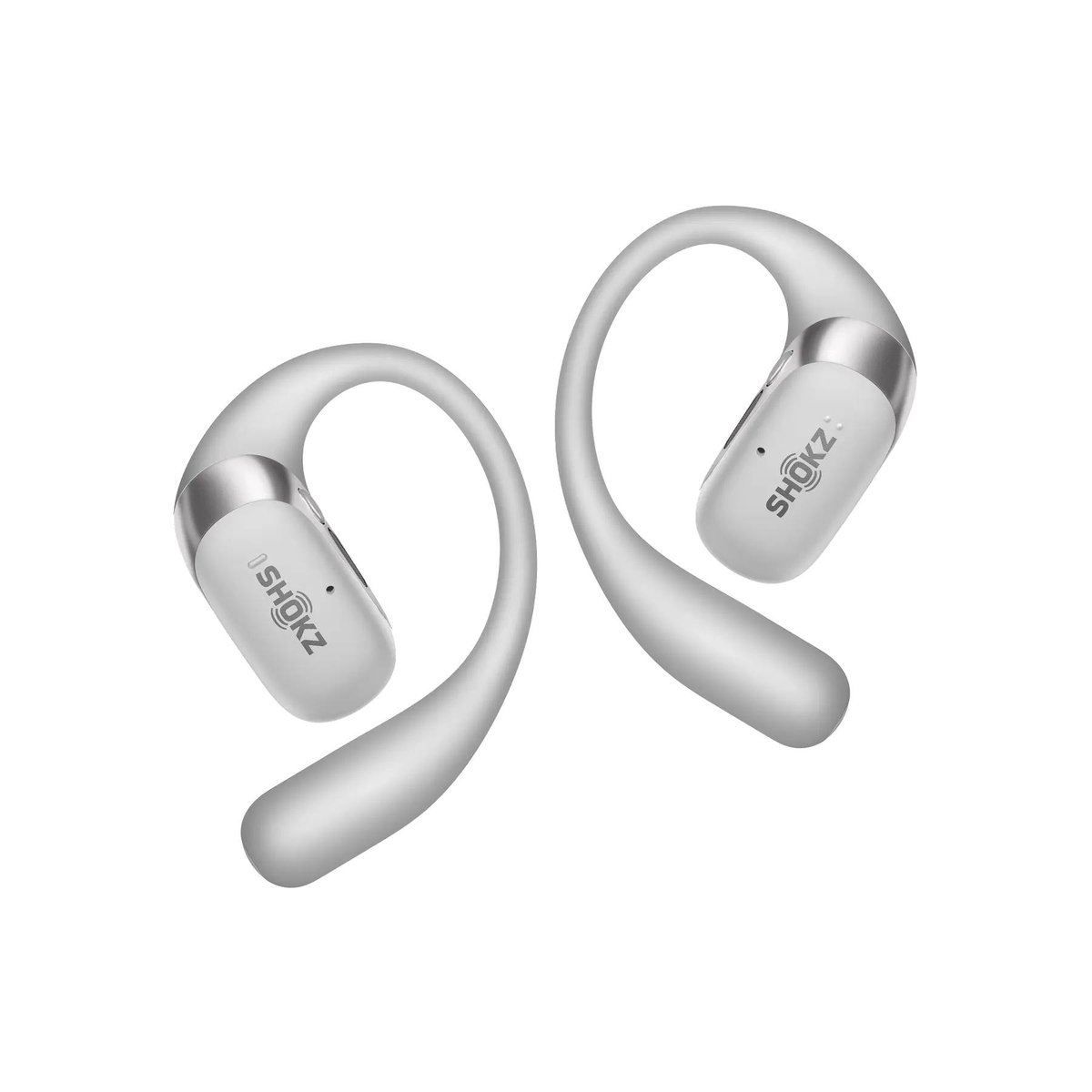
Shokz OpenFit 2+
Best OverallBuy if: you want one pair for running, the office and the commute — 11 hours a charge and a hook that does not move
Don't buy if: you need silence on planes — no open-ear bud blocks engine noise, and this one is no exception
The OpenFit 2+ is the best open-ear earbud you can buy right now. It is the pick RTINGS named best overall in its July 2026 open-ear guide, and the pick most other roundups land on too. The reason is simple: it does everything well and nothing badly. Air-conduction drivers aim sound at your ear from a small speaker outside the canal, Dolby Audio tuning keeps the sound full, and the ear hook — a thin nickel-titanium wire wrapped in soft silicone — holds the bud in place without pressing on anything.
Battery is the best here for a single charge: 11 hours from the buds, 48 hours with the case. Shokz rates it IP55 against sweat and rain, and a 10-minute charge gives about 3 hours back. The two-driver setup — a 17.3mm bass driver plus a separate tweeter — is why the low end sounds fuller than the bone conduction sets below.
Here's the thing: for most people, the $140 OpenFit 2+ beats the $299 Bose at #2. The Bose sounds better — richer, more detailed — but not $160 better, and the OpenFit's hooks grip harder at pace while its battery lasts half a day longer per charge. That is an opinion, and listeners who care most about sound will disagree. But if you buy one pair and wear it everywhere, this is the one.
I've seen conflicting data — Shokz lists the OpenFit 2+ at $199.95 in some stores, while the brand's own catalog listing shows $139.95. My read is the lower price is a live sale, not the list price — check before you buy, because the gap is big enough to matter.
Pros
- 11h per charge, 48h with the case — the longest here
- Ear hooks stay put at pace; IP55 sweat and rain rating
- Dual drivers with Dolby Audio — the fullest open-ear sound under $150
- Fast charge: 10 minutes for about 3 hours
Cons
- Deep bass still trails sealed earbuds — physics, not a flaw
- No noise cancelling of any kind
- Ear-hook fit suits most ears, not all — try it for a week
- Price moves between $139.95 and $199.95 depending on the store
Price $139.95, checked 21 Nov 2026. Check the price before buying, as prices change.
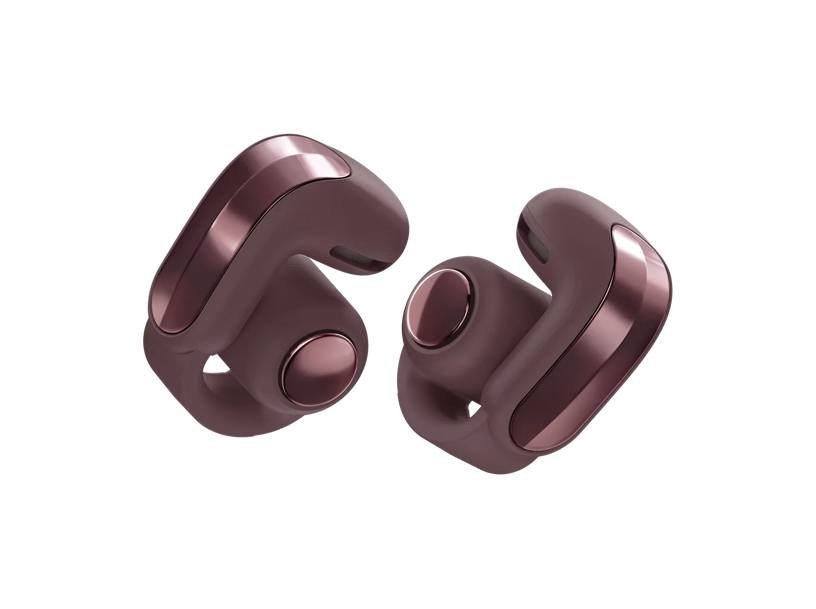
Bose Ultra Open Earbuds (2nd Gen)
Best PremiumBuy if: sound quality is the whole point — these are the best-sounding open-ear buds in this guide by a clear margin
Don't buy if: $299 stings, or you sprint — the clip holds well, but hooks grip harder at pace
The Bose Ultra Open Earbuds are the only open-ear buds here that make you forget you are wearing open-ear buds. They clip onto the edge of the ear like a cuff — no hook over the top, nothing in the canal — and Bose's OpenAudio drivers fire sound at the ear with phase-cancelling geometry that keeps most of it aimed at you instead of the room. Immersive Audio adds head-tracked spatial sound that pins music in front of you as you move.
RTINGS named the Ultra Open the best overall open-ear experience in its July 2026 guide, and the sound is the reason: fuller bass and cleaner detail than any other pair here. The second generation keeps the same clip design and adds up to 28 hours of audio with the case. The rating is IPX4 — splash-proof, not sweat-proof in the way the IP55 Shokz sets are.
Or maybe I should say it this way: the Bose is the best listening experience in this guide and the worst value in it at the same time. $299 buys the richest open-ear sound on the market. It does not buy a longer battery, a tougher shell, or a more secure fit than the $140 Shokz at #1. Buy it for the sound, knowing exactly what the extra money does and does not buy.
Pros
- Best sound in this guide — rich, detailed, real bass for an open design
- Clip-on cuff looks like jewellery and vanishes under glasses
- Immersive Audio with head tracking
- Comfortable for 6–8 hour days — nothing presses into the ear
Cons
- $299 — more than double the top pick for a sound upgrade only
- IPX4 — the weakest water rating here
- Clip is less locked-in than ear hooks for fast running
- Deep bass still can't match sealed earbuds
Price $299, checked 21 Nov 2026. Check the price before buying, as prices change.
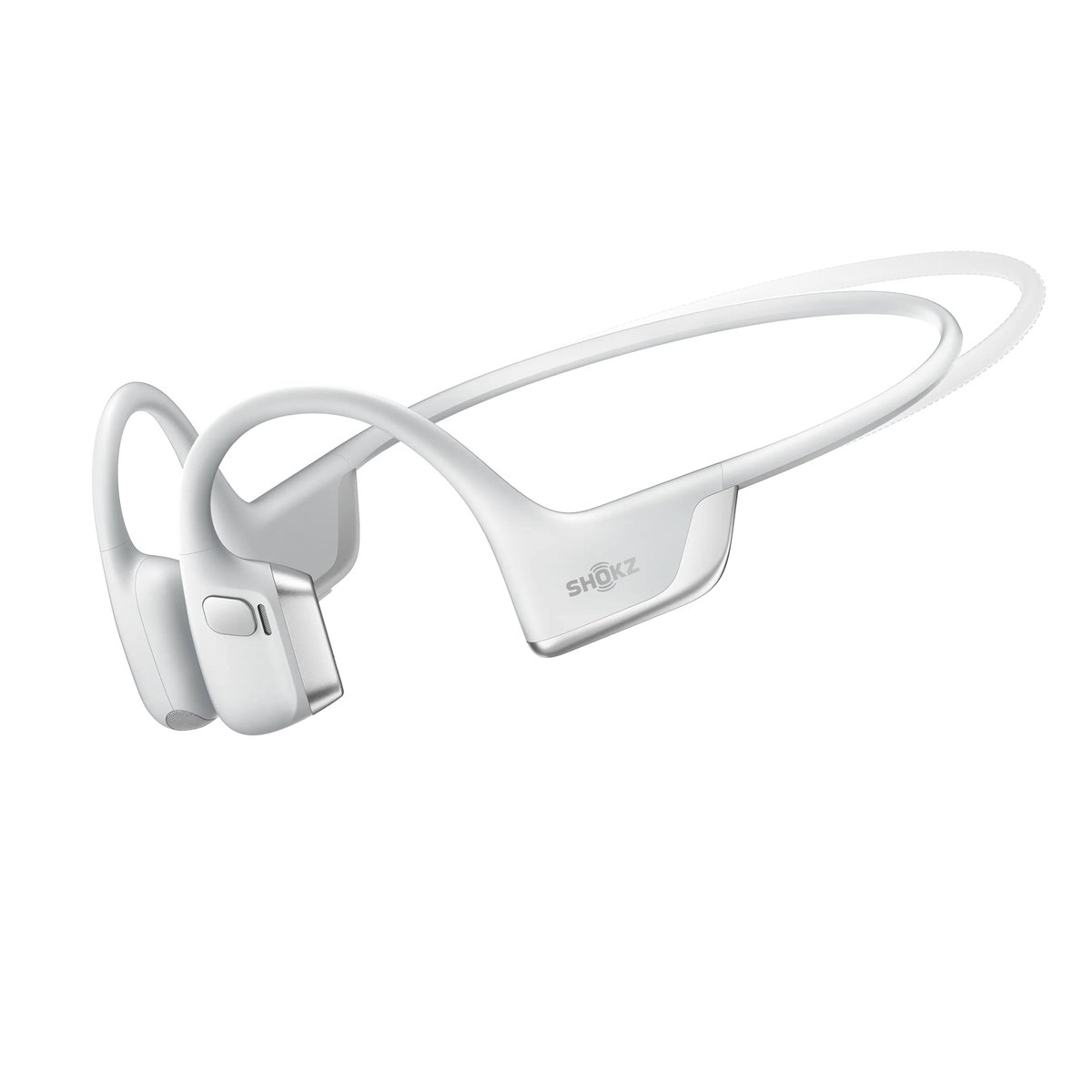
Shokz OpenRun Pro 2
Best for RunningBuy if: you run or ride on roads — the wraparound band never moves and your ears stay fully open to traffic
Don't buy if: you mostly listen at a desk — the ear-hook buds at #1 sound fuller and disappear more easily
The OpenRun Pro 2 is the running pick in almost every open-ear roundup, and it is the only bone conduction set in this guide. A wraparound band sits behind your head, transducers rest on your cheekbones, and sound reaches your inner ear as vibration — your ear canal never gets touched at all. This generation adds a second air-conduction driver alongside the bone transducer, which is why the bass sounds fuller than the older OpenRun sets.
Shokz rates it at 12 hours a charge with an IP55 shell, and the band weighs little enough to forget on a long run. The mic handles calls on the move, and the buttons are big enough to press with sweaty hands or gloves. It is the set road runners and cyclists keep coming back to, because nothing else stays this secure while leaving the ears this open.
Two honest limits. Vibration: at high volume you feel the transducers buzz against your cheekbones, which some runners hate. And swimming: IP55 handles sweat and rain, not laps — the OpenSwim line exists for the pool. Our best bone conduction headset guide covers the OpenRun Pro 2 and its rivals in more depth, including the swimming question.
Pros
- Maximum awareness — ears fully open, band never shifts at pace
- DualPitch hybrid drivers — fuller bass than pure bone conduction
- 12h battery; IP55 sweat and rain rating
- Big physical buttons work with gloves and sweaty hands
Cons
- Cheekbone vibration at high volume bothers some runners
- Not for swimming — IP55, not waterproof
- No onboard music storage
- Sound is thinner than the air-conduction buds above
Price $179.95, checked 21 Nov 2026. Check the price before buying, as prices change.
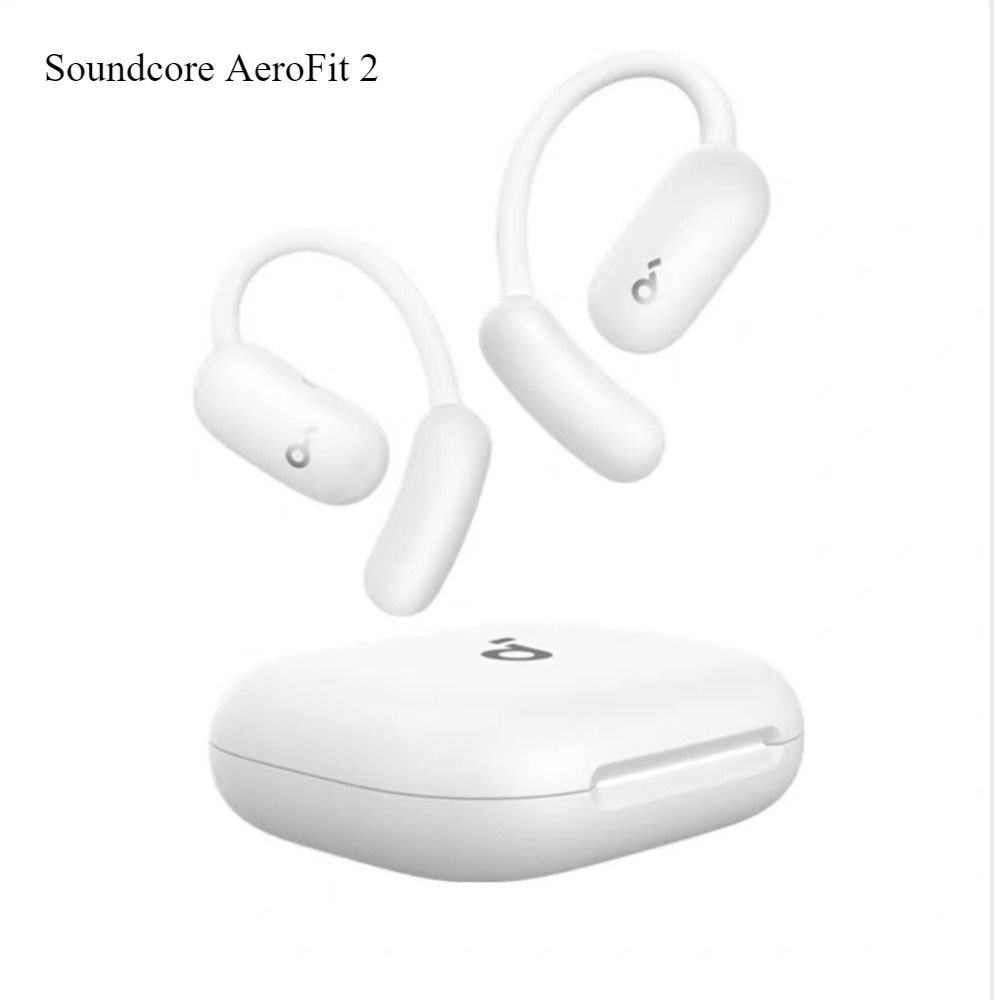
Soundcore AeroFit 2
Best BudgetBuy if: you want open-ear sound for under $100 — 42 hours total, LDAC hi-res audio, and hooks that adjust to your ears
Don't buy if: you wear glasses all day — the hooks can press where the arms sit, and the Bose clip avoids that entirely
The AeroFit 2 is the value pick, and it is closer to the top of this guide than its price suggests. Four adjustable ear-hook positions let you change the angle until the driver sits right over the canal, which is the fit trick most open-ear buds skip. The drivers are big — 20mm by 11.5mm racetrack units — and LDAC support means hi-res audio from Android phones, a feature the pricier Shokz sets skip.
Battery runs 10 hours a charge and 42 hours with the case, with a 10-minute charge giving about 3 hours back. The IP55 rating matches the Shokz sets, four beamforming mics handle calls, and the Soundcore app adds EQ plus real-time translation if you travel. At $99.99 list — and $78.99 at some stores right now — it undercuts every other pick here by at least $40.
Quick note: the case is bigger than the Shokz case, and the buds are chunkier than the Bose cuffs. That is the trade for the price. Sound is a step behind the OpenFit 2+ — thinner in the low end — but for gym sessions, commutes and calls, most listeners will not notice the gap.
Pros
- $99.99 list — the cheapest real open-ear pick here; street $78.99
- 42h total battery; LDAC hi-res audio on Android
- Four adjustable hook positions — the best fit tuning under $100
- IP55; four mics with AI call enhancement
Cons
- Hooks can press on glasses arms over long days
- Bass is thinner than the OpenFit 2+
- Bulky charging case for a pocket
- Translation features are a bonus, not a reason to buy
Price $99.99 list; street $78.99, checked 21 Nov 2026. Check the price before buying, as prices change.
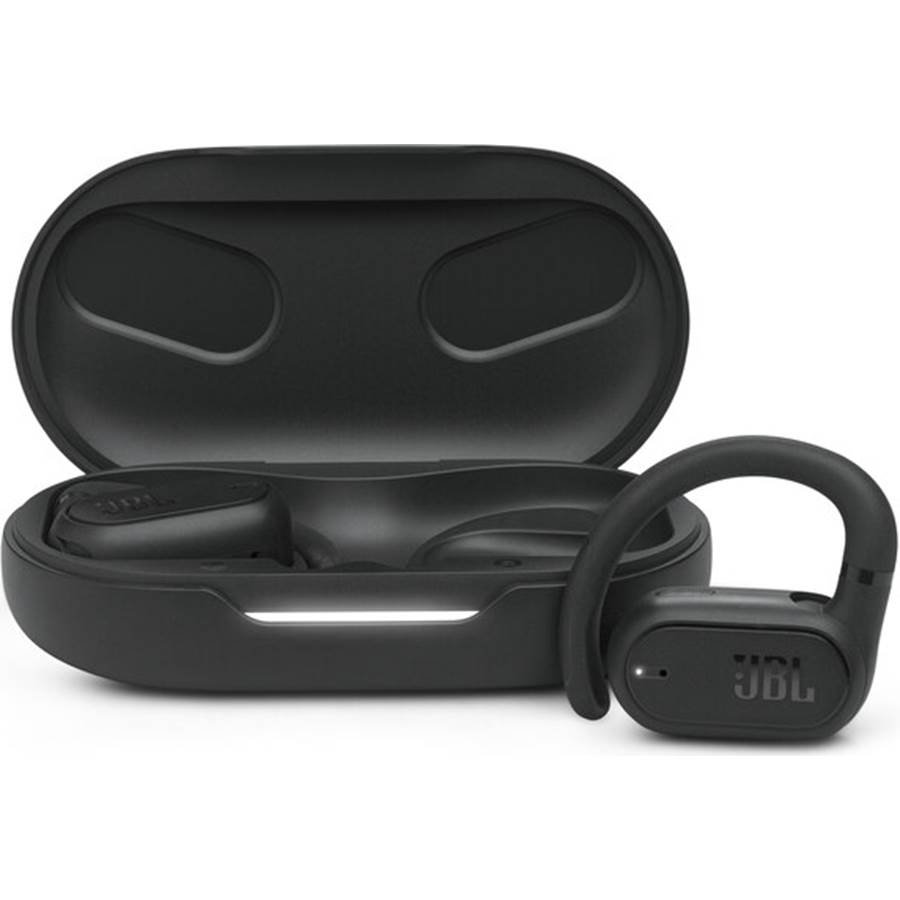
JBL Soundgear Sense
Best for the GymBuy if: you lift and train — punchy bass, a hook that grips, and a detachable neckband for extra security
Don't buy if: you need all-day battery — 6 hours a charge is the shortest here
The Soundgear Sense is JBL's open-ear gym bud, and it sounds like a JBL: punchy, loud, and bass-forward for an open design. Two 16.2mm drivers with a bass-boosting algorithm push more low end than the size suggests, and JBL's OpenSound design keeps leakage low — the brand claims almost zero sound escaping, which holds up better than most open-ear claims at gym volume.
The fit is the gym story. Ear hooks hold the buds through lifts and sprints, and a detachable neckband clips on when you want a second anchor — the only pair here with that option. Battery is 6 hours a charge and 24 hours with the case, with a 15-minute charge giving 4 hours back. The rating is IP54, and the JBL app adds EQ and multipoint pairing.
The catch is weight and battery. At 13.1 grams per bud, these are the heaviest here — you feel them more than the 8-gram Nothing buds at #6. And 6 hours a charge means a long training day plus a commute can drain them before dinner. Buy them for the gym, not for a 10-hour workday.
Pros
- Punchiest bass of any open-ear bud here
- Detachable neckband — the most secure gym fit in this guide
- OpenSound keeps leakage lower than most open designs
- 15-minute charge gives 4 hours back
Cons
- 6h per charge — the shortest battery here
- 13.1g per bud — the heaviest here
- IP54 — splash-proof, not sweat-proof like IP55 sets
- No wireless charging
Price $89.95, checked 21 Nov 2026. Check the price before buying, as prices change.
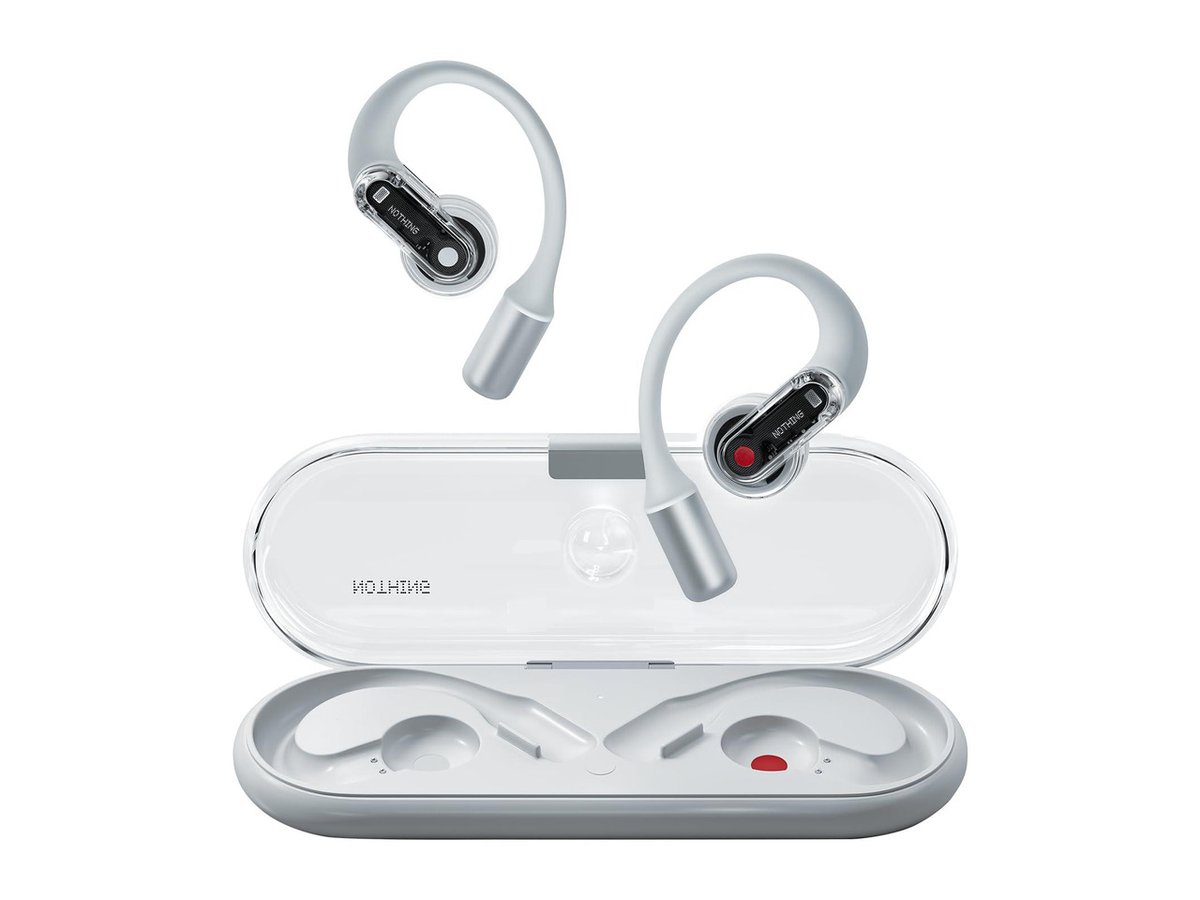
Nothing Ear (Open)
Best for StyleBuy if: you want open-ear buds that look like nothing else — transparent case, 8.1 grams, and the longest per-charge battery of the style picks
Don't buy if: you want wireless charging or the deepest bass — both are missing here
The Nothing Ear (Open) is the style pick, and it earns the spot on looks alone. The transparent case shows the buds inside, the ear hooks use a flexible nickel-titanium wire, and the whole pair weighs 8.1 grams a bud — light enough to forget. A 14.2mm titanium-coated driver pushes sound through the air into the open canal, and Nothing rates the pair at 8 hours a charge and 30 hours with the case.
Under the looks, the spec sheet is solid. Bluetooth 5.3 with multipoint pairing, IP54 dust and splash protection, pinch controls, and ChatGPT built into the Nothing X app for voice questions on the move. A 10-minute charge gives 2 hours back. The launch price was $149, and the pair still turns heads in a way no Shokz or JBL set does.
Sound is good, not great — clean and balanced, with less bass than the JBL at #5 and less warmth than the Bose at #2. The transparent case scratches easily, and there is no wireless charging. Buy these if the design matters as much as the sound. If it doesn't, the AeroFit 2 at #4 does the same job for less.
Pros
- 8.1g per bud — the lightest here; transparent case stands out
- 8h per charge, 30h with the case
- ChatGPT voice access and multipoint pairing
- Flexible ear hooks with a three-point balance that fits most ears
Cons
- No wireless charging — USB-C only
- Bass is lighter than the JBL and the Bose
- Transparent case scratches and shows every mark
- IP54 — splash-proof, not rain-proof like IP55 sets
Price $155.99, checked 21 Nov 2026. Check the price before buying, as prices change.
What Are Open Ear Bluetooth Headphones?
Open ear Bluetooth headphones sit outside your ear canal and play sound toward it, so you hear your music and the world at the same time. Nothing plugs in, nothing seals shut, and nothing presses on your eardrum. The driver — or the vibration pad — sits on or near the ear and does the work from outside.
Open ear Bluetooth headphones sit outside the ear canal and play sound toward it, so you hear your music and the street at the same time. According to Bose, open-ear earbuds use small speakers aimed at the ear instead of silicone tips that seal the canal. That open design is the whole point: nothing blocks the sound around you.
Two designs share the open-ear name, and mixing them up is the most common buying mistake. According to Shokz, bone conduction sends vibrations through the cheekbones to the inner ear, while air conduction aims a small speaker at the canal. Air conduction sounds fuller; bone conduction stays put better when you run.
The category has three shapes. Ear-hook buds like the Shokz OpenFit 2+ loop over the ear and park a speaker beside the canal. Clip-on cuffs like the Bose Ultra Open grip the edge of the ear like jewellery. Wraparound neckbands like the Shokz OpenRun Pro 2 rest transducers on the cheekbones. All three leave the canal open. The shape decides the fit, not the sound.
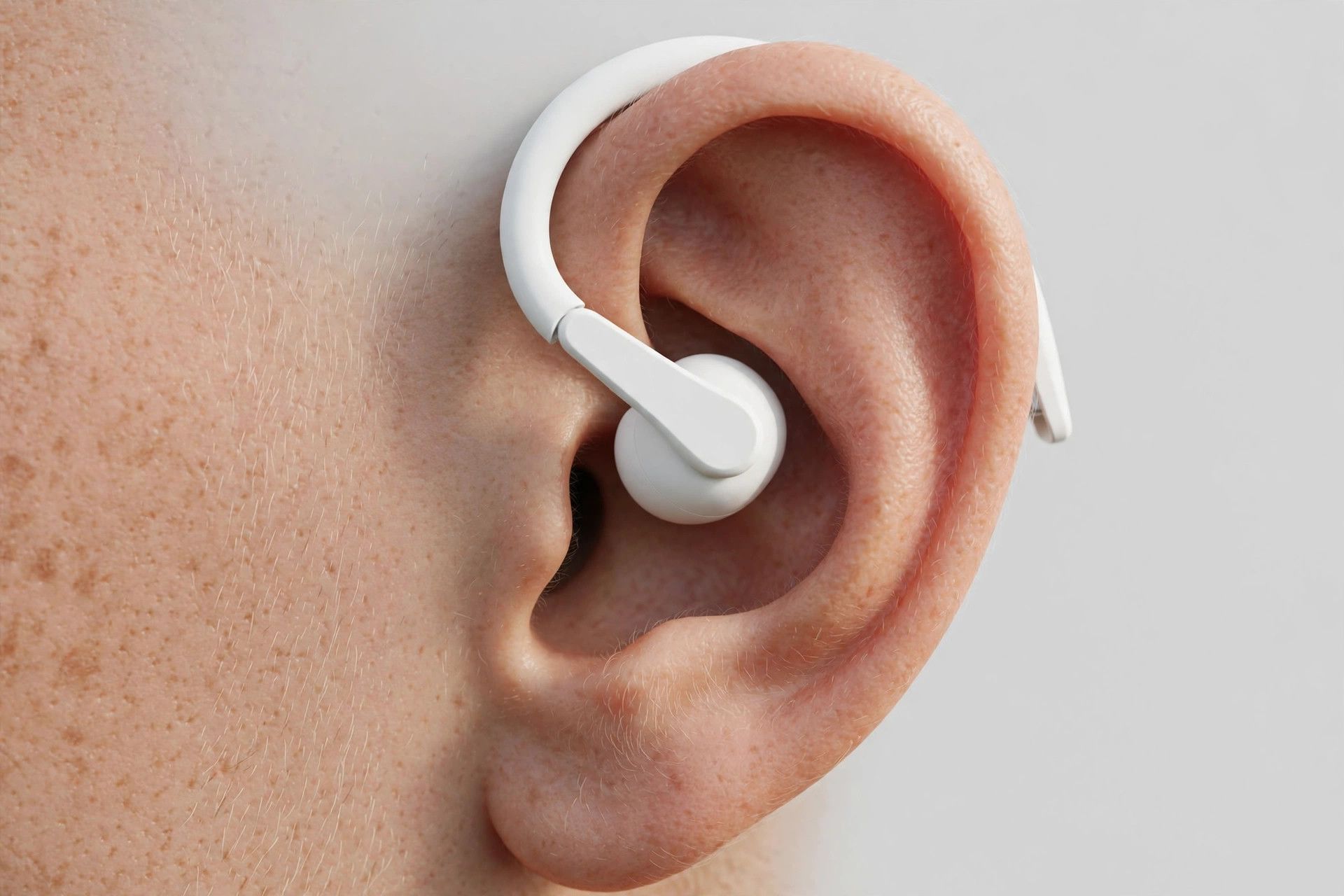
One more thing the box will not tell you: "open-ear" is a fit description, not a technology. A pair can be open-ear and still sound thin, leak badly, or fall off at pace. Judge the pair, not the label.
Are Open Ear Headphones Good?
Yes — when awareness matters more than bass or silence. Runners, cyclists, dog walkers and office workers get music without losing the room around them. The trade is real, and it is worth naming before you buy.
Open ear headphones are good when awareness matters more than bass or silence. Runners, cyclists and office workers get music without losing the room around them. The trade is real: they leak sound, they lose to sealed earbuds on deep bass, and they struggle on planes and subways. Buy them for the street, not the flight.
Comfort is the quiet win nobody advertises. No tip pressing into the canal means no pressure points, no itching, and no earwax pushed inward on long sessions. People who wear earbuds eight hours a day — calls, music, podcasts — feel the difference by day three. Ears get a rest even while the audio keeps playing.
Sound quality has caught up faster than most buyers expect. Five years ago open-ear meant thin and tinny. The 2026 sets in this guide — dual drivers, Dolby tuning, LDAC — sound genuinely good at normal volume. They still lose to sealed earbuds on deep bass. Physics sets that limit: a speaker a centimetre from your ear cannot move air the way a sealed driver can. But for podcasts, calls and most music, the gap is small now.
Our Bluetooth headphones safety guide covers the volume math and the radiation question in plain words — the short version is that how loud you listen matters far more than the Bluetooth itself.
Do Open Ear Earbuds Leak Sound?
Yes — some sound escapes, and anyone close by in a quiet room will hear it. The driver sits outside your ear, so the sound has two paths: into your ear, and out into the room. That is the design, not a defect.
How much leaks depends on four things: the volume, the model, the room, and how close the other person sits. At a normal listening volume on a bus or a street, nobody notices. At high volume in a silent office or library, the person next to you hears your podcast. JBL's OpenSound design and Bose's phase-cancelling geometry cut leakage more than most, but no open-ear bud is silent to the room.
Two rules of thumb. Keep the volume at the lowest level that sounds good — leakage grows fast past that point. And if privacy matters — calls about money, health, or work — take the call on sealed earbuds or step into another room. Open-ear buds are for awareness, not secrecy.
Can You Hear Traffic With Open Ear Headphones?
Yes — that is the point of the design. Nothing seals your ear canal, so cars, bike bells, train announcements and a coworker calling your name all reach you while music plays. It is the reason road runners and cyclists choose open-ear over sealed buds.
Keep the volume moderate so the awareness stays real. Loud music masks a car behind you just as well as a sealed earbud does — the open design helps only when the volume leaves room for the street. Some runners wear one bud only on busy roads. That works too, and it costs nothing.
One caution: awareness is not a guarantee. Wind, traffic and your own audio still mask a lot, and local rules may restrict headphone use while cycling or driving. Follow traffic laws, keep your attention on the road, and treat the open design as a help, not a shield.
Open Ear vs Bone Conduction: Which Is Better?
Air conduction sounds better. Bone conduction stays put better. Buy for your day, not for the label.
Bone conduction vs open-ear air conduction: bone conduction is better suited for running and cycling because the wraparound band never moves and the ears stay completely open. Air conduction works better when sound quality matters — the drivers play through the air the normal way, so bass and detail come through fuller. The key difference is the path: vibrations through bone, or sound through air.
Sound is the clearest split. Air-conduction buds like the OpenFit 2+ and the Bose Ultra Open use real drivers, so music has bass, warmth and detail. Bone conduction vibrates the cheekbones, which works well for podcasts and calls but sounds thinner for music — and the vibration itself can feel odd at high volume.
Fit is the other split. Bone conduction bands grip the head and never fall off, which is why trail runners and swimmers pick them. Air-conduction hooks and cuffs are comfier for all-day wear and disappear under glasses and hair more easily. If you run hard, buy bone conduction. If you wear them all day, buy air conduction.
Both are open-ear. Every bone conduction headphone is an open-ear headphone, but not every open-ear headphone uses bone conduction. Our best bone conduction headset guide compares the bone conduction sets head to head if that is the design you want.
How Do I Choose Open Ear Headphones?
Match the pair to your day first, then check the battery and the fit. The wrong pair is usually the right technology bought for the wrong day.
To choose open ear Bluetooth headphones, follow these steps: 1. Pick your fit: ear hooks for running, clip-on cuffs for all-day wear. 2. Match the design to your day: bone conduction for maximum awareness, air conduction for better sound. 3. Check the battery per charge, not the case total. 4. Check the water rating for sweat and rain. 5. Try the fit for a full week before you judge it.
- Pick your fit: ear hooks for running, clip-on cuffs for all-day wear. Ear hooks grip hardest at pace; clip-on cuffs disappear under glasses and hair.
- Match the design to your day. Bone conduction for maximum awareness on the road, air conduction for better sound at the desk or in the gym.
- Check the battery per charge, not the case total. The case total tells you how many days you get before a plug; the per-charge number tells you whether the buds survive your longest run or shift.
- Check the water rating for sweat and rain. IP55 handles sweat and rain; IP54 handles splashes. Neither is a swimming rating.
- Try the fit for a full week before you judge it. Open-ear buds feel odd on day one and normal by day three. A sore spot on day seven is a real problem; a strange feeling on day one is not.
Our best sport earbuds guide covers the sealed side of the same choice — if you train indoors and never need to hear the room, a sealed sport bud may suit you better.
Buying Guide: What Actually Matters
Fit first, battery second, codecs last. Everything else on the box is noise.
Fit decides everything. An open-ear bud that sits a few millimetres off the canal sounds thin and leaks more. Hooks, cuffs and bands all work — but only if the shape matches your ear. Adjustable hooks, like the AeroFit 2's four positions, are worth real money. Buy from a store with a good return window and test the fit on a real run, not just in the living room.
Count the per-charge battery. A run is 1–2 hours, a workday is 8. The OpenFit 2+'s 11 hours covers a full day on one charge; the JBL's 6 hours does not. The case total matters only for travel — how many days before you need a plug.
Read the IP rating in two digits. The first digit is dust, the second is water. IP55 shrugs off sweat and rain; IP54 handles splashes; IPX4 handles splashes but says nothing about dust. None of these ratings means swimming — check the swim-specific sets if the pool is your place.
Codecs matter only on Android. LDAC and aptX Adaptive lift sound quality on Android phones that support them. On an iPhone, everything plays AAC, so the codec line on the box changes nothing. Buy for the fit and the battery, not the codec list.
Check the mic before you buy for calls. Open-ear buds sit far from your mouth, so call quality lives or dies on the mics and the noise processing. The AeroFit 2's four beamforming mics and the OpenRun Pro 2's dual wind-resistant mics are the ones reviewers praise for calls; the rest are fine indoors and shaky on a windy street.
What to Skip
Generic open-ear buds promising 200 hours of battery. Three-letter brands quote battery numbers no lab has verified, and the buds are usually regular earbuds with "open-ear" printed on the box. A $25 pair that dies in a month costs more than an $80 AeroFit 2 that lasts two years.
Old Shokz OpenFit (T910) at full price. The original OpenFit is still a good bud, but the OpenFit 2 and 2+ beat it on battery, sound and fit for similar money. Buy the original only on clearance.
Open-ear buds as your only pair for flights. Engine noise drowns open-ear sound, and you will turn the volume up to compensate — the opposite of what your ears need on a long flight. Keep a sealed noise cancelling pair for planes. Our best noise cancelling earbuds guide covers the pairs that actually block engine noise.
Bone conduction for music-first listening. If music is the main job and you rarely run on roads, the air-conduction buds at #1, #2 and #4 sound better in every way. Bone conduction earns its place on the road, not at the desk.
Frequently Asked Questions
What's the best open ear Bluetooth headphone overall?
The Shokz OpenFit 2+ at $139.95 — 11 hours a charge, 48 hours with the case, Dolby Audio, and the most secure ear-hook fit here.
Are open ear headphones good?
Yes, when awareness matters more than bass or silence — running, cycling, office work. They leak sound and lose on deep bass, so keep sealed earbuds for planes and subways.
Do open ear earbuds leak sound?
Yes, some sound escapes — the driver sits outside your ear, so a nearby person can hear it in a quiet room. At normal volume outdoors, nobody notices.
Can you hear traffic with open ear headphones?
Yes — that is the point. Nothing seals your ear canal, so cars, bike bells and announcements reach you while music plays. Keep the volume moderate so they do.
Should I buy bone conduction or open ear earbuds?
Buy bone conduction for maximum awareness on runs and rides. Buy air-conduction open ear earbuds for fuller sound and all-day comfort — they sound better in every other setting.
Can I use open ear headphones on a plane?
You can, but you will not enjoy it. Engine noise drowns open-ear sound, and you will turn the volume up to compensate. Pack sealed noise cancelling earbuds for flights.
Should I buy the Shokz OpenFit 2+ or the Bose Ultra Open?
Buy the OpenFit 2+ at $139.95 for running and all-day wear — the hooks grip and the battery lasts. Buy the Bose at $299 only if sound quality matters most and the price does not.