Headphone Impedance Explained (2026): Ohms, Amps and Volume

You maxed the volume. The song stayed quiet.
That flat, thin sound is the clue most buyers meet first. You bought good wired headphones, plugged them into a phone, and the music never opened up. The missing piece is usually impedance — the ohms number on the box — paired with a source that cannot push hard enough.
This guide explains headphone impedance in plain words. You will learn which ohms suit a phone, when an amp earns its money, and why one extra spec matters more than ohms alone. If you are still choosing a pair, our guide to choosing Bluetooth headphones puts fit and battery ahead of specs like this one.
The short version: buy 16 to 32 ohms for a phone or laptop, treat 80 ohms as the borderline, and plan on an amp at 250 ohms and up. Then check sensitivity before you pay, because ohms alone never set the volume.
What Is Headphone Impedance?
Headphone impedance refers to how much a headphone resists the electrical signal from your source. It is measured in ohms, and it helps set how much voltage your phone or amp must supply.
Headphone impedance is the electrical load your headphones place on a phone, laptop or amplifier. According to Sennheiser, impedance measures how much a device resists the electric current flowing through it, and higher impedance headphones need more power for the same volume. That load is why two pairs can play at very different levels.
The ohms number on a headphone box is a nominal value, often taken near 1 kHz. According to Dekoni Audio, a headphone's impedance changes across the frequency range, so the printed figure is a rated or average value rather than one fixed number. Bass peaks and treble climbs hide inside that single spec.
One number. A whole curve.
Think of voltage as the push and current as the flow. A low-impedance headphone lets more current flow at the same push, so a weak phone output still gets loud. A high-impedance headphone holds the flow back, so the source must push harder — more voltage — to reach the same level.
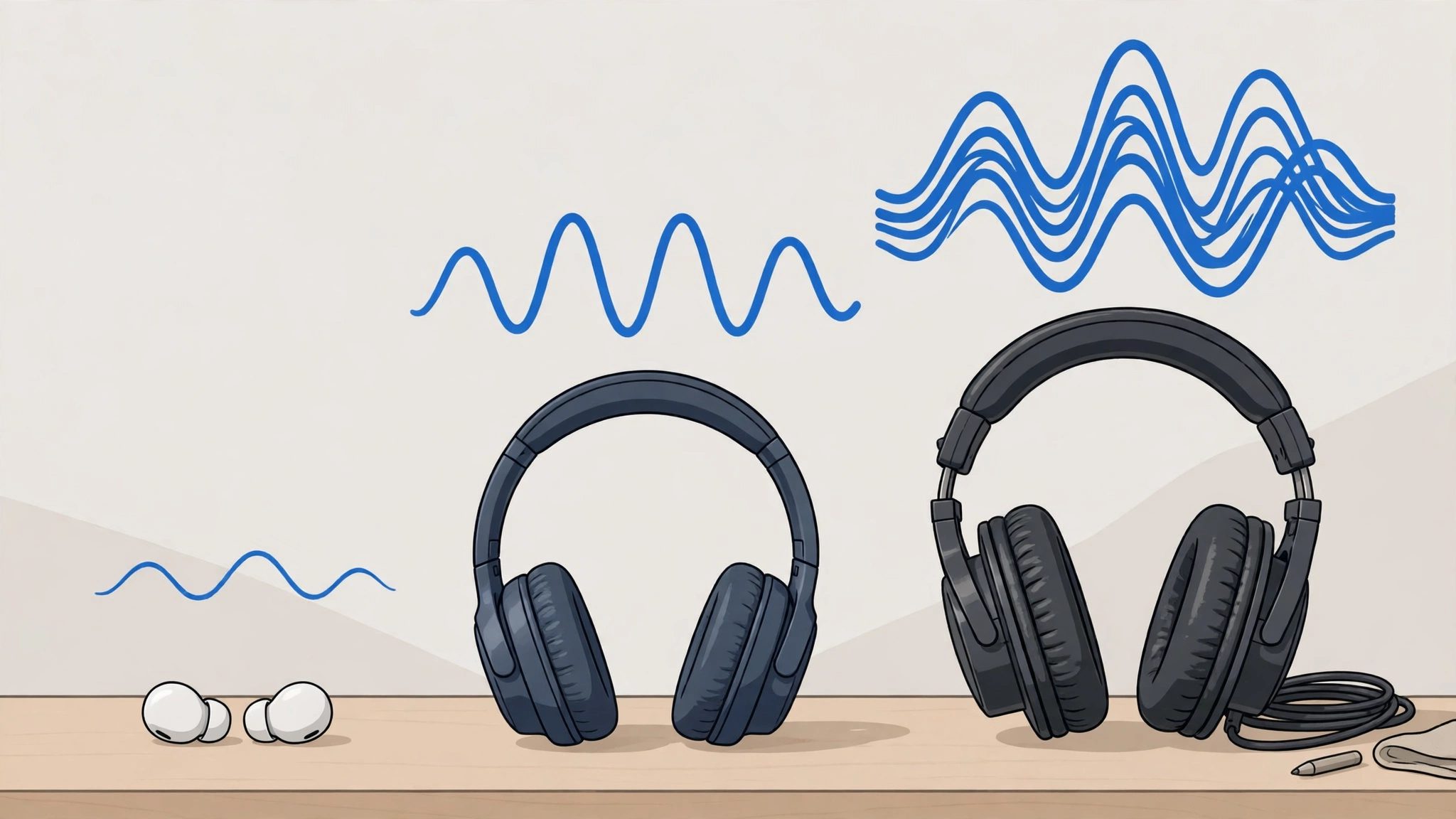
Headphones span roughly 8 to 600 ohms. Earbuds and portable pairs cluster at 16 to 32 ohms. Studio classics sit far higher, like the Beyerdynamic DT 880 Pro at 250 ohms and the Sennheiser HD 600 at 300 ohms. Neither end is a grade. Each end suits a different source.
Which Ohms Should You Buy for a Phone?
For a phone, laptop or console, buy 16 to 32 ohms. Sennheiser puts portable headphones under 50 ohms, and that range plays loud from almost any jack or dongle.
Which ohms suit a phone comes down to voltage headroom, not brand loyalty. According to Sennheiser, headphones for phones, tablets and laptops should sit below 50 ohms, while pairs above 100 ohms suit headphone amplifiers and audio interfaces. A phone dongle simply runs out of push before a 250 ohm pair wakes up.
| Impedance | Best for | Amp needed? | Typical models |
|---|---|---|---|
| 16 ohms | Earbuds, in-ear monitors, phone use | No | Most in-ear monitors |
| 32 ohms | Phones, laptops, consoles, gaming | No | Audio-Technica ATH-M50x, DT 770 Pro 32 ohm |
| 50 to 80 ohms | Studio monitoring, desk listening | Optional, helps | DT 770 Pro 80 ohm, Sennheiser HD 25 |
| 120 to 250 ohms | Audiophile desk listening | Yes, plan for one | Sennheiser HD 560S, DT 990 Pro 250 ohm |
| 300 ohms | Reference hi-fi at a desk | Yes | Sennheiser HD 600, HD 650, HD 6XX |
| 600 ohms | Reference and pro studio rigs | Yes, a strong one | Beyerdynamic DT 880 600 ohm |
32 ohm vs 250 ohm headphones: 32 ohms is better suited for phones and laptops because a weak output still reaches full volume. 250 ohms works better at a desk when a real amp supplies the voltage. The key difference is the source each load was built for.
Here's the thing: makers sell the same studio shell in several impedances for a reason. The DT 770 Pro comes in 32, 80 and 250 ohm versions, and the right pick is the one that matches your gear. Phone in your pocket? Take the 32 ohm version and skip the amp hunt.
Do You Need a Headphone Amp?
You need an amp when your pair stays quiet, thin or strained at full volume. Impedance above 100 ohms, or low sensitivity, is the usual trigger.
I've seen conflicting data — some guides say every pair above 80 ohms needs an amp, while Sennheiser treats 50 to 100 ohms as a middle ground for mixed gear. My read is both rules bend around sensitivity: a loud 120 ohm pair can beat a quiet 32 ohm pair from the same phone.
Use this split. Under 32 ohms, plug straight in. From 32 to 80 ohms, most phones cope, and a small DAC amp adds headroom on loud peaks. From 150 ohms up, budget for an amp from the start. At 600 ohms, buy the amp first and the headphones second.
Watch for the quiet-pair trap. Low impedance with low sensitivity still starves. Planar magnetic pairs prove it: a 27 ohm planar at low sensitivity can demand a strong amp, while a sensitive 60 ohm dynamic pair plays fine from a laptop. Ohms mislead when read alone.
Too quiet already? Our guide to making Bluetooth headphones louder covers the wireless side, and the same source-first logic applies here: fix the power before you blame the driver.
Impedance vs Sensitivity: Which Sets the Volume?
Sensitivity sets how loud a headphone plays for a given input. Impedance sets what your source must deliver to supply that input. You need both numbers.
Sensitivity is quoted in decibels, either per milliwatt or per volt, and the unit changes the meaning. A pair at 100 dB per milliwatt plays louder from one milliwatt than a pair at 90 dB. Compare like with like, or the louder-looking spec wins on paper only.
Quick note: a spec that prints decibels with no unit is close to useless. Ask whether the figure is per milliwatt or per volt before you compare two models. Or maybe I should say it this way: sensitivity without a unit is a price tag with no currency.
Read the pair together. Low impedance with high sensitivity runs happily from a phone. High impedance with low sensitivity wants a desk amp. Mixed pairs need the maths, and the full-volume test in the next sections settles it faster than any chart.
Is Higher Impedance Better?
No. Impedance is a load, not a quality score. A matched 32 ohm pair beats a starved 300 ohm pair on a phone, every time.
High-impedance designs exist for real reasons. Thinner voice-coil wire with more turns can lighten the moving parts, and a high load shrugs off sloppy source outputs. Studio gear supplies the voltage those designs expect, so the pairing works there.
Look — if you're buying for a phone and you're eyeing a 300 ohm classic, here's what actually works: buy the low-impedance sibling, or add the amp to the same order. Half-powered reference headphones sound worse than honest portable ones, and they cost more to disappoint you.
Here is an opinion that might get pushback: for most buyers, chasing high-impedance studio models is money spent in the wrong place. Fit, tuning and a clean source change what you hear far more than the ohms badge. Buy the pair your gear can drive today.
What Is Output Impedance and the 1/8 Rule?
Output impedance is the small resistance inside your source. Keep it at or below one-eighth of your headphone impedance, and the tone stays steady.
Every phone, dongle and amp has an output impedance of its own. The two impedances form a divider, so the headphone receives a share of the signal. Because headphone impedance shifts with frequency, a high output impedance boosts some frequencies more than others. Bass loosens first.
The maths is simple. A 32 ohm headphone wants a source at 4 ohms or below. A 250 ohm pair tolerates up to about 31 ohms. That is why high-impedance pairs forgive old receivers and tube amps, while sensitive earbuds expose them.
Same pair. Different jack. Different bass.
Multi-driver in-ear monitors swing hardest here. Their impedance can dip and spike across the band, so a high output impedance rewrites their tuning. Our wireless in-ear monitors guide sidesteps the wired version of this trap, since the amp rides inside the earbud.
Does Impedance Matter for Bluetooth Headphones?
For Bluetooth headphones, impedance barely matters to you. The amp sits inside the headphones, matched to the driver at the factory.
That is the gap most impedance guides skip. They write for wired, passive pairs, then Bluetooth buyers apply the advice to products with built-in amps. A Bluetooth spec sheet may list ohms, but you never supply the voltage, so the number cannot starve your volume.
If you've got Bluetooth headphones and they're quiet, the cause sits elsewhere — a volume limit, a codec fallback, or a fit leak. Check our Bluetooth sound quality guide before you shop for an amp you cannot plug in. And for battery-first buying, the headphone battery life guide ranks what actually runs out.
Wired mode is the exception. Many Bluetooth pairs accept a cable with the power off, and then impedance matters again, because your phone drives the load directly. Test wired volume before a long flight, not during it.
How Do You Check Your Own Pair?
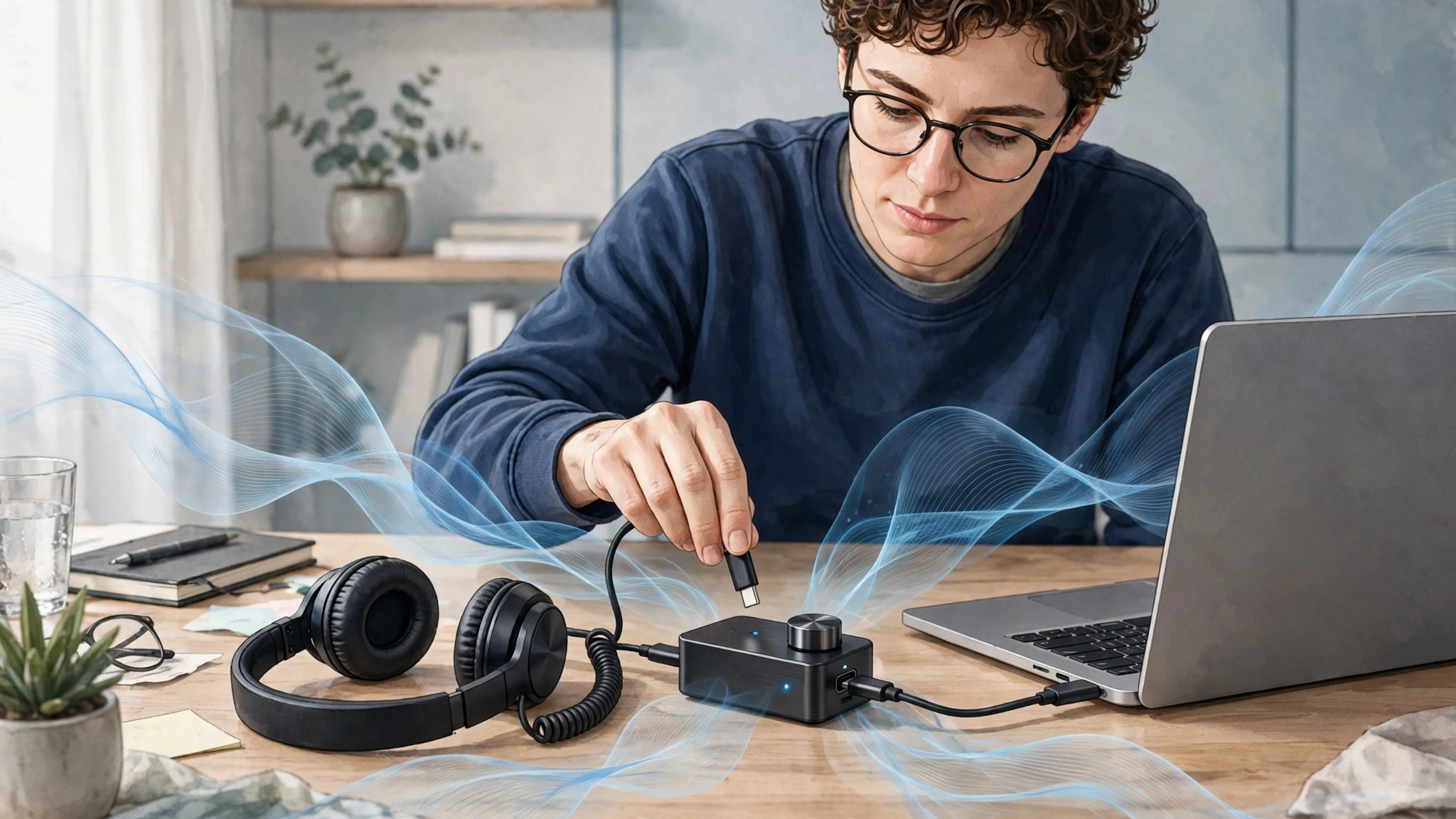
Read both specs, test at full volume, then apply the 1/8 rule. Five minutes tells you whether an amp belongs in your basket.
To check if your headphones need an amp, follow these steps: 1. Find the impedance in ohms on the box or product page. 2. Find the sensitivity and its unit. 3. Play a loud track at full volume. 4. Divide the impedance by eight for the output limit. 5. Add an amp only if volume or tone falls short.
- Find the impedance. Read the ohms figure on the box or the maker's product page, such as 32, 80 or 250 ohms.
- Find the sensitivity. Prefer decibels per milliwatt. Note the unit, since per-volt figures flatter high-impedance pairs.
- Test at full volume. Play a loud, familiar track at maximum. Quiet, thin or strained sound means the source is short of power.
- Check the 1/8 rule. Divide the headphone impedance by eight. Your source output impedance should sit at or below that number.
- Decide on an amp. Add a small DAC amp when volume runs out or bass loosens. Skip it when your pair already plays loud and clean.
Still torn between shapes? The on-ear vs over-ear guide covers comfort and isolation, which change daily listening more than a small ohms gap ever will.
What Should You Skip?
Skip ohms as a quality badge, skip sensitivity figures with no unit, and skip amps for Bluetooth pairs.
- Higher ohms as a buying goal. The number describes a load. It never promised better sound.
- 250 ohm versions for phone use. Buy the 32 ohm sibling, or budget the amp in the same order.
- Sensitivity with no unit. Per milliwatt and per volt are different claims. Compare only matching units.
- An amp for Bluetooth listening. The amp is already inside. Spend on fit, battery or a better codec match instead — our LDAC headphones guide shows where that money works.
- Old receiver jacks for sensitive earbuds. High output impedance rewrites their tuning. A clean dongle beats a vintage jack here.
Match first. Upgrade second.
Frequently Asked Questions
What's the best headphone impedance for a phone?
Pick 16 to 32 ohms for a phone. Sennheiser puts portable headphones under 50 ohms, and most phones drive that range to full volume with no amp.
Should I buy 32 ohm or 250 ohm headphones?
Buy 32 ohms for phones, laptops and consoles. Buy 250 ohms only when you own or plan to buy a headphone amp, because a phone runs out of voltage.
How do I know if I need a headphone amp?
You need an amp when your headphones stay quiet or sound thin at full volume. High impedance above 100 ohms or low sensitivity below about 96 dB per milliwatt points that way.
Why are my headphones so quiet?
Your source cannot push enough voltage into the headphone load. High ohms, low sensitivity, or both leave the driver short of power, so volume stalls early.
Does higher impedance mean better sound?
No. Impedance is an electrical load, not a quality score. A well-matched 32 ohm pair beats a starved 300 ohm pair on any phone.
Does impedance matter for Bluetooth headphones?
Almost never. Bluetooth headphones carry their own amp, so the driver load stays inside the product. Battery life, fit and codecs matter far more.
When should I worry about output impedance?
Worry when your source output impedance tops one-eighth of your headphone impedance. Past that line, bass can loosen and the tone can shift with frequency.