Do Noise Cancelling Headphones Work for Sleeping? (2026)

It is 2 a.m. The snoring next to you just got louder, or the traffic outside will not quit, and the earplugs you tried last week hurt, fell out, or both. Your noise cancelling headphones sit on the dresser. They work great on planes. Will they work in bed?
Here's the thing: they can, but only for some noises and some sleepers. This guide gives you the honest split — what ANC blocks at night, what slips through, and the safety rules that decide whether you should wear them until morning.
The short version: Noise cancelling headphones work for sleeping when your problem is steady, low noise — traffic rumble, air conditioning, a fan. They soften snoring but rarely erase it. Back sleepers can use over-ear models; side sleepers usually need small sleep earbuds or a soft headband instead. Keep volume low, set a sleep timer, and keep a backup alarm you can hear.
Do Noise Cancelling Headphones Work for Sleeping?
Yes — for steady noise. Noise cancelling headphones for sleeping use microphones and opposite sound waves to reduce steady, low sounds like engines and air conditioning. They work far less well on sudden or changing sounds, and comfort in bed matters as much as the cancelling itself.
Noise cancelling headphones do work for sleeping against constant background noise, because active noise cancelling targets steady low-frequency sound. According to the Sleep Foundation, adding consistent background noise may mask sounds you cannot control and counteract the harmful effects of noise during sleep. Random sounds remain the hard case.
Whether noise cancelling headphones help you sleep depends on the noise that wakes you and the position you sleep in. According to Cleveland Clinic, sleeping with earbuds can be OK with the right habits, but its audiologist advises turning noise cancelling off at night so alarms can still reach you. Comfort and safety set the limits.
ANC removes rumble. It does not remove surprise. A door slam, a voice, a dog bark — these change too fast for the electronics to cancel cleanly, so they still reach your ears, only a bit softer. Our explainer on how active noise cancellation works covers the physics in plain terms, and our ANC meaning guide keeps the terms straight.
Shape matters as much as sound. Over-ear cups seal around your ear and cancel the most, but they were built for sitting up. In bed, the pillow becomes part of the fit — and for many people, that is where the plan falls apart.
Steady noise, yes. Surprises, no.
What Noise Can They Block at Night?
They block steady hum best. Air conditioning, fans, distant traffic and plane engines sit in the low, constant range ANC handles well. Voices, snoring bursts, doors and footsteps change pitch and timing, so parts of them always get through.
Noise cancelling headphones reduce nighttime noise unevenly: steady hum fades the most, while changing sounds only soften. Fit decides a lot of the result, because a loose seal lets sound leak in before the electronics start. Small leaks undo expensive cancelling.
Think of it in two layers. The cup or ear tip blocks sound by sealing your ear — that is passive isolation. The electronics then cancel much of the steady rumble that remains. A good seal plus ANC beats either layer alone, which is why fit tips in our noise cancelling earbuds guide matter at night too.
Here is the night-by-night view:
| Night noise | How well ANC helps | What still gets through |
|---|---|---|
| Air conditioner or fan hum | Strong — this is ANC at its best | Very little, with a good seal |
| Steady traffic rumble | Strong to good | Sudden loud vehicles |
| Plane or train engine | Strong | Announcements and sharp sounds |
| Partner snoring | Partial — rumble drops | Sharp snorts and pitch changes |
| Voices next door | Weak to partial | Words often stay clear |
| Doors, footsteps, barks | Weak | Most of the sudden hit |
| Alarms and phone calls | May block too well | Test before you trust it |
One more limit: vibration. If a truck shakes the wall or a bass line travels through the floor, headphones cannot fix that. The sound reaches you through your body, not just your ears.
Do They Block a Snoring Partner?
Partly. ANC cuts the low rumble inside snoring, so the sound gets quieter and duller. It rarely makes snoring vanish, because snores rise, fall and snort — and changing sounds are exactly what ANC handles worst.
Snoring is not one steady tone. It swells, pauses, then bursts. The steady part sits low, where ANC works. The bursts carry higher, sharper tones that slip past. That is why two people can wear the same headphones and report opposite results: one partner rumbles, the other snorts.
Look — if snoring is what wakes you, here's what actually works best: ANC plus a soft masking sound. The cancelling lowers the rumble, and quiet white noise or rain covers the sharp edges that remain. Either tool alone leaves a gap the other one fills.
Fit decides the rest. Earbuds with a firm tip seal block more snoring than loose ones, and over-ear cups block more than either — while you stay on your back. Roll onto your side and the cup seal breaks against the pillow. Our sleep earbuds guide ranks the small, flat options built for exactly this job.
Expect quieter, not silent.
Can Side Sleepers Use Them?
Over-ear models, usually not for long. The cup presses between your ear and the pillow, so pressure builds until you wake and pull them off. Small flat sleep earbuds and soft headbands suit side sleepers far better.
Back sleepers get the easy version of this test. The cups hang free, the headband rests on the pillow, and nothing digs in. If that is you, the headphones you already own may work tonight. Stomach sleepers twist the band and strain the neck, so keep sessions short.
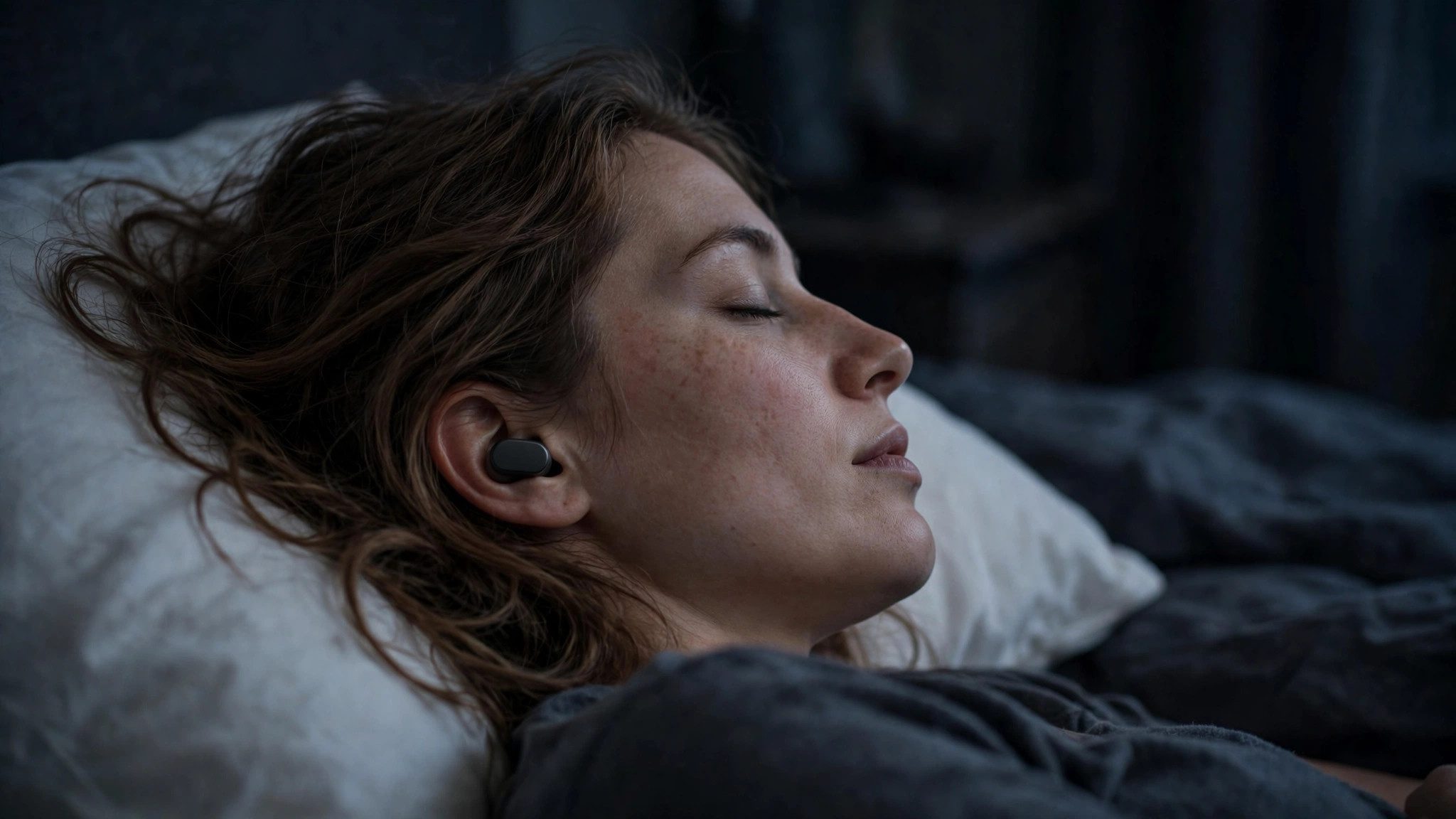
Side sleeping turns bulk into pain. A thick cup folds your ear, traps heat, and creates one hard spot you cannot shift away from. Or maybe I should say it this way: the headphones stop being audio gear and become a lump in your pillow.
Flat wins here. Sleep earbuds sit low in the ear, so the pillow presses on almost nothing. Headbands put thin speakers inside soft fabric, with no hard cup at all. Both give up some cancelling power — and both stay on until morning, which is the trade that matters.
Comfort beats specs at 3 a.m.
Is It Safe to Sleep With Them On?
It can be, with limits. The risks are loud audio playing for hours, earwax and infection from in-ear buds, sore ears from pressure, and missing alarms or calls. Low volume, a sleep timer and clean earbuds cut most of that risk.
I've seen conflicting data on overnight wear — some sources call it harmless, others warn against it. Cleveland Clinic lists five risks: hearing damage, earwax buildup, infection, discomfort and missing important sounds, and its audiologist advises skipping noise cancelling at night. Other guides say quiet ANC with no loud audio is fine for healthy adults. My read is that volume and alarms decide it: quiet, timed audio with a backup alarm is a fair trade; loud all-night playback is not.
Volume is the big one. Sound that feels fine for an hour can harm hearing across eight, and you cannot turn it down once you are asleep. Keep playback at half volume or lower — quiet enough to hear someone speak in the room — and let a sleep timer stop it after you drift off. Our guide on whether Bluetooth headphones cause hearing loss covers safe levels in plain terms.
Earbuds add ear-canal risks. They can push wax deeper, trap moisture after a shower, and carry bacteria if you never clean them. Clean tips weekly, let ears dry before wearing buds, and stop if you wake with pain, ringing or a blocked feeling. Our cleaning guide shows the safe way, and our Bluetooth safety guide covers the wider questions.
Then there is awareness. Strong ANC can hide a smoke alarm, a baby, or someone calling for help. If you must hear those sounds, skip ANC at night or use a transparency mode — and test your real setup while awake, never on trust.
ANC or White Noise: Which Helps More?
For random night noise, masking usually helps more. ANC removes steady hum; white noise covers sudden sounds so they stand out less against silence. Used together, they cover each other's gaps.
ANC vs white noise: ANC is better suited for steady hum like air conditioning and traffic because it removes that sound at the source. White noise works better when doors, voices or snoring bursts wake you, because it covers sharp changes. The key difference is removal versus cover.
Silence makes surprises louder. In a dead-quiet room, one door slam feels huge. A soft, steady sound raises the floor, so the same slam blends in instead of jolting you awake. That is why many sleep earbuds skip strong ANC and play masking sounds instead.
Quick note: you do not need a special device to test masking. A fan, a phone app, or a small speaker by the bed does the same job — and a speaker keeps your ears free, which clinicians rank as the safest option of all.
Cover the gaps ANC leaves.
How Do I Sleep With Them the Right Way?
Test before you commit. Try your sleep position awake, keep volume low, set a timer, add masking if needed, and confirm a backup alarm still reaches you. Five small steps turn a gamble into a fair test.
To sleep with noise cancelling headphones, follow these steps: 1. Lie in your sleep position for 20 minutes. 2. Keep volume at half or lower. 3. Set a sleep timer. 4. Add soft white noise if needed. 5. Confirm a backup alarm wakes you.
- Test your position first. Lie the way you actually sleep, ANC on, no music, for 20 minutes. Pressure you feel now becomes pain at hour three.
- Keep volume low. Half volume or lower, quiet enough to hear a voice in the room. Prefer silence plus ANC, or one soft steady sound, over podcasts and lyrics.
- Set a sleep timer. Let audio stop 30 to 60 minutes in. Your ears get rest, and the battery lasts the week instead of the night. Our battery life guide explains why per-charge hours matter here.
- Add masking only if needed. If snorts and doors still break through, layer quiet white noise under the ANC instead of raising the volume.
- Plan your alarm. Set a second alarm outside the headphones — a clock, a phone across the room, a vibrating watch. Test it awake before the first real night.
Stop the experiment if you wake with sore ears, a headache, ringing or hot spots. A device that hurts is not helping your sleep, whatever the spec sheet promised.
One fair test tells you.
What Should I Use Instead?
Match the tool to the noise and your position. Sleep earbuds suit side sleepers, headbands suit people who hate anything in the ear, earplugs suit simple steady noise, and a bedside speaker suits anyone who must hear alarms.
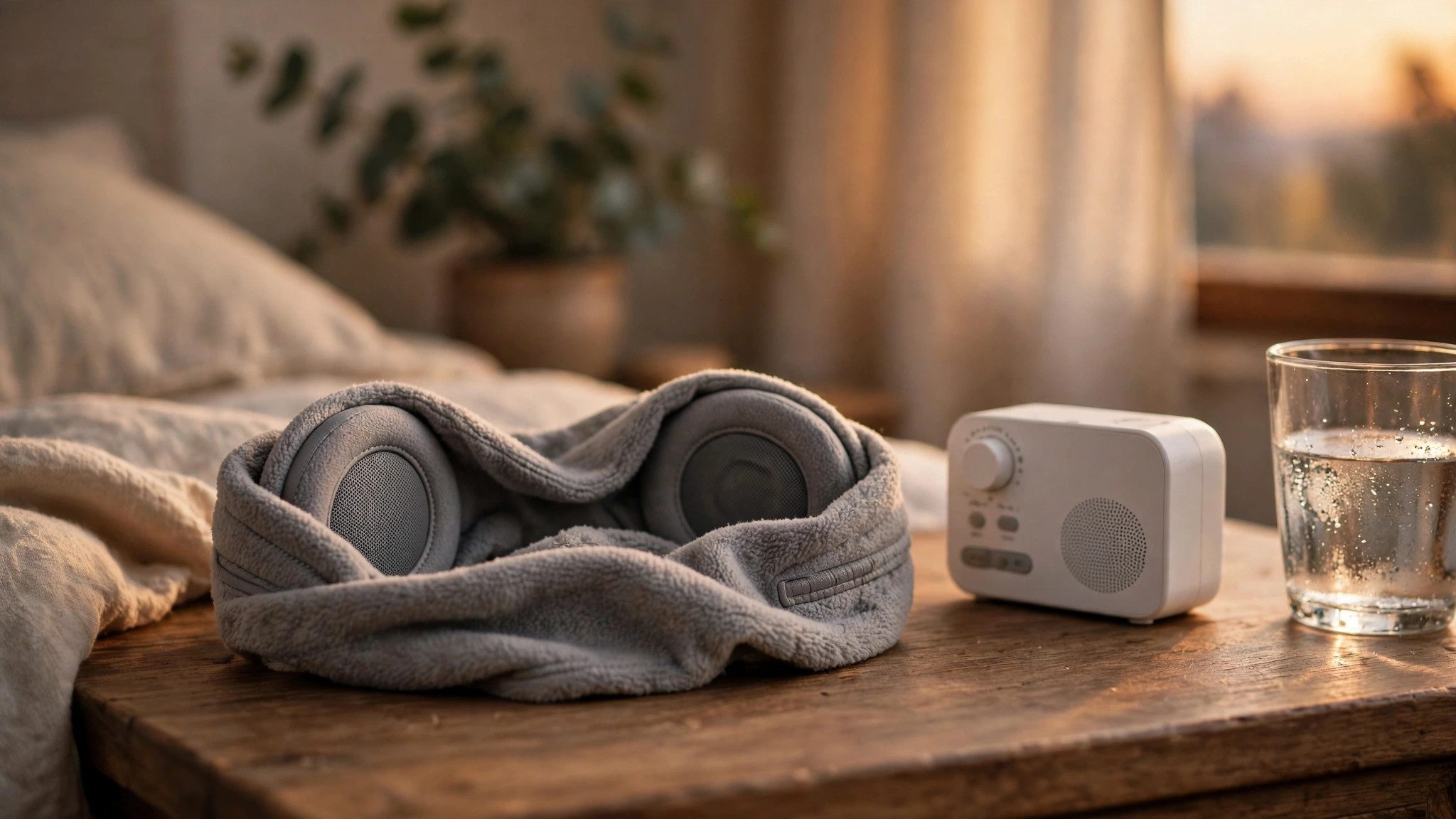
Sleep earbuds are the closest swap: small, flat, and built to stay in while you turn. Some play masking sounds, some cancel noise, a few do both. Start with our sleep earbuds guide if side sleeping rules out your current pair.
Headbands trade power for comfort. The fabric blocks little sound on its own, but the flat speakers play white noise or rain with zero ear pressure. People who find earbuds itchy often land here and stay.
Earplugs still earn their place. Foam or silicone plugs block steady noise well, cost little, and need no battery — but they can ache, fall out, and push wax if you wear them nightly. A speaker by the bed beats all of these on safety: nothing in or on your ears, masking sound in the room, alarms still audible.
One honest opinion: most people should try a bedside speaker or fan before buying sleep earbuds. It fixes the masking half of the problem for free, and half of all "ANC does not work" complaints are really masking problems wearing an ANC label.
Start simple. Spend later.
Frequently Asked Questions
Do noise cancelling headphones work for sleeping?
Yes, for steady low noise like traffic rumble and air conditioning. They soften snoring but rarely erase it, and bulky over-ear cups fail most side sleepers.
Can noise cancelling headphones block snoring?
Partly. ANC cuts the low rumble in snoring, but snores change pitch and volume, so sharp parts still get through. Adding soft white noise helps more.
Is it safe to sleep with noise cancelling headphones on?
It can be, with low volume and a sleep timer. Cleveland Clinic advises turning noise cancelling off at night so alarms and emergencies can still reach you.
What's best for side sleepers?
Small flat sleep earbuds or a soft sleep headband. Big over-ear cups press into the pillow and usually wake side sleepers within the first hour.
Should I use ANC or white noise for sleep?
Use both if you can. ANC removes steady hum, while white noise covers sudden sounds like doors and voices. Masking alone beats ANC alone for random noise.
Will I still hear my alarm?
Maybe not through strong ANC. Set a second alarm outside the headphones, keep volume low, and test your setup while awake before trusting it overnight.
How long should I wear them each night?
Use a sleep timer so audio stops after you drift off. Stop overnight wear if you wake with ear pain, soreness, ringing or a blocked feeling.