Can Bluetooth Headphones Get Wet? (2026 Guide)

Rain starts mid-run. Your earbuds are still in. You keep going, because taking them out feels fussy. Then the worry hits: did that soak just kill them?
Maybe you dropped one in the sink. Or you want music in the shower. Either way, you need a straight answer, not a sales pitch.
The short version: A little water is fine only if your pair has a water rating. IPX4 handles sweat and light splashes. IPX5 handles stronger spray. IPX7 survives a short dip in shallow water. No rating means keep them dry. Showers and pools are still risky, because soap, salt and heat break the lab rules behind every rating.
Can Bluetooth Headphones Get Wet?
Sometimes. Bluetooth headphones can get wet only up to their IP water rating. Rated earbuds shrug off sweat and splashes. Unrated pairs, and most big over-ear headphones, should stay dry. The rating on your exact model decides.
Can Bluetooth headphones get wet safely depends on one number: the last digit of the IP rating. According to the IEC 60529 standard, that digit rates water protection from 0 to 9. Higher means stronger seals. No printed rating usually means no tested protection at all.
Whether Bluetooth headphones can get wet also depends on the kind of water. According to maker guidance from Sony and Apple, ratings cover clean, fresh water only. Sweat, soap, pool chemicals and sea water fall outside the test. Real life is harsher than the lab.
Bluetooth headphones getting wet is not one risk but three: rain from above, spray from the side, and full dips under water. Each level needs a higher rating. Match the rating to the wettest moment you plan, not the average day.
Can Bluetooth headphones get wet refers to whether water can touch them without harm. The answer lives in the IP rating, not the price tag. A cheap IPX7 pair beats a pricey unrated pair in the rain.
Look — if you're standing in the rain right now, here's what actually works: keep IPX4 buds in for a light shower of rain, pocket them in a downpour, and dry everything once you're inside. Or maybe I should say it this way: light rain is a test, heavy rain is a gamble.
Check the rating first.
What Do IPX4, IPX5 and IPX7 Actually Mean?
They are lab test levels. IPX4 passed splashes from any side. IPX5 passed water jets. IPX7 passed a 30-minute dip at 1 metre deep. The higher the number, the more water the seals held out.
IP means ingress protection. The X means dust was not tested. The last number rates water. IP54 adds light dust cover on top of splash cover. Most earbuds sit at IPX4 or IPX5. True dip-proof pairs are rarer, and they cost more.
I've seen conflicting data on shower use — some sources say IPX4 is enough, others demand IPX7. Both stretch the truth. IPX4 was tested with splashes, not a shower head. My read: IPX5 is the honest shower floor, and even then soap stays a risk.
| Rating | Lab test | Rain | Shower | Short dip |
|---|---|---|---|---|
| No rating | No water test passed | No | No | No |
| IPX4 | Splashes from any side | Light rain only | No | No |
| IPX5 | Water jets from a nozzle | Yes | Spray only, with care | No |
| IPX6 | Strong water jets | Yes | Yes, with care | No |
| IPX7 | 30 minutes at 1 metre deep | Yes | Yes, with care | Yes, brief only |
| IPX8 / IP68 | Deeper dips, maker sets limits | Yes | Yes, with care | Yes, within limits |
IPX4 vs IPX7: IPX4 is better suited for gym and drizzle because it covers sweat at a lower price. IPX7 works better when a drop into water is likely. The key difference is splashes versus full dips.
One trap hides in the case. Earbuds may carry IPX7 while the charging case carries far less, or nothing. A wet case can fail even when the buds survive. Our IPX7 waterproof earbuds guide ranks dip-proof pairs and flags case ratings where makers state them.
The case is the weak link.
Can You Wear Bluetooth Headphones in the Rain?
Yes, with the right rating. IPX4 handles light rain and sweat. IPX5 and up handle steady rain. Unrated pairs and most over-ear headphones should come off, or hide under a hood.
Rain hits from above and the sides, which matches the IPX4 splash test fairly well. A short walk in drizzle rarely harms rated buds. A long run in heavy rain is different. Water finds seams, buttons and mic holes over time.

Over-ear pairs need more care. Big ear pads soak up water like a sponge. Mesh, hinges and long seams give water many paths in. Most over-ear models carry no water rating at all. Treat them as dry-only gear.
Here's the thing: rain itself rarely kills rated buds in one outing. Slow harm does. Damp pads, corroded contacts and stale moisture build up over weeks. Dry your pair after wet runs, every time. Our sport earbuds guide picks pairs built for sweat and weather, and our ear hook headphones guide covers fits that stay put when wet.
Drizzle is fine. Downpours aren't.
Can You Shower or Swim With Bluetooth Headphones?
Shower spray needs IPX5 or higher, and soap still raises the risk. Swimming for music fails with normal Bluetooth, even on IPX8 pairs. Water blocks the signal within inches, so swim models play stored songs instead.
Shower water comes as jets, which matches the IPX5 test. That part is fine. Soap and shampoo are not. They thin the water so it slips past seals more easily. Hot water and steam age rubber seals faster too. Makers test with cool, clean water, so shower use always stretches the rating.
Pools add two more problems. Chlorine and salt attack seals and metal parts. Worse, the music stops. Bluetooth uses a 2.4 GHz radio signal, and water absorbs it fast. Your head goes under, the link drops, and the buds may survive in silence.
Here's my honest take: skip shower listening unless your buds are IPX5 or higher and you accept the seal risk. For laps, buy a swim model with built-in storage. Normal buds in a pool are money at risk for music that cuts out anyway. If phone-free play is the goal, our guide on Bluetooth headphones without a phone explains stored-music options.
Surviving water isn't playing in it.
What Happens If They Get Wet Anyway?
Damage ranges from nothing to a dead pair. Light splashes on rated buds usually end well. Deep soaks can corrode parts, muffle sound, or kill one side. Charging too soon turns a saveable pair into scrap.
Water inside attacks in stages. First come crackles, weak sound, or a mic that stops working. Then charging fails as contacts corrode. Some pairs work for days, then die as rust spreads. A pair that plays right after a soak is not yet safe.
Warranty cover is thin. Most standard warranties exclude liquid damage, even on water-rated models. The rating promises lab survival, not free repairs. Check your cover before you test the limits on purpose.
Quick note: one wet bud sounding quiet is often water sitting on the speaker mesh, not a dead driver. Drying fixes that case. True corrosion does not heal. Our guide on how to clean Bluetooth headphones covers safe care once your pair is dry, and our headphone lifespan guide shows what shortens a pair's life.
Wait before you charge.
How Do I Dry Wet Bluetooth Headphones?
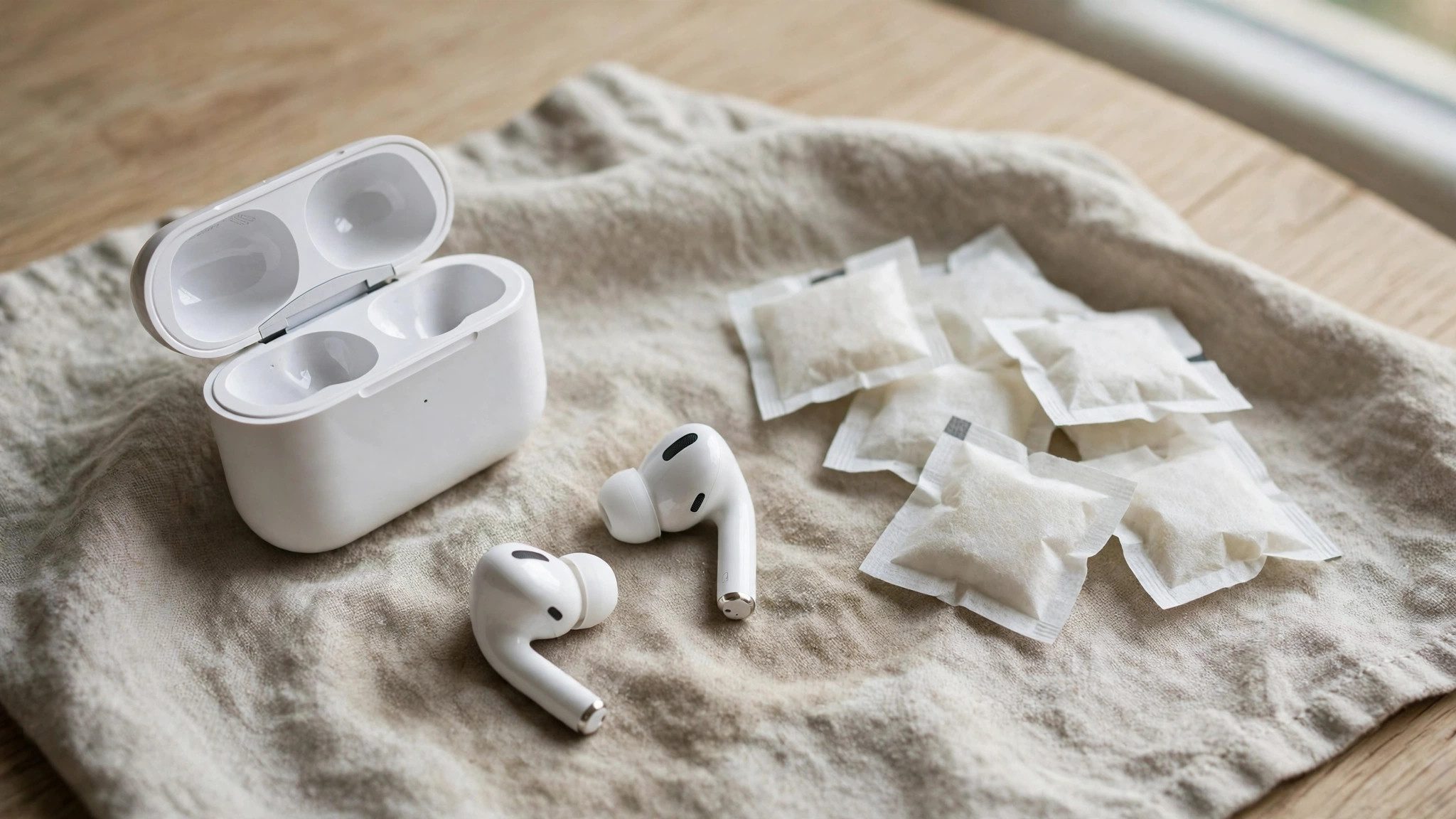
Turn them off, pat them dry, pull the tips off, and air-dry them for a full day. Use silica gel if you have it. Skip rice and hair dryers. Test sound only after 24 hours, and charge last.
To dry wet Bluetooth headphones, follow these steps: 1. Turn them off at once. 2. Pat off surface water gently. 3. Remove tips and open the case. 4. Air-dry with silica gel. 5. Test after a full day.
- Turn them off. Power down and keep them off the charger. Power plus water causes shorts, so this step comes first, every time.
- Pat them dry. Dab with a soft, dry cloth. Press lightly around seams and ports. Do not shake hard, and never blow air inside.
- Remove the tips. Take off ear tips or pads so trapped water can escape. Leave the charging case open, buds facing up.
- Air-dry with silica gel. Rest everything in dry air with silica gel packets for 24 to 48 hours. Rice absorbs little and leaves dust. Heat warps plastic and seals.
- Test, then charge. After a full day, play a short test at low volume. Charge only once sound, buttons and lights act normal.
Still choosing a pair for wet workouts? Our guide on how to choose Bluetooth headphones covers ratings in plain terms, and our true wireless earbuds guide ranks mainstream picks with their ratings stated.
Patience saves pairs.
Frequently Asked Questions
Can Bluetooth headphones get wet?
A little, if they have a water rating. IPX4 handles splashes and sweat. IPX7 survives a short dip. No rating means keep them dry.
Can I wear my earbuds in the rain?
Light rain is fine with IPX4 or higher. Heavy rain needs IPX5 or more. Take unrated and over-ear pairs off, or cover them.
Can I shower with Bluetooth earbuds?
IPX5 or higher handles shower spray. Soap, shampoo and hot water still harm seals, so most makers say skip the shower anyway.
Can I swim with Bluetooth headphones?
Not for music. Water blocks the Bluetooth signal within inches. Swim models play songs stored inside them, with no live link.
What should I do if my earbuds fall in water?
Fish them out fast. Turn them off, pat them dry, and leave the case open. Wait a full day before you charge or play them.
Can I charge wet earbuds?
No. Charging wet earbuds can short the battery and ruin them. Dry the buds and the case fully first, then charge.
Does water damage void the warranty?
Often, yes. Most standard warranties exclude liquid damage, even on rated models. Check your cover before you risk a soak.