Best IPX7 Waterproof Earbuds 2026: 6 Picks

IPX7 waterproof earbuds are earbuds tested to survive a dunk in still, fresh water — up to 1 metre deep for 30 minutes. The rating covers the earbuds only, never the charging case. It says nothing about swimming, chlorine, salt water, or hot showers.
Look — if your last pair died mid-run, here's what actually works: a rating you can check, not a word on the box. "Waterproof" on an Amazon listing means nothing on its own. IPX7 means a lab dunked the buds and they kept playing.
Most "waterproof earbuds" lists mix real ratings with wishful thinking. They put IPX4 and IPX5 buds next to IPX7 ones and call the whole page waterproof. Every pick below was checked against the maker's own pages on 24 November 2026. No IPX4 stowaways, no dead models, no paid placement.
Quick Comparison
| Product | Key Specs | ||
|---|---|---|---|
| #1 | Soundcore Sport X20Best Overall | IP68 · 12h/48h · ANC · $79.99 | Check Price |
| #2 | JBL Endurance Peak 3Best for Running | IP68 · 10h/50h · PowerHook · $99.99 | Check Price |
| #3 | Jabra Elite 8 Active Gen 2Most Rugged | IP68 · 14h/56h · MIL-STD · $229.99 | Check Price |
| #4 | Samsung Galaxy Buds 2 ProBest Everyday Sound | IPX7 · 8h/29h · 24-bit audio · $229.99 | Check Price |
| #5 | TOZO T10Best Budget | IPX8 · 10h/45h · wireless charging · $39.99 | Check Price |
| #6 | 1More Fit Open Earbuds S50Best Open-Ear | IPX7 · 11h/38h · open-ear · $149.99 | Check Price |
IPX7 vs IPX8: IPX7 is better suited for rain, sweat, and accidental drops in water because it guarantees 30 minutes at 1 metre. IPX8 works better when earbuds will stay under water longer or deeper, such as swimming. The key difference is depth and time: IPX8 is tested beyond 1 metre, IPX7 stops there.
What Does IPX7 Actually Mean?
It means the earbuds survived 30 minutes under 1 metre of still, fresh water. That is the whole test. Nothing more.
IPX7 is a water-resistance rating, not a promise that earbuds are fully waterproof. According to Soundcore's waterproof guide, IPX7 means the earbuds survive 30 minutes under 1 metre of still, fresh water. The test uses room-temperature water with no movement, so rain, sweat, and a dropped bud are covered — but pools, showers, and the sea are not.
The X in IPX7 means dust was never tested, so the rating says nothing about sand or grit. According to the IEC 60529 standard, the 7 stands for immersion only, while the 8 in IPX8 means deeper and longer submersion set by the maker. An IP68 pair covers both.
Here's the thing: the number is a floor, not a ceiling. A pair rated IPX7 survived the test, but the maker may never have tried to break it. What matters is what the test leaves out — and the list is long.
Four things sit outside every IP rating. Chlorine in a pool eats at seals. Salt water corrodes charging contacts. Hot water and steam push past the pressure the test uses. And the charging case is almost never rated at all — Soundcore says so plainly on its own pages. A wet bud in a damp case is how most "waterproof" earbuds actually die.
So read the rating like this. IPX4 handles splashes. IPX5 handles jets of water. IPX7 handles a dunk. IPX8 handles a longer, deeper dunk. None of them handles a swim — that needs a different kind of earbud entirely, which is the next section.
Can You Swim With IPX7 Earbuds?
No — and the makers say so themselves. IPX7 sounds swim-proof. It is not.
No — you should not swim with IPX7 earbuds, even though the rating sounds swim-proof. The dunk test uses still water, while laps mean moving water, chlorine, and a head going under again and again. Bluetooth also dies underwater, so the music cuts out the moment you push off the wall.
I've seen conflicting data — some sources say IPX7 earbuds are fine for swimming, others say the makers warn against it. My read is the makers are right: the test never covers a pool, and Soundcore, Samsung, and JBL all tell buyers not to swim with IPX7 buds. The blogs that say otherwise are guessing.
Three reasons, plain. First, the water moves. A lap pool is not the still tank the test uses, and every stroke pushes water past the seals at angles the test never tried. Second, the water is not fresh. Chlorine and salt attack seals and contacts over weeks, not minutes — the damage shows up long after the swim. Third, the music stops anyway. Bluetooth barely travels through water, so even a bud built for the pool goes silent under the surface.
If swimming is the goal, buy buds built for it. They need two things IPX7 pairs do not have: an IPX8 rating from a maker that actually tests for swimming, and music stored on the buds themselves, since Bluetooth cannot reach them underwater. The Shokz OpenSwim Pro is the usual pick — it stores MP3s on board and is made for laps. It costs more than any pick here, and it sounds worse on land. That is the trade, and it is an honest one.
One more thing. They're not swim buds, they're rain-and-sweat buds, and that's fine. Most buyers never swim with earbuds at all. They run in the rain, sweat through a workout, and drop a bud in a puddle. IPX7 covers all three.
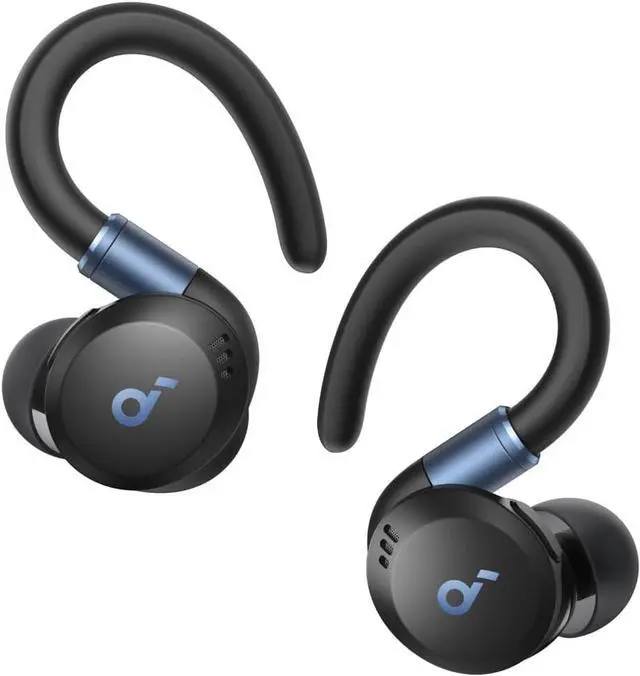
Soundcore Sport X20
Best OverallBuy if: you want the best all-round waterproof pair — IP68, 12-hour battery, hooks that adjust, ANC
Don't buy if: you run by the sea every day — the JBL at #2 is the only pick here rated for salt water
The Sport X20 is the pair most people should buy. Soundcore rates it IP68 — dust-tight and dunk-proof beyond the IPX7 line — and the battery runs 12 hours per charge, 48 hours with the case. Adaptive noise cancelling is on board, which is rare at this price, and Bluetooth 5.3 with multipoint means the buds stay paired to your phone and your laptop at once.
The hooks are the clever part. They rotate 30 degrees and extend 4 mm, so the fit adjusts to your ear instead of forcing your ear to fit the bud. SweatGuard is Soundcore's coating that keeps sweat out of the driver chamber — the bit that kills most gym buds over time. Our best sport earbuds guide picked the X20 as its budget winner for the same reasons.
Or maybe I should say it this way: you are getting a $150 pair of features for $80. The ANC is not class-leading, and the case is not waterproof — no case here is. But for rain, sweat, and the odd puddle, nothing in this guide does more for the money.
Pros
- IP68 — the strongest rating in this guide
- 12h battery, 48h with the case; ANC on board
- Adjustable ear hooks fit more ear shapes
- Multipoint pairs to phone and laptop at once
Cons
- ANC is good, not great — wind still gets in
- Not rated for salt water
- Charging case is not waterproof
- Bulkier than the Samsung at #4
Price $79.99 list on Soundcore's store, checked 24 Nov 2026. Check the price before buying, as prices change.
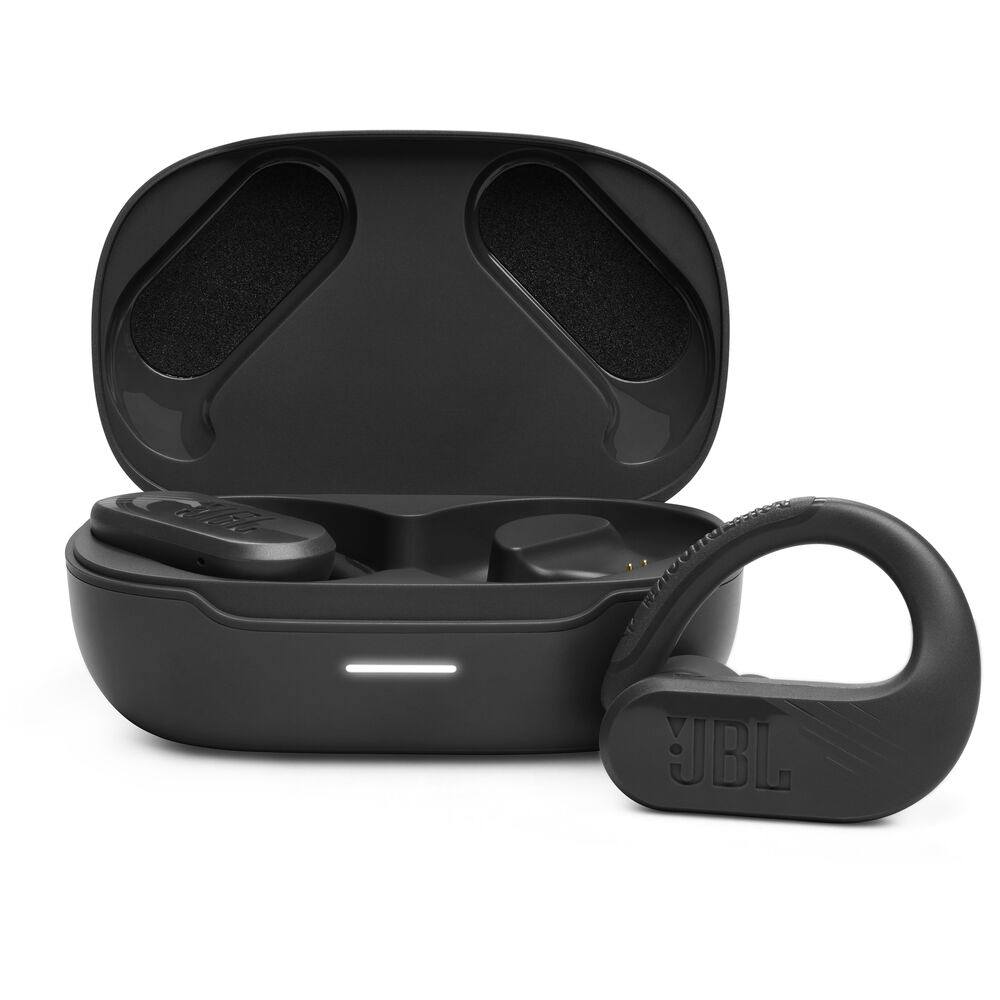
JBL Endurance Peak 3
Best for RunningBuy if: you run outdoors in any weather — the hook fit locks in and the rating covers salt water too
Don't buy if: you want noise cancelling — there is none here
The Endurance Peak 3 is the runner's pick. JBL rates it IP68 and — unusually — tests it in salt water as well as fresh: 1.5 metres for 30 minutes in either. If your route runs along the coast, or you train on a beach, that line matters. No other pick here claims it.
The fit is the other reason. The PowerHook is a flexible ear hook that twists to lock the bud in place, and JBL's TwistLock design means the bud does not shift when you sweat. The battery runs 10 hours per charge and 50 hours with the case, and 10 mm drivers give the sound a bigger, bass-forward JBL character than the flatter Soundcore at #1.
Two honest limits. There is no noise cancelling, so traffic noise stays in. And Bluetooth 5.2 is a generation behind the 5.3 on most picks here — fine in practice, but worth knowing. For a pure running bud, though, the Peak 3 is the toughest fit in this guide.
Pros
- IP68 and rated for salt water — 1.5 m, 30 min
- PowerHook fit stays put on sweaty runs
- 10h battery, 50h with the case
- Big 10 mm drivers, bass-forward JBL sound
Cons
- No noise cancelling at all
- Bluetooth 5.2, a generation behind
- Hook design is not for everyone — try the fit
- No multipoint pairing
Price $99.99 list, checked 24 Nov 2026. Check the price before buying, as prices change.
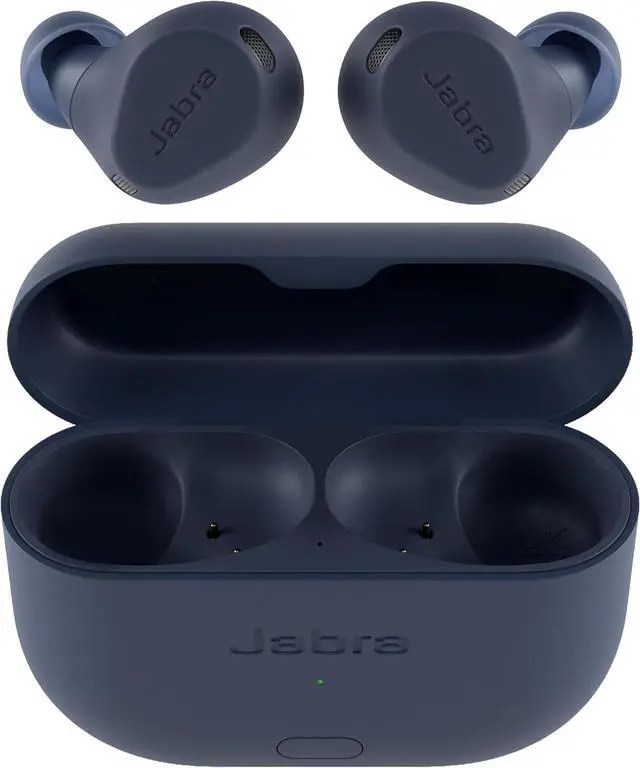
Jabra Elite 8 Active Gen 2
Most RuggedBuy if: you want the toughest pair here — military-grade build, the best grip, and a smart case
Don't buy if: you want a pair with a long future — Jabra has left the consumer earbud market
The Elite 8 Active Gen 2 is the toughest bud in this guide. Jabra rates it IP68 and tests it to the MIL-STD-810H military standard for shock, dust, and temperature. ShakeGrip is a rubberised coating that holds the bud in place as you sweat — no hooks needed. The battery runs 14 hours per charge with ANC off, 8 with it on, and 56 hours with the case.
The case is the clever bit. It is IP54 rated — the only case here with any water rating — and it can plug into gym equipment and stream the audio to your buds over Bluetooth. That solves the treadmill problem: no phone in your hand, music straight from the machine.
One warning, plain. Jabra's parent company wound down its consumer Elite line in June 2024, and this is the last generation. It is sold while stock lasts, with warranty support continuing, but there will be no Gen 3. At around $149 on the street — down from a $229.99 list — it is still a fair buy. Just buy it knowing it is end of the line.
Pros
- IP68 plus MIL-STD-810H rugged testing
- ShakeGrip holds without hooks
- 14h battery, 56h with the case
- Smart case streams from gym equipment; case is IP54
Cons
- End of the line — Jabra exited consumer earbuds in 2024
- $229.99 list is steep; street price is the real price
- No ear hooks — grip relies on the coating alone
- Heavier than the Samsung at #4
Price $229.99 list, checked 24 Nov 2026. Check the price before buying, as prices change.
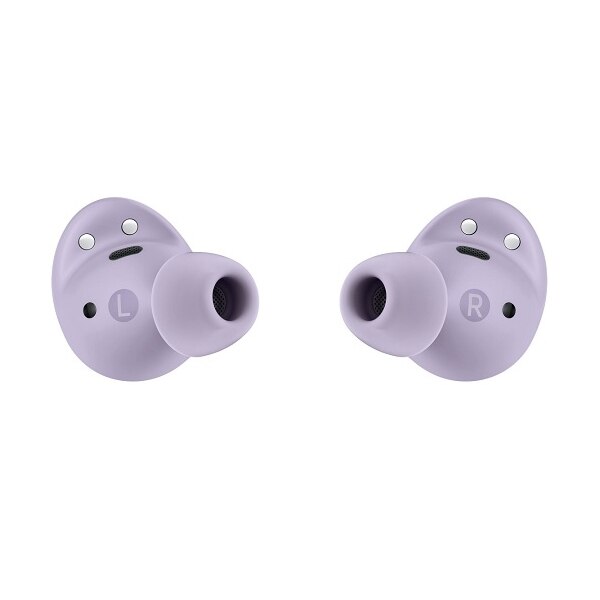
Samsung Galaxy Buds 2 Pro
Best Everyday SoundBuy if: you want the best sound and noise cancelling in this guide, in the smallest buds here
Don't buy if: you need hooks or a long battery — these are 8 hours at best, with no hook
The Galaxy Buds 2 Pro are the everyday pick. Samsung rates them IPX7 — the only pick here with the exact rating in the title — and backs it with the best noise cancelling in this guide and 24-bit audio. They are small, light, and disappear in the ear, which is why they suit all-day wear better than any hook design here.
They are also the bargain of the list right now. A 2022 model succeeded by the Buds3 Pro, they sell for $129.99 on Amazon against a $229.99 list — the cheapest they have ever been. For a commuter who runs in the rain and wants one pair for everything, that price is hard to beat.
Quick note: the battery is the shortest here. Eight hours per charge with ANC off, five with it on, and 29 hours total with the case. And there are no hooks, so a hard sprint can loosen the seal. If the fit holds for you, nothing else here sounds this good at this price.
Pros
- Best ANC and sound quality in this guide
- IPX7 rated, 24-bit audio, 360 Audio
- Small and light — best for all-day wear
- $129.99 street price, down from $229.99 list
Cons
- Shortest battery here — 8h per charge at best
- No ear hooks for hard runs
- 2022 model, succeeded by the Buds3 Pro (IP57)
- Best features need a Samsung phone
Price $229.99 list, $129.99 on Amazon, checked 24 Nov 2026. Check the price before buying, as prices change.
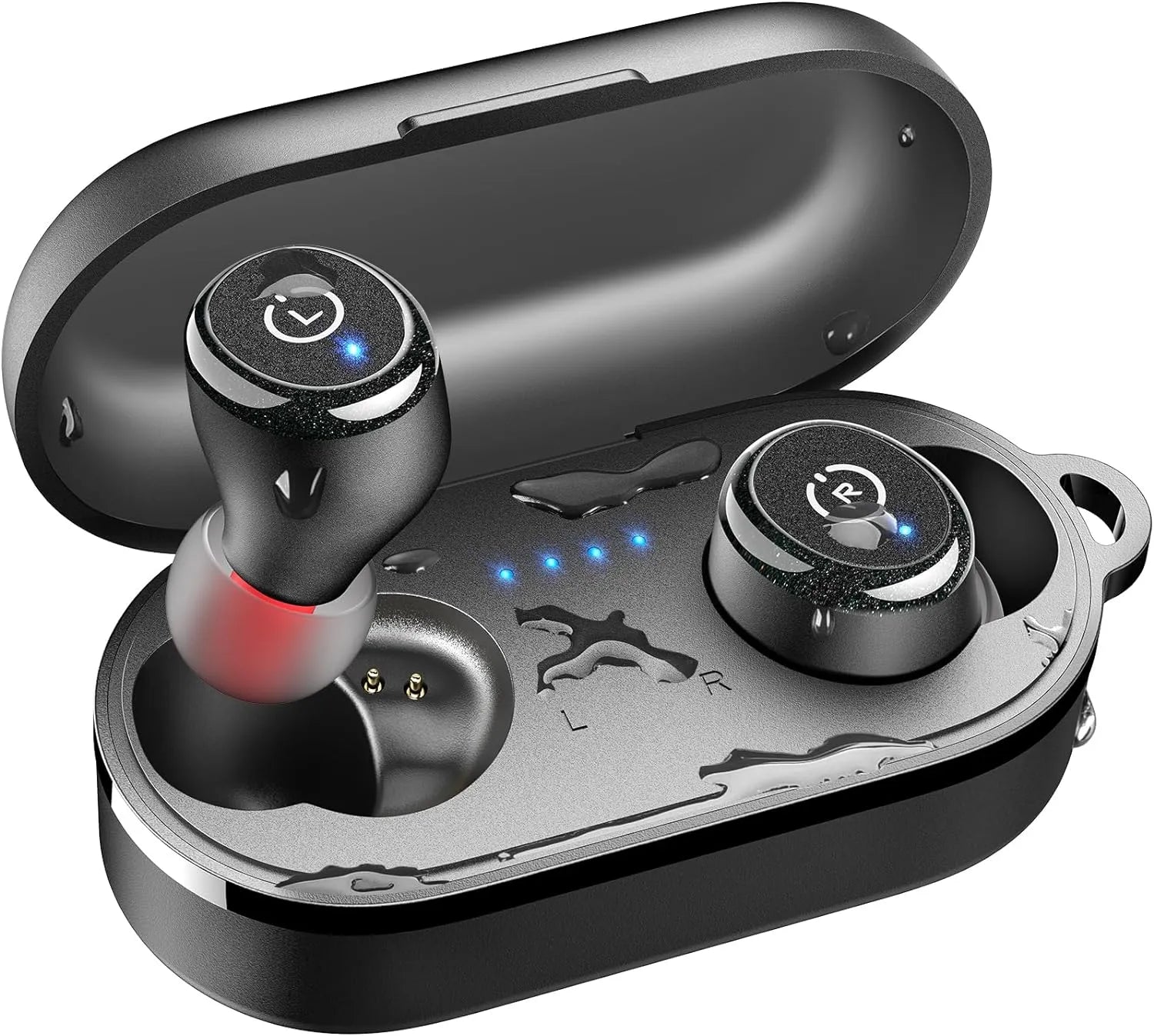
TOZO T10
Best BudgetBuy if: you want a real IPX8 rating for about $26 — the cheapest honest waterproof pair here
Don't buy if: you want noise cancelling or a premium fit — this is a basic bud done well
The TOZO T10 is the budget pick that embarrasses the rest. It carries a real IPX8 rating — deeper than IPX7 — and a wireless-charging case, for $39.99 list and about $26 on Amazon. With over 200,000 Amazon ratings behind it, it is also the most-bought pair in this guide by a wide margin.
The battery runs 10 hours per charge. TOZO's own pages disagree on the total — 45 hours in the spec table, 55 in the marketing copy — and Amazon says 45, so that is the number to trust. The app offers 32 EQ presets, which is more tuning than some $150 pairs give you, and Bluetooth 5.3 keeps the connection steady.
What you give up is polish. There is no noise cancelling, the fit is a plain in-ear seal with no hook, and the sound is bass-forward rather than balanced. For a gym bag pair you will not cry over if it gets crushed, though, nothing else here comes close on price.
Pros
- Real IPX8 rating at about $26 street
- 10h battery; wireless-charging case included
- App with 32 EQ presets
- Over 200,000 Amazon ratings
Cons
- No noise cancelling
- No ear hooks — fit is a plain seal
- TOZO's own battery figures disagree (45h vs 55h total)
- Bass-heavy sound, less balanced than the Samsung
Price $39.99 list, about $25.99 on Amazon, checked 24 Nov 2026. Check the price before buying, as prices change.
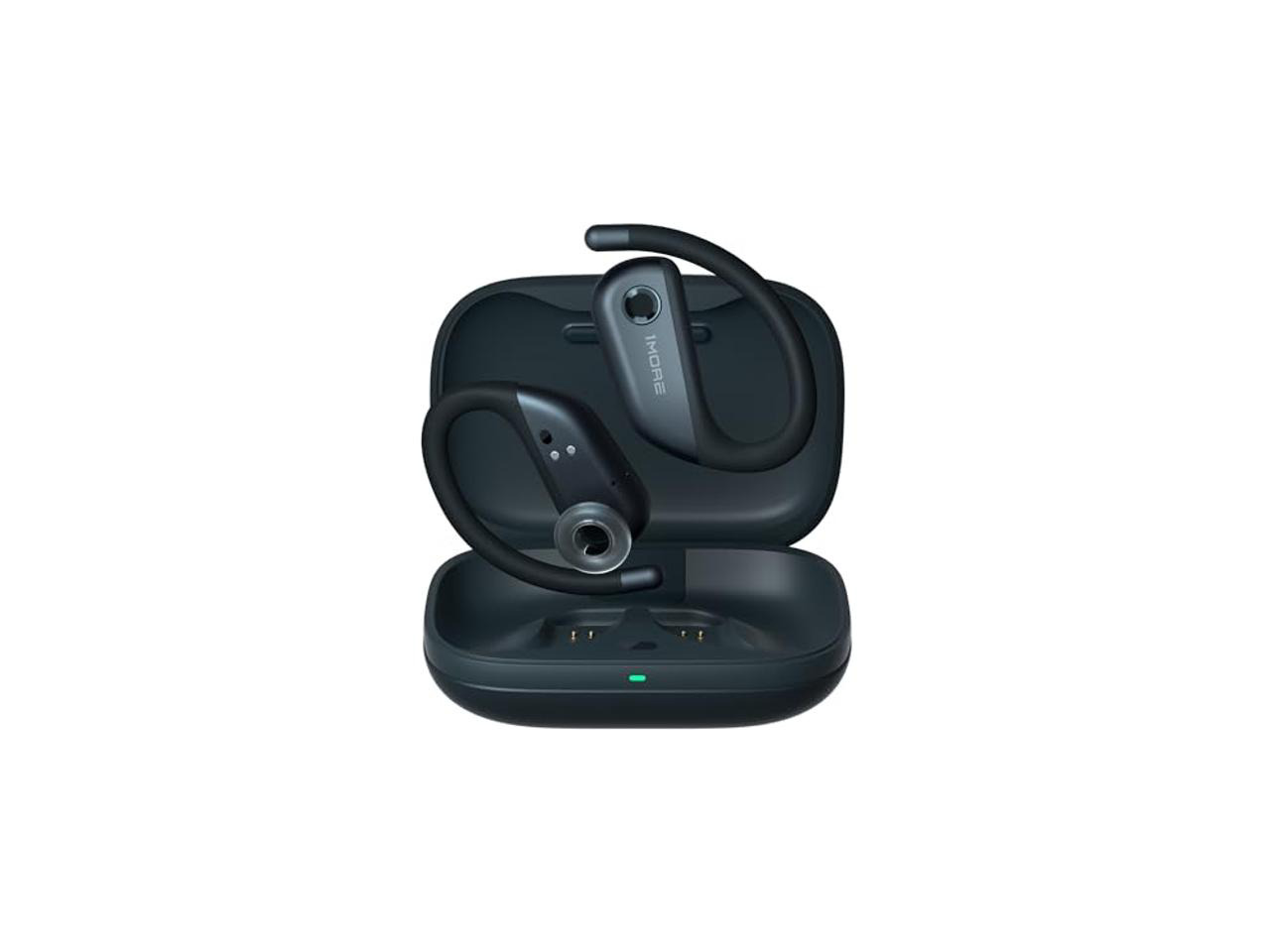
1More Fit Open Earbuds S50
Best Open-EarBuy if: you run on roads and need to hear traffic — open-ear sound with a real IPX7 rating
Don't buy if: you want deep bass or silence — open-ear lets the world in by design
The 1More Fit S50 is the open-ear pick. It sits outside the ear canal on a hook, so you hear traffic, other runners, and your own breathing alongside the music. For road running, that awareness is a safety feature, not a flaw — and the IPX7 rating means rain and sweat are no threat to it.
The specs hold up. An 11-hour battery per charge, 38 hours with the case, and a 5-minute quick charge that gives 2 hours back. A 13.6 mm driver with a diamond-like carbon coating pushes more bass than most open-ear buds manage, and wireless charging is included — rare at this price.
The trade is built into the design. Open-ear buds leak sound and let noise in, so bass is thinner than a sealed bud and a loud street will drown the music out. If you run on roads, that is the right trade. If you run on trails or in the gym, the sealed Soundcore at #1 gives you more sound for less money.
Pros
- Open-ear design — hear traffic while you run
- IPX7 rated; 11h battery, 38h with the case
- 13.6 mm driver, best bass of any open-ear pick here
- Wireless charging; 5-min charge gives 2h
Cons
- Thin bass next to a sealed bud
- Sound leaks — not for quiet offices
- $149.99 list is steep for open-ear sound
- No noise cancelling by design
Price $149.99 list, often $65–$114 on sale, checked 24 Nov 2026. Check the price before buying, as prices change.
IPX7 vs IPX8: What's the Difference?
Depth and time — and who sets them. IPX7 is a fixed test. IPX8 is a promise the maker writes.
IPX7 means 1 metre, 30 minutes, still fresh water. Every maker tests to the same line, so one brand's IPX7 means the same as another's. IPX8 means deeper and longer, but the depth and the time are set by the maker — one pair is tested at 1.5 metres, another at 3. Read the fine print before you trust the 8.
For most buyers, the 8 buys nothing. Rain, sweat, a dropped bud in a puddle — IPX7 covers all three. IPX8 only matters if the buds will stay under water: a swimmer, a kayaker, someone who works in the rain all day. And even then, the rating alone is not enough — the buds need onboard music storage too, since Bluetooth dies underwater.
Do not pay extra for IPX8 on a gym pair. The TOZO T10 at #5 carries IPX8 for $26, which tells you the rating itself costs makers almost nothing. What costs money is the fit, the battery, and the sound. Spend on those.
How Do I Keep Waterproof Earbuds Working?
Dry them before you charge them. That one habit saves more earbuds than any rating.
To keep waterproof earbuds working, follow these steps: 1. Shake off the water and towel-dry the buds after every wet workout. 2. Rinse them under fresh water after salt or chlorine. 3. Let them air-dry fully before charging. 4. Keep the case dry — it is not waterproof. 5. Check the ear tips still seal snugly before your next run.
- Shake off the water and towel-dry the buds after every wet workout. Do not put dripping earbuds straight into the case.
- Rinse them under fresh water after salt or chlorine. Salt and chlorine attack the seals and the charging contacts. A quick rinse under the tap stops the damage.
- Let them air-dry fully before charging. Wet charging contacts corrode, and a damp case traps moisture against the pins.
- Keep the case dry — it is not waterproof. Wipe it out if it gets wet and never charge earbuds while the case is damp inside.
- Check the ear tips still seal snugly before your next run. A worn tip lets water in past the seal and loosens the fit.
One more habit. Clean the buds the way our how to clean Bluetooth headphones guide shows — a dry cloth for the body, a soft brush for the mesh, never a sharp tool in the speaker hole. Sweat leaves salt behind as it dries, and that salt is what eats the contacts over months.
Buying Guide: What Actually Matters
Fit first, rating second, battery third. In that order.
The rating on the box matters less than the fit in your ear — a loose IPX8 bud that falls out mid-run is worse than a snug IPX7 pair that stays put. That is an opinion, and plenty of people will disagree. But a bud on the pavement is a bud that is not playing music, whatever its rating says.
Start with the fit system. Ear hooks hold best for running. A deep in-ear seal holds well for the gym. Open-ear suits road running, where hearing traffic matters. Try the fit before you trust the rating — a bud that seals well also keeps water out better.
Then read the rating properly. Check it is the buds that are rated, not just the case, and check whether salt water is covered if you train near the sea. Check the battery with ANC on, not off — makers quote the bigger number first. And check the case rating, if it has one: most do not, and a wet case is the quiet killer.
Finally, match the pair to the job. Gym and road running want hooks and IPX7 or better. Commuting wants noise cancelling and a small bud. The office wants multipoint so the buds switch between laptop and phone. One pair rarely does all three well — the Soundcore at #1 comes closest, which is why it tops this guide.
What to Skip
Any "waterproof" listing with no IP number. If the page says waterproof but never prints a rating, there is no rating. Walk away.
IPX4 and IPX5 buds in a "waterproof" list. They handle splashes and sweat, not dunks. The EarFun Air Pro 4 and the JLab Go Air Sport both show up in rival waterproof roundups — they are IPX5 and IP55, and they do not belong on an IPX7 list.
Cheap no-name pairs promising IPX8. A $12 pair from a brand with no website and no support line is a guess, not a measurement. The TOZO at #5 is the floor for a rated budget pair with a real track record.
Swim claims on IPX7 buds. If a listing says IPX7 earbuds are "perfect for swimming", the seller has not read the test. Laps need IPX8, onboard music, and a maker that tests for swimming — none of which an IPX7 rating promises.
AirPods as a waterproof pick. AirPods Pro 2 are IP54 — splash resistant, not dunk-proof. They are fine in the rain. They are not IPX7 earbuds, and no list should pretend they are.
Frequently Asked Questions
What's the best IPX7 waterproof earbud overall?
The Soundcore Sport X20 at $79.99 — IP68, a 12-hour battery, adjustable ear hooks, and adaptive ANC for gym and road runs.
Can I swim with IPX7 earbuds?
No. IPX7 covers a 30-minute dunk in still fresh water, not laps. Chlorine, moving water, and Bluetooth dying underwater all rule it out.
What's the difference between IPX7 and IPX8?
IPX7 is 1 metre for 30 minutes. IPX8 goes deeper and longer, with the depth set by the maker. Neither means swim-ready on its own.
Are IPX7 earbuds OK in the shower?
Better not. Hot water, steam, and soap sit outside the test, and shower jets hit harder than the still-water dunk IPX7 tests.
Can I put wet earbuds back in the case?
Dry them first. The case is almost never waterproof, and wet charging contacts corrode. Shake them off and towel-dry, then dock.
Does Bluetooth work underwater?
No. Bluetooth barely travels through water, so music cuts out the moment the buds go under — even on swim-built pairs.
Are AirPods waterproof?
No. AirPods Pro 2 are IP54 — splash and sweat resistant, not dunk-proof. They do not belong on an IPX7 list.