Best Neckband Earphones in 2026: 6 Picks That Stay Put

Neckband earphones are wireless earbuds joined by a flexible band that rests around your neck. The band holds the battery and controls, so the buds stay light and the charge lasts far longer than true wireless buds. When you take them out, they hang round your neck instead of getting lost.
Look — if you're the person who has lost three pairs of buds this year, here's what actually works: stop buying buds that live in a case you can misplace. A neckband is the one pair you can't drop down a drain, leave on a train seat, or wash with your jeans. The band is the whole point.
Most "best neckband" lists are stale. They still crown the Bose QuietControl 30 and the Sony WI-1000XM2 — both discontinued years ago — and they repeat 200-hour battery claims from brands nobody has heard of. Every pick below was checked as buyable on amazon.com on 19 November 2026, with the battery and spec numbers taken from the brand's own pages. No dead model, no mystery brand, no paid placement.
Quick Comparison
| Product | Key Specs | ||
|---|---|---|---|
| #1 | Beats FlexBest Overall | 12h · W1 chip · magnetic auto-pause · USB-C · $69.99 | Check Price |
| #2 | Sony WI-C100Best Budget | 25h · IPX4 · DSEE · Fast Pair · $39.99 | Check Price |
| #3 | Jabra Evolve 75eBest for Work Calls | 14h · ANC · busylight · USB dongle · $102 | Check Price |
| #4 | Shokz OpenRun Pro 2Best for Running | 12h · IP55 · bone conduction · 30.3g · $179.95 | Check Price |
| #5 | DEWALT Heavy Duty MagneticBest Rugged | 30h+ · IPX6 · cVc 8.0 · magnetic earbuds · $64.99 | Check Price |
| #6 | Edifier W280NB ProBest ANC & Sound | 23h · ANC −45dB · LDAC · Bluetooth 5.4 · $33.99 | Check Price |
Neckband earphones vs true wireless earbuds: neckbands are better suited for all-day wear and calls because the band holds a bigger battery and the mic sits closer to your mouth. True wireless works better when you want the smallest case and no cable at all. The key difference is the band: it trades pocketability for battery life and a pair you can't lose.
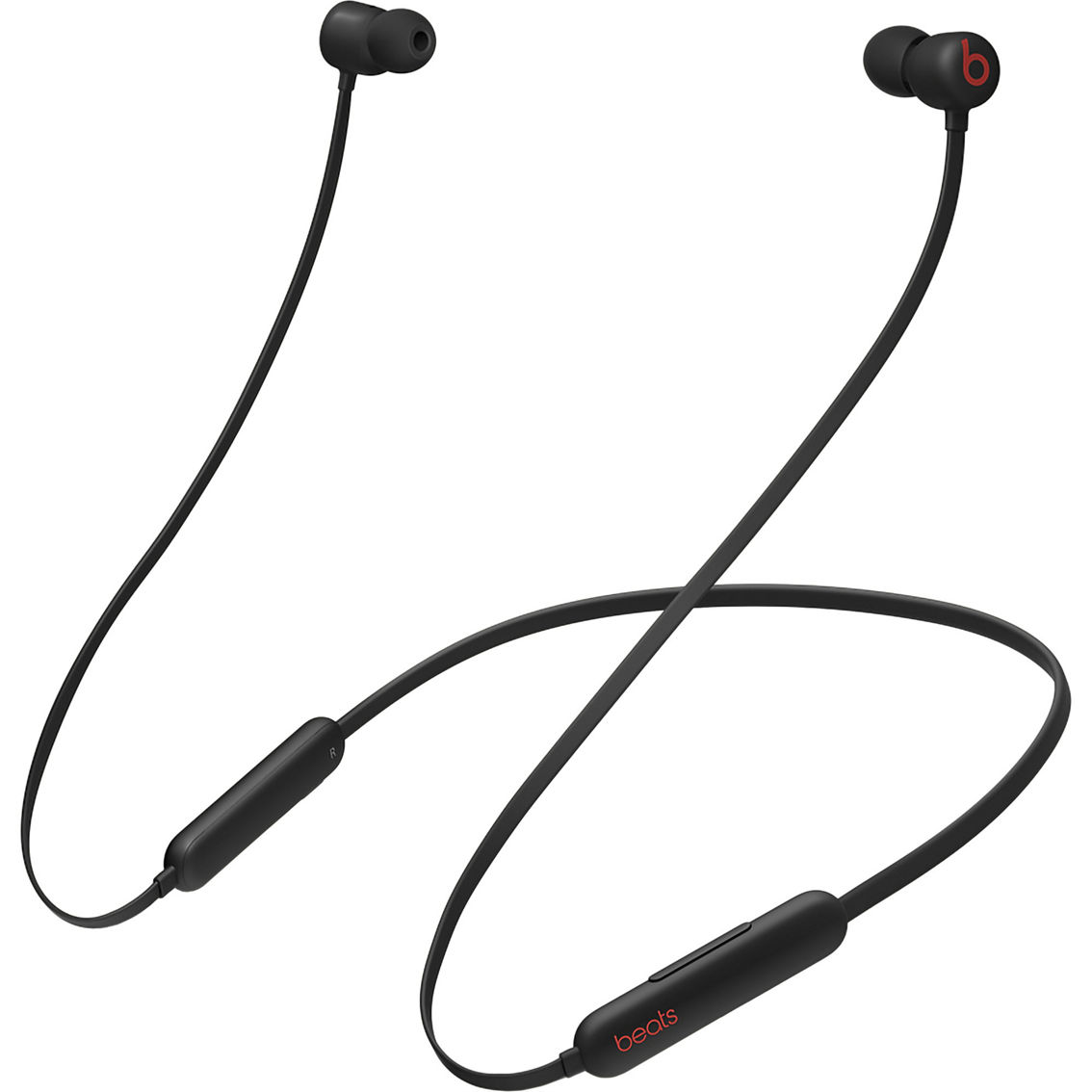
Beats Flex
Best OverallBuy if: you use an iPhone and want the neckband that just works — instant pairing, auto-pause magnets, and a 12-hour battery
Don't buy if: you need noise cancelling or water resistance — the Flex has neither
The Beats Flex is the default neckband for a reason. Apple's W1 chip pairs it with your iPhone the moment you hold it near the phone, and it switches between your Apple devices without a menu dive. Clip the magnetic earbuds together and the music pauses; pull them apart and it starts again. Small trick. You will use it ten times a day.
Battery is honest. Twelve hours from one charge, and a ten-minute top-up gives 1.5 hours — enough for a commute home. The sound is warm and bass-forward, which suits pop and podcasts better than classical. Four colours, USB-C charging, and a cable that stays out of the way under a jacket collar.
Two limits to know. First, there is no noise cancelling and no water-resistance rating, so this is a commuter's pair, not a gym pair. Second, there is no true multipoint: smooth switching works between Apple devices signed into the same account, and Android users get the music but not the magic.
Pros
- W1 chip — instant pairing and switching on iPhone
- Magnetic earbuds pause music when clipped together
- 12h battery; 10-minute charge gives 1.5h
- 60,000+ Amazon reviews — the most-reviewed neckband here
Cons
- No ANC at all
- No water-resistance rating — not a gym pair
- No true multipoint — smooth switching needs Apple devices
- 12h battery is tied for the shortest here
Price $69.99 list; street ~$49, checked 19 Nov 2026. Check the price before buying, as prices change.
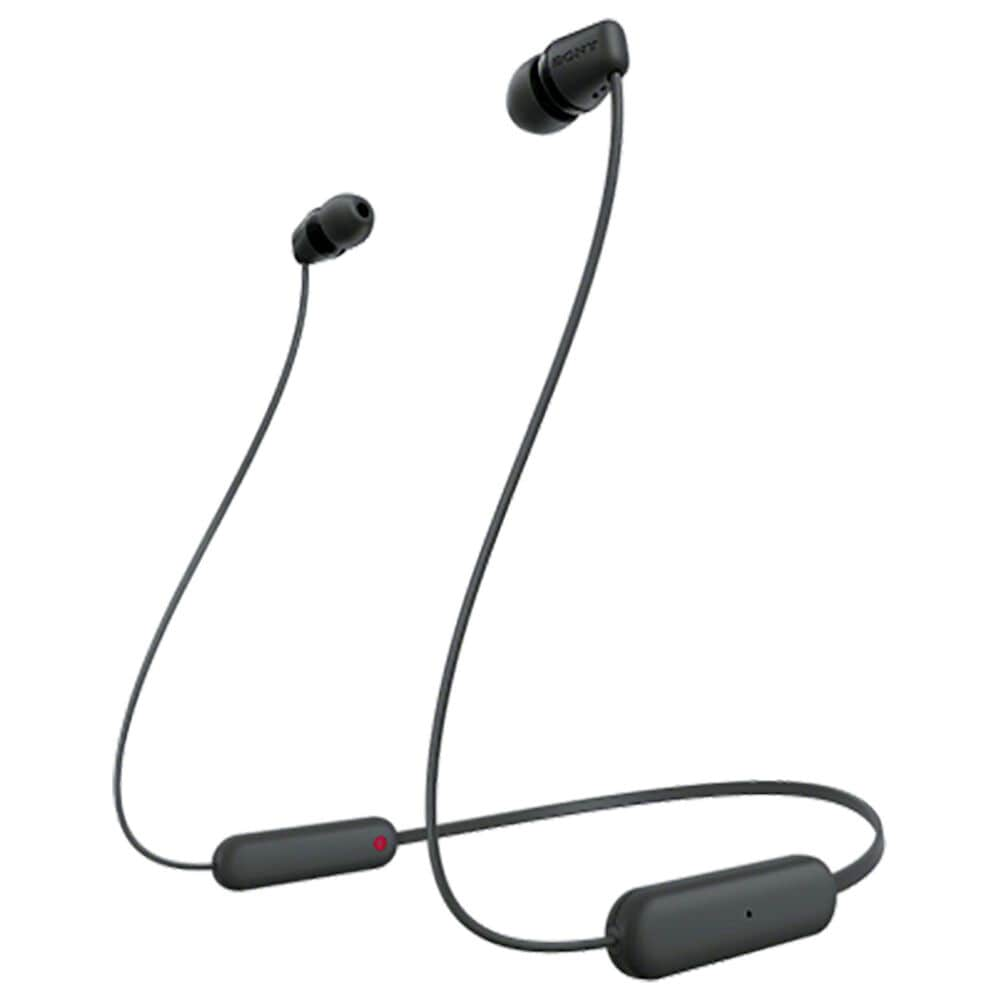
Sony WI-C100
Best BudgetBuy if: you want the longest battery for the least money — 25 hours for under $40
Don't buy if: you need noise cancelling — this pair has none, whatever some roundups claim
The WI-C100 is the battery bargain of this guide. Sony rates it at 25 hours of music on one charge — more than twice the Beats Flex — and it weighs 20 grams, so you forget the band is there. A ten-minute charge gives an hour of playback, and the IPX4 rating covers sweat and rain.
They're light, they're cheap, and they won't quit before lunch. The 9mm drivers sound clear and balanced for the price, and Sony's DSEE processing lifts compressed streams a notch. The Headphones Connect app adds an EQ and lets you check the battery from your phone. Fast Pair pops the setup card up on Android the first time you switch it on.
Here's the thing: some "noise cancelling neckband" roundups list the WI-C100 at number one. That is wrong. The WI-C100 has no ANC — the seal blocks a little noise and nothing more. Buy it for battery and price, not for silence. Calls are fine for a quick chat, but the mic is basic, so a full day of meetings belongs to the Jabra at #3.
Pros
- 25h battery — the longest under $40 here
- IPX4 splash-proof; weighs just 20g
- DSEE sound processing; app EQ included
- Fast Pair on Android; USB-C charging
Cons
- No ANC — roundups that list it as noise cancelling are wrong
- No multipoint — one device at a time
- 3-hour full charge is slow next to the Edifier's 1.5 hours
- Basic call mic — not a meeting headset
Price $39.99 list; street $32.26 on Amazon, checked 19 Nov 2026. Check the price before buying, as prices change.
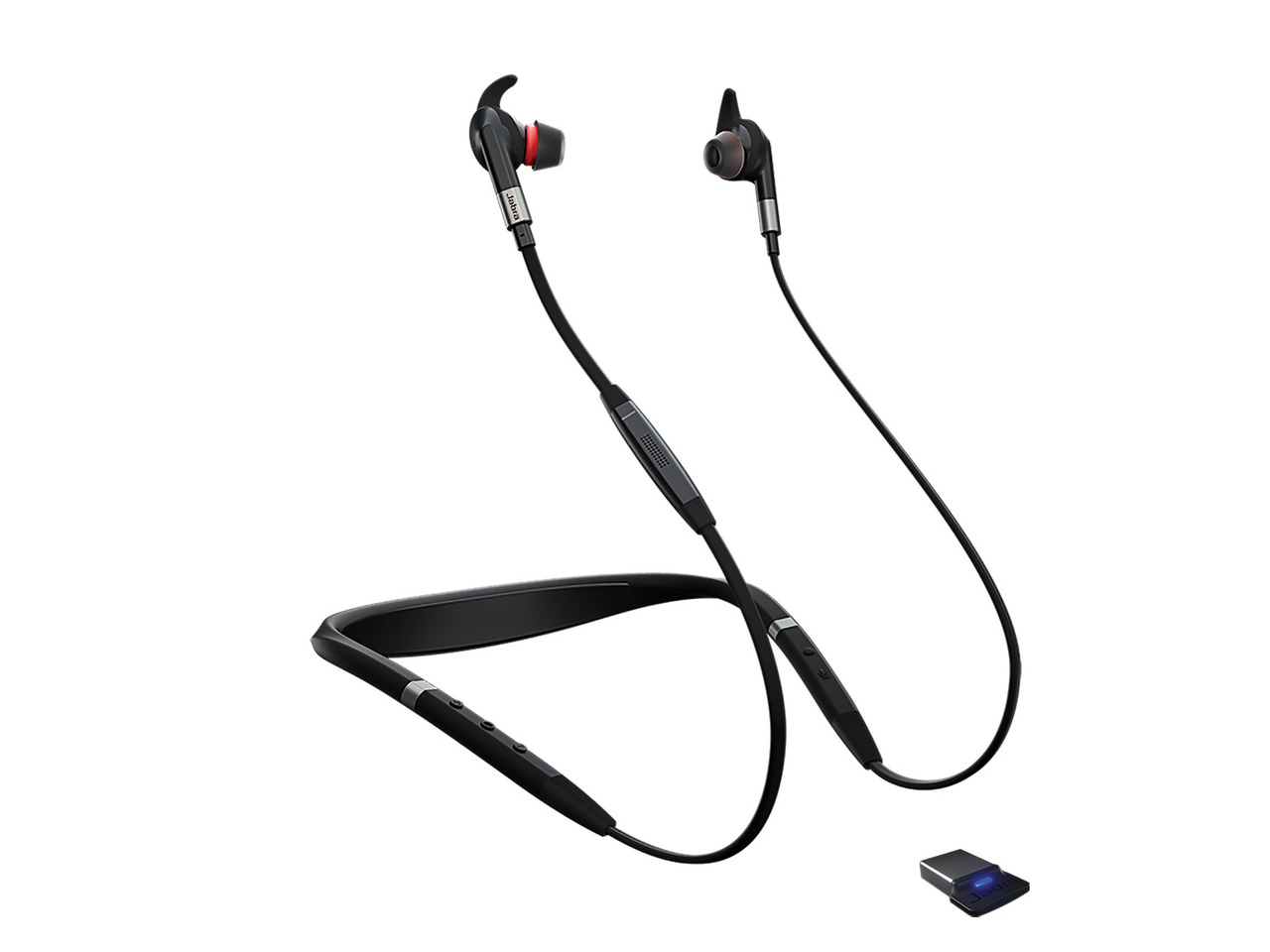
Jabra Evolve 75e
Best for Work CallsBuy if: you spend your day on calls — ANC, a busylight and vibrating call alerts, all built for meetings
Don't buy if: you want a music-first pair — this is a work headset that plays music, not the other way round
The Evolve 75e is the only pick here designed for an office, not a commute. Active noise cancelling cuts the hum of air conditioning and open-plan chatter. A busylight on the band glows red while you're on a call, so colleagues see you're busy before they tap your shoulder. And the band vibrates when a call comes in, so you never miss one with the phone on silent.
Fourteen hours of battery covers a full workday, and the UC version pairs with your laptop through the included USB dongle — no Bluetooth wrestling with a locked-down work machine. It is certified for Teams and Zoom, and the earbuds use wingtips that hold through a long call without slipping.
Or maybe I should say it this way: the 75e is a meeting tool that happens to play music, and it sounds like one. Voices are clear, bass is thin, and nobody buys this pair for a playlist. It also charges over micro-USB in 2026, which feels a decade old. I've seen conflicting data on the price — Jabra's own store lists the 75e at $102 while older listings still show $269. My read is the $102 is the real price now, as Jabra clears the line, but check before you buy.
Pros
- Real ANC on a neckband — rare in this category
- Busylight + vibrating call alerts
- UC-certified for Teams and Zoom; USB dongle included
- 14h battery covers a full workday
Cons
- Micro-USB charging in 2026
- Music sounds thin — tuned for voices, not bass
- 14h is the second-shortest battery here
- $102 looks like a clearance price — stock may not last
Price $102 on Jabra's store (list $269), checked 19 Nov 2026. Check the price before buying, as prices change.
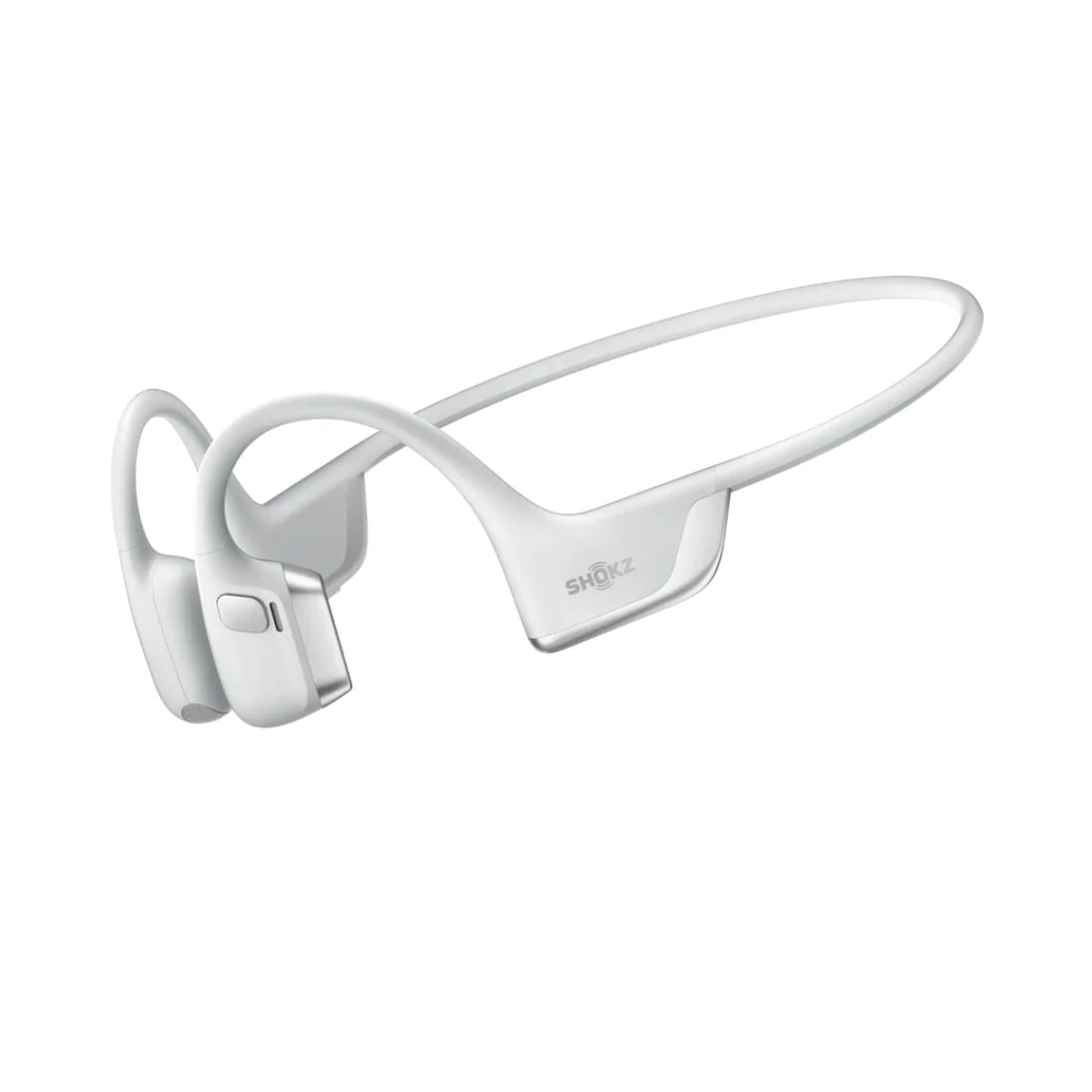
Shokz OpenRun Pro 2
Best for RunningBuy if: you run on roads and want to hear traffic — nothing sits in your ear at all
Don't buy if: you want silence — there is no noise cancelling, by design, and bass is thinner than sealed buds
The OpenRun Pro 2 does not go in your ears. It rests on your cheekbones and sends sound through bone, while a second air-conduction driver adds the bass the older models could not make. Your ears stay open, so you hear the car, the cyclist and the dog before any of them reach you. For road running, that is the whole point.
The numbers are honest. Twelve hours of playback on one charge, and a five-minute charge gives 2.5 hours. The whole headset weighs 30.3 grams, and the nickel-titanium band holds its shape under a cap or sunglasses. IP55 covers sweat and rain. USB-C charging, finally, after years of Shokz's magnetic cable.
Quick note: this is a behind-the-neck band, not a collar neckband — the band wraps around the back of your head, which is why it stays put on a run while collar bands bounce. Bone conduction sounds different, and you should know that before you buy. Bass is thinner than a sealed bud, and in a noisy gym the music competes with the room instead of replacing it.
Pros
- Ears stay open — the safest pick for road running
- 12h battery; 5-minute charge gives 2.5h
- DualPitch drivers fix the thin bass of older bone conduction
- Light at 30.3g; USB-C fast charging
Cons
- No noise cancelling — gym noise comes straight in
- Bass is thinner than any sealed bud here
- IP55 is not a swimming rating
- No charging case — the headset charges on its own cable
Price $179.95 on Shokz's store, checked 18 Nov 2026. Check the price before buying, as prices change.
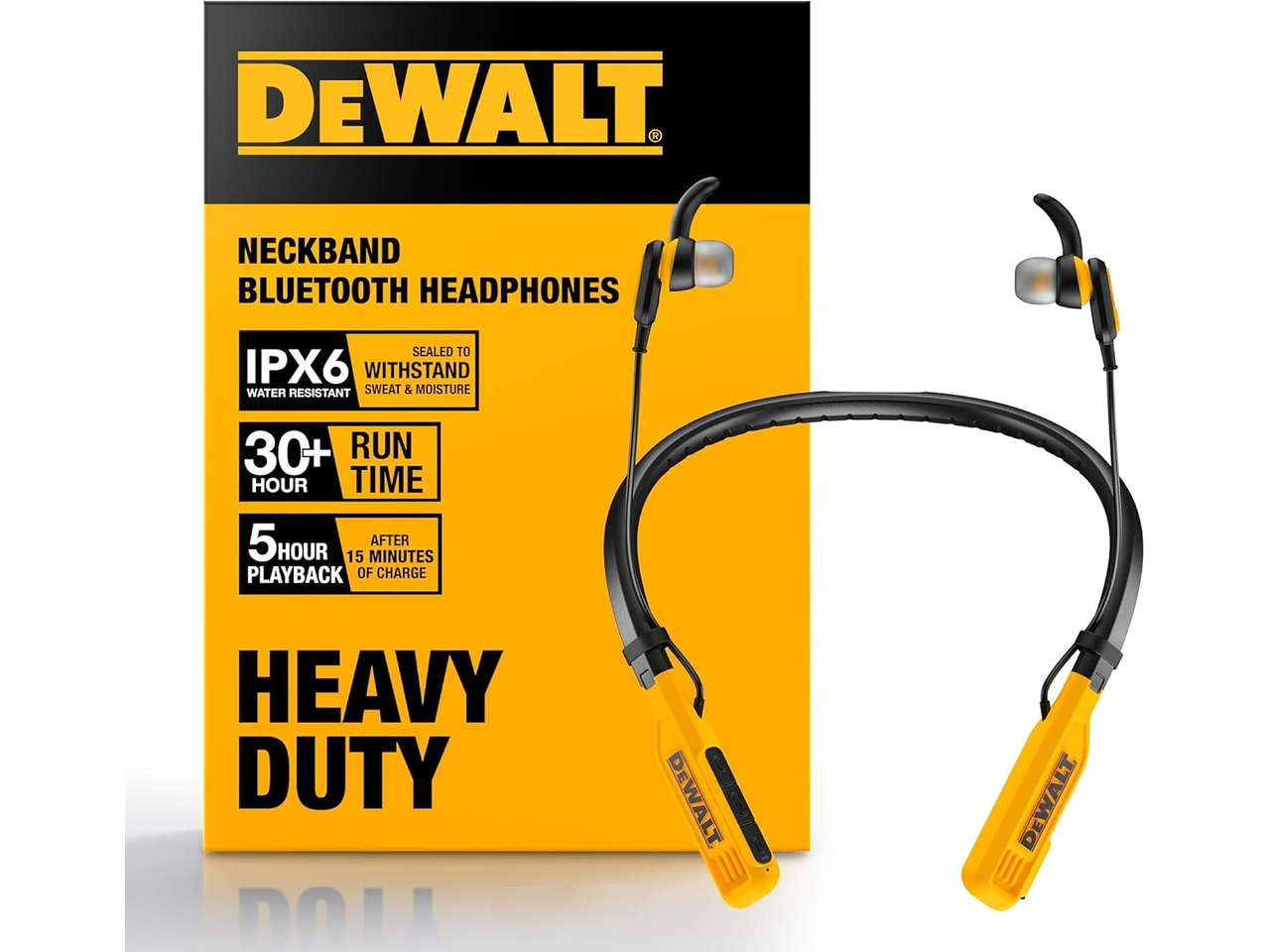
DEWALT Heavy Duty Magnetic
Best RuggedBuy if: your workday is dusty, wet or loud — 30-plus hours and an IPX6 seal built for a jobsite
Don't buy if: you want noise cancelling or rich sound — this pair is tough, not refined
The DEWALT is the work boot of this guide. More than 30 hours of playback on one charge — the longest battery here — and an IPX6 rating that survives powerful water jets, not just a splash. The magnetic earbuds snap together when you take them out, and the band is built to be dropped, stepped on and wiped clean.
Calls hold up on a loud site. The cVc 8.0 noise reduction cuts background roar from the mic, so the person on the other end hears you, not the saw. A 15-minute charge gives about five hours, and the box includes extra ear cushions in three sizes. Home Depot sells the same pair as the Jobsite Pro for $59.97, if that is closer to you.
Here's the thing: the "noise isolation" in the listing is a passive seal, not noise cancelling. The silicone tips block some sound by fit alone, and there is no ANC chip doing the work. Sound is practical rather than rich — clear voices, solid bass, no sparkle. For a workshop or a warehouse, that is the right trade. For a quiet listen, buy the Edifier at #6.
Pros
- 30h+ battery — the longest here
- IPX6 — survives powerful water jets
- cVc 8.0 call noise reduction for loud sites
- Magnetic earbuds; extra ear cushions included
Cons
- No ANC — "noise isolation" is a passive seal, not cancelling
- Sound is practical, not rich
- Bulky band next to the Sony and Beats
- No app or EQ — the sound is fixed
Price $64.99 list; street $54.99, checked 19 Nov 2026. Check the price before buying, as prices change.
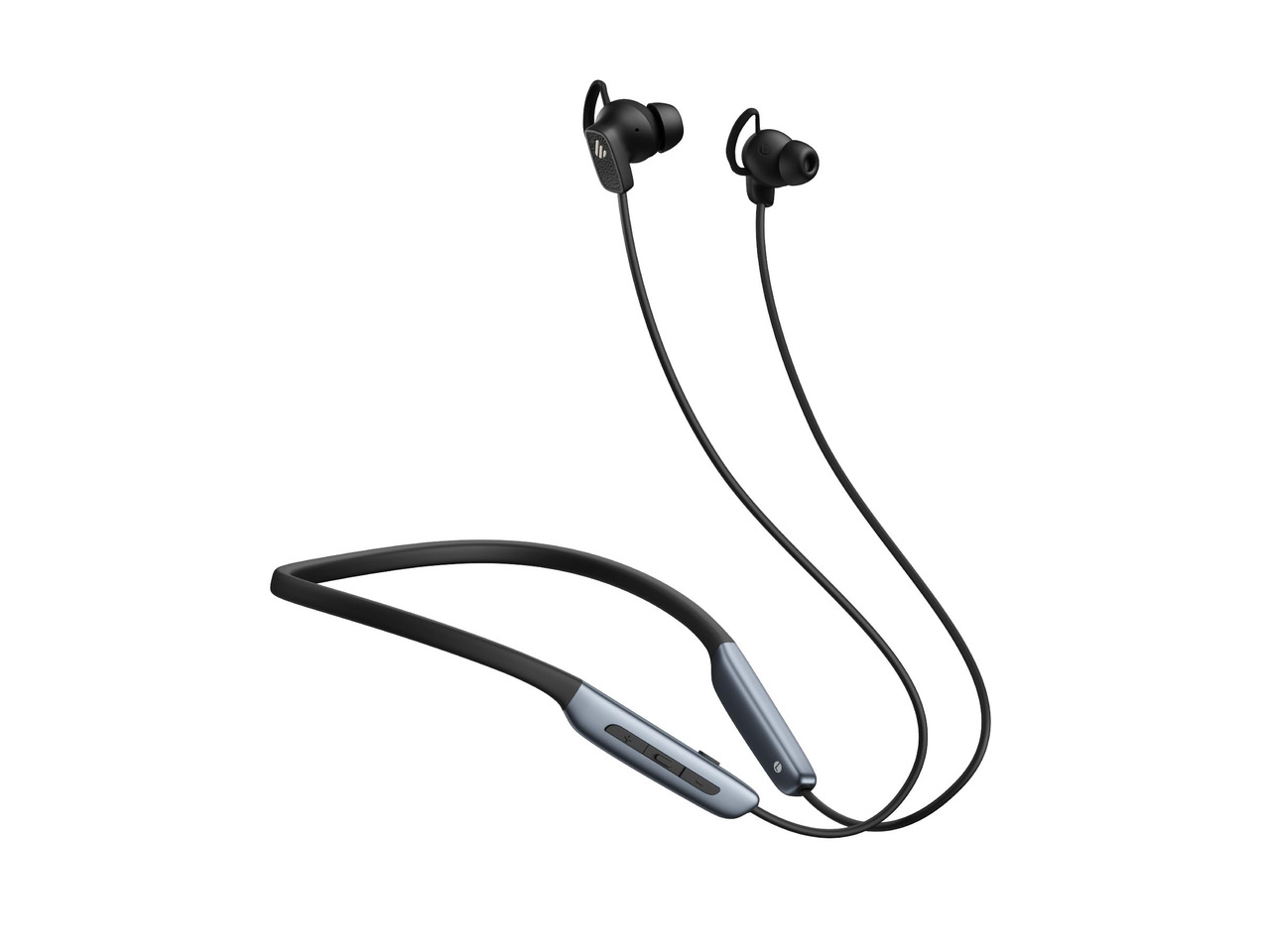
Edifier W280NB Pro
Best ANC & SoundBuy if: you want real noise cancelling and hi-res sound on a neckband — for about $34
Don't buy if: you need all-day ANC — the battery drops to 14 hours with cancelling on
The W280NB Pro is the surprise of this guide. It is the only neckband here with hybrid noise cancelling — up to 45 decibels cut, with four modes for the commute, the office, the street and the wind. It is also the only one with LDAC, Sony's hi-res codec, plus a Hi-Res Audio Wireless badge. No other neckband under $100 does either.
The spec sheet reads like a flagship. Bluetooth 5.4 with multipoint, so the pair stays connected to your laptop and your phone at once. Twenty-three hours with ANC off, 14 with it on, and a 15-minute charge gives five hours. IP55 covers sweat and rain, and a low-latency game mode keeps video and sound in step.
Two things to weigh. First, the 23-hour figure drops to 14 the moment you switch ANC on — the biggest ANC penalty here. Second, Edifier is a smaller name than Sony or Beats, and the default tuning is bass-heavy. Tame it in Edifier's app and the 10mm titanium-coated drivers open up. At $33.99, it is the cheapest pair here and the best-sounding one.
Pros
- Hybrid ANC — up to −45dB, the strongest cancelling here
- LDAC + Hi-Res Audio Wireless; Bluetooth 5.4 multipoint
- 23h ANC-off; 15-minute charge gives 5h
- $33.99 — the cheapest pair in this guide
Cons
- Battery drops to 14h with ANC on
- Default tuning is bass-heavy — fix it in Edifier's app
- Lesser-known brand than Sony or Beats
- No charging case — the band is the battery
Price $33.99 on Amazon, checked 19 Nov 2026. Check the price before buying, as prices change.
Are Neckband Earphones Better Than True Wireless Earbuds?
For all-day wear, yes. For the gym bag, no. A neckband wins on battery, calls and not getting lost. True wireless wins on size and nothing else. Which one is better depends on the day you are having, not the spec sheet.
Neckband earphones are better than true wireless earbuds for all-day wear. According to Sony, the WI-C100 runs for 25 hours on one charge — about three times a typical true wireless pair — because the band holds a bigger battery. The trade is size: you carry a band around your neck instead of a pocket case.
True wireless earbuds win on pocketability and nothing else. According to Shokz, its OpenRun Pro 2 gives 12 hours from the band alone, while most true wireless buds need their case after 6 to 8 hours. If you lose small things, the band is the safer buy.
For most commuters, a neckband beats true wireless outright — the case is the thing you lose, not the buds. That is an opinion, and plenty of people will disagree. The case is small, the buds are smaller, and one sneeze on a train platform ends a $150 pair. A neckband has no case to lose and no bud small enough to vanish.
Honest downsides exist. The cable thumps against your shirt when you walk fast. Sweat builds up under the band in summer. The band fights with a shirt collar, a hoodie and a pair of glasses, and it sits badly under a motorcycle helmet. True wireless has none of those problems, because there is nothing around your neck at all. Our best true wireless earbuds guide covers the pocketable pairs — buy those for the gym, and a neckband from this guide for the day.
Do Neckband Earphones Fall Off When You Run?
No — not when the fit is right. The band rests on your shoulders, so the buds hang from a short cable instead of relying on friction alone. A loose band or the wrong tip size is what makes them bounce, and both are fixable in two minutes.
Neckband earphones stay put on a run when the fit is right. The band rests on your shoulders, so the buds hang from a short cable instead of relying on friction alone. Magnetic buds clip together when you take them out, so they don't swing and pull. A loose band or the wrong tip size is what makes them bounce.
To stop neckband earphones bouncing on a run, follow these steps: 1. Pick the right ear tip size. 2. Clip the cable short with the slider. 3. Wear the band under your collar. 4. Use the ear fins if your pair has them. 5. Do a shake test before you leave.
- Pick the right ear tip size. The seal comes from the tip, not the bud. Most people wear the medium tips that came fitted and never try the rest.
- Clip the cable short with the slider. A short cable cannot swing, and a swinging cable is what yanks a bud loose.
- Wear the band under your collar. The collar holds the band still, so the band stops bouncing against your chest.
- Use the ear fins if your pair has them. Fins press into the outer ear and anchor the bud where friction alone fails.
- Do a shake test before you leave. Shake your head side to side and up and down. If a bud moves, refit it now — not at mile three.
One more thing: a collar band is not the best running shape. The Shokz at #4 wraps behind your head instead, and that shape bounces far less. If running is the main job, buy the Shokz. If running is a side job, any collar band in this guide works once the cable is clipped short.
Can You Trust 80-Hour Battery Claims?
No. Treat any claim over 40 hours from a brand you've never heard of as marketing. The real neckbands in this guide top out at 30 hours, and those numbers come from Sony, Beats and DEWALT — brands with labs and lawyers behind the claim.
The inflated claims come from no-name Amazon listings: 80 hours, 120 hours, 150 hours, 200 hours, sometimes with a microSD slot thrown in. Nobody has measured them, and the sellers vanish before a reviewer can. Real-world battery is usually 70 to 80 percent of the claim anyway, because the claim is measured at low volume, with ANC off, on the basic SBC codec. Turn the volume up and the number falls.
Compare like with like. Sony's 25 hours for the WI-C100, DEWALT's 30-plus, Edifier's 23 with ANC off — those are single-charge figures from the brand's own spec page. A true wireless bud manages 6 to 10 hours per charge and leans on its case for the rest. A neckband has no case, so the number on the box is the number you live with. That is why the band's hours matter more here than anywhere else.
Short version: if the brand is one you know and the number is under 40, trust it. If the brand is three random letters and the number is 200, don't.
Are Neckband Earphones Good for Calls and Work Meetings?
Yes — better than true wireless buds, because the mic hangs on your chest, not inside your ear. A neckband mic sits closer to your mouth and further from the wind, so your voice comes through clearer on both ends of the call.
The Jabra at #3 is the meeting pick for a reason. It is certified for Teams and Zoom, the busylight shows your colleagues you're on a call, and the band vibrates when a call comes in. The DEWALT at #5 uses cVc 8.0 noise reduction to cut jobsite roar from the mic, and the Edifier at #6 adds AI call cleanup. The Beats Flex and Sony WI-C100 handle a quick call fine, but neither is built for eight hours of meetings.
Wind is the weak spot. A mic on a cable catches more wind than a mic tucked in your ear, so roadside calls sound rougher on a neckband than a sealed bud. The Shokz at #4 uses wind-resistant mics for exactly this reason, and it is the pick for calls on the move.
One rule for work calls: check the certification before you buy. A headset certified for Teams or Zoom has been tested against that platform's mic and speaker standards. An uncertified pair might work fine — and might not, on the one call that matters.
Do Any Neckband Earphones Have Real Noise Cancelling?
Two in this guide do: the Edifier W280NB Pro and the Jabra Evolve 75e. Every other neckband here relies on a snug seal, and any roundup that says otherwise is wrong.
The Edifier is the real ANC pick. Hybrid noise cancelling cuts up to 45 decibels, with four modes for the commute, the office, the street and the wind. It is the only neckband under $100 with LDAC and a genuine ANC chip, and it costs $33.99. The Jabra's ANC is tuned for office focus instead of music — it kills air-conditioning hum and open-plan chatter, not bass.
The fakes are easy to spot. The Sony WI-C100 appears at number one on "noise cancelling neckband" lists, and it has no ANC at all. The DEWALT's "noise isolation" is a passive silicone seal, not a chip. And the old ANC neckbands everyone remembers — the Bose QuietControl 30, the Sony WI-1000XM2 — are discontinued. You can still find the Bose as a renewed listing, but you are buying a dead product with no support. Our best noise cancelling earbuds guide covers the sealed buds if ANC is the whole point of the purchase.
Buy the Edifier if you want quiet on a train. Buy the Jabra if you want quiet in an office. Buy anything else here if you want a good seal and a fair price, and stop expecting silence from a pair that never promised it.
Can You Sleep in Neckband Earphones?
You can, but most people shouldn't. The band presses into the back of your neck the moment you roll onto your side, and the cable tangles around the pillow. Back sleepers manage it. Side sleepers give up within a week.
One more thing nobody prints on the box: the band is the problem, not the buds. The earbuds themselves are small and light, but the band is a rigid loop that has nowhere to go on a pillow. A pair of sleep earbuds sits flat in the ear with nothing around your neck, which is why they exist as a separate category.
If you fall asleep to a podcast every night, buy earbuds made for sleep, not a neckband. If you only need sound for a nap on a plane, the Sony WI-C100 at #2 is the lightest band here at 20 grams — and even that will dig in after an hour on your side.
Neckband vs Behind-the-Neck: What's the Difference?
A neckband rests on your collarbones with the buds hanging on short cables. Behind-the-neck wraps around the back of your head. They look similar in a product photo and behave very differently on your body.
Collar bands — the Sony, the Beats, the Jabra, the DEWALT, the Edifier — sit in front, with the controls and battery in two modules at your collarbones. They are easy to put on, easy to take off, and easy to wear under a jacket. They bounce a little when you run, because the band is free to move.
Behind-the-neck bands — the Shokz at #4 is the one in this guide — wrap around the back of your head and rest on your cheekbones or ears. The band cannot bounce, because your head holds it in place. That is why runners and cyclists buy them, and why they cost more for the same battery. Our best sport earbuds guide covers the running shapes in more depth, including open-ear buds that sit outside the ear entirely.
Choose by what you do most. Commute, office, workshop: collar band. Road, trail, bike: behind the neck. Mixed days: the Shokz, or two cheap pairs — one for each.
Buying Guide: What Actually Matters
To pick the right neckband earphones, follow these steps: 1. Match the pair to your day. 2. Count the single-charge battery. 3. Check the IP rating for where you wear them. 4. Check multipoint if you use two devices.
Match the pair to your day first. Commuting wants the Beats Flex or the Edifier. All-day calls want the Jabra. Running wants the Shokz. A jobsite wants the DEWALT. A tight budget wants the Sony. The use case decides the pair; everything else is secondary.
Count the single-charge battery, not a case total. A neckband has no case, so the number on the box is the number you live with. Twelve hours covers a week of commutes. Twenty-five hours covers a fortnight. Thirty hours covers a work week on a jobsite.
Check the IP rating for where you wear them. IPX4 survives sweat and rain. IP55 adds dust protection. IPX6 survives powerful water jets. None of these ratings covers swimming — the number after the X is about water, and none of these pairs is a swim pair.
Check multipoint if you use two devices. Only the Edifier here connects to a laptop and a phone at once. The rest make you disconnect one to use the other, which gets old fast if your work laptop and your phone both ring.
Buy the battery for year three, not day one. Every pair here loses capacity over 2 to 3 years. A pair that starts at 25 hours still gives you a full week of commutes at year two. A pair that starts at 12 hours may not. The Sony and DEWALT ratings are the best insurance in this guide.
Ignore the 200-hour claim. A battery number from a brand with no website, no reviews and no support line is a guess, not a measurement. Buy on brand-spec numbers — the three things you will actually notice are battery, fit and call clarity.
What to Skip
Discontinued flagships at full price. The Bose QuietControl 30, Sony WI-1000XM2, Sony WI-SP510 and Jaybird Tarah still appear in "best of 2026" lists. They are dead products. Buy them only as renewed stock at a deep discount — and only if you accept no support and a battery that is already years old.
Generic neckbands promising 80 to 200 hours. Lecefty, Rythflo, Kinobo and their cousins quote battery numbers no lab has verified, and several are out of stock by the time you click. A $15 neckband that dies in a month costs more than a $34 Edifier that lasts two years.
Any "noise cancelling neckband" list that crowns the Sony WI-C100. The WI-C100 is a fine pair. It has no ANC. A list that gets that wrong has not checked anything else either.
India-market models sold at US prices. The OnePlus Bullets Wireless Z3 and the Realme Buds Wireless 5 ANC are good neckbands with no official US sale — grey-market listings charge a premium and offer no warranty. Buy them only if you live where they are sold.
The Jabra Evolve 75 confused with the 75e. The Evolve 75 is a different, on-ear office headset. Sellers mix the two names up. Check for the "e" — the 75e is the neckband, the 75 is not.
Last year's true wireless buds for all-day calls. A great everyday bud is not a neckband. No band, a 6-hour battery and a mic inside your ear will not hold through a day of meetings, however good the sound is. Our best wireless headset for work guide covers the office pairs — buy those for the desk, and a pair from this guide for the commute.
Frequently Asked Questions
What's the best neckband earphone overall?
The Beats Flex at $69.99 — 12-hour battery, Apple's W1 chip, and magnetic earbuds that pause music when they clip together.
Are neckband earphones better than true wireless earbuds?
For all-day wear and calls, yes — bigger battery, a mic closer to your mouth, and a pair you can't lose. For the gym bag, true wireless is smaller.
How long do neckband earphones last on one charge?
Between 12 and 30 hours, depending on the pair. The Sony WI-C100 manages 25 hours; the DEWALT lasts 30-plus.
Do neckband earphones have noise cancelling?
Two do. The Edifier W280NB Pro cuts up to 45 decibels, and the Jabra Evolve 75e has office-tuned ANC. The rest rely on a snug seal.
Can I sleep in neckband earphones?
You can, but most people shouldn't — the band presses into your neck on your side. Sleep earbuds fit flat instead.
Are neckband earphones good for running?
Yes, if the band sits under your collar and the tips fit. The Shokz OpenRun Pro 2 is the running pick — open ears, so you hear traffic.
Should I buy the Sony WI-C100 or the Beats Flex?
Buy the WI-C100 at $39.99 if battery and price matter most. Buy the Flex at $69.99 for iPhone pairing and the auto-pause magnets.