Best Mouse Pad for Wrist Support in 2026: 6 Picks That Ease the Ache

It's mid-afternoon. Your wrist aches. Your forearm feels tight, and the hard edge of your desk has been pressing into the same spot since lunch. You've tried stretching. You've tried a brace. Maybe you've even tried a cheap gel pad that went flat in a month. None of it stuck — because the pad never matched your mouse.
That's the person this guide is for: an office worker at a desk six to nine hours a day, with a dull ache that shows up by lunch and a worry that it's getting worse. A wrist-rest mouse pad can help that person. It can also waste their money if the rest is the wrong height, the wrong material, or used the wrong way. This guide fixes that. Every pick is chosen by height and size first, with the material and base checked against real reviews — not by copying a spec sheet.
A mouse pad for wrist support is a mouse pad with a built-in cushion — gel or memory foam — at its front edge. The cushion holds the heel of your palm level with your mouse, so your wrist stops bending up over a hard desk edge all day.
The top 10 results for "best mouse pad for wrist support" are mostly thin affiliate listicles. They crown the same gel pads, repeat each other's specs without checking them, and never mention that a wrist rest only works if it sits level with your mouse — or that pressing your wrist into the cushion while you move the mouse can make things worse. This guide covers both, plus an honest answer on carpal tunnel, a real gel-versus-foam call, and a clear list of who should not buy one at all.
No prices are printed in this guide — these pads sell through many sellers and prices move by week, so check the live price before buying. Sizes and thicknesses are the makers' figures, and where sources disagree, the disagreement is stated on the card.
How High Should a Wrist Rest Be?
Level with your mouse. A rest that sits higher than your mouse bends your wrist back; a rest that sits lower does nothing at all.
The right wrist rest height is level with your mouse. According to OSHA's computer workstation guidance, a wrist support should touch the heel of your palm, not the wrist itself, and your hand should stay free to move. Most rests run 0.8 to 1.2 inches thick, which matches most standard mice — measure your mouse first, then match the rest to it.
A wrist rest works best when it supports your palm heel between clicks, not while you move the mouse. According to Cornell University's CUErgo ergonomics guidance, pressing your wrist into the cushion while your fingers are moving can raise pressure inside the carpal tunnel. Rest between bursts, move from your elbow, and the pad helps instead of hurting.
Quick note: a slim travel mouse sits low, around 0.8 inches, while a tall ergonomic mouse can sit over 1.5 inches. One rest height cannot fit both. If your mouse is tall, pick a thicker rest like the YIWEI or the Hokafenle. If your mouse is slim and low, pick a lower rest like the BRILA. Get the height wrong and the pad fights you all day.
Gel vs Memory Foam: Which Wrist Rest Is Better?
Gel for most people. Foam feels softer on day one, but gel stays cooler, holds its shape for years, and spreads pressure more evenly.
Gel beats memory foam for most office desks. Gel stays cooler and firmer across long sessions and holds its shape for years, while foam moulds to your wrist at first and then slowly flattens with daily use. Pick gel for durability, foam for a softer first feel, and replace either one once it goes flat.
Gel vs memory foam: gel is better suited for long days at a hot desk because it stays cooler and holds its shape for years. Memory foam works better when you want a soft, moulded feel from day one. The key difference is durability: foam feels nicer first, gel lasts longer.
| Gel | Memory Foam | |
|---|---|---|
| Feel | Cool, firm, smooth | Soft, slow moulding |
| Shape over time | Holds its shape for years | Compresses with daily use |
| Heat | Stays cooler in long sessions | Warms up against the skin |
| Weight | Heavier — stays put | Lighter — easy to move |
| Risk | Can leak if punctured | No leak risk |
| Best for | All-day desk work, warm rooms | Soft feel, small desks, travel |
Here's my opinion, and plenty of foam fans will push back on it: buy gel, not foam, unless your hands run cold or you genuinely love a soft cushion. Foam wins the first week. Gel wins the next two years. A foam rest that has gone flat is just a lumpy pad — and most people keep using it long after it stops helping, because the change is so slow they never notice.
Or maybe I should say it this way: the material matters less than the height. A gel rest at the wrong height hurts. A foam rest at the right height helps. Pick the height first, then pick gel.
Quick Comparison
| Product | Type / Size / Rest Height | ||
|---|---|---|---|
| #1 | MROCO Ergonomic Mouse PadBest Overall | Gel / 9.4 × 8.1 in / ~1 in | Check Price |
| #2 | 3M Precise MW85BBest Gel | Gel / 8.5 × 9 in / ~0.75 in | Check Price |
| #3 | Kensington Duo GelBest Premium Gel | Gel / standard pad / wave pillow | Check Price |
| #4 | YIWEI Ergonomic Mouse PadBest Stitched Edges | Gel + foam / 11 × 7.87 in / ~1.2 in | Check Price |
| #5 | Hokafenle U-Shaped PadBest Wrap-Around | Memory foam / 10.2 × 8.3 in / ~1.2 in | Check Price |
| #6 | BRILA Memory Foam RestBest for Small Desks | Memory foam / 5.1 × 3.1 in / 0.8 in | Check Price |
Rest heights are the makers' figures. The 3M's rest is lower than most at around three-quarters of an inch, which suits slim mice. The Kensington's wave pillow has no published height, so it is listed by shape. No prices are printed — check the live price before buying.
MROCO Ergonomic Mouse Pad with Gel Wrist Rest
Best OverallBuy if: you want the best-selling gel wrist-rest pad, with a roomy surface and a rest height that fits most standard mice
Don't buy if: your desk is narrow, or your mouse is very slim and low
The MROCO is the best overall pick because it gets the basics right at a low price. A 9.4 × 8.1 inch surface with a gel wrist rest just under an inch thick, a smooth Lycra top that tracks well with optical mice, and a non-slip PU base that stays put on a desk. At 6.88 ounces it is light for its size, so it is easy to slide into place, and the listing backs it with an 18-month after-sales service. It is the Overall Pick on Amazon's ergonomic mouse pad search — the one most buyers end up with.
The limits are honest ones. The gel rest is firm, so if you want a soft, sinking feel, the foam picks below suit you better. The pad is wide, so on a narrow desk it can push your keyboard further away than you like. And gel can leak if it is punctured, so keep it away from sharp desk edges. For a standard mouse on a normal desk, it is the safe first buy.
Pros
- Roomy 9.4 × 8.1 inch surface for wide mouse movement
- Gel rest at the right height for most standard mice
- Light at 6.88 oz — easy to reposition
- Reinforced edges resist fraying
- 18-month after-sales service
Cons
- Firm gel feel — not for soft-cushion fans
- Wide pad crowds narrow desks
- Gel can leak if punctured
- Too tall for very slim mice
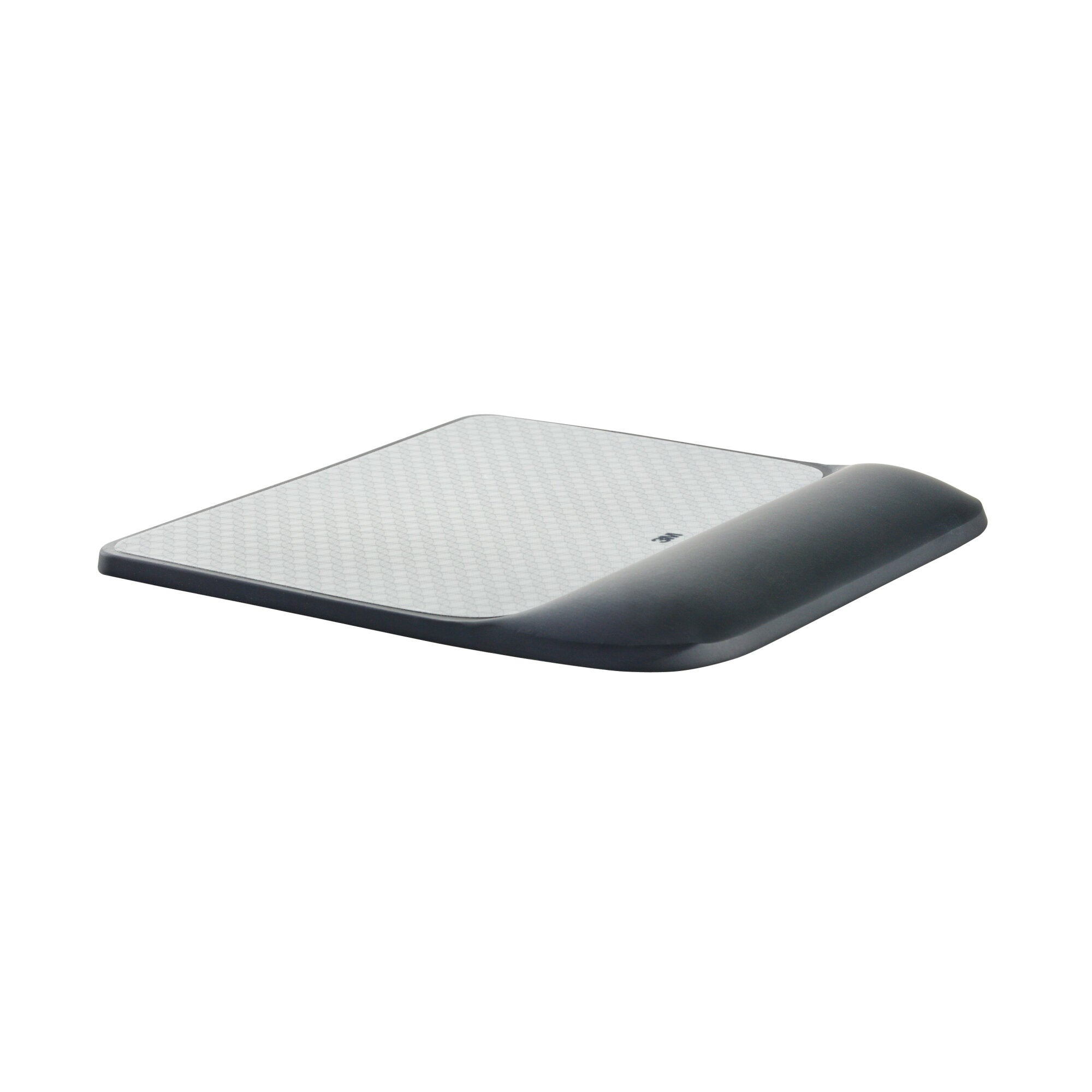
3M Precise Mouse Pad with Gel Wrist Rest MW85B
Best GelBuy if: you want the established brand-name gel pad, with the lowest rest in this guide for slim mice
Don't buy if: your mouse is tall, or you want a cloth-smooth surface
The 3M Precise MW85B is the oldest name in this guide, and the one most ergonomic roundups crown — StandDeskLab names it the best ergonomic mouse pad for 2026. The pad is 8.5 × 9 inches with a textured Precise mousing surface and a gel wrist rest at around three-quarters of an inch, the lowest rest here. That low height is the point: it matches slim office mice that taller rests would push your wrist above. 3M also claims the textured surface saves mouse battery life — the maker's claim, not a test result.
Two things to know. The surface is textured, not cloth-smooth, so it feels different from a standard fabric pad — precise, but with more grip under the mouse. And the rest is genuinely low: if your mouse is tall, your wrist will sit below it and the pad does nothing. For a slim mouse on a desk where you want a brand you can trust, it is the pick.
Pros
- Lowest rest here — matches slim mice
- 3M brand with a long track record
- Textured surface for precise tracking
- Named best ergonomic pad by StandDeskLab
- Firm gel holds its shape
Cons
- Textured surface feels grippy, not smooth
- Too low for tall mice
- Smaller surface than the MROCO
- Battery-saving claim is the maker's, not tested
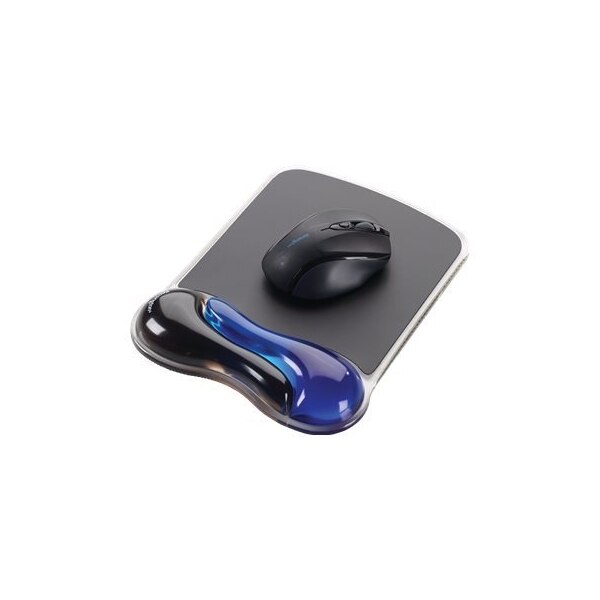
Kensington Duo Gel Mouse Pad with Wrist Rest
Best Premium GelBuy if: you want the premium gel pad from the ergonomics brand most offices already know
Don't buy if: you want the biggest surface, or the lowest price
The Kensington Duo Gel is the premium pick, and the one with the most thought in the rest itself. The Duo Gel wave pillow — model K62401AM in black and blue — has a ventilation channel running through the gel, so it stays cooler than a solid gel block in a warm room, and a rigid base that keeps the pad flat on the desk. Kensington has sold ergonomic desk gear to offices for decades, and it shows in the build: this is the pad most likely to still be on your desk in three years.
The trade is size and price. The surface is smaller than the MROCO's, so wide mouse sweeps run off the edge sooner. And you pay for the brand — the Duo Gel costs more than the budget gel pads while doing the same basic job. What you buy is the cooler rest, the rigid base, and a name with a real ergonomics history behind it.
Pros
- Ventilation channel keeps the gel cooler
- Rigid base stays flat on the desk
- Kensington's long ergonomics track record
- Wave pillow shape supports the palm heel
- Firm gel holds its shape for years
Cons
- Smaller surface than the MROCO
- Costs more than budget gel pads
- No published rest height — check against your mouse
- Blue gel look is not for every desk
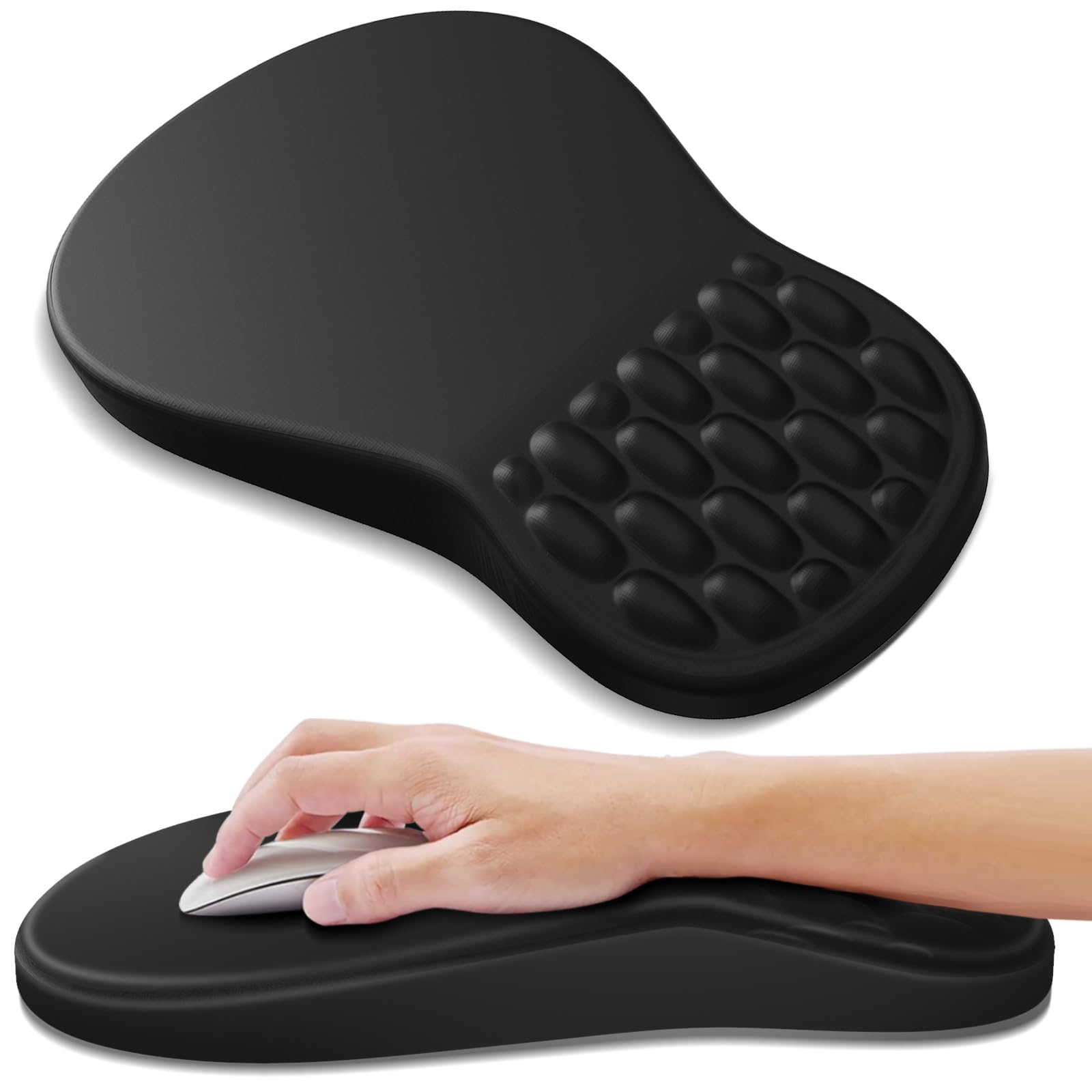
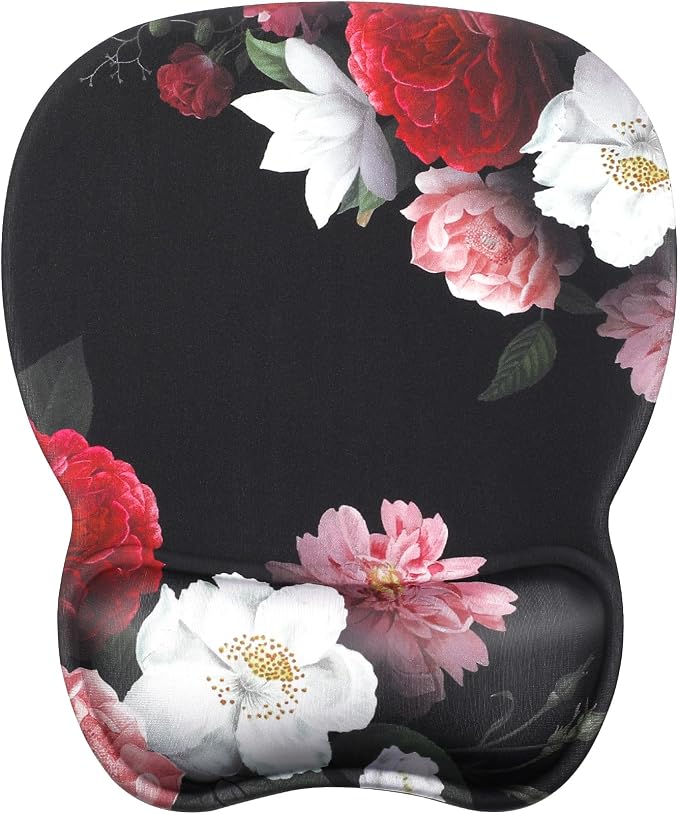
YIWEI Ergonomic Mouse Pad with Wrist Rest
Best Stitched EdgesBuy if: you want the tallest rest here, with stitched edges and a washable surface
Don't buy if: your mouse is slim and low, or you dislike a textured rest
The YIWEI is the best-built budget pad in this guide. At 11 × 7.87 inches and about 1.2 inches thick, it is the largest and tallest pick here, with an 8-degree slope and a massage-bump texture on the rest. The build is the story: gel plus Lycra plus memory foam under the top, a non-slip PU base, and stitched edges — the fix for the most common failure on cheap pads, where the cloth peels away from the base. It wipes clean with a damp cloth and works for left or right hands.
The height is the catch. At 1.2 inches, this rest is too tall for a slim mouse — your wrist would bend back over it. It is the right pick for a tall mouse or a raised palm, and the wrong pick for a flat travel mouse. The massage bumps are a matter of taste too: some people like the texture, some find it distracting. For a tall mouse on a desk where you want the pad to last, it is the best value here.
Pros
- Stitched edges fix the usual failure point
- Tallest rest here — matches tall mice
- 8-degree slope keeps the wrist straighter
- Wipe-clean surface
- Works for left or right hands
Cons
- Too tall for slim, low mice
- Massage bumps divide opinion
- Largest pad here — needs desk space
- "No sagging" claims are marketing, not tested
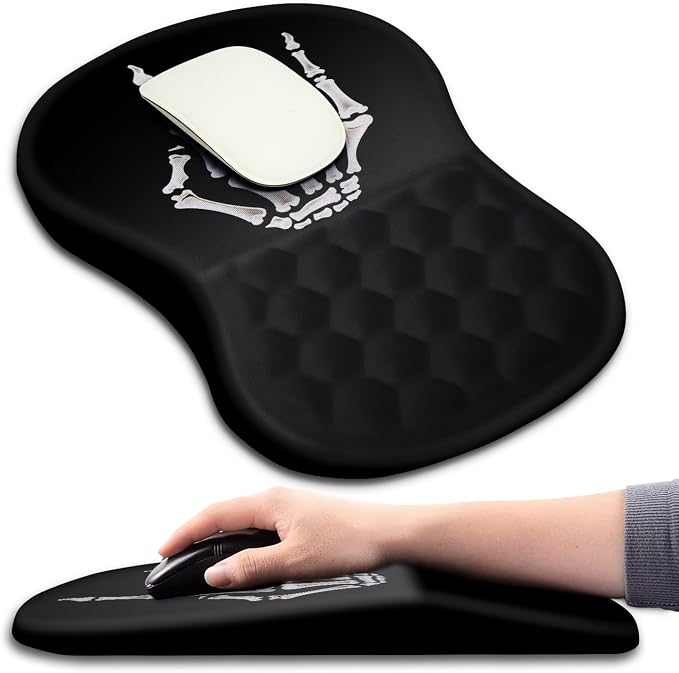
Hokafenle Ergonomic Mouse Pad Wrist Support
Best Wrap-AroundBuy if: you want the most support under your wrist and palm, with a curved cradle shape
Don't buy if: your desk is small, or your mouse is low and flat
The Hokafenle is the most supportive pad here — and the biggest. Its U-shaped curve wraps around the wrist, with a memory-foam slope and a massage bulge that gives broad support under the wrist and palm, not just a single ridge. The pad is 10.2 × 8.3 inches, about 1.2 inches thick, and 14.4 ounces — the heaviest pick in this guide, which also means it never slides around. The Lycra top is smooth for tracking, and the surface is water-resistant.
The size is the trade. At over 10 inches wide and nearly a pound, it takes real desk space and it is not a pad you move around. The tall profile does not suit flat mice. And one warning: the listing makes health claims about carpal tunnel and pain relief that we cannot support — this is a comfort aid, not a treatment. For a tall mouse and a wrist that wants a firm cradle, it is the most supportive pick here.
Pros
- Curved U-shape supports wrist and palm together
- Heavy base never slides
- Smooth Lycra top for tracking
- Water-resistant surface
- Works for either hand
Cons
- Heaviest and largest pad here
- Too tall for flat mice
- Enclosed shape can tempt you to lean on it
- Listing's carpal tunnel claims are not supported
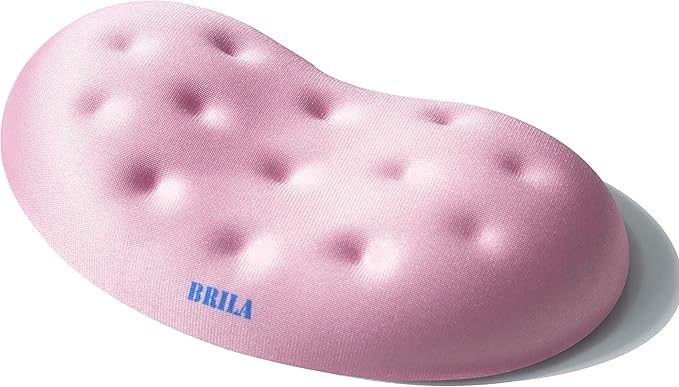
BRILA Ergonomic Memory Foam Mouse Wrist Rest
Best for Small DesksBuy if: your desk is tight, or you want to keep the mouse pad you already own
Don't buy if: you want a combined pad and rest, or you dislike soft foam
The BRILA is the only separate rest in this guide — a small memory-foam cushion, 5.1 × 3.1 inches and 0.8 inches thick, that sits in front of the mouse pad you already have. That is the whole point: if you like your current pad, you do not have to replace it. The foam has massage holes across the top, a Lycra cover, and a non-slip PU base, and the listing backs it with a two-year replacement.
Know what you are giving up. A separate rest can slide out of place, and it only works if you park it in the right spot every day. The foam is soft, so it will compress over months of daily use — budget for a replacement sooner than a gel pad. And at 0.8 inches it suits slim mice, not tall ones. For a small desk, a laptop setup, or a pad you already love, it is the cheapest honest fix here.
Pros
- Smallest footprint here — fits any desk
- Keeps the mouse pad you already own
- Soft foam with massage-hole texture
- Low 0.8 inch height suits slim mice
- Two-year replacement
Cons
- Separate rest can slide out of place
- Foam compresses over time
- Too low for tall mice
- No pad included — it is the rest only
Do Wrist-Rest Mouse Pads Help With Wrist Pain?
They can ease the strain — they are not a treatment. A wrist-rest pad keeps your wrist straighter and takes pressure off the heel of your hand. That helps many people with aching wrists. It does not fix carpal tunnel, and it is not a medical device.
I've seen conflicting data — some sources say ergonomic wrist supports cut carpal tunnel risk by up to 60%, others cite a Cochrane review from 2018 finding little and inconsistent evidence that ergonomic fixes prevent muscle and joint problems at all. My read is that both can be true: a pad changes your wrist angle, which is real, but no study shows a pad alone prevents injury, and the big numbers come from surveys and maker pages, not trials. Treat a wrist-rest pad as a comfort aid, not a cure.
The honest limit: if you have numbness, tingling, or pain that does not fade after a few days away from the mouse, see a doctor — a pad change is the wrong fix for a nerve problem. What a pad does do, at the right height, is remove one source of strain: the bend. Pair it with a chair and desk height that lets your forearm rest flat, and with breaks — the pad alone is half the fix.
How Do You Use a Wrist Rest the Right Way?
Rest your palm heel on it between clicks — never press your wrist into it while you move the mouse.
To use a wrist-rest mouse pad the right way, follow these steps: 1. Set the rest level with your mouse. 2. Park the heel of your palm on it between clicks. 3. Move the mouse from your elbow, not your wrist. 4. Lift off and stretch every half hour.
Step by step, it goes like this. First, slide the pad so the rest sits directly in front of your mouse, level with it — not higher, not lower. Second, when you pause to read or think, let the heel of your palm sink onto the cushion. Third, when you move the cursor, lift your hand and move from the elbow and forearm, with the wrist floating. Fourth, every half hour, lift off, shake your hands out, and stretch your fingers wide for ten seconds.
The mistake almost everyone makes is the second step in reverse: they plant their wrist on the cushion and drag it around while they work. That presses the soft tissue of the wrist into the pad and bends it at the same time — the exact pressure the pad is meant to remove. Used the right way, the pad is a parking spot for pauses. Used the wrong way, it is a new problem wearing a soft cover.
What If a Wrist-Rest Pad Isn't Enough?
If the ache stays after two weeks with a well-fitted pad, the shape of your mouse is the next thing to change — not a thicker pad.
A wrist-rest pad fixes the desk edge. It does not fix a mouse that twists your forearm flat for eight hours. If your wrist still aches every day after two weeks with the right-height rest, look at a vertical mouse, which holds your hand in a handshake position instead of flat. Our vertical mouse guide covers six picks by hand size, with the honest adjustment plan and the keyboard-height trap most roundups skip.
Check your desk height first, though — it costs nothing. Sit with your elbow near 90 degrees and your forearm flat. If your desk is too high, your shoulder carries the mouse arm all day, and no pad or mouse fixes that. A keyboard tray or a lower chair setting can do more than any pad on this page.
Who Should NOT Buy a Wrist-Rest Mouse Pad?
If you use a computer for a few hours a day and your wrist never aches, don't buy one. A wrist-rest pad solves a problem you don't have.
Here's the thing: most of the wrist ache at a desk is a desk problem, not a pad problem. If your chair is too low, your desk is too high, or your mouse sits a foot from your keyboard, a gel cushion papers over the cause. Fix the setup first — chair height, mouse position, breaks — and the ache often goes on its own. Buy the pad when the setup is right and the ache is still there.
Skip it too if you play fast games on the same mouse — a wrist rest anchors your hand, and fast flicks need a free wrist. Skip it if you use a trackball, where the hand barely moves. And skip it if you already own a good pad and your wrist feels fine: the money is better spent on a better chair.
Buying Guide: What Actually Matters
After height, the four things worth your attention are material, size, base and edges — in that order.
Height decides whether the pad helps or hurts: match the rest to your mouse, 0.8 to 1.2 inches for most standard mice. Material decides how it feels over years: gel stays cool and firm, foam starts soft and compresses. Size decides whether the pad fits your desk: a 9-inch pad crowds a laptop setup, a 5-inch rest fits anywhere. Base decides whether it stays put: a non-slip PU or rubber base matters more than most buyers think, because a sliding pad makes your arm compensate all day.
Edges decide how long it lasts: stitched edges stop the cloth peeling away from the base, while unstitched edges fray at the corners — the YIWEI is the only pick here with stitched edges, and it shows. Three things not to overpay for: "carpal tunnel relief" claims on a listing (no pad treats it), massage bumps you may not like, and a brand name on a pad with the wrong height. And one thing to check before you buy: the return window. A wrist-rest pad needs a week of real desk days to judge, so buy from a seller that gives you at least that long.
Pads to Skip in 2026
Flat desk mats with no rest — a fine mat, and the wrong buy for this problem. A big leather or cloth desk mat looks good and feels smooth, but it does nothing for a wrist that bends over a hard edge. Buy it for looks — don't buy it expecting wrist support.
No-name gel pads with no brand, no weight and no warranty — cheap for a reason. They flood low-quality roundups with inconsistent model names, no professional-review backing, and gel that leaks at the seams. The MROCO and the YIWEI cover the budget tier with real verification behind them.
Hard plastic wrist rests — firm is not the same as supportive. A rigid rest presses into the same spot all day with no give. Gel and foam spread the pressure; hard plastic concentrates it.
Keyboard wrist rests sold as mouse rests — the wrong shape for the job. A long keyboard rest is too wide and too flat to sit in front of a mouse, and it pushes your mouse further from your body. Buy the mouse-sized rest, not the keyboard one.
The pattern is the same every time: a good product, recommended to the wrong hands — or the wrong shape entirely.
Frequently Asked Questions
What's the best mouse pad for wrist support in 2026?
The MROCO gel pad for most desks. If you want the established brand-name gel pick, get the 3M Precise MW85B instead.
Is gel or memory foam better for a wrist rest?
Gel for cool, firm support that holds its shape for years. Foam for a softer, moulded feel that slowly compresses with daily use.
Do wrist-rest mouse pads help with carpal tunnel?
They ease pressure and keep the wrist straighter, but they do not treat carpal tunnel. Numbness or tingling needs a doctor.
How thick should a mouse wrist rest be?
About 0.8 to 1.2 inches, matched to your mouse height so your wrist stays straight, not bent up or down.
Should I rest my wrist on the pad while using the mouse?
No — rest the heel of your palm there between clicks, and move the mouse from your elbow while you work.
Can I use a wrist-rest mouse pad with a vertical mouse?
Yes, but most vertical mice sit higher than a standard rest, so check the height match first.
How do I clean a gel mouse pad?
Wipe the surface with a damp cloth and mild soap, then air-dry. Do not soak a gel pad or machine-wash it.