Best Handheld Gaming PCs in 2026: 6 Picks for Steam, Game Pass & AAA

Handheld gaming PCs got more expensive in 2026, and the guides ranking them did not keep up. Valve raised the Steam Deck OLED from $549 to $789 in May. ASUS launched three different handhelds all carrying the name "Ally X". Lenovo's Legion Go 2 lists at $1,349.99 on its own store and $1,999.99 at Best Buy for the same configuration. Half the roundups at the top of Google still print the old prices, still recommend the discontinued Steam Deck LCD, and still call the 2024 Ally X the Windows pick — even though the October 2025 Xbox Ally X replaced it.
This guide is built on prices re-verified on 13 November 2026, with the exact model named on every pick — chip, storage, and operating system together, because in this market the name alone tells you nothing. Six current handhelds, ranked by who each one is actually for, with the anti-cheat list that decides the buy before any spec does.
One thing to settle first: the operating system decides the purchase, not the chip. SteamOS is the better handheld experience, but it cannot run Fortnite, Valorant, Call of Duty, Destiny 2, or Battlefield 6. If any of those is your main game, you need Windows — no matter how good the Deck's screen is. Start with the question in the which one first section, then pick from the table.
Quick Comparison
| Product | Key Specs | ||
|---|---|---|---|
| #1 | Valve Steam Deck OLED 512GBBest Overall | 7.4″ HDR OLED 90Hz · SteamOS · 50Wh · 640g · $789 list | Check Price |
| #2 | ASUS ROG Xbox Ally XBest Windows / Best for Game Pass | Ryzen AI Z2 Extreme · 24GB · 7″ 1080p 120Hz · 80Wh · $999.99 list | Check Price |
| #3 | Lenovo Legion Go S SteamOSBest Big-Screen SteamOS | Ryzen Z2 Go · 8″ 1200p 120Hz · 55.5Wh · Hall sticks · from $449.99 | Check Price |
| #4 | MSI Claw A8Best Windows Alternative | Ryzen Z2 Extreme · 24GB · 8″ 1200p 120Hz VRR · 80Wh · $1,299 list | Check Price |
| #5 | Lenovo Legion Go 2Best Big-Screen Premium | Ryzen Z2 Extreme · 32GB · 8.8″ OLED 144Hz · 74Wh · $1,349.99 list | Check Price |
| #6 | ASUS ROG Xbox AllyBest Budget | Ryzen Z2 A · 16GB · 7″ 1080p 120Hz · 60Wh · $599.99 list | Check Price |
Prices below are makers' list prices as of 13 November 2026 unless a retailer and date are named — and for the Legion Go 2 and the Claw A8, the list price is only half the story, so read the price notes on those cards before buying. All six cards carry a real exact-match product photo, each visually verified.
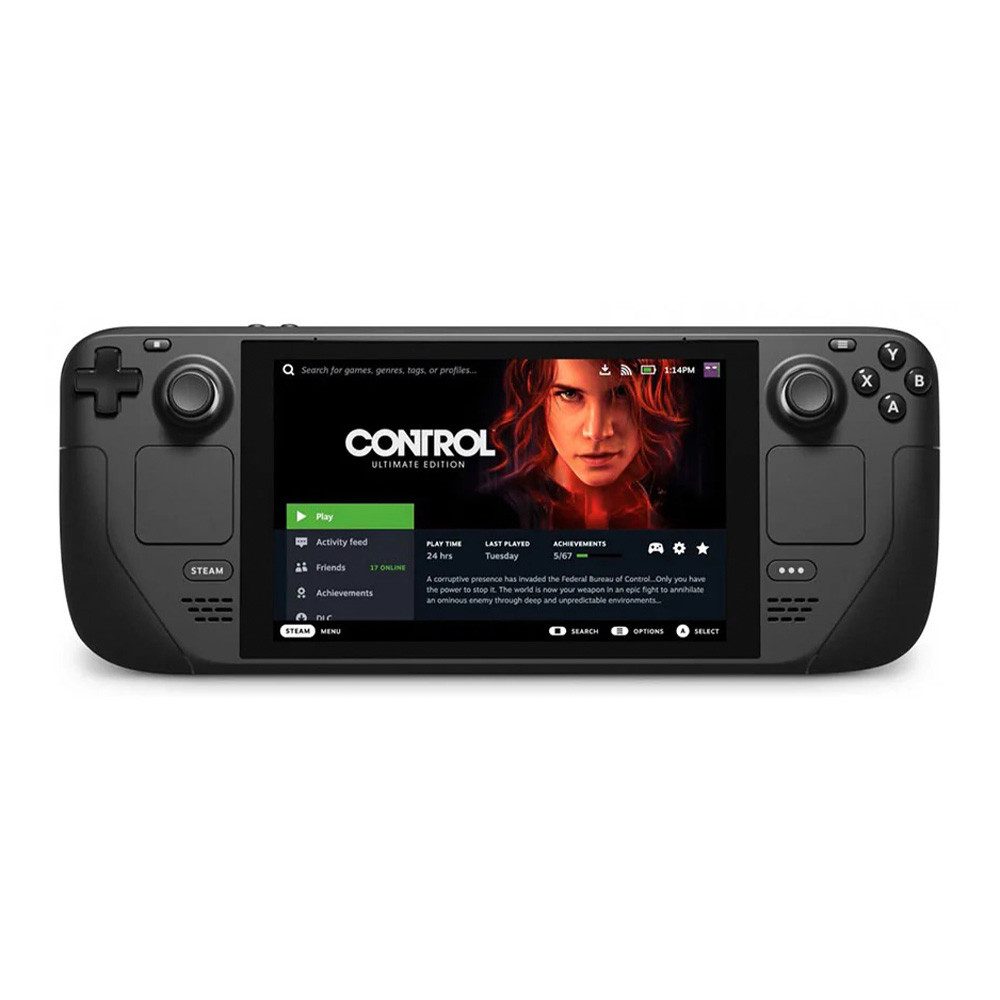
Valve Steam Deck OLED 512GB
Best OverallBuy if: your library is mostly Steam, you want the most console-like handheld, and you don't play anti-cheat shooters
Don't buy if: Fortnite, Valorant, or Game Pass is your main thing — those need the Windows pick below
The Deck OLED is still the default recommendation, and it is not because of the chip — it is the slowest processor in this guide. It wins on everything around the chip: SteamOS boots straight into your library, suspend and resume just works, the per-game performance controls are one button away, and the 7.4-inch HDR OLED at 90Hz makes games look better than the raw frame rate suggests. No Windows handheld in this guide feels this finished as a handheld.
The price is the part the internet keeps getting wrong. Valve raised the 512GB model from $549 to $789 and the 1TB from $649 to $949 on 27 May 2026, citing component and logistics costs — the hardware did not change. Any guide still printing $549 is quoting a price that has not existed for six months. At $789 the Deck is no longer the cheap option; it is the best-software option at a mid-range price. The 1TB model at $949 buys only storage and etched anti-glare glass — no speed difference — so most buyers should take the 512GB and add a microSD card. Certified refurbished OLED models appear at $629 (512GB) and $759 (1TB) when in stock, and are the only discounted route worth watching: a Black Friday cut looks unlikely while component costs are driving prices up.
The honest limits: the custom Zen 2 / RDNA 2 APU is a 2022 chip. Demanding new games need moderated settings — think 800p with upscaling rather than native 1080p — and at the Deck's 15W cap the newer chips' advantage mostly disappears in lighter games, which is why the Deck still trades blows with handhelds costing twice as much in indies and older AAA. Battery is 50Wh, and Valve rates it 3–12 hours depending on what you play; Tom's Guide measured a 3-hour-12-minute gaming average.
Pros
- SteamOS is the best handheld interface — suspend/resume, per-game controls, no desktop faff
- 7.4-inch HDR OLED at 90Hz — the best screen per dollar in this guide
- Trackpads make mouse-and-keyboard games playable; no other handheld here has them
- Verified programme tells you before buying whether a game runs well
Cons
- $789 is a $240 rise from the old $549 — and half the internet still prints the old price
- Cannot run Fortnite, Valorant, Call of Duty, or Destiny 2 — kernel anti-cheat is blocked on SteamOS
- Slowest chip here — demanding AAA needs moderated settings and upscaling
- 512GB fills fast with modern games; budget for a microSD card
List price $789 (512GB) / $949 (1TB) — check the price before buying, as prices change.
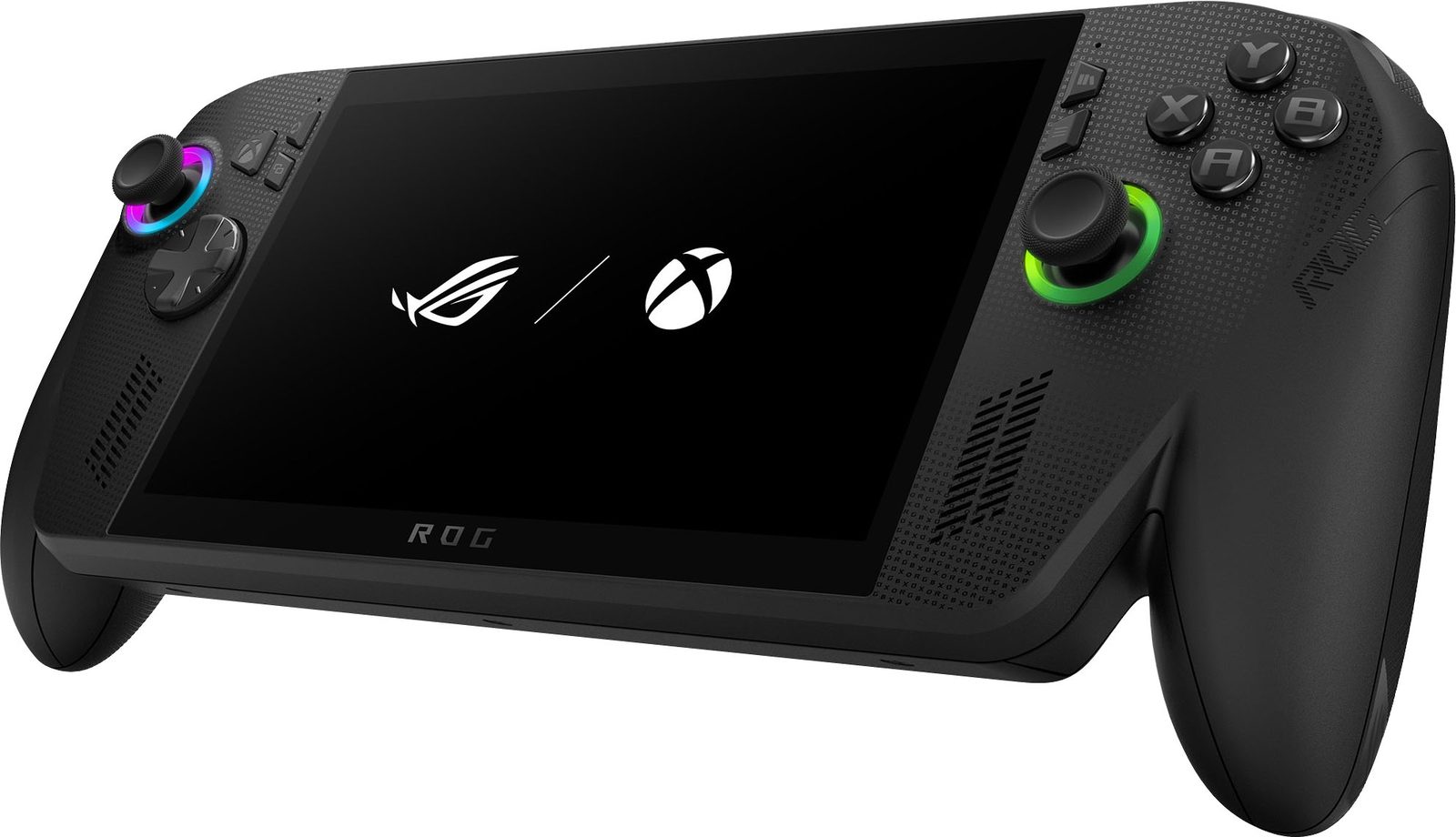
ASUS ROG Xbox Ally X
Best Windows / Best for Game PassBuy if: you play Game Pass, Fortnite, or Valorant, or your library spans Steam, Epic, and Battle.net
Don't buy if: you only play Steam games — the Deck OLED is $210 cheaper and feels better doing it
This is the Windows answer, and the one every major outlet names the top Windows handheld: PC Gamer, Tom's Hardware, and Trusted Reviews all put it first. The Ryzen AI Z2 Extreme with 24GB of memory and an 80Wh battery is the strongest combination in this guide, and the Xbox full-screen shell on top of Windows 11 makes it the closest a Windows handheld has come to feeling like a console — three months of Game Pass Premium are included, which is the point. Game Pass runs natively here; on the Deck it is cloud streaming only.
The measured performance backs the ranking. Trusted Reviews ran Cyberpunk 2077 at 1080p at 28.9fps native, rising to 46.4fps with FSR 2.1 in Performance mode, and Returnal from 28fps to 37fps the same way. That is the fastest 1080p result in this guide's lab-tested set, and the 80Wh battery is the joint largest. The trade-off is the one built into every Windows handheld: Windows sits underneath the Xbox shell, so updates, drivers, and the occasional desktop detour are part of ownership. Battery life in Tom's Guide's gaming average was 2 hours 56 minutes — slightly behind the Deck OLED despite the much bigger battery, because the faster chip drinks more.
Name it exactly: this is the ROG Xbox Ally X (October 2025, Ryzen AI Z2 Extreme, $999.99). The original ROG Ally X (2024, Ryzen Z1 Extreme, $799 launch) is a different, older handheld — several roundups still recommend it as the Windows pick, and it is not. The $300-more X20 below is the same chip with an OLED screen. If you want the chip and the battery without the OLED tax, this is the buy.
Pros
- Fastest measured 1080p performance in this guide — Cyberpunk 46.4fps with FSR, per Trusted Reviews
- Native Game Pass plus Steam, Epic, and Battle.net — every launcher, every anti-cheat game
- 80Wh battery, 24GB RAM, 1TB storage — no compromises on the spec sheet
- Xbox full-screen shell is the most console-like Windows handheld interface yet
Cons
- $999.99 — $210 more than the Deck OLED for a worse handheld interface
- Windows underneath means updates and desktop detours; battery trails the Deck in real gaming tests
- 7-inch LCD, not OLED — the screen is the one place it loses to the Deck
- Easy to confuse with the 2024 Ally X and the sold-out X20 — check the chip before buying
List price $999.99 — check the price before buying, as prices change.
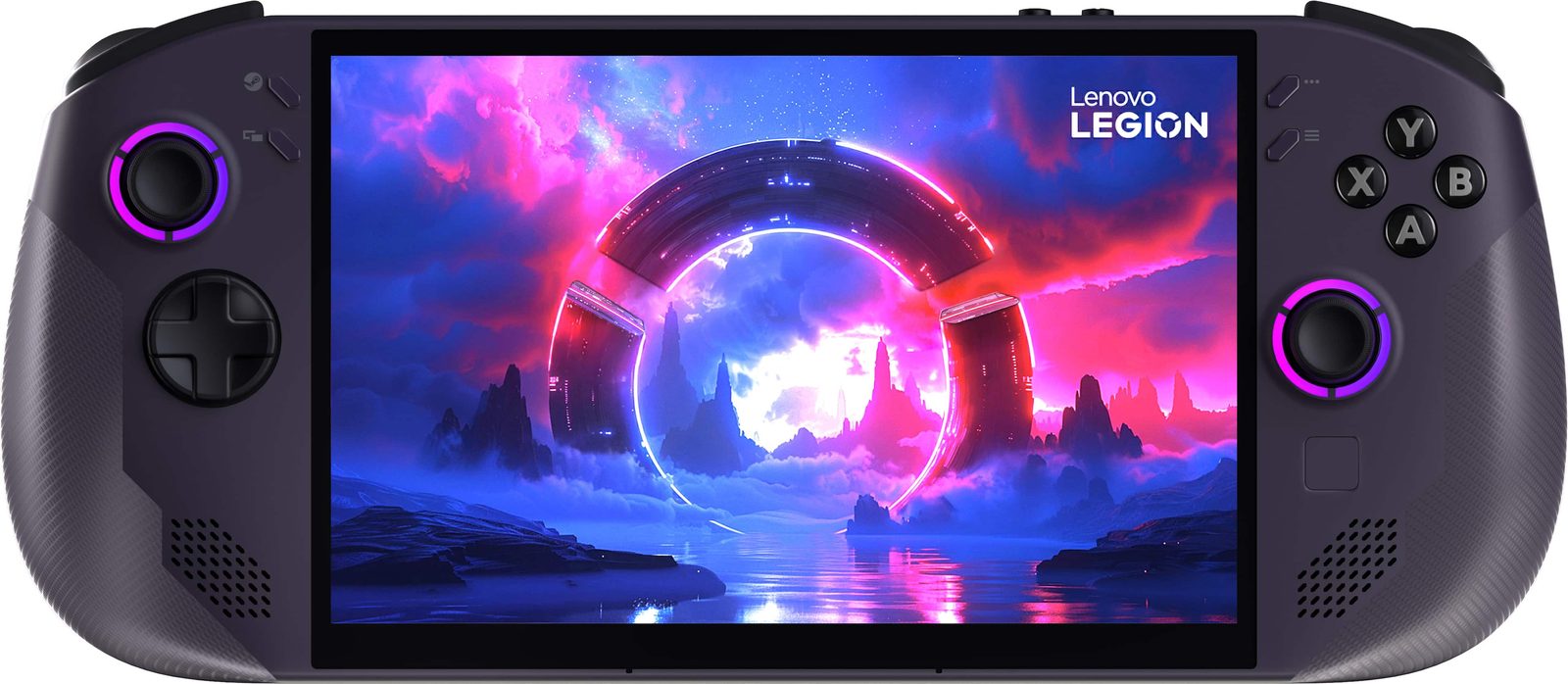
Lenovo Legion Go S SteamOS
Best Big-Screen SteamOSBuy if: you want the Deck's SteamOS experience on a bigger, faster screen, and you play plugged in or in short sessions
Don't buy if: battery life is your priority — this is the shortest-lived handheld in the guide
The Go S SteamOS is the Deck experience stretched onto better hardware: an 8-inch 1920×1200 IPS panel at 120Hz with VRR, Hall-effect sticks, and the same SteamOS with the same suspend and resume. It is the first non-Valve handheld to ship SteamOS with Valve's official support, and Trusted Reviews calls it the best SteamOS alternative to the Deck. The larger screen is a genuine upgrade for older eyes and for text-heavy games — and at 730g it is only 90g heavier than the Deck OLED.
Two traps, and both are in the name. First, there are two Go S chips: the Ryzen Z2 Go (4 cores, the weakest chip in this field) in the entry model, and the Ryzen Z1 Extreme (8 cores) in the faster one — and the Z1 Extreme version costs about twice as much. This card is the Z2 Go 16GB/512GB model, which Best Buy listed at $449.99 in an early Black Friday cut on 13 November (it was $649.99); the Z1 Extreme 32GB/1TB version was $949.99 at Best Buy on 12 November. Do not compare a Z2 Go price against a Z1 Extreme review. Second, the Windows edition exists at a $729.99 list price — if the listing does not say SteamOS, it is not this handheld.
The honest limit is the battery. The 55.5Wh pack is the second smallest here, and Trusted Reviews' gaming test drained it in 1 hour 36 minutes — the shortest runtime in the guide. The Z2 Go chip is also a step down from the Deck's APU in some games despite the newer name, so this is a screen-and-software buy, not a performance buy. If you mostly play at home near a charger, that trade is worth it; if you play on trains and planes, it is not.
Pros
- SteamOS on an 8-inch 1200p 120Hz screen — the Deck's software, bigger and faster
- Hall-effect sticks — no potentiometer wear, unlike the Deck and the 2024 Ally X
- Entry model from $449.99 at Best Buy (13 Nov) — the cheapest SteamOS handheld here
- Replaceable SSD, so the 512GB is not a dead end
Cons
- Shortest battery in the guide — 1h 36m in Trusted Reviews' gaming test
- Z2 Go is the weakest chip here; the faster Z1 Extreme version costs about twice as much
- IPS, not OLED — no inky blacks, and the 1200p panel asks more of the chip than the Deck's 800p
- Same anti-cheat limits as the Deck — no Fortnite, Valorant, or Call of Duty
From $449.99 at Best Buy (Z2 Go 16GB/512GB, 13 Nov 2026); Z1 Extreme 32GB/1TB $949.99 — check the price before buying, as prices change.
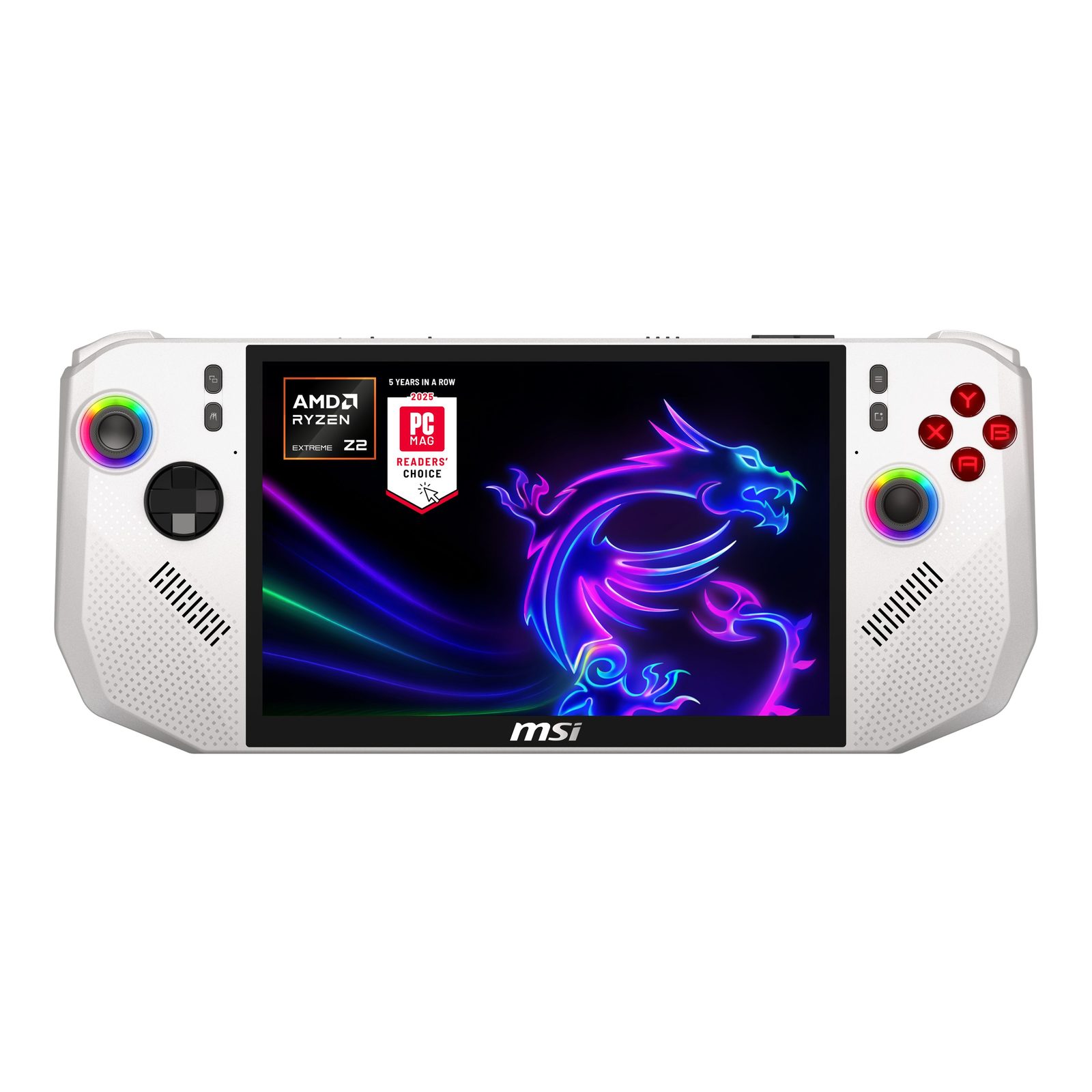
MSI Claw A8
Best Windows AlternativeBuy if: you want the Z2 Extreme chip with the longest measured Windows battery life, and you prefer MSI's hardware to ASUS's
Don't buy if: you want the best value Z2 Extreme handheld — the Xbox Ally X is $150 cheaper at list
The Claw A8 is MSI's AMD answer, and it is the quiet overachiever of this guide: the same Ryzen Z2 Extreme chip as the Xbox Ally X, the same 24GB and 1TB, the same 80Wh battery, but with the longest measured battery life of any Windows handheld here — about 9.5 hours of indie play at 6W, 3.25 hours of AAA at 17W, and an 11-hour-31-minute PCMark 10 battery score. Trusted Reviews measured it as the best-value Z2 Extreme handheld, and its Cyberpunk result (23.2fps native, 34.3fps with FSR at 1080p) trails the Xbox Ally X but beats the Deck OLED in raw frames.
The price is the part to get right, because two figures circulate and both are real. The list price is $1,299. MSI's own US store shows a limited-time offer of $1,149, and B&H cut it to $1,159 in early November. Print the pair together: $1,299 list, about $1,149 street in November 2026. At the street price it undercuts the Xbox Ally X by nothing and the list by $150 — the honest way to read it is that the A8 and the Xbox Ally X trade wins by game, and the A8 wins on battery while the Ally X wins on interface and price.
One naming warning: this is the Claw A8 (BZ2EM, AMD Ryzen Z2 Extreme). MSI sells five Claws — the original A1M (Intel Meteor Lake, the poor original, never a pick), the Claw 7 AI+ and 8 AI+ (Intel Lunar Lake), this A8, and the new Claw 8 EX AI+ at $1,799. A listing that just says "MSI Claw" tells you nothing; the BZ2EM model number is the check.
Pros
- Longest measured Windows battery life here — 11h 31m PCMark 10, ~9.5h indie play
- Same Z2 Extreme / 24GB / 1TB / 80Wh core as the Xbox Ally X
- Hall-effect sticks and an 8-inch 1200p 120Hz VRR screen
- About $1,149 at MSI's store in November — $150 under its $1,299 list
Cons
- Slower than the Xbox Ally X in Trusted Reviews' Cyberpunk test, despite the same chip
- Windows on a touchscreen with no Xbox shell — more setup than the Ally X
- IPS, not OLED; no Game Pass bundle in the box
- Five Claws share the name — verify the BZ2EM model number before buying
List price $1,299; about $1,149 at MSI's US store (limited-time offer, 13 Nov 2026) — check the price before buying, as prices change.
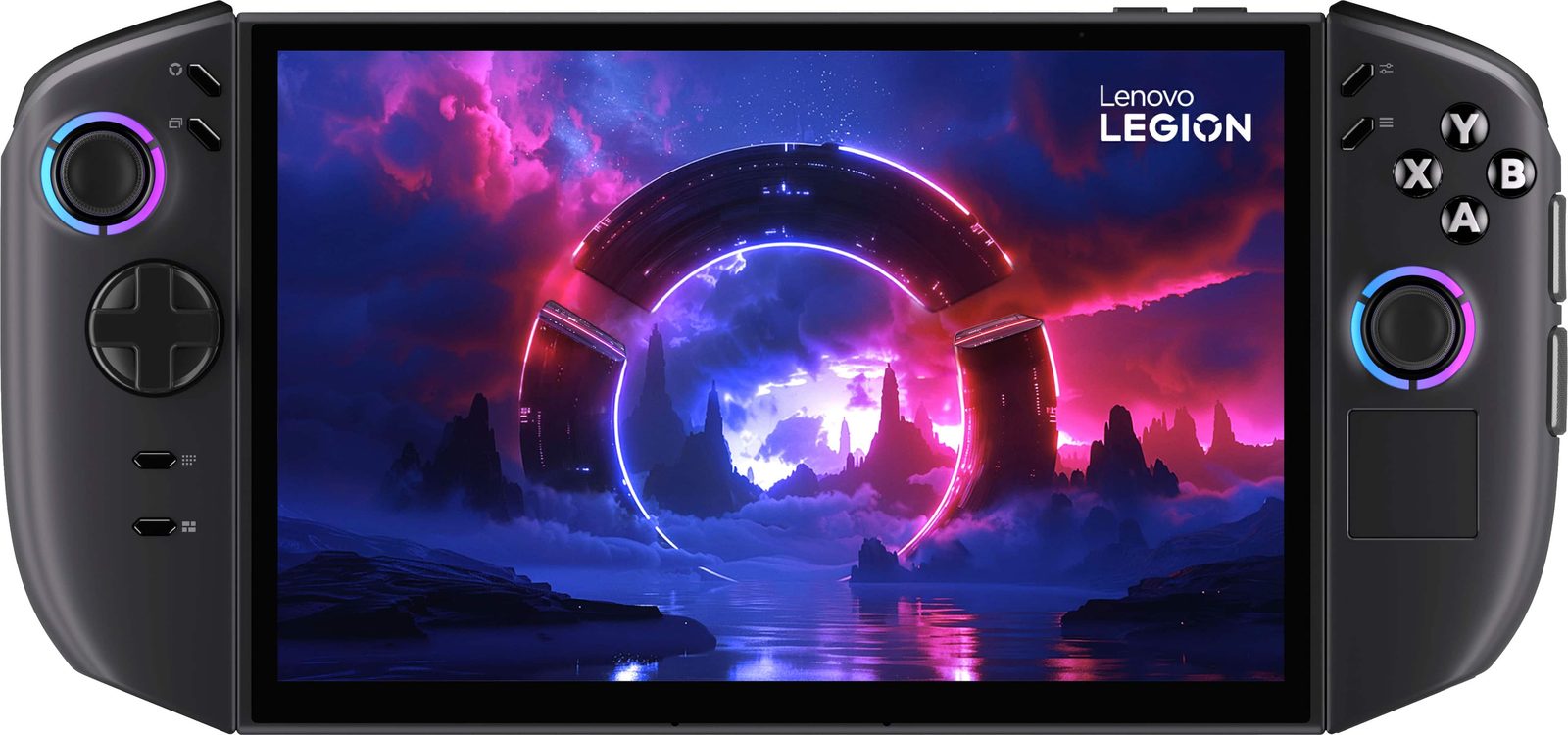
Lenovo Legion Go 2
Best Big-Screen PremiumBuy if: you want the biggest, best handheld screen and detachable controllers, mostly at a desk or on the couch
Don't buy if: you want value or portability — at $1,349.99+ it costs more than some RTX 5060 gaming laptops
The Go 2 is the most hardware in this guide: an 8.8-inch 1920×1200 OLED at 144Hz with VRR, detachable controllers with an FPS mouse mode, a built-in kickstand, two USB4 ports, a user-replaceable SSD, and the Z2 Extreme with 32GB of memory. Trusted Reviews measured Cyberpunk 2077 at 27.1fps on Ultra at 1080p, rising to 42.1fps with FSR — the second-fastest result here — and calls it the best big-screen handheld. Detach the controllers, prop it on the kickstand, and it is the closest a handheld gets to a small desktop.
The price is the story, and it is volatile enough to be the reason not to buy blind. Lenovo lists the Z2 Extreme 32GB/1TB at $1,349.99 and the 32GB/2TB at $1,479.99 — but Best Buy has listed the same 1TB configuration at $1,999.99, and Lenovo's own store has shown the 2TB version at $2,849.99. The memory-cost surge of 2026 moved this handheld's price more than any other in the guide, and regional prices moved further still. The rule is simple: never pay a retailer price without checking Lenovo's list first, and never treat a launch price as current.
The other honest cost is the weight: about 921g with the controllers attached, against 640g for the Deck OLED. This is a tablet that happens to have controllers, not a pocket handheld — buy it for couch and desk play, not for the train. The SteamOS edition, announced at CES in January 2026 with a $1,199 estimated start, was still "Coming Soon" on Lenovo's US page on 12 November — do not buy a Go 2 expecting SteamOS until it is actually listed.
Pros
- Best screen here — 8.8-inch OLED, 144Hz, VRR, the only OLED bigger than the Deck's
- Detachable controllers + kickstand + FPS mouse mode — the most flexible form factor
- 32GB RAM and a user-replaceable SSD; two USB4 ports
- Second-fastest measured Cyberpunk result in this guide
Cons
- Price is volatile — same 1TB config listed from $1,349.99 to $1,999.99 in 2026; check before buying
- About 921g — the heaviest handheld here, and it shows on a long session
- At $1,349.99+ it costs more than some RTX 5060 gaming laptops
- SteamOS edition still "Coming Soon" in the US — Windows only for now
Lenovo list $1,349.99 (Z2 Extreme 32GB/1TB); retailers have listed the same config up to $1,999.99 — check the price before buying, as prices change.
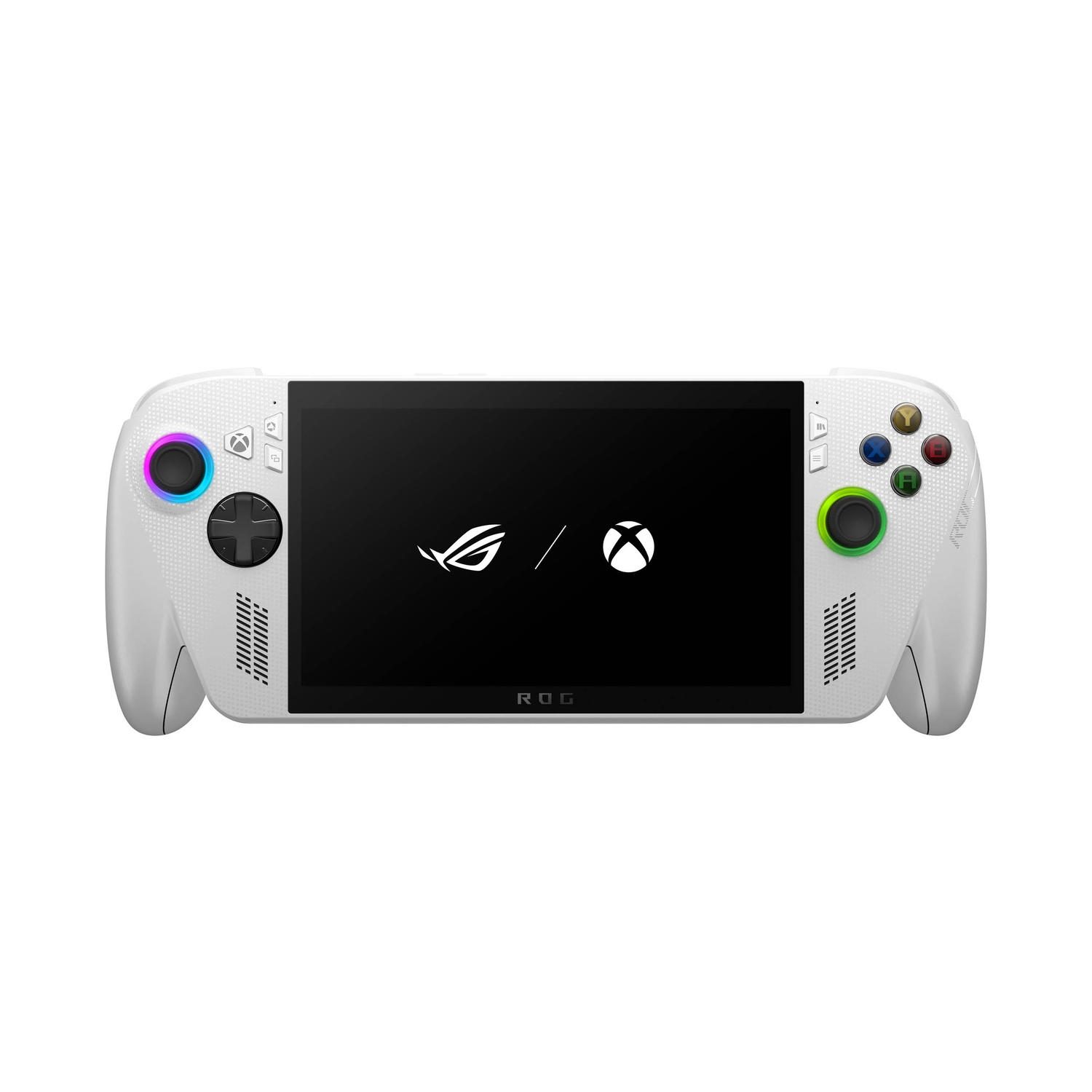
ASUS ROG Xbox Ally
Best BudgetBuy if: you want the cheapest real Windows handheld — Game Pass and anti-cheat games for $599.99
Don't buy if: you want the fastest handheld — this chip is no quicker than the three-year-old Deck OLED
The entry Xbox Ally is the cheapest way into Windows handheld gaming, and that is its whole job. At $599.99 it undercuts every other Windows handheld here by $400, it runs Game Pass natively, it runs Fortnite and Valorant, and it carries the same Xbox full-screen shell as its $999.99 sibling. For a buyer whose main games are Game Pass titles and anti-cheat shooters, it opens the door the Deck cannot.
Be honest about what the $400 saving costs. The Ryzen Z2 A is a 4-core Zen 2 chip — the weakest in this guide — and Tom's Hardware found the handheld no faster than a three-year-old Steam Deck OLED. The 16GB of memory and 512GB of storage are the smallest here, and the 60Wh battery is the second smallest. It is a door-opener, not a performance buy: fine for Game Pass indies, older AAA, and shooters at moderated settings, but the wrong pick if you want the handheld to also be your fastest machine.
Name it exactly: this is the ROG Xbox Ally (2025, Ryzen Z2 A, white, $599.99). It is not the 2023 ROG Ally (Ryzen Z1 Extreme, the one with the documented microSD reader failures), and it is not the black Xbox Ally X. The white body is the tell — the X is black.
Pros
- $599.99 — the cheapest real Windows handheld in this guide by $400
- Native Game Pass and anti-cheat games — the two things the Deck cannot do
- Same Xbox full-screen shell as the $999.99 X; three months of Game Pass Premium included
- 7-inch 1080p 120Hz screen with VRR
Cons
- Ryzen Z2 A is no faster than a three-year-old Deck OLED, per Tom's Hardware
- 16GB RAM and 512GB storage are the smallest here; 60Wh battery is second smallest
- White body and Z2 A chip are easy to confuse with the 2023 ROG Ally — check the name
- A Direct3D wake crash was reported in 2026; ASUS's workaround is to hibernate instead of sleep
List price $599.99 — check the price before buying, as prices change.
Which Handheld Gaming PC Should I Buy First?
Answer one question before looking at any spec: which games do you actually play? The operating system is the filter, and it splits the six picks into two groups that do not overlap.
Buy SteamOS — the Deck OLED or the Legion Go S SteamOS — if your library is mostly Steam and you play indies, older AAA, strategy games, and single-player adventures. You get the better handheld experience: suspend and resume that works like a console, per-game performance controls, and no Windows maintenance. The Deck's trackpads are also the only way to play mouse-and-keyboard games comfortably on a handheld.
Buy Windows — the Xbox Ally X, the Claw A8, the Go 2, or the entry Xbox Ally — if you play Game Pass, Fortnite, Valorant, Call of Duty, Destiny 2, or Battlefield 6, or if your library spans Steam, Epic, and Battle.net. Windows runs all of them natively. The cost is the interface: Windows on a 7-inch touchscreen needs more setup and more patience than SteamOS, and battery life is shorter for the same size pack.
Then pick by screen and battery. OLED matters more than the chip for most players — the Deck OLED and the Go 2 are the only OLED screens here, and the difference in dark games is visible the moment you turn them on. Battery is watt-hours, not hours: 80Wh (Ally X, X20, all Claws) beats 74Wh (Go 2), 60Wh (Xbox Ally), 55.5Wh (Go S), and 50Wh (Deck OLED) on paper — but the Deck's efficient chip and 800p screen mean it outlasts bigger batteries in real gaming tests. The table below is the decision in one place.
| If you… | Buy | Why |
|---|---|---|
| Play mostly Steam games | Steam Deck OLED 512GB | Best software, best screen per dollar, $789 |
| Play Game Pass or anti-cheat shooters | ASUS ROG Xbox Ally X | Native Game Pass, every launcher, fastest 1080p |
| Want SteamOS on a bigger screen | Lenovo Legion Go S SteamOS | 8-inch 120Hz, Hall sticks, from $449.99 |
| Want the longest Windows battery | MSI Claw A8 | 80Wh, ~11.5h PCMark 10, about $1,149 street |
| Want the biggest screen, mostly at home | Lenovo Legion Go 2 | 8.8-inch OLED 144Hz, detachable controllers — check the price first |
| Want Windows for the least money | ASUS ROG Xbox Ally | $599.99, Game Pass and shooters, slowest chip here |
Can You Play Fortnite and Valorant on a Steam Deck?
No — not natively, and not by installing Windows either. This is the single most important fact in this guide, because it is the one that sends buyers to the wrong handheld.
Fortnite and Valorant both use kernel-level anti-cheat — Easy Anti-Cheat and Vanguard — and neither runs on SteamOS. Fortnite is playable on the Deck only through cloud streaming (Xbox Cloud Gaming or GeForce NOW), which needs a fast, stable connection and a subscription. Valorant does not work at all: Vanguard needs Secure Boot, and the Deck's firmware does not expose a Secure Boot switch, so even a Windows install on a Deck will not run it. Battlefield 6 has the same Secure Boot requirement.
The full denied list on SteamOS, as of November 2026, is Fortnite, Valorant, Call of Duty, Destiny 2, Battlefield 6, Rainbow Six Siege, Apex Legends, PUBG, GTA Online, and Rust. The tracking site areweanticheatyet.com lists 53 of 1,167 tracked anti-cheat games as "Denied" — about 5% of the catalogue, but they include the most-played multiplayer games on PC.
There is one update worth knowing. On 14 October 2026 Epic announced Fortnite is coming to Linux through a rebuilt Easy Anti-Cheat v2 — but Epic's own statement says "The Steam Deck does not support the required features for our EAC v2 solution", and it is "actively talking with Valve" with no release date and no Deck timeline. Buy on what works today, not on that announcement: if Fortnite or Valorant is your main game, buy a Windows handheld.
How Long Does a Handheld Gaming PC Battery Last?
Shorter than the box suggests, and the headline "hours" figure is the least useful number a maker prints. Battery life depends on the game, the brightness, the frame cap, and the power limit — so compare watt-hours first, then measured runtimes for the games you actually play.
| Handheld | Battery | Measured Gaming Runtime |
|---|---|---|
| Valve Steam Deck OLED | 50Wh | 3h 12m average (Tom's Guide); Valve rates 3–12h by content |
| ASUS ROG Xbox Ally X | 80Wh | 2h 56m average (Tom's Guide) |
| Lenovo Legion Go S SteamOS | 55.5Wh | 1h 36m (Trusted Reviews gaming test) |
| MSI Claw A8 | 80Wh | ~9.5h indie at 6W; ~3.25h AAA at 17W; 11h 31m PCMark 10 |
| Lenovo Legion Go 2 | 74Wh | Not yet measured in the same tests — 74Wh is the second largest here |
| ASUS ROG Xbox Ally | 60Wh | Not yet measured in the same tests — 60Wh is the second smallest here |
Two things the table hides. First, the Deck outlasts the Xbox Ally X in real gaming despite a much smaller battery, because its chip sips power and its 800p screen asks less of it — at the Deck's 15W cap, the performance gap to the newer chips largely closes in lighter games. Second, the Claw A8's long runtimes come from its power management, not magic: at 25W in AAA games it is down to about 2.25 hours. The practical rule is to set a frame cap (40fps is the sweet spot on the Deck, 60fps on the 120Hz screens) and a power limit before judging any handheld's battery — the out-of-the-box numbers are the worst case, not the typical one.
Can You Dock a Handheld Gaming PC to a TV?
Yes — every handheld in this guide docks to a TV or monitor over USB-C, and a dock adds display, network, power, and peripheral connections. What a dock does not add is GPU performance. The same chip renders the same game at the same speed; the only thing that changes is the screen it has to fill.
That is the trap: a handheld tuned for a 7-inch 800p screen suddenly has to drive a 55-inch 4K TV, and it cannot. The fix is to render at 1080p or lower and let upscaling do the work — FSR on AMD handhelds, the Deck's built-in scaler — and to cap the frame rate at 60fps. At 1080p with FSR in Performance mode, the Xbox Ally X runs Cyberpunk 2077 at 46fps, which is playable on a TV; at native 4K it would not be. The Deck OLED, with its 800p panel, is the most honest docked machine here precisely because it was never pretending to be a 4K device.
Budget for the dock separately: Valve's official dock, and the UGREEN, Anker, and JSAUX alternatives, are all sold separately, and the good ones cost $40–$90. Check the dock's HDMI version and whether it passes 4K60 before buying — a cheap dock that caps at 4K30 will make the TV experience worse than the handheld screen. See our Steam Deck accessories guide for the dock options that fit each handheld.
Is the Steam Deck Worth It in 2026 — or Should I Wait for Steam Deck 2?
Yes, it is worth it — and no, you should not wait. There is no Steam Deck 2 announcement as of 13 November 2026. Valve confirmed in April 2026 that a successor is in development, but the earliest credible window anyone will put a date on is late 2027, and Valve has said repeatedly it will not ship a new Deck until a chip arrives that is a genuine generational jump. That is at least a year away, probably more.
The price rise changes the maths but not the answer. At $549 the Deck was an easy recommendation; at $789 it is a considered one. What has not changed is that nothing else at $789 gives you this software, this screen, and this suspend-and-resume — and the Deck's library advantage compounds: every Steam sale makes the machine you already own more valuable, while a Windows handheld's value is in the chip, which ages faster.
Wait only if you can genuinely wait a year or more and your main games are the newest AAA releases at high settings — those are the games where the Deck's 2022 chip shows its age. Everyone else should buy now. If $789 still stings, watch for certified refurbished OLED models at $629 (512GB) or $759 (1TB) when Valve has stock — the only discounted route that is actually the same machine.
The Exact-Model Trap Decoder
Three names in this market each hide two or three different handhelds. Check the chip, the storage, and the operating system on the listing — the name alone will not save you.
| Name on the Box | What It Actually Is |
|---|---|
| ROG Ally X (2024) | Ryzen Z1 Extreme, 24GB, 1TB, 7″ LCD, 80Wh, $799 launch — the older Windows handheld |
| ROG Xbox Ally X (2025) | Ryzen AI Z2 Extreme, 24GB, 1TB, 7″ LCD, 80Wh, $999.99 — the current Windows flagship |
| ROG Xbox Ally X20 (2026) | Same Z2 Extreme chip, 7.4″ OLED, 24GB, 1TB, $1,299.99 — sold out, see below |
| ROG Xbox Ally (2025) | Ryzen Z2 A, 16GB, 512GB, 7″ LCD, 60Wh, $599.99, white — the budget Windows handheld |
| ROG Ally (2023) | Ryzen Z1 Extreme, 16GB, 512GB, 40Wh — the original, with documented microSD reader failures |
| MSI Claw | What It Actually Is |
|---|---|
| Claw A1M (2024) | Intel Meteor Lake — the poor original, never a current pick |
| Claw 7 AI+ / 8 AI+ | Intel Core Ultra 7 258V (Lunar Lake), 32GB, 80Wh — the Intel generation |
| Claw A8 BZ2EM | AMD Ryzen Z2 Extreme, 24GB, 1TB, 80Wh — the AMD pick in this guide |
| Claw 8 EX AI+ | Intel Arc G3 Extreme, $1,799 — the fastest handheld tested, at twice the price |
| Lenovo Legion Go | What It Actually Is |
|---|---|
| Legion Go (2023) | Ryzen Z1 Extreme, 8.8″ IPS 144Hz, 49.2Wh, 854g — the original, detachable controllers |
| Legion Go S (Windows) | Ryzen Z2 Go, 8″ IPS 120Hz, 55.5Wh — $729.99 list; the Windows version |
| Legion Go S (SteamOS) | Same hardware, SteamOS — from $449.99 at Best Buy (Z2 Go) or $949.99 (Z1 Extreme 32GB/1TB) |
| Legion Go 2 | Ryzen Z2 / Z2 Extreme, 8.8″ OLED 144Hz, 74Wh, ~921g — the premium pick in this guide |
| Legion Go 2 SteamOS | Announced Jan 2026, $1,199 estimated — still "Coming Soon" in the US, not buyable |
Handhelds to Avoid (and One You Can't Buy Yet)
ROG Xbox Ally X20 — cover, do not buy. The 20th-anniversary edition launched 15 October 2026 at $1,299.99 ($2,499.99 bundled with XREAL glasses) with the same Z2 Extreme chip as the $999.99 Xbox Ally X, plus a 7.4-inch OLED screen, TMR sticks, and an anniversary chassis. It sold out within days at Best Buy and ASUS, and scalpers were asking $2,000+ in early November. The $300 buys the OLED screen and the sticks — worth waiting for a restock, never worth a scalper price.
MSI Claw 8 EX AI+ — the money-no-object mention. At $1,799 it is the fastest handheld tested — about 50% faster than the Z2 Extreme in heavy games, per early testing — but it costs twice a discounted Xbox Ally X. It exists to show what the ceiling is, not to be the recommendation.
Original ROG Ally (2023) — avoid as a new buy. Half the battery of the Ally X, a documented history of microSD reader failures, and a chip two generations old. Refurbished only, with a strong warranty and a large price gap.
MSI Claw A1M — avoid. The Meteor Lake original is superseded in every way by the A8 and the 8 AI+. Never buy it on the name "Claw" alone.
Steam Deck LCD — avoid as a new buy. Discontinued in December 2025. The OLED model is the only new Deck, and refurbished LCD units from about $319 are the only route worth considering — and only if the OLED's $789 is genuinely out of reach.
Legion Go 2 SteamOS edition — not buyable yet. Announced at CES in January 2026 with a $1,199 estimated start, it was still "Coming Soon" on Lenovo's US page on 12 November. Do not buy a Windows Go 2 expecting to switch it to SteamOS later.
Buying Guide: What Actually Matters
Decide the operating system first. SteamOS or Windows is a library decision, not a spec decision — and it is irreversible in practice, because the anti-cheat games that need Windows will not run on SteamOS at any price.
Compare battery in watt-hours, never in "hours". Maker runtime claims are not comparable across games and settings. 80Wh beats 50Wh on paper, but the Deck's efficient chip and 800p screen mean it outlasts bigger batteries in real gaming — check the measured runtimes in the table above, not the box.
OLED is worth more than a faster chip for most players. The Deck OLED and the Go 2 are the only OLED screens here, and the contrast difference is visible the moment you turn them on. A faster chip renders more frames; an OLED screen makes every frame look better.
Name the exact model, chip, and storage together. "Ally X" is three handhelds, "Claw" is five, "Legion Go" is three lines plus a SteamOS edition that does not exist yet in the US. The model number — BZ2EM for the Claw A8, RC73XA for the Xbox Ally X — is the check that saves you from buying the wrong one.
Check the price on the day you buy. The Go 2's price moved from $1,349.99 to $1,999.99 for the same configuration in 2026, and the Claw A8's street price sits $150 under its list. November prices move weekly ahead of Black Friday — a price printed even a month ago may be wrong.
Budget for storage and a dock. 512GB fills fast with modern games — a 1TB microSD card is the Deck's cheapest upgrade — and every handheld here needs a separately bought dock for TV play. Neither is in the box.
Weight matters more than the spec sheet admits. The Go 2 is about 921g against the Deck OLED's 640g, and 280g is the difference between a handheld you play for three hours and one you put down after one. Try before you buy if hand comfort is a concern, or buy from a retailer with a workable return policy.
Frequently Asked Questions
Which handheld gaming PC is best overall?
The Valve Steam Deck OLED 512GB at $789. It has the best handheld software, the best screen per dollar with its 7.4-inch HDR OLED, and suspend and resume that just works. It is not the fastest chip here — but for a mostly-Steam library it is the handheld most buyers should start with. If you play Game Pass or anti-cheat shooters, the ASUS ROG Xbox Ally X at $999.99 is the better overall pick for you.
Can you play Fortnite on a Steam Deck?
Not natively. Fortnite's Easy Anti-Cheat does not run on SteamOS, so the only way to play it on a Deck is cloud streaming through Xbox Cloud Gaming or GeForce NOW. Epic announced in October 2026 that Fortnite is coming to Linux through a rebuilt Easy Anti-Cheat v2, but Epic says the Steam Deck "does not support the required features" and there is no release date. If Fortnite is your main game, buy a Windows handheld.
Can you play Game Pass games on a Steam Deck?
Only through cloud streaming — Game Pass does not run natively on SteamOS. Native Game Pass needs a Windows handheld like the ASUS ROG Xbox Ally X or the MSI Claw A8. The Xbox Ally X is the best pick for Game Pass players: it runs the Xbox full-screen shell, includes three months of Game Pass Premium, and costs $999.99.
Is the Steam Deck OLED worth it at $789?
Yes, for most buyers. Valve raised the price from $549 to $789 in May 2026, but nothing else at $789 gives you SteamOS, a 7.4-inch HDR OLED screen, and trackpads in one device. The 1TB model at $949 buys only storage and etched anti-glare glass, so most buyers should take the 512GB and add a microSD card. Certified refurbished OLED models at $629 (512GB) are the only discounted route worth watching.
What is the difference between the ROG Ally X and the ROG Xbox Ally X?
They are different handhelds. The ROG Ally X (2024) has the Ryzen Z1 Extreme chip and launched at $799. The ROG Xbox Ally X (October 2025) has the newer Ryzen AI Z2 Extreme chip, 24GB of memory, an 80Wh battery, and the Xbox full-screen shell, at $999.99. The Xbox Ally X is the current flagship — several roundups still recommend the 2024 model, and it is not the pick. The white ROG Xbox Ally at $599.99 is the budget version with the weaker Ryzen Z2 A chip.
How long does the Steam Deck battery last?
Valve rates the Deck OLED at 3–12 hours depending on what you play, and Tom's Guide measured a 3-hour-12-minute gaming average. Light indie games at a 40fps cap can run for five or six hours; demanding AAA at full brightness lasts about two. The 50Wh battery is the smallest here, but the efficient chip and 800p screen mean it outlasts bigger batteries in real gaming — the Xbox Ally X averaged 2 hours 56 minutes in the same test despite an 80Wh pack.
Should I wait for the Steam Deck 2?
No. There is no Steam Deck 2 announcement as of November 2026, and Valve has said it will not ship a successor until a chip arrives that is a genuine generational jump — the earliest credible window is late 2027. Buy the Deck OLED now unless you can genuinely wait a year or more and your main games are the newest AAA releases at high settings, where the 2022 chip shows its age.