Best Prebuilt Gaming PCs in 2026: 6 Picks

You're buying your first gaming tower, and every "best gaming PC" page lists the same five $3,000 machines with prices from months ago. The cheaper ones all look identical on the spec sheet — same RTX 5070, same "32GB", same $1,999 — yet the forums keep saying some of them are traps.
This guide fixes that in order. Every price below is dated and retailer-labelled, checked 20 November 2026, and every trap — the single stick of RAM, the 8GB card hiding under the same name, the 500W power supply — is named on the card it belongs to.
A prebuilt gaming PC is a complete desktop tower that arrives ready to play: case, power supply, motherboard, processor, graphics card, memory, storage and Windows already installed. You plug in a monitor, keyboard and mouse, and you are gaming the same day.
Quick Comparison
| Product | Key Specs | ||
|---|---|---|---|
| #1 | Lenovo Legion Tower 5 (2026)Best Overall | 9800X3D · RTX 5070 Ti 16GB · 32GB DDR5 · 1TB · $2,499.99 | Check Price |
| #2 | MSI Codex Z2Best Value | 8700F · RTX 5070 12GB · 32GB DDR5 · 2TB · $1,799 | Check Price |
| #3 | iBUYPOWER ElementBest Black Friday Deal | 7900X · RTX 5070 12GB · 32GB DDR5 · 1TB · $1,899.99 | Check Price |
| #4 | Alienware Aurora ACT1250Best Premium | 265F · RTX 5070 Ti 16GB · 32GB DDR5 · 1TB · $2,299.99 | Check Price |
| #5 | CyberPowerPC Gamer XtremeBest Under $1,300 | 250KF Plus · RTX 5060 Ti 8GB · 16GB DDR5 · 1TB · $1,199 | Check Price |
| #6 | ZOTAC MEKBest Budget 1080p | 9600X · RTX 5060 8GB · 16GB DDR5 · 1TB · $1,299.99 | Check Price |
Lenovo Legion Tower 5 vs MSI Codex Z2: the Legion is better suited for 1440p high-refresh gaming because its RTX 5070 Ti has 16GB of VRAM and its 9800X3D is the fastest gaming CPU here. The Codex works better when the budget stops at $1,800, since its RTX 5070 still handles 1440p well. The key difference is GPU class against $700.
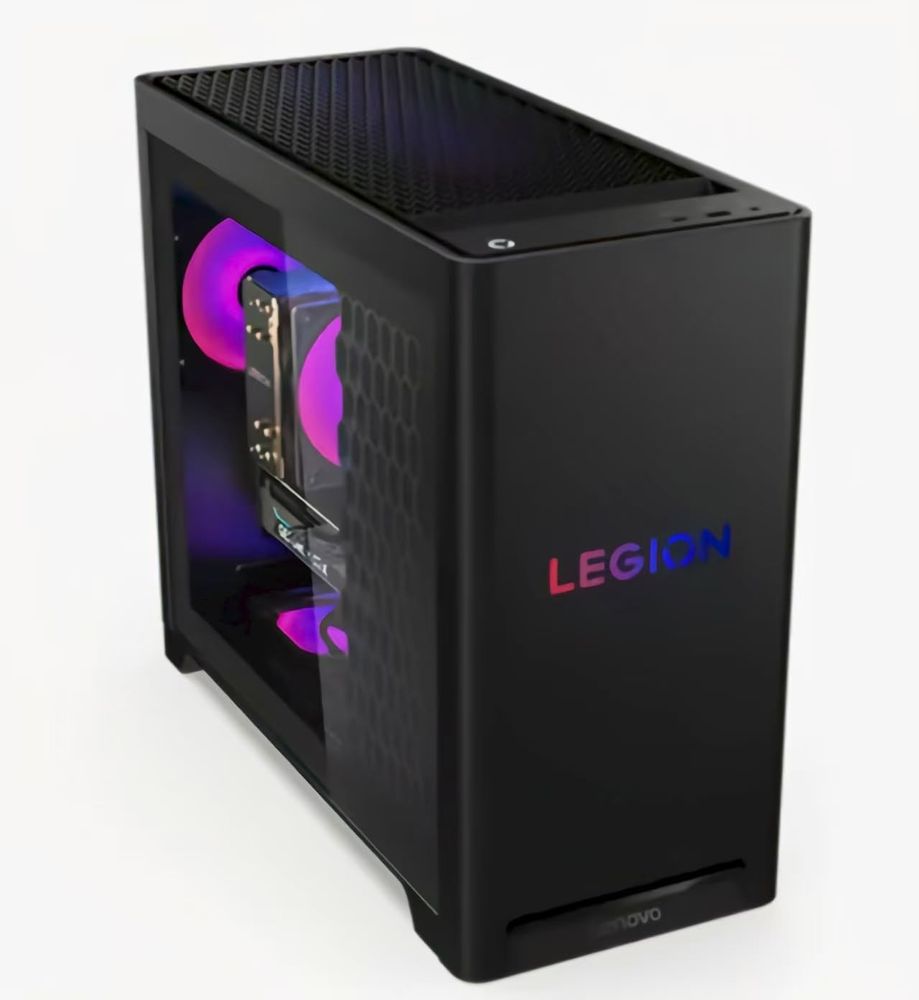
Lenovo Legion Tower 5 (2026)
Best OverallBuy if: you want the best 1440p system here and a tower you can upgrade later
Don't buy if: your budget stops under $2,000, or you want a laptop instead
The Legion Tower 5 is the pick every serious outlet keeps crowning, and the spec sheet shows why: a Ryzen 7 9800X3D — the fastest gaming CPU you can buy — paired with an RTX 5070 Ti with 16GB of VRAM, 32GB of DDR5 in two sticks, and a 1TB Gen4 drive. At $2,499.99 from Lenovo direct, it undercuts the same parts bought separately in November 2026, because Lenovo is still building from bulk memory bought before the price spike.
The safest $2,500 you can spend on a tower right now.
Two things to get right before you buy. First, the name: Tower 5 is the AMD tower, Tower 5i is the Intel one, and Tower 5a is the AMD Gen 10 — same case, different CPUs, so check the processor on the listing, not just the badge. Second, the price: Lenovo's list is $2,499.99, but stackable coupons took the 5i to $2,256.24 on 3 November and the 7800X3D version to $2,371.99 on 11 November — while Amazon's own listing sat at $2,716.41 on 5 November. Buy direct, and check for a coupon before you pay list.
Pros
- Fastest gaming CPU here — the Ryzen 7 9800X3D
- 16GB of VRAM for 1440p high-refresh play
- 32GB of dual-channel memory, not a single stick
- Standard board and power supply, so upgrades are easy
Cons
- $2,499.99 is list — coupon prices come and go
- Amazon's price runs higher, at $2,716.41
- Three similar names make the wrong config easy to buy
- No monitor, keyboard or mouse in the box
List price $2,499.99 at Lenovo direct — coupon deals of $2,256–$2,372 were seen 3–11 Nov. Check the price before buying, as prices change.
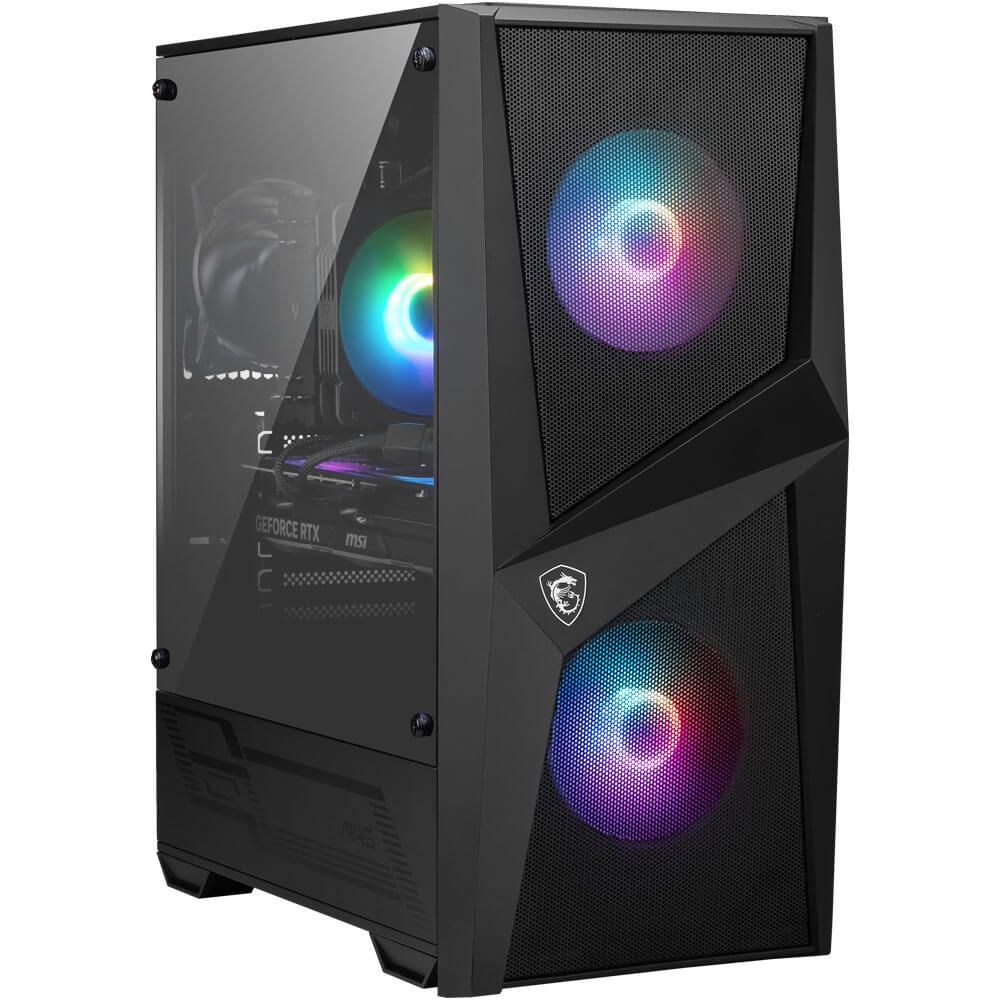
MSI Codex Z2
Best ValueBuy if: you want 1440p gaming for $1,799 and a 2TB drive
Don't buy if: you need the power supply named on the listing, or you want 16GB of VRAM
The Codex Z2 is the most tower for the money in this guide: a Ryzen 7 8700F, an RTX 5070 with 12GB of VRAM, 32GB of DDR5 and a 2TB drive for $1,799 on Amazon on 19 November. That is $700 less than the Legion for the same 1440p target, and the only thing you give up is the faster CPU and 4GB of VRAM — neither of which most 1440p games will miss.
The most tower for the money — if you buy the right SKU.
The catch is the name. "Codex Z2" covers a spread from $1,799 to $2,350 across sellers and SKUs on 19–20 November: the 2TB model A8NVP-436US is $1,799 on Amazon, the 1TB version is $1,819.99 at Best Buy, and one Newegg listing for the same 2TB model is $2,349.99. Buy the exact SKU, from the exact seller, at the exact price — or you pay $550 for the same tower. One more honest gap: the listing does not state the power supply brand or wattage, so check it on arrival rather than assuming a named unit.
Pros
- RTX 5070 with 12GB handles 1440p well
- 2TB of storage at this price
- 32GB of DDR5 memory
- $1,799 undercuts the same-GPU rivals by hundreds
Cons
- Same model name spans $1,799–$2,350 by seller and SKU
- Power supply brand and wattage not stated on the listing
- 12GB of VRAM is a 4K ceiling
- Refurbished units at $1,499 are not new
Amazon $1,799 on 19 Nov for SKU A8NVP-436US (2TB) — check the SKU and seller before buying, as prices change.
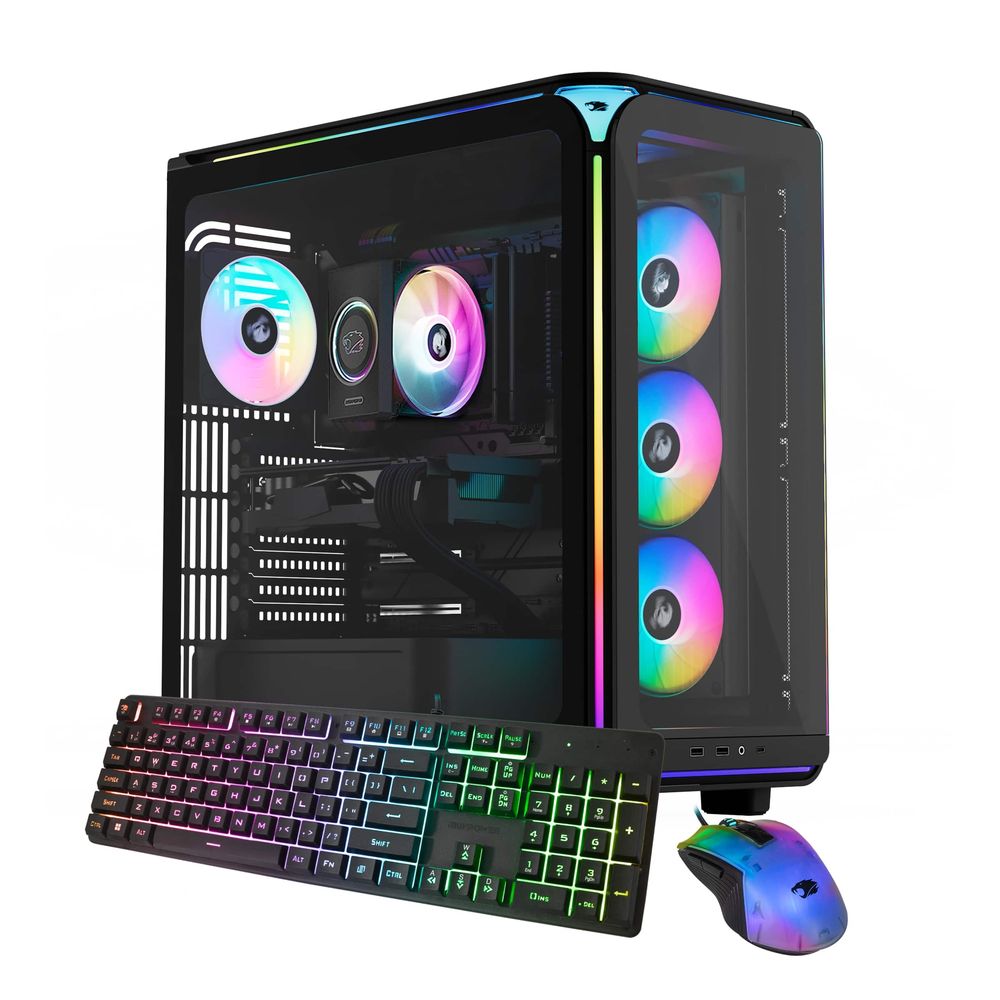
iBUYPOWER Element
Best Black Friday DealBuy if: you are buying today, 20 November, and want the cheapest RTX 5070 tower
Don't buy if: you are reading this after 20 November — the Best Buy price is gone
The Element is the deal of this guide, and it is also the most time-sensitive pick in it. Best Buy has the Ultra 7 265F config — RTX 5070, 32GB of DDR5, 1TB — for $1,349.99 today only, 20 November, down from $1,799.99. That is $450 less than the same GPU in the Codex Z2, for a tower that also ships with a keyboard and mouse in the box.
Today's price is the story. Tomorrow's is a different article.
The standing price is still good: $1,899.99 on Amazon, down from $2,299.99, for the Ryzen 9 7900X config with 32GB of DDR5 RGB memory at 5200MHz. And the family runs wide — Costco has a 9800X3D config with 2TB for $1,999.99 in its Black Friday sale, and Newegg's Element Y40 pairs the 9800X3D with a 5070 Ti for $2,599.99. But "Element" is a family, not one PC: always name the CPU, the GPU and the price together, or you will compare two different machines.
Pros
- Cheapest RTX 5070 tower today at $1,349.99
- Keyboard and mouse included — rare here
- 32GB of DDR5 and a 1TB drive
- Costco and Newegg configs give a real upgrade path
Cons
- The $1,349.99 price ends today, 20 November
- "Element" covers configs from $1,349.99 to $2,599.99
- Power supply brand and wattage not stated on the listing
- The 7900X is last-gen next to the 9800X3D
Amazon $1,899.99 (was $2,299.99); Best Buy one-day $1,349.99 on 20 Nov only for the Ultra 7 265F config. Check the price before buying, as prices change.
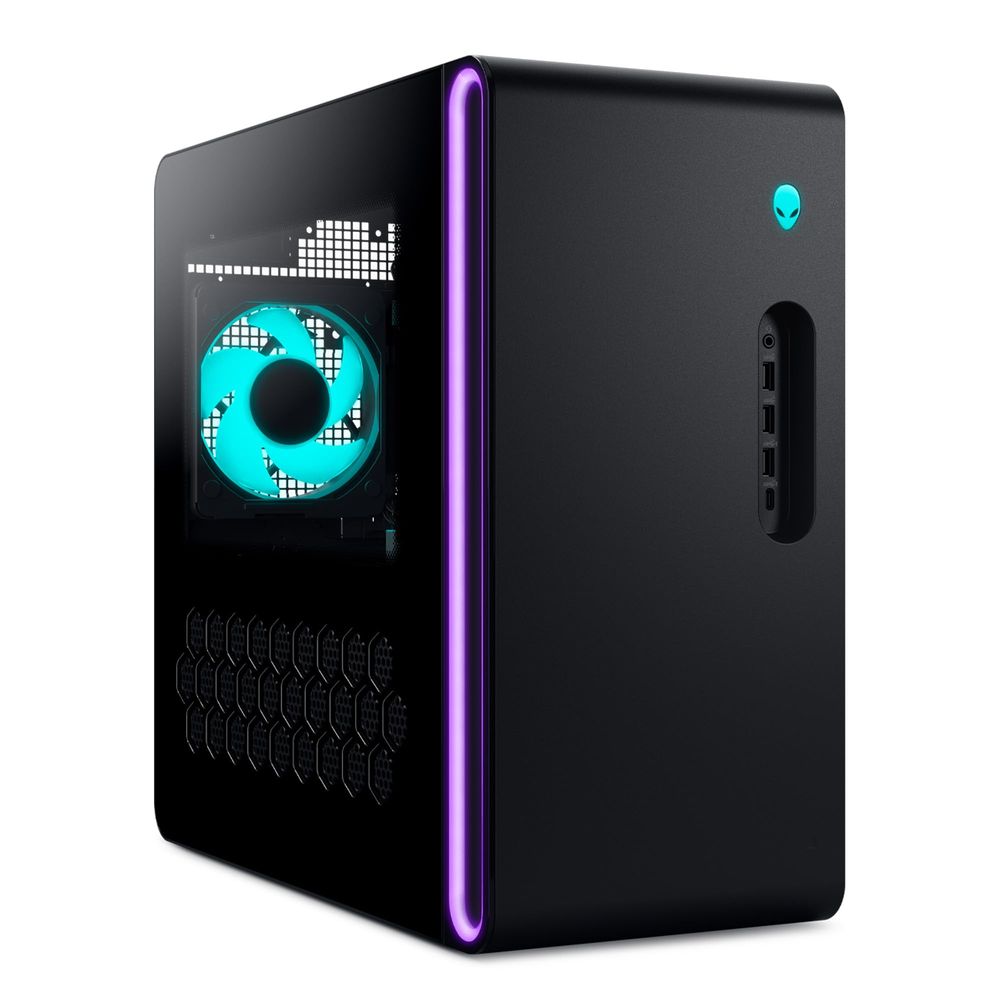
Alienware Aurora ACT1250
Best PremiumBuy if: you want the best-looking tower here and Alienware's design and support
Don't buy if: you plan to upgrade the board later without checking the exact SKU first
The Aurora is the premium pick, and the price tells the story: Micro Center had the 5070 Ti config for $2,299.99 on 15 November — $500 below the next-best price at the time — while Dell's own store lists a weaker 5060 Ti config at $2,129.99 and flags it sold out. Amazon has the RTX 5070 config at $1,899.97 on 20 November. Dell direct is currently the most expensive way to buy an Alienware, which is not how it is supposed to work.
The prettiest tower here — and the one to check twice.
Two traps live on this card. First, the power supply: entry configs ship a 500W unit, and the 750W and 1,000W upgrades cost $150 and $180 — a 500W supply in a tower at this price is a pass. Second, the board. I've seen conflicting data — TechRadar calls the Aurora's board proprietary, while another outlet says newer Auroras moved to standard ATX. My read is neither claim covers every SKU, so check the exact config before you count on an upgrade. One bright spot: Dell's 16GB build is two 8GB sticks, so at least the memory runs in dual-channel — though 16GB total is still a red flag at $2,129.99.
Pros
- The best-looking chassis in this guide
- RTX 5070 Ti with 16GB of VRAM
- Micro Center's $2,299.99 undercuts Dell direct by hundreds
- 1,000W power supply option on higher configs
Cons
- Entry configs ship a 500W power supply
- Dell direct is currently pricier than Amazon and Micro Center
- Board-upgrade evidence conflicts — check the exact SKU
- The 8GB 5060 Ti version costs $2,866.97 at Best Buy
Micro Center $2,299.99 on 15 Nov for the 5070 Ti config; Amazon 5070 config $1,899.97 on 20 Nov. Check the price before buying, as prices change.
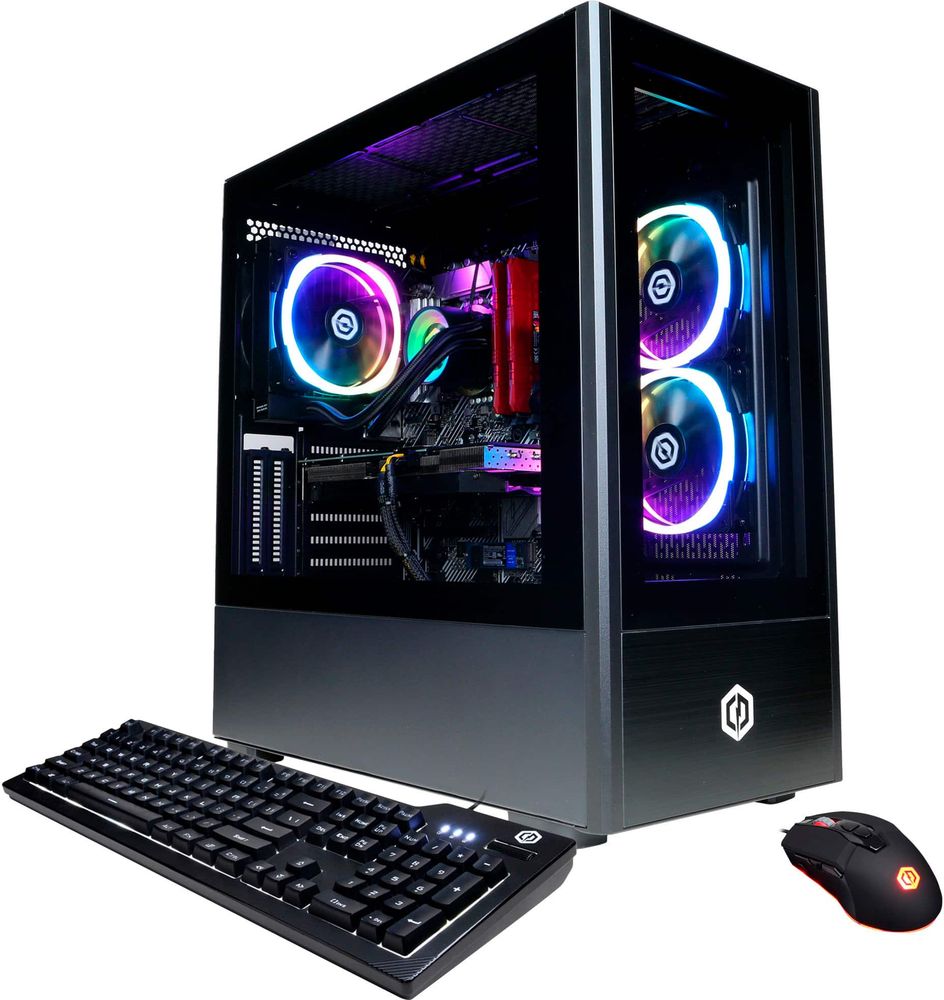
CyberPowerPC Gamer Xtreme
Best Under $1,300Buy if: you want the cheapest way into a current-gen tower and you play at 1080p
Don't buy if: you play at 1440p with ray tracing — the 8GB card will hold you back
The Gamer Xtreme is the cheapest current-generation tower in this guide — at one retailer. Walmart had SKU GXi4700WST — Ultra 5 250KF Plus, RTX 5060 Ti with 8GB, 16GB of DDR5, 1TB — for $1,199 on 9 November. The same SKU is $1,827.24 at Best Buy and $1,659.99 at Staples. That is a $628 spread on the identical machine, and it is the whole lesson of this guide in one price: name the retailer with the price, or the price means nothing.
A $1,199 tower — but only at Walmart.
Know what $1,199 buys. The 5060 Ti's 8GB of VRAM is fine at 1080p and tight at 1440p with ray tracing, and 16GB of RAM is the floor, not the standard. The listing does not state the power supply brand or wattage. And prices here move fast: CyberPowerPC's own-site prices rose $100 in four days between 8 and 12 November. If you want the 5070 instead, Best Buy has the same CPU with 32GB for $2,149.99 — but at that point the Codex Z2 at $1,799 is the better buy.
Pros
- The cheapest current-gen tower here at $1,199
- RTX 5060 Ti with DLSS 4 for 1080p
- 1TB NVMe storage
- Keyboard and mouse included
Cons
- 8GB of VRAM is tight at 1440p with ray tracing
- 16GB of RAM is the floor, not the standard
- Same SKU costs $1,827.24 at Best Buy — a $628 spread
- Power supply brand and wattage not stated
Walmart $1,199 on 9 Nov for SKU GXi4700WST — the same SKU is $1,827.24 at Best Buy. Check the price before buying, as prices change.
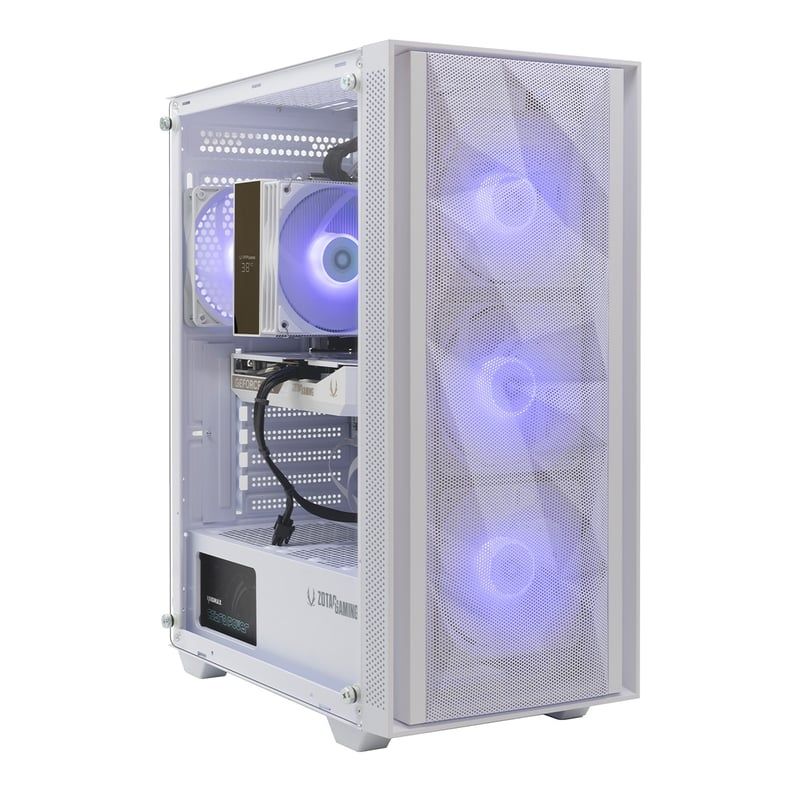
ZOTAC MEK
Best Budget 1080pBuy if: you want a 1080p tower under $1,300 with a named power supply
Don't buy if: you play at 1440p — 8GB of VRAM and 16GB of RAM are both floors here
The MEK is the budget pick that does something almost no other tower at this price does: it names its power supply. The listing states a 650W 80+ Gold unit, alongside a Ryzen 5 9600X, an RTX 5060 with 8GB, 16GB of DDR5 and a 1TB drive, with Wi-Fi 6E, a 1-year system warranty and a 3-year GPU warranty. It is US-assembled, and at $1,299.99 on Amazon on 19 November it is the cheapest honest 1080p tower here.
The budget pick that actually names its power supply.
Two warnings. First, the price moved: this same model was about $999 earlier in November, so waiting for a better price already cost $300 — check the live price before you decide to wait. Second, the name: a second MEK pairs the same RTX 5060 with a Ryzen 5 5500 and 16GB of DDR4 under model MEKA5060A5500BR1. Same name, older platform, slower memory. Check the model code — MEKA5060A9600XWR1 is the one in this guide — and do not pay the DDR5 price for the DDR4 machine.
Pros
- Named 650W 80+ Gold power supply — rare at this price
- 3-year GPU warranty
- US-assembled with Windows 11 Home included
- The cheapest 1080p tower here with a current CPU
Cons
- Price rose from about $999 to $1,299.99 in November
- 8GB VRAM and 16GB RAM are both 1080p-tier
- A DDR4 variant shares the same MEK name — check the model code
- No keyboard or mouse in the box
Amazon $1,299.99 on 19 Nov for model MEKA5060A9600XWR1 — it was about $999 earlier in November. Check the price before buying, as prices change.
Also Worth Knowing
Five more systems came up in research and did not make the six. The HP Omen 35L is the honourable mention: a solid tower, but HP's own configurator ships base configs with a single 16GB stick of RAM, and HP direct runs about $1,000 above Best Buy on the same spec — buy it only in a two-stick config from a retailer. The NZXT Player Two is $2,899 list, or $2,829 in its Black Friday sale, and Player One and Player Three are $1,499 and $4,299 — good machines, but NZXT Flex is a subscription, not a purchase, so do not compare its monthly price with these buy prices.
The Skytech KING95 is worth a look at $1,999.99 at Best Buy for the 9700X and RTX 5070 — but only the 16GB version; the 32GB version with the 7800X3D is $2,279.99, and the 5060 Ti 16GB version is also $1,999.99, so read the spec before you pay. The Dell Tower Plus is the budget wildcard: its $1,449.99 tier frequently drops to $1,049.99, though it is a tower for light gaming, not the 1440p machines above. And the Corsair Vengeance i7600 at about $3,199.99 is the premium alternative to the Aurora — same class, different badge, and the one to check if Alienware's board question puts you off.
Are Prebuilt Gaming PCs Worth It in 2026?
Yes — in November 2026, for most buyers. Memory prices spiked this year, and prebuilt makers bought their memory in bulk before the rise, so a clean-spec prebuilt now undercuts the same parts list bought at retail. The value is real, but only when the spec sheet is clean — a single stick of RAM or a 500W power supply can eat the whole saving.
Prebuilt gaming PCs are worth it in 2026 for most buyers. According to Newegg Insider, OEMs bought memory before the price spike, so prebuilt systems with a Ryzen 7 9800X3D and an RX 9070 XT were coming in cheaper than the same parts list in late October 2026. The value holds only when the spec sheet is clean.
The best prebuilt gaming PC for most buyers is the Lenovo Legion Tower 5 with a Ryzen 7 9800X3D and an RTX 5070 Ti. According to Tom's Hardware, the RTX 5070 Ti alone was selling for about $1,249 on 30 October against a $749 list price, which is why the whole system at $2,499.99 undercuts the parts.
For most buyers right now, a prebuilt is the smarter buy than building your own — and that's not something I'd have said a year ago. The memory spike flipped the maths: the same RAM that cost $120 last year costs double now at retail, while Lenovo and MSI are still shipping systems built from stock bought before the rise. Once memory prices settle, DIY wins again. Today it doesn't.
It's not the GPU that'll catch you out — it's the fine print, and you won't see it until the box is open.
Is It Cheaper to Build or Buy a Prebuilt in 2026?
In November 2026, buying a prebuilt is usually cheaper — for the first time in years. A DIY build pays today's spiked prices on RAM and GPUs at retail; a prebuilt ships with parts the maker bought in bulk before the spike. The crossover point is roughly $1,500: below it the gap is small, above it the prebuilt wins by hundreds.
Building a gaming PC is cheaper than buying a prebuilt only when you already own parts or find the memory at old prices. A new build in November 2026 pays the spiked RAM and GPU prices at retail, while prebuilt makers still ship systems built from bulk memory bought before the rise. The gap closes once memory prices settle.
Price the same list yourself and the gap shows up fast. A 9800X3D and a 5070 Ti alone cost most of the Legion's $2,499.99 at November retail, before you add the board, memory, storage, case, power supply and Windows licence. The old advice — build it yourself, save hundreds — assumed cheap RAM and GPUs at list price. Neither is true right now.
DIY still wins in three cases: you already own a case, power supply and storage; you want one specific motherboard or a custom cooling setup; or you are buying after memory prices settle. If you do want to build, our guides on what you need to build a gaming PC and the most important parts of a gaming PC cover the parts order first.
What Should I Look For in a Prebuilt Gaming PC?
Four things, in order: the RAM sticks (two sticks, 32GB, DDR5), the GPU's VRAM in gigabytes (12GB or 16GB for 1440p), the power supply (named brand, 650W or more), and the motherboard (standard ATX, so you can upgrade). Check the exact model code and the price date, too.
To check a prebuilt before you buy it, follow these steps: 1. Read the RAM line for stick count and speed. 2. Check the GPU's VRAM in GB. 3. Find the power supply wattage and brand. 4. Confirm the board is standard ATX. 5. Check the price date and retailer.
The RAM line is where most traps hide. "32GB" means nothing on its own — you want "2x16GB", two sticks running in dual-channel. HP's own configurator ships the Omen 35L base config with one 16GB stick, and that single stick costs you frames in every game. The VRAM line is the second trap: the RTX 5060 Ti ships in 8GB and 16GB versions under the same name, and the 8GB version is a different card in everything but the badge. The power supply line is the third: three of the six cards in this guide do not state the PSU brand or wattage on the listing at all, and the Alienware entry configs ship a 500W unit. A 500W supply in a $2,000 tower is a pass.
Then read the box. Only the Element includes a keyboard and mouse. None of the six ships with a monitor. And check the price date: a "deal" from July 2026 is not a deal in November, and the same SKU can cost $628 more at a different retailer — the Gamer Xtreme is $1,199 at Walmart and $1,827.24 at Best Buy.
Is 16GB of RAM Enough for Gaming in 2026?
16GB is enough to play, but it is no longer the standard above $1,200. 32GB in two sticks is the right buy at this price — and a single 16GB stick at $2,000 is a trap, because it runs in single-channel mode and costs you frames.
Think of it as lanes on a road. One 16GB stick is a single lane: the CPU can only fetch memory down one path at a time. Two 8GB sticks — or two 16GB sticks — open a second lane, and the same games run faster on the same hardware. That is why the Omen 35L's single-stick base config is a problem even though the number on the box says 16GB.
At 1080p on a budget, 16GB in two sticks is fine — the Gamer Xtreme and the MEK both ship it, and both are priced for it. At $1,800 and up, 32GB is the expectation: the Codex Z2, the Element and the Legion all ship 32GB in two sticks. One more check: make sure the memory is DDR5, not DDR4. The second MEK variant pairs the same RTX 5060 with 16GB of DDR4 — slower, and not worth the DDR5 price.
Is 8GB of VRAM Enough for 1440p Gaming?
No — not with ray tracing on, and not in recent releases. 8GB cards spill textures to system memory, which shows up as stutter. Buy 12GB or 16GB for 1440p: the RTX 5070 or 5070 Ti.
Here's the thing: the name on the box no longer tells you the VRAM. The RTX 5060 Ti ships in 8GB and 16GB versions at the same price tier, and the 5070 Ti only comes with 16GB — which is part of why it's the safer buy.
At 1080p, 8GB is still fine — the Gamer Xtreme and the MEK both run it, and both are honest 1080p towers. At 1440p, 12GB is the floor and 16GB is comfortable: the Codex Z2's 5070 handles 1440p well, and the Legion and Aurora's 5070 Ti handles it with room to spare. At 4K, do not buy below 16GB at all — and that means the 5070 Ti, the 5080 or a 9070 XT with 16GB.
Can I Upgrade a Prebuilt Gaming PC Later?
Yes, if it uses standard parts. The Legion Tower 5 uses a standard board and power supply, so a RAM or GPU swap later is straightforward. The Alienware Aurora is the risk — reports conflict on its board, so check the exact SKU before you count on an upgrade.
The upgrade path most buyers actually use is simple: add a second stick of RAM to reach 32GB, add a second SSD when the 1TB drive fills up, and swap the GPU in two or three years. All three work only if the board has free slots and the power supply has the watts and the connectors — which is why the PSU line matters on day one, not just on upgrade day. A 500W supply in the Aurora's entry configs is the bottleneck that blocks a bigger GPU later.
One more check: the warranty. ZOTAC's MEK carries a 1-year system warranty and a 3-year GPU warranty, and opening the case to add RAM or storage does not void most makers' warranties — but check the terms on your exact model before you open the side panel.
Do Prebuilt Gaming PCs Come With a Monitor?
Almost never. Five of the six towers here ship with no monitor, and only the iBUYPOWER Element includes a keyboard and mouse. Budget for a display separately — our 1440p monitor guide lands 23 November.
That matters because the monitor is a real cost: a decent 1440p display runs $200–$400, and a 1080p display runs $100–$200. A $1,199 tower plus a $250 monitor is a $1,449 setup, not a $1,199 one. Check the "what's in the box" line on the listing before you buy — it is the line most buyers skip, and the one that causes the most returns.
How Much Should I Spend on a Prebuilt Gaming PC?
$1,200–$1,300 buys a solid 1080p tower (Gamer Xtreme, MEK). $1,800 buys a real 1440p machine (Codex Z2). $2,500 buys the best 1440p system here (Legion Tower 5). Above $3,000 you are paying for a 5080 or 5090, and most buyers will not see the difference at 1440p.
Timing matters as much as the number. Amazon's Black Friday Week runs 19–30 November, Walmart's main event runs 23–29 November, and Best Buy's sale started 19 November. But waiting is not always the right call: the Element's $1,349.99 price ends today, 20 November, and the MEK already rose from about $999 to $1,299.99 during November. The Legion and Codex can wait — Lenovo's coupons come back, and the Codex's $1,799 price has held. The Aurora's Micro Center price is the one to watch: $2,299.99 on 15 November, and the deal of the guide if it returns.
Buying Guide: What Actually Matters
Look — if you're buying your first tower this week, here's what actually works: check the RAM sticks first, the VRAM second, and the price date third.
Start with the monitor you own or plan to buy. A 1080p monitor pairs with the 5060 (MEK) or 5060 Ti (Gamer Xtreme); a 1440p monitor pairs with the 5070 (Codex Z2, Element) or the 5070 Ti (Legion, Aurora). Then set the budget with the monitor inside it — a $1,799 tower and a $300 monitor is a $2,099 purchase. Then read the four lines: RAM sticks, VRAM in gigabytes, power supply brand and wattage, board type. Then name the retailer and the date, and buy from the cheapest one — not the first one.
Or maybe I should say it this way: buy the system, not the spec sheet. Two towers can share the same CPU and GPU and be $600 apart on value, because one ships a single stick of RAM, an 8GB card under the same name, or a 500W power supply. The spec sheet is the advert. The RAM line, the VRAM line and the PSU line are the product.
What to Skip
Single-stick RAM configs above $1,200. The HP Omen 35L base config ships one 16GB stick. At that price, it should be two.
8GB 5060 Ti cards at premium prices. Best Buy lists the Aurora ACT1250 with an 8GB 5060 Ti at $2,866.97 — more money than the 5070 Ti version at Micro Center, for a weaker card.
The DDR4 MEK variant at the DDR5 price. Model MEKA5060A5500BR1 pairs the RTX 5060 with a Ryzen 5 5500 and DDR4. Same name, older platform — check the model code.
Refurbished units sold as new. The Codex Z2 refurb at $1,499 in the MSI store is a returned machine, not a new one. At $1,799 new, the refurb saves $300 and costs you the new warranty.
NZXT Flex as a purchase. Flex is a subscription — a monthly fee, not a price. Do not compare it with the buy prices in this guide.
Dead deals. The Aurora's $1,349.99 February price is gone, and the Skytech Archangel 5 lost its buy path on 4 November. Neither belongs in a November 2026 buying guide.
Frequently Asked Questions
Are prebuilt gaming PCs worth it in 2026?
Yes, for most buyers. Memory and GPU prices spiked in 2026, and prebuilt makers still ship systems built from bulk parts bought before the rise — so a clean-spec prebuilt now undercuts the same DIY parts list.
What's the best prebuilt gaming PC for 1440p?
The Lenovo Legion Tower 5 with a Ryzen 7 9800X3D and RTX 5070 Ti at $2,499.99. Its 16GB of VRAM and 32GB of dual-channel memory handle 1440p high-refresh play without the traps cheaper towers hide.
How much RAM do I need in a gaming PC in 2026?
32GB of DDR5 in two sticks is the standard at $1,200 and up. 16GB is the floor, and a single 16GB stick is a red flag above that price — it runs in single-channel mode and costs you frames.
Is 8GB of VRAM enough for gaming?
Yes at 1080p, and no at 1440p with ray tracing. 8GB cards spill textures to system memory in recent releases. For 1440p, buy 12GB or 16GB — the RTX 5070 or 5070 Ti.
Should I wait for Black Friday to buy a gaming PC?
Not for three picks here. The iBUYPOWER Element's $1,349.99 Best Buy price ends today, 20 November, and the ZOTAC MEK already rose from about $999 to $1,299.99. The Legion and Codex can wait.
Can I upgrade a prebuilt gaming PC later?
Yes, if it uses standard parts. The Legion Tower 5 and HP Omen use standard boards and power supplies. The Alienware Aurora is the risk — reports conflict on whether its board is proprietary, so check the exact SKU.
Do prebuilt gaming PCs come with a monitor?
Almost never. Most towers here ship with no monitor, keyboard or mouse — the iBUYPOWER Element is the exception, with a keyboard and mouse in the box. Budget for a display separately.