Best Budget Microphone for Podcasting (2026): 6 Picks

Your first test recording sounds like a phone call from a bathroom.
If you're starting a podcast in a spare bedroom or at a kitchen table, that echo is the room, not your voice. Bare walls bounce sound back at the mic. A laptop mic hears all of it. This guide fixes that with cheap mics built for real rooms.
Best budget microphone for podcasting refers to a low-cost mic that records one clear voice in a normal room. It should sit close, reject echo and fan noise, and need no costly extras.
This guide covers solo and two-host shows recorded at home. If you stream live instead, our streaming microphone guide fits better. For work calls only, see the USB microphone for video calls guide.
Prices below were checked on 28 November 2026 at the makers' US stores and named retailers. Sales move them often, so check the live price before buying. Specs are the makers' own figures.
What's the Best Budget Microphone for Podcasting?
For most beginners, the Samson Q2U. It costs $69.99, works over USB or XLR, and needs nothing else to start.
The best budget microphone for podcasting is the Samson Q2U for most new shows. According to Samson, it uses a dynamic cardioid capsule with USB and XLR outputs, and the box includes a tripod stand, clip, windscreen and both cables. That full kit is why it wins.
A budget podcast microphone under $100 works best when it is dynamic and sits close to your mouth. According to The Podcast Host's gear survey, 42% of podcasters use a dynamic mic against 28% on a condenser. Most record in untreated rooms, where dynamics forgive echo.
Look — if you're recording in a bare room and your test file echoes, here's what actually works: a dynamic mic six inches from your mouth beats a costly condenser across the desk.
Samson Q2U vs Rode PodMic: the Q2U is better suited for beginners because it plugs straight into a laptop over USB. The PodMic works better when you already own an audio interface. The key difference is total cost, not sound alone.
How Much Does a Budget Podcast Setup Really Cost?
A USB kit costs the mic price. An XLR mic costs the mic plus an interface, a cable and a stand.
The true cost of a budget podcast setup depends on the connection. A USB or USB/XLR kit records the day it arrives. An XLR-only mic needs an audio interface, which is a small box that turns the mic signal into computer audio. That box is the hidden cost.
Here's the thing: a $99 XLR mic is not a $99 setup. The Focusrite Scarlett Solo 4th Gen lists at $159.99 and sells near $129.99 on sale. Add a cable and a stand, and the $99 mic passes $230 before you record a word.
| Product | Mic Price | Also Needed to Record | Ready on Day One? | |
|---|---|---|---|---|
| #1 | Samson Q2U | $69.99 | Nothing — stand and cables in the box | Yes |
| #2 | FIFINE AmpliGame AM8 | $57.99 | Nothing over USB — XLR cable sold apart | Yes |
| #3 | Maono PD200X | $80.99 | Nothing in the boom-arm bundle | Yes |
| #4 | Rode PodMic | $99 | Interface, XLR cable, stand or arm | No |
| #5 | Shure SM58 | $109 list | Interface, XLR cable, stand or arm | No |
| #6 | Behringer XM8500 | $19.90 | Interface, XLR cable, stand or arm | No |
The XM8500 shows the trap best. The mic costs about $20. The setup costs far more. Buy it only when an interface already sits on your desk.
Should I Buy a Dynamic or Condenser Microphone for Podcasting?
Buy dynamic for a normal room. Buy condenser only for a quiet, soft room.
A dynamic mic hears mostly what sits close in front of it. A condenser mic hears fine detail, and it hears the room too. In a bare bedroom, that detail turns into echo, fan hum and street noise.
Cardioid means the mic favours sound in front. It hears less from the sides and back. Every pick in this guide uses cardioid pickup, which suits one voice at a desk.
My honest take: most beginners should skip condenser mics even when demos sound richer, because demos happen in treated studios and your spare room is not one. Buy the room first — a rug, curtains and a bookshelf help more than a pricier capsule.
Quick note: soft rooms beat costly mics. Record facing curtains or a full wardrobe, not a bare wall.
Do I Need an XLR Microphone, or Is USB Enough?
USB is enough for a solo show. XLR earns its cost when two people record in one room.
USB mics plug straight into a computer. Nothing else to buy, nothing else to learn. XLR mics run through an interface, which lets you set each voice level apart and add mics later.
A hybrid mic does both. Start on USB today. Add an interface next year and keep the same mic. The Q2U, AM8 and PD200X all work this way, so none of them becomes waste.
Or maybe I should say it this way: buy the connection your show needs this month, not the one a studio tour made look fun.
Can Two People Record a Podcast with One Microphone?
Yes for a test episode. No for a show you plan to keep.
One cardioid mic favours one mouth. Two people sharing it lean in, drift back, and end up at two volumes. Editing cannot fully fix that gap.
The cheap fix is two hybrid mics and one interface later, or two USB mics recorded on two laptops. Remote guests are easier: each person records their own mic, and you line the files up in editing.
I've seen conflicting data on the Shure SM58 price — older guides still print $99, while US list price now sits at $109 with sales near $89. My read is simple: budget $109 and treat any sale as a bonus.
Quick Comparison
| Product | Best For | Key Specs | ||
|---|---|---|---|---|
| #1 | Samson Q2UBest Overall | First podcast, any room | Dynamic · USB + XLR · full kit · $69.99 | Check Price |
| #2 | FIFINE AmpliGame AM8Best Under $60 | Lowest ready-to-record cost | Dynamic · USB-C + XLR · touch mute · $57.99 | Check Price |
| #3 | Maono PD200XBest Software Controls | Voice shaping without extra apps | Dynamic · USB-C + XLR · 24-bit · $80.99 bundle | Check Price |
| #4 | Rode PodMicBest Sound with an Interface | Interface owners | Dynamic · XLR · built-in pop filter · $99 | Check Price |
| #5 | Shure SM58Best for Loud Rooms | Live shows and rough handling | Dynamic · XLR · steel grille · $109 list | Check Price |
| #6 | Behringer XM8500Cheapest Real Mic | Spare or second mic | Dynamic · XLR · case included · $19.90 | Check Price |
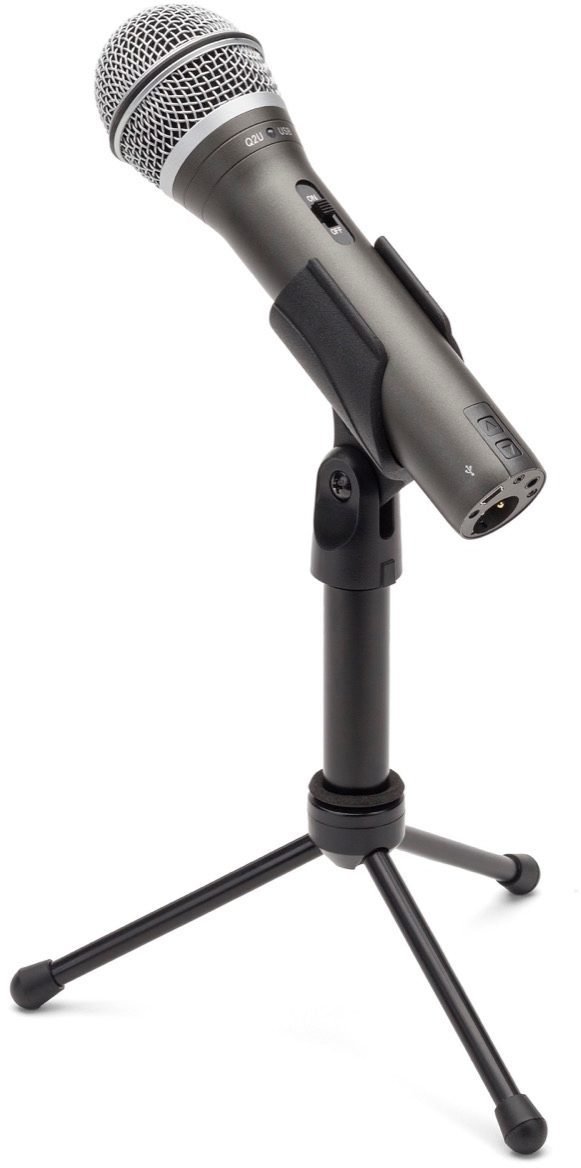
Samson Q2U
Best OverallBuy if: this is your first podcast mic and the room is untreated
Don't buy if: you want touch controls and a modern desk look
The Q2U is the default budget pick for a reason. Samson lists a dynamic cardioid capsule, 50 Hz–15 kHz response, and 16-bit/48 kHz USB recording. It also has a headphone output with level control, so you hear yourself with no delay.
The kit seals it. At $69.99 you get a tripod stand, clip, windscreen, USB cable and XLR cable. Record over USB now, add an interface later, keep the same mic. The on/off switch works, but it is slower than a touch mute.
Pros
- USB and XLR outputs
- Full starter kit in the box
- Dynamic capsule rejects room noise
- Headphone output with level control
Cons
- On/off switch, not touch mute
- 16-bit USB conversion
- Handheld look on a tripod
- Must sit close to your mouth
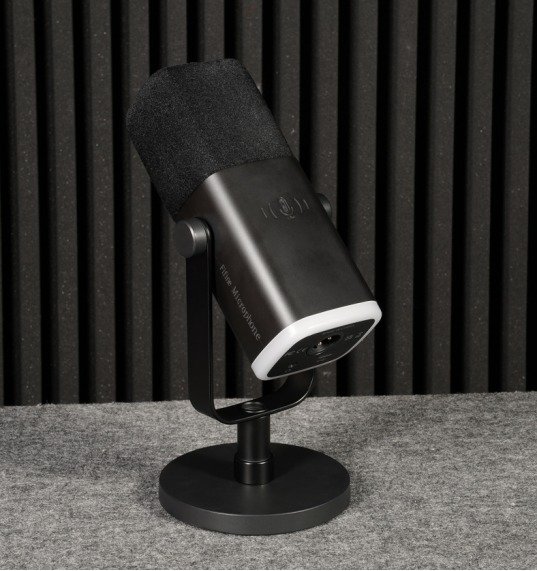
FIFINE AmpliGame AM8
Best Under $60Buy if: every dollar counts and you record solo over USB
Don't buy if: you plan to use XLR controls from day one
The AM8 is the cheapest ready-to-record pick here. FIFINE lists a dynamic cardioid capsule, USB-C and XLR outputs, 50 Hz–16 kHz response, and 16-bit/48 kHz USB audio. A gain knob, touch mute and headphone jack sit on the body.
Read the fine print. The mute, lights and headphone jack work over USB only, and no XLR cable sits in the box. At $57.99 from FIFINE's store, sales often drop it lower. The desk stand is included, so USB recording starts at once.
Pros
- Lowest ready-to-record price
- USB-C and XLR outputs
- Touch mute and gain knob
- Desk stand included
Cons
- Mute and lights are USB-only
- No XLR cable in the box
- Plastic body
- 120 dB max level suits voice, not loud amps
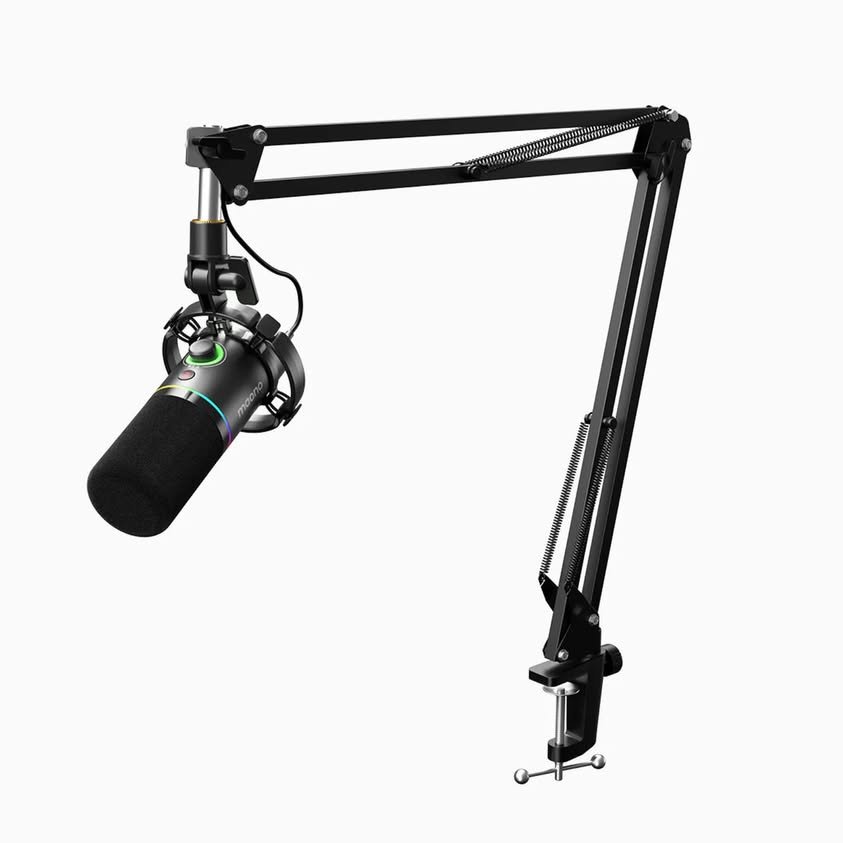
Maono PD200X
Best Software ControlsBuy if: you want EQ and voice shaping without extra apps
Don't buy if: you hate lights and software on a mic
The PD200X is the control pick. Maono lists a dynamic cardioid capsule, USB-C and XLR outputs, 40 Hz–16 kHz response, and 24-bit/48 kHz USB audio. A 2-in-1 knob sets gain and headphone volume, and one tap mutes.
Maono Link software adds EQ, a limiter and presets over USB. Maono's store lists the PD200X with its BA20 boom arm at $80.99, which is the bundle in the photo. The mic-only box holds a shock mount and USB cable, but no stand and no XLR cable.
Pros
- 24-bit USB audio
- EQ and limiter in Maono Link
- Metal body with shock mount
- Boom-arm bundle records at once
Cons
- Software features are USB-only
- No stand in the mic-only box
- No XLR cable included
- Lights will not suit every desk
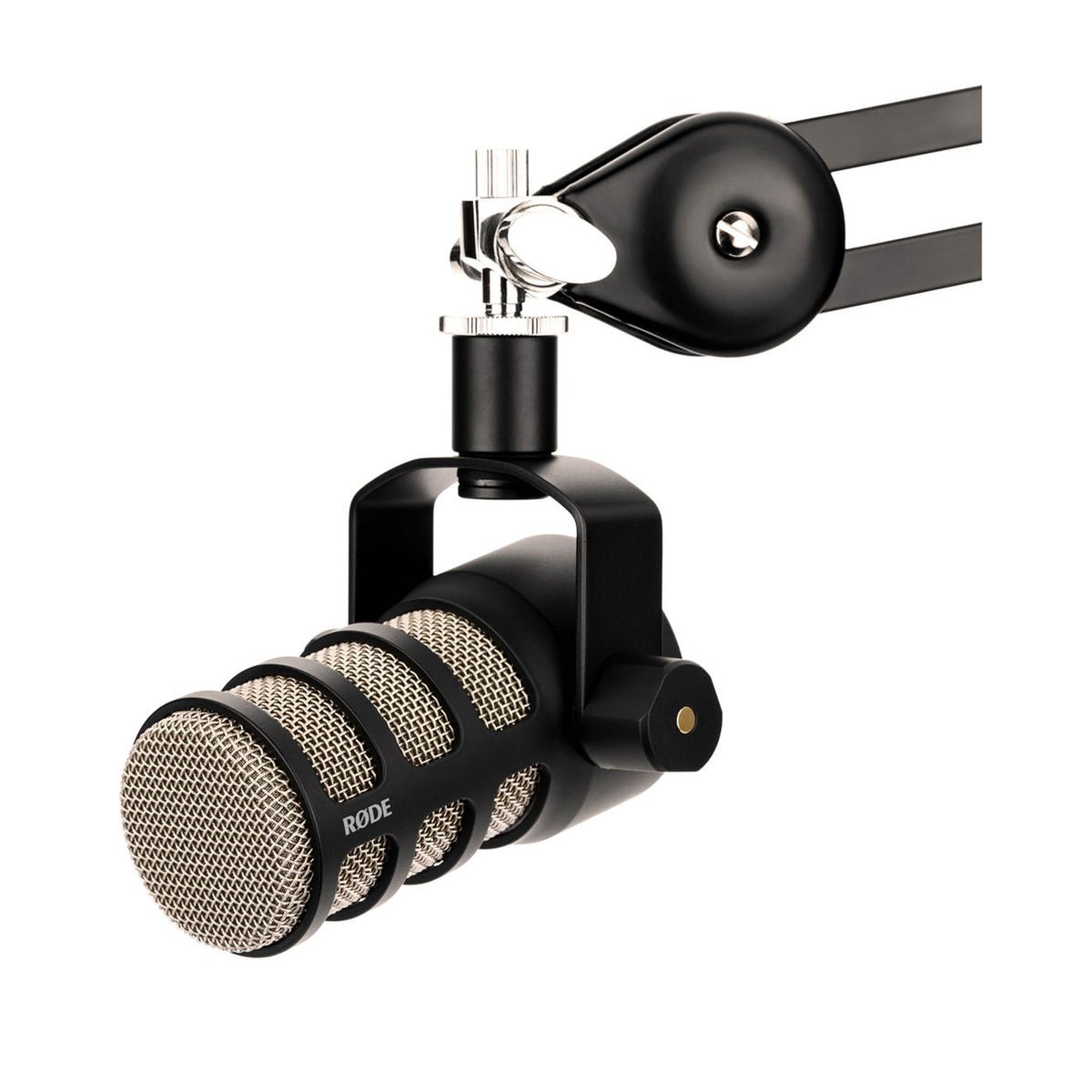
Rode PodMic
Best Sound with an InterfaceBuy if: an audio interface already sits on your desk
Don't buy if: you own no interface and the budget stops at $100
The PodMic is the best-sounding mic here. Rode lists a dynamic cardioid capsule, an internal pop filter that softens harsh p and b sounds, an internal shock mount, and an all-metal body. It costs $99 at Rode's US store.
Count the full setup before you buy. The PodMic is XLR only, so it needs an interface, an XLR cable and a stand or arm. Rode's own FAQ says the same. With an interface owned, it is the pick. Without one, the Q2U wins.
Pros
- Rich broadcast voice sound
- Built-in pop filter and shock mount
- All-metal body
- Strong room-noise rejection
Cons
- XLR only — interface required
- No stand or cable in the box
- Heavy at 937 g
- True setup passes $230
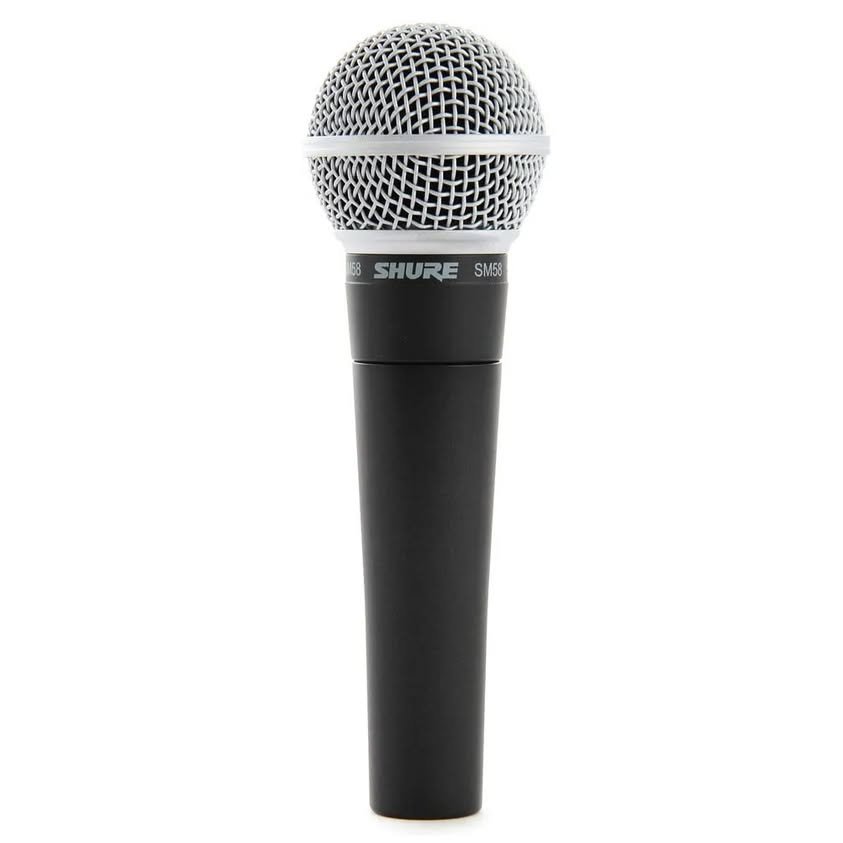
Shure SM58
Best for Loud RoomsBuy if: you record live shows or handle gear roughly
Don't buy if: you want a plug-in USB mic for a first episode
The SM58 is the stage standard. Shure lists a dynamic cardioid capsule, 50 Hz–15 kHz response, and a steel mesh grille built to take drops. A stand adapter and storage bag sit in the box. No cable does.
It suits loud rooms and live recording, where its tight pickup keeps feedback and crowd noise down. US list price is $109, with sales near $89. Like the PodMic, it needs an interface, a cable and a stand before it records.
Pros
- Extremely durable build
- Handles loud voices with ease
- Strong feedback rejection
- Stand adapter and bag included
Cons
- XLR only — interface required
- No cable in the box
- Handheld shape needs a stand
- List price rose to $109
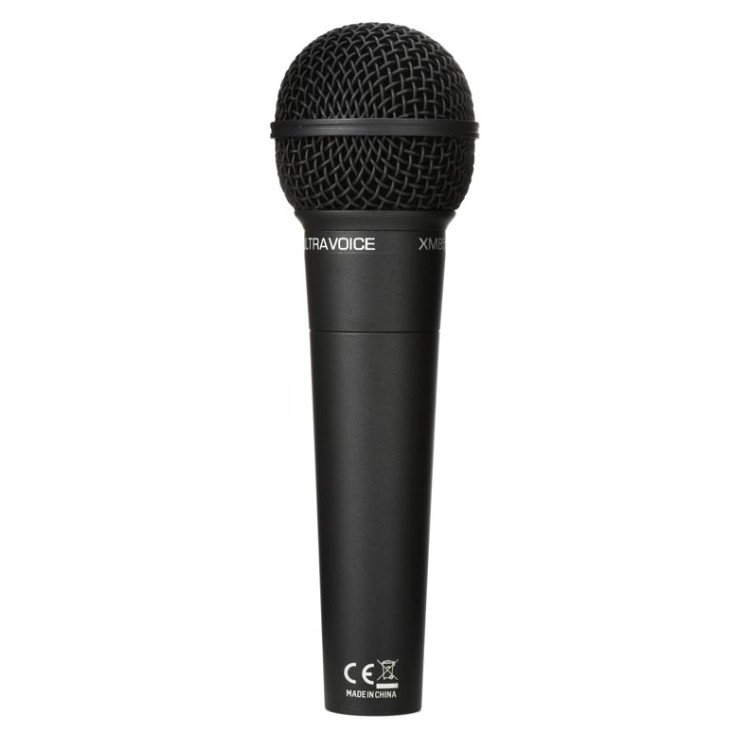
Behringer XM8500
Cheapest Real MicBuy if: you own an interface and need a spare or guest mic
Don't buy if: this would be your only mic and you own no interface
The XM8500 Ultravoice is the cheapest real mic here. Behringer lists a dynamic cardioid capsule, 50 Hz–15 kHz response, an internal shock mount and a two-stage pop filter. A stand adapter and hard case sit in the box.
At $19.90 it looks like a steal, and as a second mic it is. As a first mic it misleads: no cable, no stand, no USB. Add an interface and the cheap mic costs more than the Q2U kit. Buy it as a guest mic, not a starter.
Pros
- About $20 at US retailers
- Metal body with hard case
- Built-in pop filter
- Good guest or spare mic
Cons
- XLR only — interface required
- No cable or stand included
- Weak output needs interface gain
- Not a starter setup on its own
How to Set Up a Budget Podcast Microphone
Place it close, plug it in, set gain once, then record a test.
To set up a budget podcast microphone, follow these steps: 1. Place it six inches from your mouth. 2. Plug in USB or XLR. 3. Pick it in your recording app. 4. Set gain while speaking normally. 5. Record a one-minute test.
- Place it six inches from your mouth. Aim the front at your mouth, slightly to one side.
- Plug in USB or XLR. USB goes straight to the computer. XLR goes to the interface first.
- Pick it in your recording app. Choose the mic as the input before you record.
- Set gain while speaking normally. Gain is the input volume. Aim strong, never clipping.
- Record a one-minute test. Listen on headphones for echo, hum and harsh p sounds.
If the test echoes, move closer before you touch settings. A boom arm keeps the mic near your mouth and off the desk — our mic arm guide covers the cheap options.
Buying Guide: What Actually Matters
Four things matter most: distance, mic type, connection, and total cost.
Distance comes first. Six inches sounds close and clear. Two feet sounds thin and echoey. No spec fixes bad placement.
Mic type comes next. Dynamic mics forgive bare rooms. Condenser mics reward soft, quiet rooms with detail. Most first podcasts happen in bare rooms.
Connection decides the real price. USB kits record at once. XLR mics need an interface, a cable and a stand. Hybrids do both, so they grow with the show.
Total cost is the honest number. Add every part needed for episode one. Then compare. The cheapest mic rarely makes the cheapest setup.
Close first. Specs second.
Budget Podcast Microphones to Skip in 2026
The Audio-Technica ATR2100x-USB as a default pick. It was the Q2U's twin for years. Audio-Technica's US page now marks it discontinued, and major retailers list it as no longer available. Buy remaining stock only at a clearance price.
USB condensers sold as podcast mics for bare rooms. They hear the room as clearly as the voice. In a soft, quiet room they shine. In a spare bedroom they echo.
The Rode PodMic USB at a budget price. It is a fine mic, but it lists near $199, not $99. The $99 PodMic is XLR only. Check which PodMic a listing means before you pay.
No-name mics with no spec sheet. If the maker hides the capsule type and pickup pattern, the price is the only feature. Skip them.
Frequently Asked Questions
What's the best budget microphone for podcasting?
The Samson Q2U for most beginners. It costs $69.99, works over USB or XLR, and includes the stand and cables.
How much should I spend on my first podcast microphone?
About $60 to $70 buys a full USB kit. XLR setups cost more once the interface, cable and stand join the bill.
Should I buy a dynamic or condenser mic for podcasting?
Buy dynamic for a normal room. Buy condenser only for a quiet, soft room where echo stays low.
Do I need an audio interface for a podcast mic?
Only for XLR mics. USB and hybrid mics record without one, so beginners can skip the extra box.
Can two people use one microphone for a podcast?
Yes for a test, but levels drift. Two mics, or one mic each recorded apart, sound far steadier.
Why does my podcast recording echo?
Bare walls bounce your voice back. Move the mic closer, add soft furnishings, and record away from hard corners.
Is the Samson Q2U good enough for a real podcast?
Yes. Its dynamic capsule, dual outputs and full kit cover most solo shows until the room becomes the limit.