Best Monitors for Sim Racing 2026: 7 Top Picks
In sim racing, the monitor matters as much as the wheel. A wider field of view lets you see the apex on entry, spot rivals alongside you, and judge braking distances with far more confidence than a standard 16:9 display.
Below: seven monitors genuinely worth a sim racer's money in 2026, from affordable 34-inch ultrawides to 49-inch super-ultrawides. Picks are based on specifications and owner feedback, and every product is sold on Amazon — preceded by a short buying guide on what actually matters.
Best Sim Racing Monitors at a Glance
- Best overall: Alienware AW3423DWF — 34" QD-OLED, 165Hz
- Best super-ultrawide: Samsung Odyssey OLED G9 (G93SC) — 49", 240Hz
- Best burn-in warranty: MSI MPG 491CQPX — 49" QD-OLED, 240Hz
- Best LCD super-ultrawide: Samsung Odyssey G9 (G95C) — 49", 240Hz
- Ultimate triple replacement: Samsung Odyssey Neo G9 57" — dual 4K, 240Hz
- Best mid-range: ASUS TUF Gaming VG34VQL1B — 34", 165Hz
- Best budget pick: AOC CU34G2X — 34", 144Hz
Our Top 7 Monitors for Sim Racing in 2026
Our Top Pick
Alienware AW3423DWF
Best Overall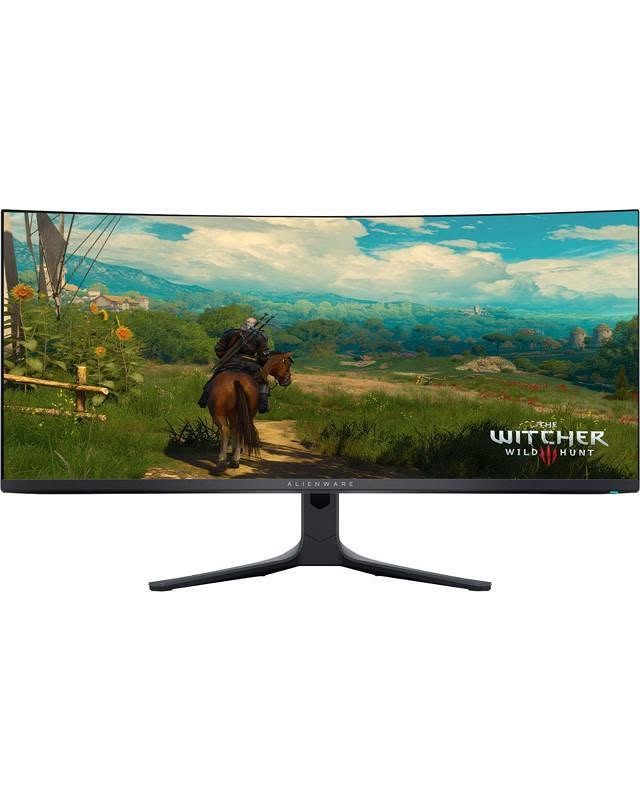
The AW3423DWF remains the best-balanced sim racing monitor you can buy, based on specifications and owner feedback. Its QD-OLED panel makes night racing feel genuinely dark — tarmac disappears into true black while headl…
Check Price on AmazonQuick Comparison
| Product | Key Specs | ||
|---|---|---|---|
| #1 | Alienware AW3423DWFBest Overall | 34-inch 21:9 QD-OLED, 3440x1440 · 165Hz refresh rate, 0.1ms response time · 1800R curvature, DisplayHDR True Black 400 | Check Price |
| #2 | Samsung Odyssey OLED G9 (G93SC)Best Super-Ultrawide | 49-inch 32:9 QD-OLED, 5120x1440 · 240Hz refresh rate, 0.03ms response time · 1800R curvature, DisplayHDR True Black 400 | Check Price |
| #3 | MSI MPG 491CQPX QD-OLEDBest Burn-In Warranty | 49-inch 32:9 QD-OLED, 5120x1440 · 240Hz refresh rate, 0.03ms response time · 1800R curvature, DisplayHDR True Black 400 | Check Price |
| #4 | Samsung Odyssey G9 (G95C)Best LCD Super-Ultrawide | 49-inch 32:9 VA panel, 5120x1440 · 240Hz refresh rate, 1ms response time · 1000R curvature, DisplayHDR 600 | Check Price |
| #5 | Samsung Odyssey Neo G9 57"Ultimate Triple-Screen Replacement | 57-inch 32:9 VA panel, 7680x2160 (dual 4K) · 240Hz refresh rate, 1ms response time · 1000R curvature, Quantum Mini-LED, DisplayHDR 1000 | Check Price |
| #6 | ASUS TUF Gaming VG34VQL1BBest Mid-Range | 34-inch 21:9 VA panel, 3440x1440 · 165Hz refresh rate, 1ms response time · 1500R curvature, DisplayHDR 400 | Check Price |
| #7 | AOC CU34G2XBest Budget Pick | 34-inch 21:9 VA panel, 3440x1440 · 144Hz refresh rate, 1ms response time · 1500R curvature, FreeSync support | Check Price |
Alienware AW3423DWF
Best OverallBuy if: you're looking for 34-inch 21:9 QD-OLED at 3440x1440 — true blacks make night racing feel dark
Don't buy if: you can't live with needing DisplayPort for the full 165Hz
The AW3423DWF remains the best-balanced sim racing monitor you can buy, based on specifications and owner feedback. Its QD-OLED panel makes night racing feel genuinely dark — tarmac disappears into true black while headlights pop — and at 165Hz with near-instant response, wheel-to-wheel battles stay clean. Dell's three-year warranty explicitly covering burn-in removes the biggest OLED worry in a game full of static HUDs. Just use DisplayPort for the full 165Hz, and know peak brightness is modest in a sunlit room.
Pros
- 34-inch 21:9 QD-OLED at 3440x1440 — true blacks make night racing feel dark
- 165Hz with 0.1ms response keeps wheel-to-wheel battles clean
- Dell's 3-year warranty explicitly covering burn-in
- 1800R curvature with AMD FreeSync Premium Pro
Cons
- Needs DisplayPort for the full 165Hz
- Peak brightness modest in sunlit rooms
- 34-inch 21:9 less immersive than 49-inch super-ultrawides
Full specifications
- 34-inch 21:9 QD-OLED, 3440x1440
- 165Hz refresh rate, 0.1ms response time
- 1800R curvature, DisplayHDR True Black 400
- AMD FreeSync Premium Pro, 3-year burn-in warranty
Prices change frequently — click through to see today's price.
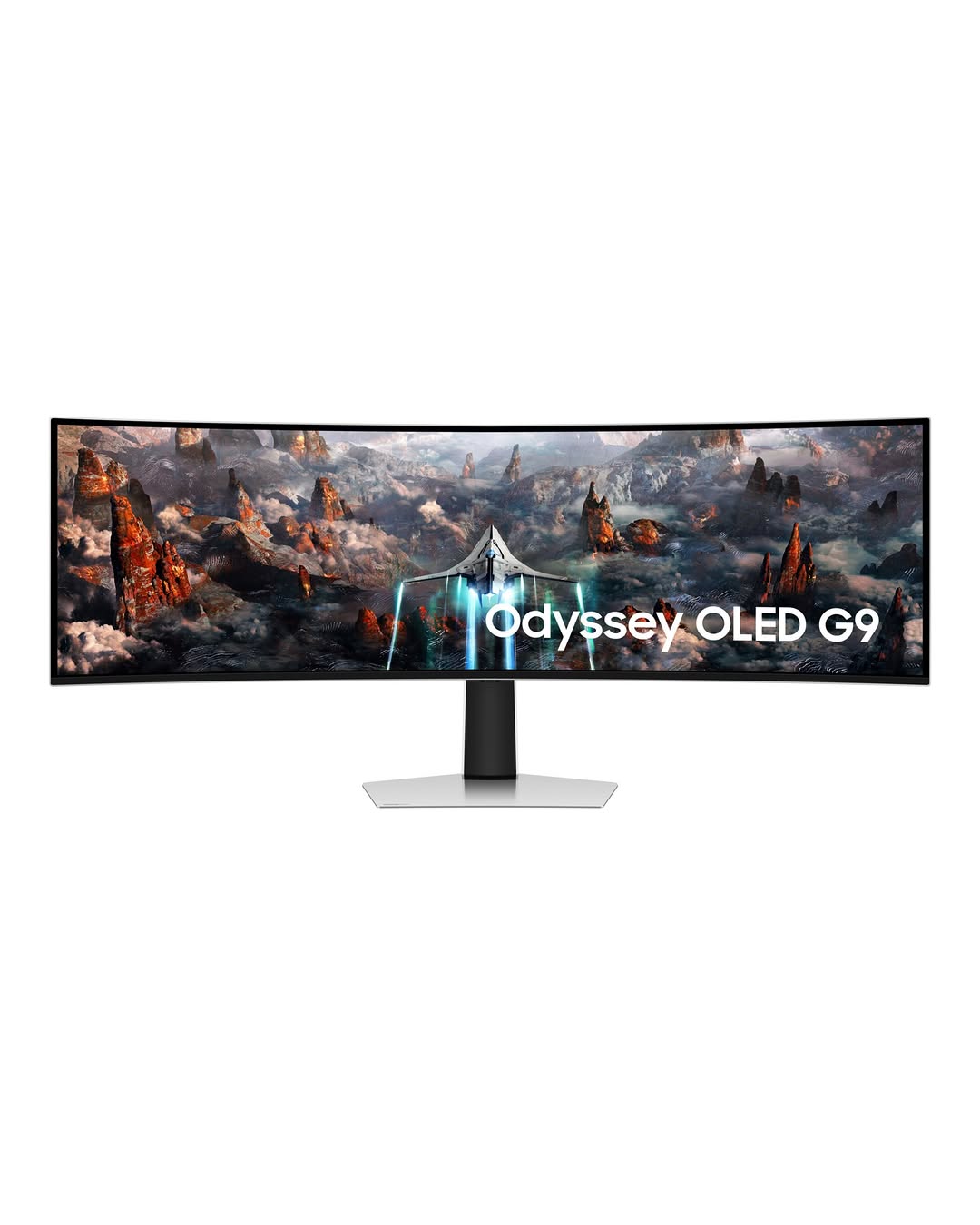
Samsung Odyssey OLED G9 (G93SC)
Best Super-UltrawideBuy if: you need 49-inch 32:9 QD-OLED: two 27-inch monitors fused with no bezel
Don't buy if: 5120x1440 at 240Hz demands a high-end GPU is a dealbreaker for you
The most immersive screen for sim racing short of building a triple-monitor rig. The 49-inch 32:9 panel wraps far enough into your periphery that a car alongside you genuinely feels beside you, and the QD-OLED image is spectacular — night endurance racing looks properly dark while 240Hz with 0.03ms response stays smear-free. The costs are real: 5120x1440 at high refresh rates wants a high-end GPU, and the panel is nearly four feet wide, so measure your desk first.
Pros
- 49-inch 32:9 QD-OLED: two 27-inch monitors fused with no bezel
- 240Hz with 0.03ms response — smear-free at high speeds
- 1800R curve wraps into the periphery for rivals alongside you
- DisplayHDR True Black 400 plus Picture-by-Picture mode
Cons
- 5120x1440 at 240Hz demands a high-end GPU
- Nearly four feet wide — measure the desk first
- QD-OLED needs pixel-care routines for static HUDs
Full specifications
- 49-inch 32:9 QD-OLED, 5120x1440
- 240Hz refresh rate, 0.03ms response time
- 1800R curvature, DisplayHDR True Black 400
- AMD FreeSync Premium Pro, Picture-by-Picture mode
Prices change frequently — click through to see today's price.
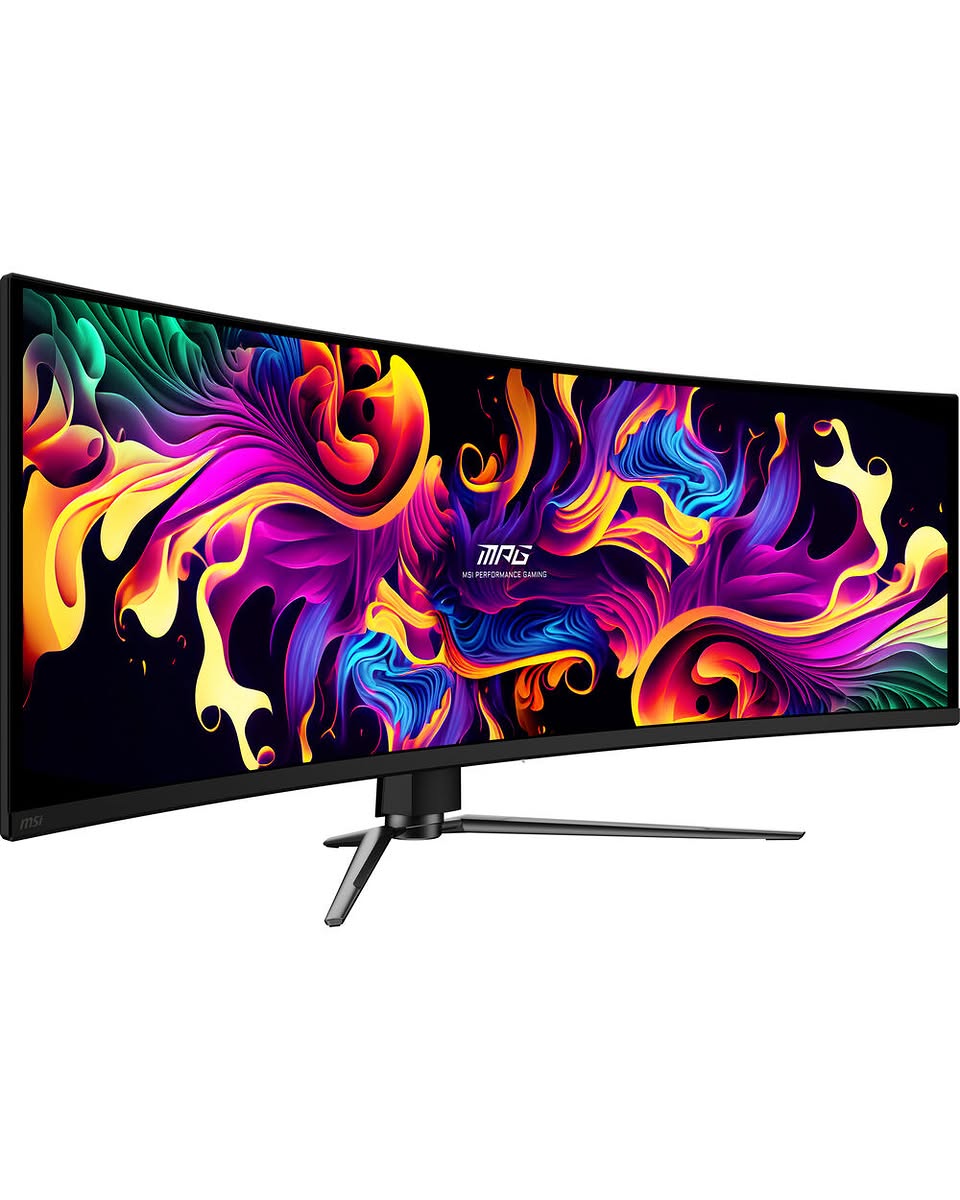
MSI MPG 491CQPX QD-OLED
Best Burn-In WarrantyBuy if: you prefer explicit 3-year burn-in warranty takes OLED anxiety off the table
Don't buy if: you won't accept same high-end GPU demands as other 5120x1440 240Hz panels
The MPG 491CQPX delivers flagship QD-OLED image quality with the single biggest OLED anxiety — burn-in — taken off the table by an explicit three-year burn-in warranty. For a racer who'll spend hundreds of hours staring at static speed, gear, and track-map HUDs, that coverage matters more than any other spec line. The 1800R curve is a well-judged middle ground between immersion and usable desktop space, and the fanless graphene heatsink runs silently — welcome when engine audio is the soundtrack.
Pros
- Explicit 3-year burn-in warranty takes OLED anxiety off the table
- 49-inch 32:9 QD-OLED, 240Hz, 0.03ms response
- Fanless graphene heatsink runs silently — no fan noise over engine audio
- MSI OLED Care 2.0 pixel protection routines
Cons
- Same high-end GPU demands as other 5120x1440 240Hz panels
- Huge footprint needs a deep desk and strong mount
- 1800R curve is gentler than the 1000R cockpit-wrap alternatives
Full specifications
- 49-inch 32:9 QD-OLED, 5120x1440
- 240Hz refresh rate, 0.03ms response time
- 1800R curvature, DisplayHDR True Black 400
- MSI OLED Care 2.0, 3-year burn-in warranty
Prices change frequently — click through to see today's price.
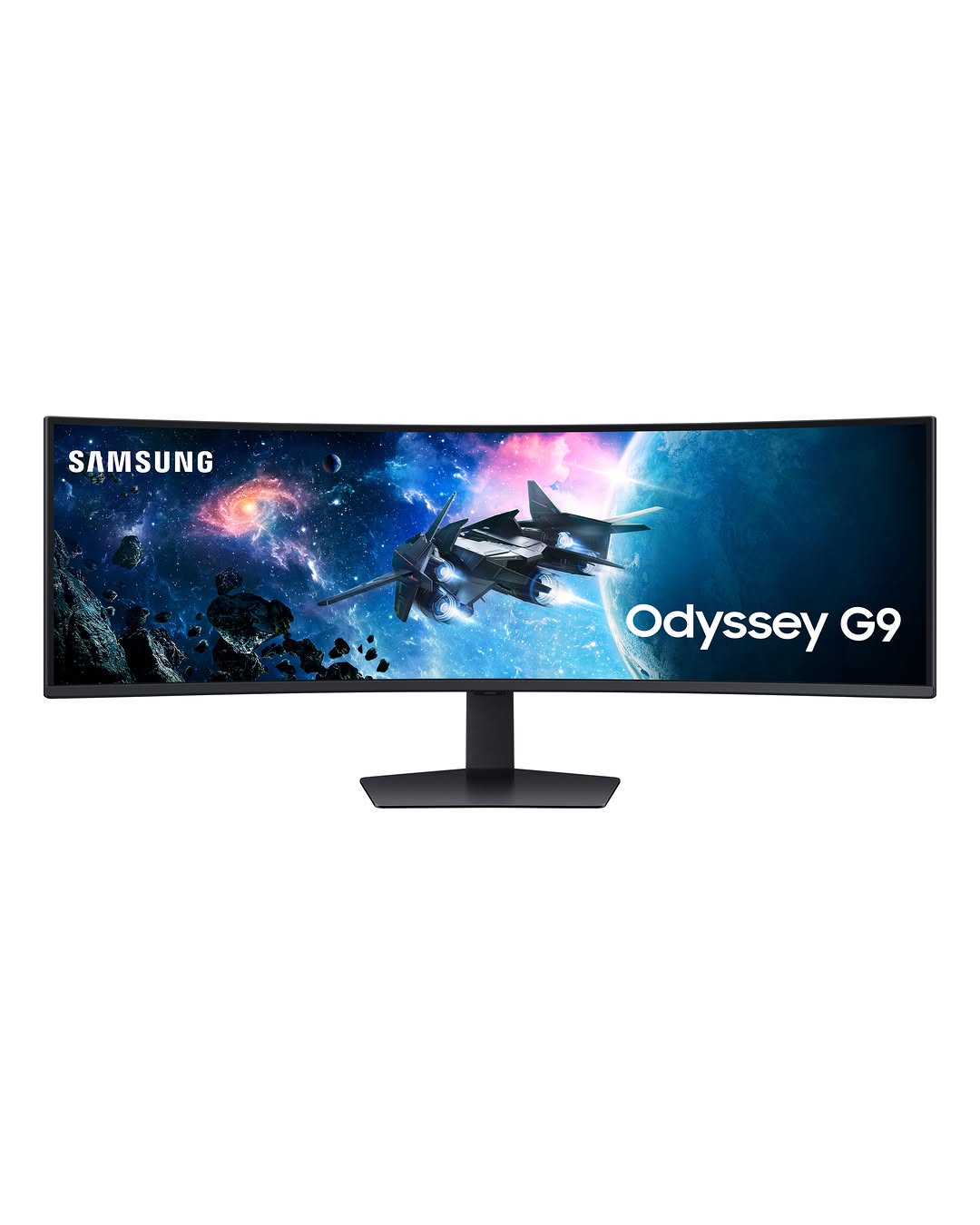
Samsung Odyssey G9 (G95C)
Best LCD Super-UltrawideBuy if: you want aggressive 1000R curve — the tightest wrap here, like a real cockpit
Don't buy if: you can't live with VA contrast and blacks can't match QD-OLED for night racing
The classic LCD Odyssey G9 remains a serious sim racing weapon for those who don't want OLED. Its headline is the aggressive 1000R curve — the tightest in this roundup — wrapping the 49-inch panel around you like a real cockpit. The VA panel gets noticeably brighter than its QD-OLED siblings, so it holds up better in daylight, and there's zero burn-in anxiety no matter how many hours your HUD sits on screen. At 240Hz with FreeSync Premium Pro, motion is silky; just note the 32:9 panel is wide but not tall.
Pros
- Aggressive 1000R curve — the tightest wrap here, like a real cockpit
- VA panel gets noticeably brighter than the QD-OLED siblings
- Zero burn-in anxiety no matter how long the HUD sits on screen
- 240Hz with FreeSync Premium Pro, DisplayHDR 600
Cons
- VA contrast and blacks can't match QD-OLED for night racing
- 32:9 panel is wide but not tall — limited vertical space
- Nearly four feet wide needs a heavy-duty mount
Full specifications
- 49-inch 32:9 VA panel, 5120x1440
- 240Hz refresh rate, 1ms response time
- 1000R curvature, DisplayHDR 600
- AMD FreeSync Premium Pro, Picture-by-Picture
Prices change frequently — click through to see today's price.
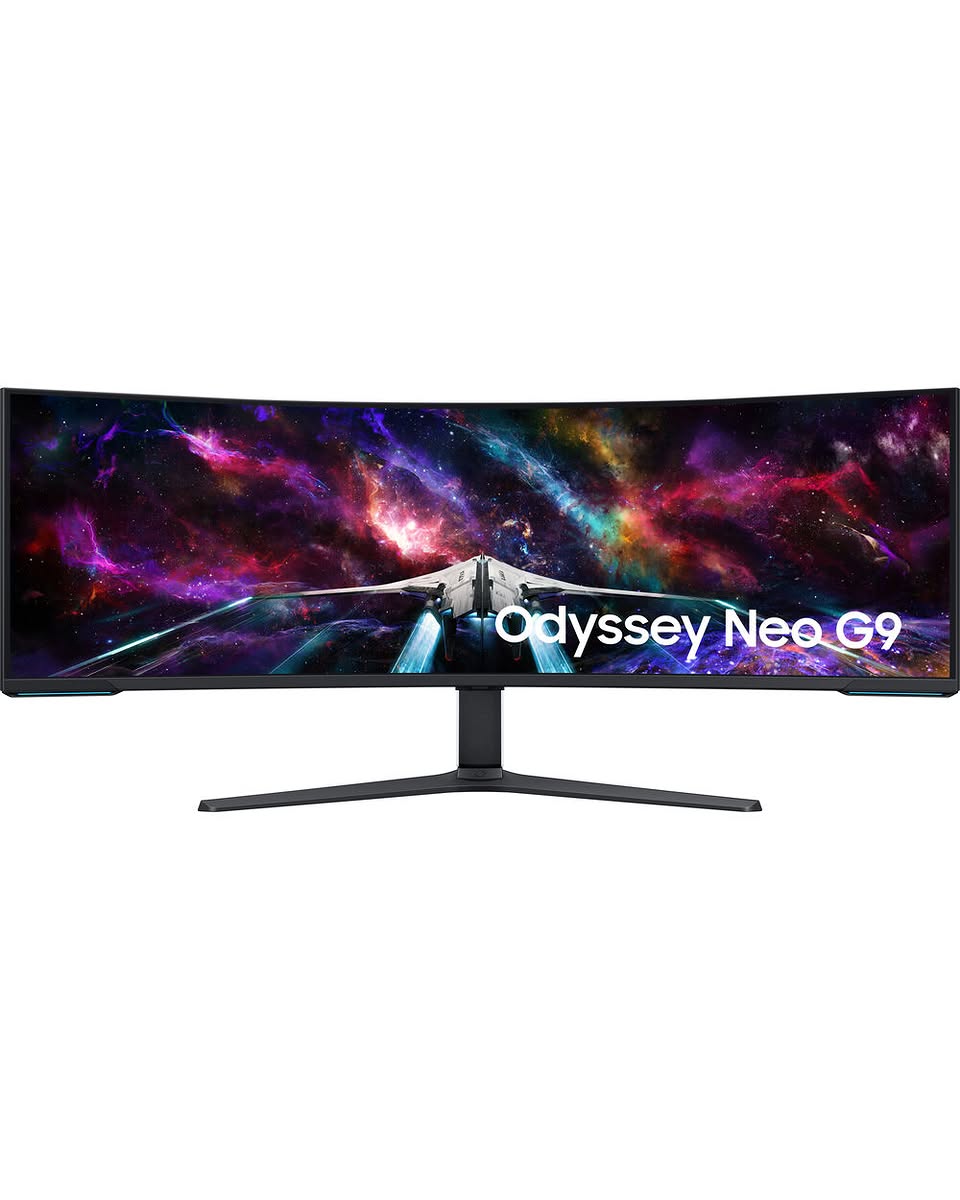
Samsung Odyssey Neo G9 57"
Ultimate Triple-Screen ReplacementBuy if: you're after 7680x2160 dual 4K — the widest single-panel field of view available
Don't buy if: dual 4K at 240Hz needs a top-tier GPU is a dealbreaker for you
The endgame for single-panel sim racing: 7680x2160 is two 4K monitors side by side with no bezel — the widest field of view of any single display and the sharpest image here. The Quantum Mini-LED backlight with DisplayHDR 1000 delivers HDR punch standard VA panels can't touch, and the 1000R curve keeps the enormous width comfortable. Be honest before buying: dual 4K at 240Hz needs a top-tier GPU, plus a deep desk and a seriously strong mount.
Pros
- 7680x2160 dual 4K — the widest single-panel field of view available
- Quantum Mini-LED with DisplayHDR 1000 for strong HDR punch
- 240Hz, 1ms, 1000R curvature
- No bezel lines — true triple-screen replacement
Cons
- Dual 4K at 240Hz needs a top-tier GPU
- 57-inch size needs a deep desk and a seriously strong mount
- VA panel without OLED's true blacks
Full specifications
- 57-inch 32:9 VA panel, 7680x2160 (dual 4K)
- 240Hz refresh rate, 1ms response time
- 1000R curvature, Quantum Mini-LED, DisplayHDR 1000
- AMD FreeSync Premium Pro
Prices change frequently — click through to see today's price.
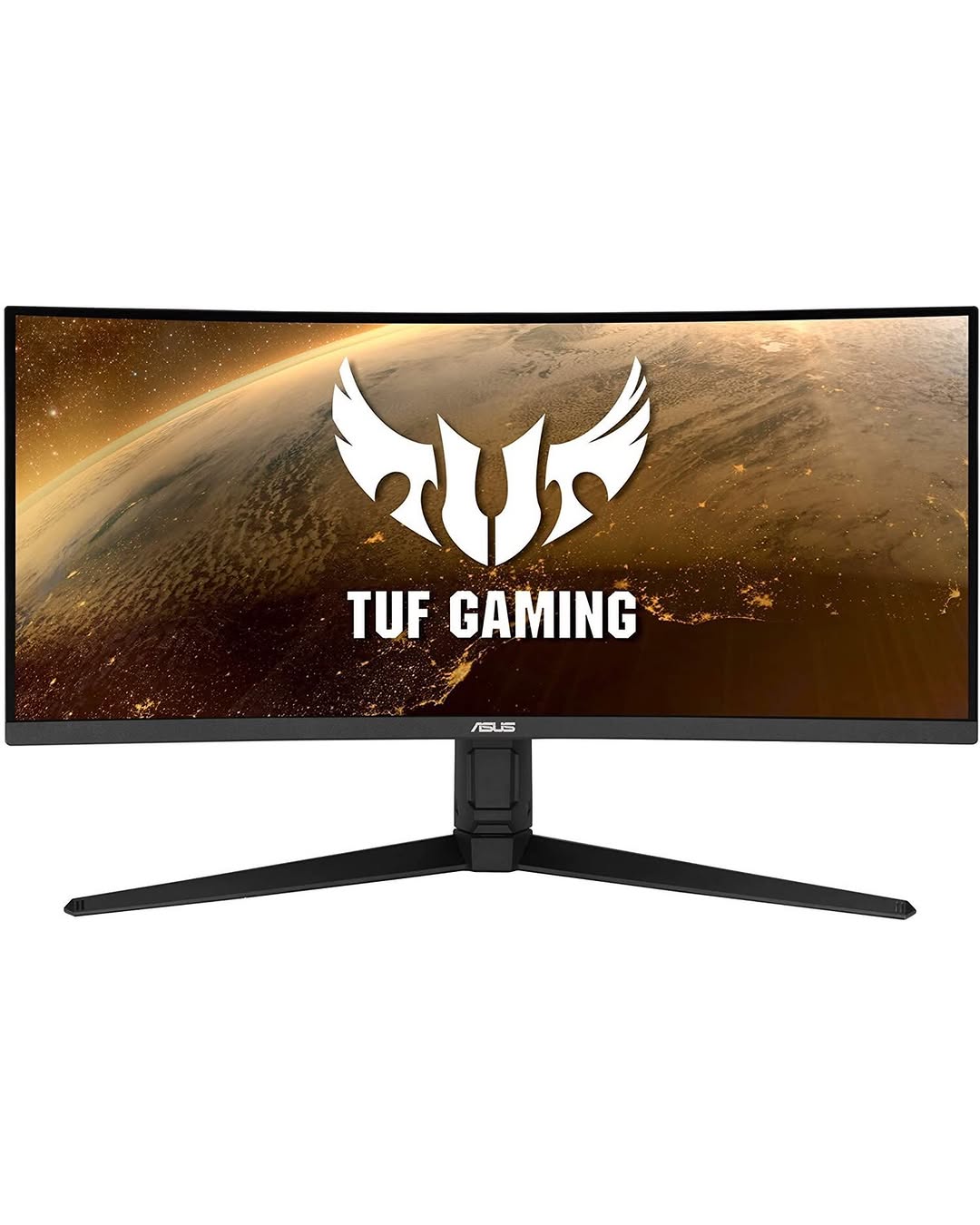
ASUS TUF Gaming VG34VQL1B
Best Mid-RangeBuy if: you're looking for 34-inch 21:9, 3440x1440, 165Hz, 1500R — the key ingredients at a fraction of OLED prices
Don't buy if: you won't accept blacks and contrast won't match OLED
The calm, sensible mid-range pick: the key sim racing ingredients — 34 inches of 21:9, 3440x1440 sharpness, 165Hz, and a 1500R curve — at a fraction of the OLED price. The VA panel keeps contrast strong for night racing, and both FreeSync and G-Sync support means it works with AMD or NVIDIA cards. It won't match OLED blacks, but as an all-rounder for racing, other games, and everyday work, it's a dependable workhorse.
Pros
- 34-inch 21:9, 3440x1440, 165Hz, 1500R — the key ingredients at a fraction of OLED prices
- Strong VA contrast for night racing
- FreeSync Premium and G-SYNC Compatible — works with AMD or NVIDIA
- Height-adjustable stand included
Cons
- Blacks and contrast won't match OLED
- DisplayHDR 400 only — modest HDR
- 1500R curve less wrapping than 1000R cockpit-style panels
Full specifications
- 34-inch 21:9 VA panel, 3440x1440
- 165Hz refresh rate, 1ms response time
- 1500R curvature, DisplayHDR 400
- FreeSync Premium and G-Sync Compatible, height-adjustable stand
Prices change frequently — click through to see today's price.
AOC CU34G2X
Best Budget PickBuy if: you need the cheapest way into a genuine 34-inch 3440x1440 144Hz curved panel
Don't buy if: you can't live with older VA panel — color and motion clarity trail modern options
The CU34G2X has been the default budget ultrawide for years: the cheapest way to get a genuine 34-inch, 3440x1440, 144Hz curved panel. For sim racing, 144Hz is a big step up from 60Hz, and the 1500R curve does the same peripheral-vision work as pricier rivals. Manage expectations — this is an older VA panel, so color and motion clarity trail the modern options above. But if your budget is tight and your GPU can't push 165Hz+ anyway, this gets you into ultrawide racing for the least money.
Pros
- Cheapest way into a genuine 34-inch 3440x1440 144Hz curved panel
- 1500R curve does the same peripheral-vision work as pricier rivals
- 144Hz is a big step up from 60Hz for sim racing
- Height-adjustable stand and multiple video inputs
Cons
- Older VA panel — color and motion clarity trail modern options
- 144Hz ceiling limits headroom if you upgrade your GPU
- No strobing, no premium pixel protection, basic build
Full specifications
- 34-inch 21:9 VA panel, 3440x1440
- 144Hz refresh rate, 1ms response time
- 1500R curvature, FreeSync support
- Height-adjustable stand, multiple video inputs
Prices change frequently — click through to see today's price.
FAQs
Are curved monitors better for sim racing?
Yes. A curved panel keeps screen edges at a consistent distance from your eyes, reducing distortion in your peripheral vision — where you spot rivals alongside you. For sim racing, 1000R–1800R curvature is the practical range.
What refresh rate do I need for sim racing?
144Hz is the recommended baseline: motion looks natural and input lag drops noticeably versus 60Hz. If your GPU can sustain higher frame rates, 165Hz–240Hz is even smoother — but a stable frame rate matters more than the biggest Hz number.
Is a 49-inch super-ultrawide or a triple-screen setup better?
Triples still win on total field of view, but a 49-inch 32:9 super-ultrawide gives you most of the immersion with no bezel lines, no triple-mount complexity, and far less fiddling. Triples suit dedicated rig rooms; most racers will be happier with the super-ultrawide.
Will my graphics card handle a super-ultrawide?
A 5120x1440 panel has about 1.5 times the pixels of a 3440x1440 ultrawide, so it needs meaningfully more GPU power — an RTX 4080-class card or better is realistic for high settings. For 3440x1440, an RTX 4070-class card generally runs modern sims well. If you're building or upgrading your rig, see our guide to the best gaming PC under 1000 dollars.
Should I worry about OLED burn-in with racing HUDs?
It's a fair concern, since speed, gear, and track-map elements sit in the same spot for hours. Modern QD-OLED monitors run pixel-refresh routines, and models like the Alienware AW3423DWF and MSI MPG 491CQPX carry multi-year warranties that explicitly cover burn-in. If your room is bright anyway, a VA panel removes the question entirely. For more on OLED displays, see our best OLED monitors for gaming roundup.
Buying Guide: What Makes a Great Sim Racing Monitor
Ultrawide vs. Super-Ultrawide vs. Triple Screens
A 21:9 ultrawide (34 inches) is the sweet spot: a much wider field of view than 16:9 without a monster GPU. A 32:9 super-ultrawide (49 inches) is two 27-inch monitors fused into one seamless panel — no center bezel to kill immersion. Triples still give the widest field of view but need three identical monitors, a heavy mount, lots of space, and a GPU that drives three displays. Unless you're building a dedicated rig room, a 49-inch super-ultrawide delivers most of the immersion with far less hassle.
Curvature
For sim racing, curved beats flat: it keeps screen edges at a uniform distance from your eyes, reducing distortion in your peripheral vision. 1000R is the most aggressive, wrapping around you like a cockpit; 1500R–1800R is the middle ground for a 34-inch panel. For 49 inches, look for 1000R or 1800R.
Refresh Rate and Response Time
A 144Hz refresh rate is the practical minimum — it makes the world flow naturally and cuts input lag versus 60Hz. 165Hz–240Hz is even better if your GPU can push the frames; on a 240Hz QD-OLED panel, fast direction changes look nearly motion-blur-free. Pair a high refresh rate with FreeSync or G-Sync compatibility so frame-rate dips don't turn into visible tearing mid-corner.
Resolution and Field of View
On a 34-inch ultrawide, target 3440x1440; on a 49-inch super-ultrawide, 5120x1440 — cheaper 3840x1080 variants look visibly soft at that size. A wider screen also lets you run a more realistic in-game FOV setting, and dialing it in correctly is one of the biggest free lap-time gains available.
Panel Type
QD-OLED is the image-quality king: perfect blacks for night racing, near-instant response, vivid color — with lower peak brightness than LCD in bright rooms and some burn-in risk from static HUDs, now offset by multi-year burn-in warranties. VA panels give strong contrast at much lower prices; IPS gives the best viewing angles but weaker contrast.
Mounting and VESA Compatibility
Check the VESA mount pattern (usually 100x100mm) and the panel's weight before buying a mount. 49-inch monitors often weigh 25–30 pounds, so your arm must be rated above the panel's weight. Integrated rig mounts from Sim-Lab, Trak Racer, and Next Level Racing keep the screen isolated from wheel vibration, which would otherwise add motion blur no spec sheet can fix.
Frequently Asked Questions
Are curved monitors better for sim racing?
Yes. A curved panel keeps screen edges at a consistent distance from your eyes, reducing distortion in your peripheral vision — where you spot rivals alongside you. For sim racing, 1000R–1800R curvature is the practical range.
What refresh rate do I need for sim racing?
144Hz is the recommended baseline: motion looks natural and input lag drops noticeably versus 60Hz. If your GPU can sustain higher frame rates, 165Hz–240Hz is even smoother — but a stable frame rate matters more than the biggest Hz number.
Is a 49-inch super-ultrawide or a triple-screen setup better?
Triples still win on total field of view, but a 49-inch 32:9 super-ultrawide gives you most of the immersion with no bezel lines, no triple-mount complexity, and far less fiddling. Triples suit dedicated rig rooms; most racers will be happier with the super-ultrawide.
Will my graphics card handle a super-ultrawide?
A 5120x1440 panel has about 1.5 times the pixels of a 3440x1440 ultrawide, so it needs meaningfully more GPU power — an RTX 4080-class card or better is realistic for high settings. For 3440x1440, an RTX 4070-class card generally runs modern sims well. If you're building or upgrading your rig, see our guide to thebest gaming PC under 1000 dollars.
Should I worry about OLED burn-in with racing HUDs?
It's a fair concern, since speed, gear, and track-map elements sit in the same spot for hours. Modern QD-OLED monitors run pixel-refresh routines, and models like the Alienware AW3423DWF and MSI MPG 491CQPX carry multi-year warranties that explicitly cover burn-in. If your room is bright anyway, a VA panel removes the question entirely. For more on OLED displays, see ourbest OLED monitors for gamingroundup.
Conclusion
The Alienware AW3423DWF is the best all-round choice for most racers: OLED image quality, 165Hz smoothness, and a burn-in warranty at a 34-inch size that fits real desks. For ultimate single-panel immersion, step up to the Samsung Odyssey OLED G9 or the burn-in-warrantied MSI MPG 491CQPX; the LCD Odyssey G9 gives you 49-inch width without OLED trade-offs. On a budget, the AOC CU34G2X gets you into ultrawide racing for the least money.
Whatever you choose, set your in-game FOV correctly and mount the screen at eye level — those two free adjustments do more for lap times than any panel upgrade. If budget is the binding constraint, our best budget gaming monitors guide covers cheaper options for racing.