How the winter window check works
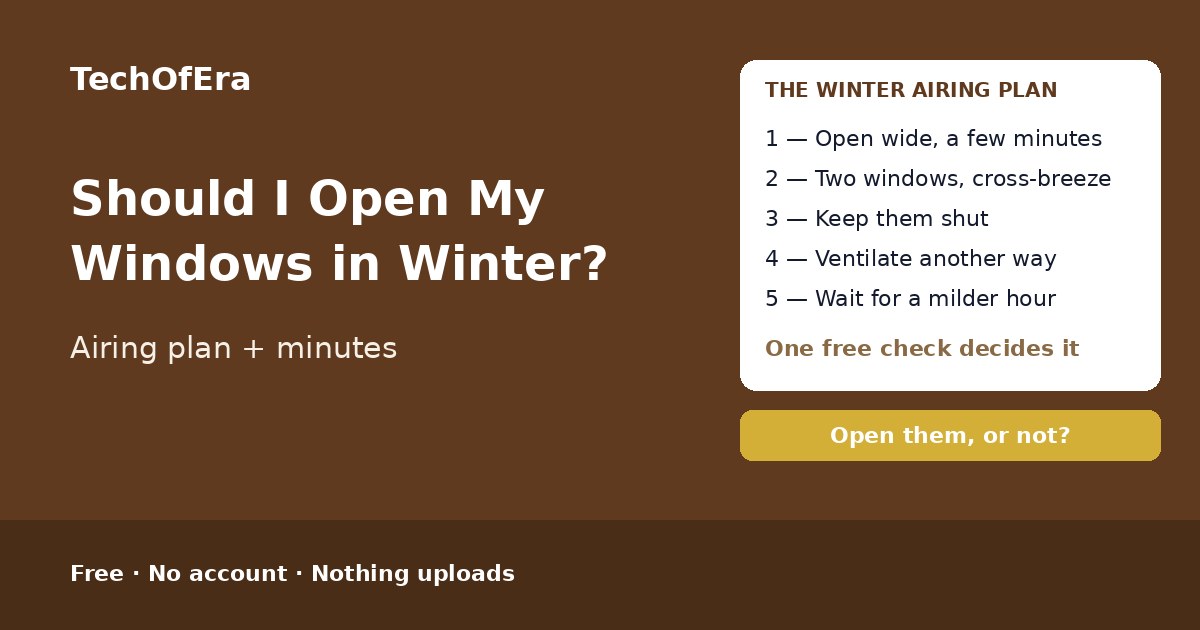
Opening a window in winter is a balance, not a habit. Too little fresh air and the room goes stale — carbon dioxide climbs, cooking smells linger, and condensation collects on the windows overnight. Too much and the room cools down, the heating works harder, and the cold walls collect the very condensation you were trying to clear. The trick is the short burst: open wide for 5–10 minutes, using two windows on opposite sides for a cross-breeze where you can, and close them again before the room gets cold. This checker weighs all of it — the outdoor temperature, why you want fresh air, the room, the indoor humidity if you know it, the heating, the outdoor air quality, how long you would leave the windows open, and who is at home — and gives you a winter airing plan: open wide for a few minutes, open two windows for a cross-breeze, keep them shut, ventilate another way, or wait for a milder part of the day.
To use it:
- Say how cold it is outside. Below −5°C is bitterly cold and needs a burst of about 5 minutes; −5 to 0°C is freezing and also wants about 5 minutes; 0–5°C is cold but workable at about 10 minutes; 5–10°C is mild for winter and suits a cross-breeze; above 10°C is mild enough for 15–20 minutes. The temperature sets the minutes.
- Say why you want fresh air. Stuffy or stale air, cooking or cleaning smells, condensation on the windows, laundry drying indoors, or just habit. A real reason — stuffiness, smells, condensation — points to a short opening; habit alone does not, and on a bitterly cold day the heat loss is real.
- Say which room it is. A bedroom collects moisture overnight from breathing; a living room is the stuffiest room and benefits most from a cross-breeze; a kitchen or bathroom gets damp in bursts from cooking and showers; the whole house is a cross-breeze job, two windows on opposite sides open together.
- Say what the indoor humidity is, if you know it. A cheap hygrometer tells you in a day. Under 30% is very dry, 30–50% is the healthy range the US EPA recommends, and over 60% is too damp for comfort or for mould. Cold outdoor air is dry air, so a short opening still dries a damp room — even on a rainy or foggy day.
- Say what heating is in that room. Central heating replaces the warm air quickly, so a short opening costs little; a heat pump recovers more slowly; heating off means the room cools fast. And a wood stove, fireplace or other fuel-burning heater can backdraft when windows are open — combustion gases pulled back into the room — so the heating can rule the window out entirely.
- Say what the outdoor air is like. Clean air is worth letting in; smoky or polluted air is not — opening the windows would let the bad air in. High pollen is a problem if anyone at home has hay fever or asthma: air the room briefly in the early morning or after rain, when the count is lowest.
- Say how long you would leave them open. A few minutes is the right length in winter; 10–20 minutes is the upper end, fine on a mild day and too long on a freezing one. An hour or more, or all day, wastes heat and cools the walls — several short bursts a day beat one long opening.
- Say who is at home. A baby, an elderly person or someone ill feels the cold draught first, and a cold room is a real risk for them. Someone with asthma or allergies is sensitive to cold air and pollen. Keep them out of the draught while the windows are open, and wait for the warmest part of the day if it is bitterly cold.
The five verdicts, and what each one means
Open wide for a few minutes
The room needs fresh air and the weather allows it. Open the window fully — not tilted — for a short burst, about 5 minutes when it is freezing and about 10 minutes when it is cold, then close it again before the room gets cold.
Open two windows for a cross-breeze
A mild day, and the air is stuffy or smelly. Open two windows on opposite sides of the home, or a window and a fan, for a short burst: the cross-breeze moves air through the house far faster than one open window, so you get the fresh air in less time and lose less heat.
Keep them shut
Right now the heat loss, the outdoor air, or the air already being too dry outweighs the fresh air. Leave the windows closed, run the extractor fan instead, and re-run the checker when the weather warms up or the air clears — the answer changes with the day.
Ventilate another way
Opening the window is the wrong tool for this room right now — a fuel-burning heater or fireplace can backdraft, or the outdoor air is too smoky or polluted to let in. Use the extractor fan in the kitchen or bathroom, or a trickle vent if the room has one.
Wait for the warmest part of the day
The fresh air is worth having, but not in the coldest hours. Wait until early afternoon, when the outdoor temperature is at its highest and the heat loss is smallest, then open wide for a few minutes and close the windows again.
What makes this checker different
The pages that rank for this search are guides — an article on whether to leave a window open in winter, a guide to opening windows during winter, a guide to airing out the house. None of them asks how cold it is outside, why you want fresh air, which room it is, what the indoor humidity is, what heating is running, what the outdoor air is like, or who is at home, and none of them gives you a verdict for your home with a number of minutes. There is no free, standalone checker that takes your weather, your room, your reason and your household and turns them into a winter airing plan. This page is that answer: eight questions, an instant verdict, the blockers named, and the next steps. It is a self-assessment, so it says plainly what it cannot know: it cannot measure your room, test your humidity, or see inside the walls.
When is this the right check?
When the bedroom windows stream every morning and you wonder whether to open them — because condensation means the room was too damp overnight, and a short burst of cold, dry air is the fix, not a window left cracked all day. When the living room feels stuffy on a mild winter day and you are not sure the heat loss is worth it — because on a 5–10°C day a 10-minute cross-breeze costs very little heat. When the air outside is smoky and you are not sure whether to open up anyway — because the answer is no, and the extractor fan is the right tool instead. And when someone vulnerable is at home and the day is bitterly cold — because the checker says wait for the warmest part of the day, and keep them out of the draught while the windows are open.
Honest limitations
A self-assessment, not a heating engineer’s report
This checker cannot measure your room, test your humidity, or see inside the walls. It cannot tell whether a damp patch is condensation, a leak or rising damp. If mould is spreading or water keeps coming in, get the cause checked by a professional.
Without a hygrometer, the verdict is weaker
How damp the air feels is a poor guide: a room can feel clammy at 45% and comfortable at 55%. The checker still works without a reading, but it says so — the verdict drops to low confidence and the first step is to get a hygrometer.
Room humidity is not one number
A hygrometer in the living room can read 40% while the basement reads 55% — one space can be very different from the rest of the house. Measure the room you are asking about, not the room next door, and watch the windows.
The airing minutes are planning figures
The recommended minutes — about 5 minutes below freezing, about 10 minutes when it is cold, 15–20 minutes on mild days — come from the shock-ventilation guidance, not a measurement of your home. Your house, your insulation and your heating all change how fast a room cools: use the minutes as a starting point, and close the windows when the room starts to feel cold.
Cold weather lowers the humidity target
In cold weather, aim for the lower end of the range — about 30–40% — so moisture does not condense on cold windows and walls. A room that is fine at 45% in mild weather can be too damp on a freezing night, and the windows will tell you first.
Rules from official sources, dated November 2026
The rules here are the US EPA indoor humidity guidance (30–50%, below 60%), the ENERGY STAR heating-season guidance (30–40% in cold climates), and the UK government damp and mould guidance (ventilate, avoid drying clothes indoors, wipe condensation off windows), as they read in November 2026. Guidance changes: recheck if anything about the room changes.