How to decide whether to take vitamin C with a cold
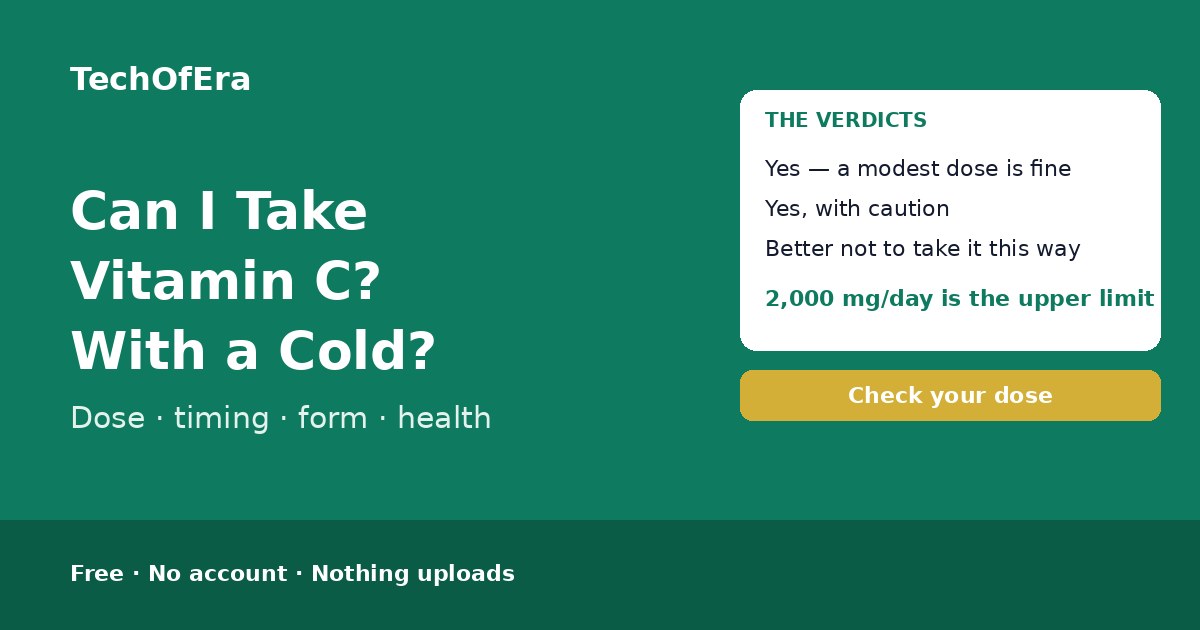
The dose is not the number that decides it — the dose, the timing, the form and your health factors together are. Vitamin C is genuinely essential for immune function, and food sources cover it for most people. The question is not whether vitamin C is good for you — it is whether a supplement, at the dose you are taking, at the moment you are taking it, helps this cold, and whether it is safe for you. The Cochrane review — the most careful look at decades of trials — found that regular vitamin C did not stop people catching colds, and only shortened them by about 8% in adults when taken every day before the cold started. This checker asks exactly what decides it.
To use it:
- Read the label. Look for the milligrams per tablet and how many you take a day. Effervescent and “immune” products are often 1,000 mg each, and a multivitamin or cold remedy may already contain vitamin C — add the amounts together.
- Match the dose, not the brand. Pick the option that matches how much you are actually taking. A 250 mg tablet and a 2,000 mg effervescent are different answers, and the safe upper limit for adults is 2,000 mg a day. If you cannot check the label, the checker says it cannot tell, rather than guessing.
- Mind the timing. The modest benefit the trials found comes from taking vitamin C every day before you get sick. Starting after symptoms began has not reliably shortened colds — so do not take a megadose now expecting it to work faster. It will not.
- Check the health factors. A history of kidney stones or kidney disease, iron overload, or G6PD deficiency each lower the safe dose. Pregnancy is fine at normal doses but not at megadoses, and children have much lower upper limits than adults.
- Check the other medicines. High-dose vitamin C may blunt the benefit of statins, reduce the effect of warfarin, increase aluminium absorption from antacids, and may interfere with chemotherapy. If you take any of these, check with your clinician or pharmacist before taking a high dose.
- Know what it can actually do. Vitamin C will not prevent this cold or cure it. At best, regular daily use shortens it by about half a day. What helps most is still the unglamorous trio: rest, fluids and time.
Doses and situations at a glance
The table below is built from the same rules as the checker, so it can never disagree with your verdict. The dose, the timing, the form and your health factors decide, together.
| Condition | Verdict | What to know |
|---|
What makes this checker different
The pages that rank for this search are guides — thorough explanations of what the evidence says, the safe upper limit, and the general advice that vitamin C will not cure your cold — but they leave you to do the work yourself: to read the label, work out whether your dose is over the limit, judge whether starting today is different from taking it daily, and decide whether your kidney stones or your statin change the answer. There is no free interactive checker that takes your dose and turns it into a verdict. This page is that answer: the dose in, the timing, the form and your health factors scored together, and a verdict for the exact tablet you hold — take it, take it with caution, or better not to take it this way — with the dose to aim for, what it can actually do, and the cautions that apply to you. It is a self-assessment, so it says plainly what it cannot know: a web page cannot read your label or know your kidneys, so anything you mark “Not sure” stays on the list until you confirm it.
When is this the right check?
Whenever you are holding a vitamin C tablet with a cold: the 1,000 mg effervescent you dissolve at the first sneeze, the daily 500 mg tablet you have taken for months, the second “immune” product on top of your multivitamin, the question of whether to start now that you are already ill, or the packet your child wants because you take one. Also whenever the conditions are borderline and the decision turns on something specific — whether 1,000 mg is different from 2,000 mg, whether a history of kidney stones changes it, whether your statin or blood thinner matters, or whether the fizzy form is different from a plain tablet. And whenever someone has told you to take a megadose to “crush” the cold, and you want a straight answer from the evidence instead of a marketing claim.
Honest limitations
A self-assessment, not medical advice
This checker works only from the dose and answers you enter. It cannot diagnose you — no web page can read your label, know your kidneys, or know your medical history. If an answer is wrong, the verdict is wrong. When in doubt, keep the dose low — or ask a pharmacist.
The caution score and dose guidance are estimates
The 0–100 caution score and the dose to aim for (up to 1,000 mg a day, or 500 mg a day or less with caution) are this checker’s own conservative estimates, built from the published guidance — not measurements of your body. They are not a safe-dose guarantee.
The checker cannot read your label
The verdict is only as good as the dose you pick. Effervescent and “immune” products are often 1,000 mg each, and multivitamins and cold remedies hide vitamin C under “ascorbic acid”. If you pick the wrong dose, the verdict is wrong — read the label, and ask a pharmacist if you are unsure.
Vitamin C does not prevent or cure a cold
No dose of vitamin C will stop you catching a cold or cure one you have. The best the evidence offers is a small shortening — about 8% in adults — and only from taking it every day before you get sick. A “take it” verdict is not a promise that you will feel better faster.
Food is the safest source
Citrus, peppers and berries cover the day’s vitamin C without any dose to count, and there is no upper-limit question at all. A supplement adds little if your diet is already adequate — and a megadose adds stomach cramps, not benefit.
Rules from public-health sources
The rules here follow the Cochrane review, the NIH Office of Dietary Supplements and the published interaction guidance, as they read in November 2026. Guidance can be revised, so re-check if a new edition appears.