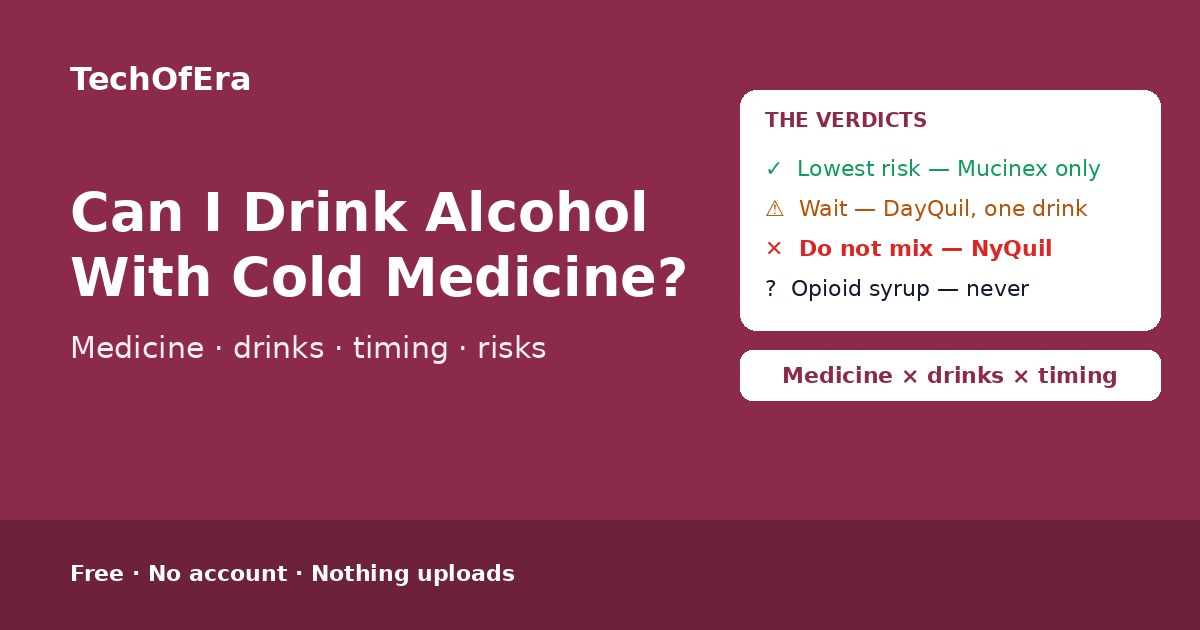
How to decide whether you can drink alcohol with cold medicine
The brand name is not the number that decides it — the ingredients are. A cold remedy is usually a combination of several active ingredients, and each one clashes with alcohol in its own way: acetaminophen (paracetamol) strains the liver, sedating antihistamines cause drowsiness, dextromethorphan is a central nervous system depressant, decongestants raise blood pressure, NSAIDs irritate the stomach, and opioids slow breathing. The NIAAA says mixing alcohol with cold medicines can intensify the sedating effects and make it unsafe to drive, and can increase the risk of falls and serious injuries, especially in older adults. This checker asks exactly what decides it.
To use it:
- Read the Drug Facts label. Look for the active ingredients on the box or bottle: acetaminophen (paracetamol), diphenhydramine or doxylamine, dextromethorphan, codeine, pseudoephedrine or phenylephrine, ibuprofen or naproxen, or guaifenesin. Many multi-symptom remedies contain acetaminophen without it being prominent on the front of the box.
- Match the ingredients, not the brand. Pick the option that matches what is in the bottle — a night-time multi-symptom remedy is a different answer from an expectorant-only one, and Mucinex-DM is a different answer from plain Mucinex. If you cannot check the box, the checker says it cannot tell, rather than guessing.
- Count the drinks honestly. One standard drink is a beer, a glass of wine or a shot. The risk climbs steeply with the amount — one drink and four drinks are different answers for the same medicine, and four or more is heavy drinking by any measure.
- Mind the timing. The clash is strongest while the medicine is at its peak effect — the first few hours after taking it. Drinking first and then taking a sedating medicine is the worst order: the alcohol is still in your system when the medicine peaks.
- Check the extras. Age over 65, a liver condition, heavy regular drinking, another product with acetaminophen, a sleep aid, or a need to drive tonight each move the verdict — the checker scores all of them, and pregnancy or being under 18 settles the question on its own.
- Know the warning signs. Feeling very drowsy, confused, slow to breathe, or unable to stay awake after mixing alcohol and medicine is an emergency, not a question for a checker — call emergency services now.
Ingredients and what to do at a glance
The table below is built from the same rules as the checker, so it can never disagree with your verdict. The ingredients, the amount, the timing and your risk factors decide, together.
| Condition | Verdict | What to know |
|---|
What makes this checker different
The pages that rank for this search are guides — thorough explanations of why alcohol and cold medicine clash, the ingredient-by-ingredient risks, and the general advice to avoid mixing them — but they leave you to do the work yourself: to read the label, work out which ingredients are in your bottle, judge whether one drink is different from three, and decide how long to wait. The drug-interaction checkers that do exist are general tools for any two drugs — they do not answer the question as it is actually asked: “I have taken this cold medicine, can I have a drink tonight?” This page is that answer: the medicine in, the amount, the timing and your risk factors scored together, and a verdict for the exact evening you plan — do not mix, wait, or one drink is low risk — with the wait time, the driving call and the exact interaction named. It is a self-assessment, so it says plainly what it cannot know: a web page cannot read your medicine box or know your liver, so anything you mark “Not sure” stays on the list until you confirm it.
When is this the right check?
Whenever you have taken a cold remedy and a drink is on offer: the glass of wine with dinner after a dose of DayQuil, the beer at the pub after taking NyQuil last night, the Christmas party when you have been taking a cough syrup all day, the question of whether Mucinex alone changes the answer, or the night you have already had a few drinks and are wondering whether to take the night-time remedy at all. Also whenever the conditions are borderline and the decision turns on something specific — whether one drink is different from three, whether taking the medicine eight hours ago changes it, whether another product with acetaminophen matters, or whether you can drive after one drink with a decongestant. And whenever you have mixed them before and felt worse than expected, and want a straight answer instead of a general article to interpret.
Honest limitations
A self-assessment, not medical advice
This checker works only from the medicine and answers you enter. It cannot diagnose you — no web page can read your medicine box, know your liver, or know your medical history. If an answer is wrong, the verdict is wrong. When in doubt, do not drink — or ask a pharmacist.
The risk score and wait times are estimates
The 0–100 risk score and the wait times (8 hours after a sedating antihistamine, 6 hours after dextromethorphan, 24 hours after an opioid cough syrup) are this checker’s own conservative estimates, built from the published guidance — not measurements of your body. They are not a safe-drinking guarantee.
The checker cannot read your box
The verdict is only as good as the medicine you pick. Combination products hide acetaminophen under brand names, and Mucinex-DM is not plain Mucinex. If you pick the wrong option, the verdict is wrong — read the Drug Facts label, and ask a pharmacist if you are unsure.
Alcohol worsens the cold itself
Even when there is no direct interaction — guaifenesin alone — alcohol still worsens a cold: dehydration, worse sleep and a weaker immune response. A “lowest risk” verdict is not a recommendation to drink; skipping the drink helps you recover faster.
Warning signs override the verdict
Feeling very drowsy, confused, slow to breathe, or unable to stay awake after mixing alcohol and medicine is an emergency, whatever the checker said. Call emergency services now — do not wait to see if it passes.
Rules from public-health sources
The rules here follow the NIAAA, Drugs.com, FDA and SingleCare interaction guidance, as it read in November 2026. Guidance can be revised, so re-check if a new edition appears.