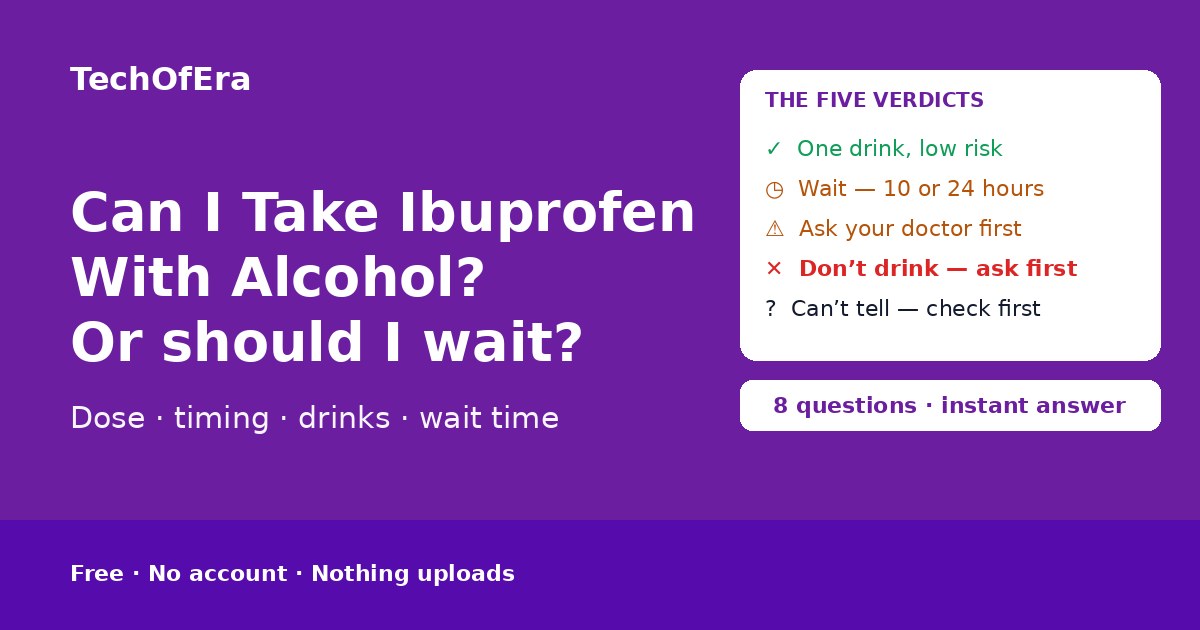
How to tell whether you can take ibuprofen with alcohol
Ibuprofen is one of the most widely used painkillers in the world — and one of the most searched questions about it is whether it mixes with alcohol. The short answer is that one standard drink with ibuprofen is usually OK for most people, but moderate to excessive alcohol increases the side effects of ibuprofen, such as stomach irritation and kidney disease. The full answer turns on the dose, when you took it, how much you drank, what you ate, and what else is true about you. This checker asks exactly that. (In the US the same medicine is usually called by its American name — Advil or Motrin for ibuprofen — the rules are the same either way.)
To use it:
- Work out which way round it is. Did you take ibuprofen and want a drink, did you drink and want ibuprofen, or are you planning ahead? The wait time is different each way: about 10 hours after ibuprofen before drinking, or at least 24 hours after drinking before taking ibuprofen.
- Check the dose. The usual adult over-the-counter dose is 200–400 mg every 4–6 hours as needed, with a maximum of 1,200 mg in 24 hours. A single 200 mg dose clears in about 4 hours; 400 mg or more takes about 10 hours. Doses of 600 mg or more are prescription-strength and always need a doctor’s say-so before drinking.
- Count standard drinks, not glasses. One standard drink is 12 oz of beer (5%), 5 oz of wine (12%) or 1.5 oz of spirits (40%). A large glass of wine or a generous pour of spirits can be two standard drinks at once — and beer and wine are no safer than liquor: what matters is the total alcohol.
- Check the timing. Ibuprofen has a half-life of about 2 hours and takes around 10 hours to clear the body. If you drank first, wait at least 24 hours before taking ibuprofen — and never take ibuprofen to ease a hangover while alcohol is still in your system. Those wait times are this checker’s own conservative estimates.
- Think about what you have eaten. A full meal in the last hour is what the NHS advises for NSAIDs. An empty stomach makes both ibuprofen and alcohol hit harder — so eat first, and take the ibuprofen with food or milk.
- Check the flags that change everything, and whether you plan to drive. An ulcer, liver or kidney problems, blood thinners, or another NSAID already taken today mean do not mix them at all. Age 65 or over and high blood pressure raise the risk too. And drinking any alcohol and driving is never safe.
Ibuprofen and alcohol at a glance
The table below is built from the same rules as the checker, so it can never disagree with your verdict.
| Situation | Verdict | What to know |
|---|
What makes this checker different
The pages that rank for this search are guides — Drugs.com, Healthline, GoodRx, Medical News Today and Healthgrades all explain why mixing ibuprofen and alcohol is risky, but they leave you to work out what that means for the tablet you took, at your dose, with the drinks you had, today. There is no interactive tool that answers the actual question: can I have this drink, after this dose, this long ago — or how long should I wait? This page is that answer: eight questions, an instant verdict, a wait time, an alcohol-risk score, and the reason named — with nothing to install, no account, and nothing uploaded. It is general information, so it says plainly what it cannot know: a web page cannot examine you, so anything you mark “Not sure” stays on the list until you confirm it, and every verdict ends with asking your doctor or pharmacist.
This checker is about ibuprofen and alcohol only. It is not the same question as taking ibuprofen on an empty stomach, which is about food and timing; it is not about mixing two painkillers, which is about ibuprofen with paracetamol; and it is not about drinking alcohol while taking antibiotics, which is a different medicine with different rules. Those three questions have their own checkers, linked below.
When is this the right check?
Whenever you have taken ibuprofen and someone offers you a drink: a glass of wine with dinner after a headache tablet, a beer at a barbecue after a sports injury, a celebration after a toothache dose. Also whenever you drank last night and wake up wanting pain relief — the morning-after question, where the 24-hour wait matters most. And whenever you are planning an evening out and want to know the safe plan before the first tablet or the first drink. If the answer is "do not drink", the checker names what to do instead, and who to ask.
Honest limitations
General information, not medical advice
This checker works only from the answers you enter. It cannot examine you — no web page can know your medical history, your dose, or what else you are taking. If an answer is wrong, the verdict is wrong. When in doubt, ask your doctor or pharmacist.
The wait times are estimates
The wait times (at least 4 hours after a single 200 mg dose, at least 10 hours after 400 mg or more, at least 24 hours after drinking) and the alcohol-risk score (0–10) are this checker’s own conservative estimates, not medical guidance. They summarise the factors you entered so you can see what is driving the verdict. They are not a measurement of your body and they are not a dose recommendation.
A standard drink is the unit that matters
One standard drink is 12 oz of beer (5%), 5 oz of wine (12%) or 1.5 oz of spirits (40%) in the US; in the UK one unit is 8 g of pure alcohol. Count standard drinks, not glasses — a large glass of wine or a generous pour of spirits can be two standard drinks at once.
The type of drink matters less than the amount
Beer and wine are no safer than liquor when it comes to taking ibuprofen — what matters is the total alcohol. Spirits are easy to over-pour, which is why the checker asks what kind of drink it is, but the verdict turns on how many standard drinks, not which bottle they came from.
Daily use and heavy drinking are different decisions
Taking ibuprofen every day, or drinking heavily, changes the answer completely. No painkiller should be taken every day for more than a few days without asking a doctor or pharmacist, and four or more drinks with ibuprofen is a do-not-drink verdict, not a wait.
Rules from health authorities
The rules here follow NHS guidance on ibuprofen and on alcohol and medicines, the Drugs.com medical answers on drinking alcohol with ibuprofen, and GoodRx, Healthline and Medical News Today on the same question, as they read in November 2026. Authorities can revise guidance, so re-check if a new edition appears.