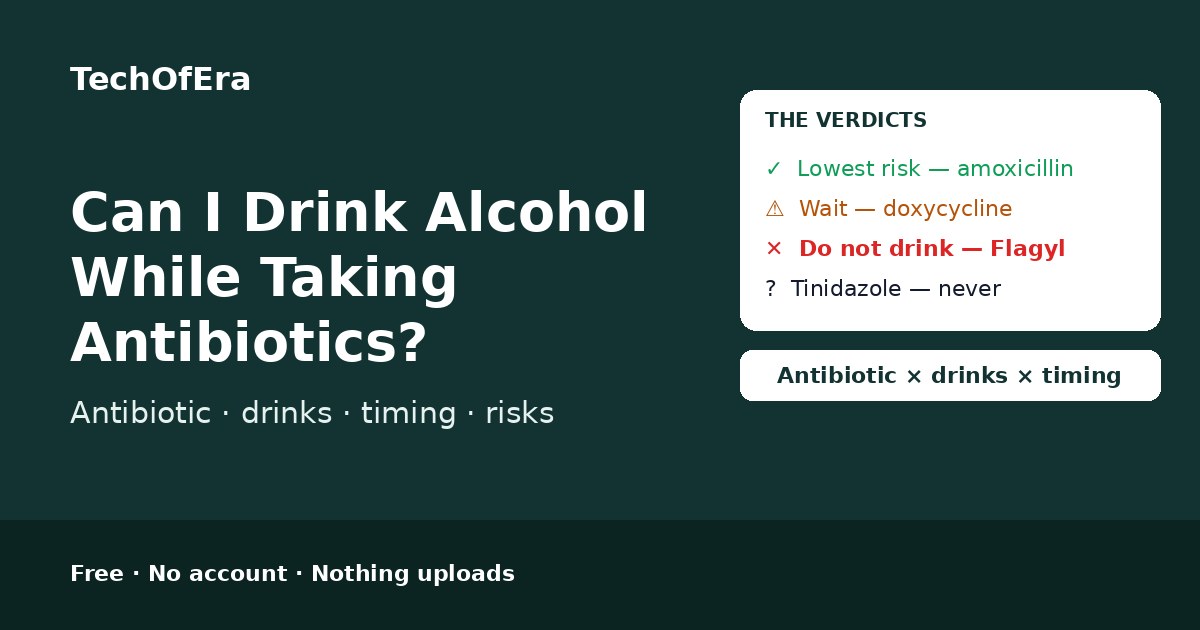
How to decide whether you can drink alcohol while taking antibiotics
The antibiotic name is the number that decides it — not the infection, and not a blanket rule. The common belief that no alcohol is safe with any antibiotic is a myth: the NHS says drinking in moderation is unlikely to cause problems with the most common antibiotics, and the Mayo Clinic says modest alcohol use does not affect most antibiotics. But a few are genuinely dangerous with alcohol, and the whole point of this checker is to tell them apart. Metronidazole, tinidazole and cefotetan can cause a disulfiram-like reaction. Linezolid clashes with tyramine-rich drinks such as red wine and tap beer. Isoniazid and rifampin strain the liver. This checker asks exactly what decides it.
To use it:
- Read the packet or the prescription label. Look for the name of the antibiotic: metronidazole, tinidazole, linezolid, cefotetan, isoniazid, rifampin, Bactrim, doxycycline, or a common antibiotic such as amoxicillin. The name on the packet is the one that decides the verdict.
- Match the antibiotic, not the infection. Pick the option that matches what is on the packet — a metronidazole course is a different answer from an amoxicillin course, and metronidazole skin cream is a different answer from metronidazole tablets. If you cannot check the packet, the checker says it cannot tell, rather than guessing.
- Count the drinks honestly. One standard drink is a beer, a glass of wine or a shot. The risk climbs steeply with the amount — one drink and four drinks are different answers for the same antibiotic, and four or more is heavy drinking by any measure.
- Mind the timing. The clash is strongest while the antibiotic is at its peak level — the first few hours after the last dose. For metronidazole, tinidazole and cefotetan the wait is measured in days, not hours: 72 hours after the last dose. If you finished the course more than 3 days ago, the wait period has passed even for the strictest antibiotics.
- Check the hidden alcohol. Mouthwash and some cold medicines contain alcohol — and with metronidazole or tinidazole even that small amount can trigger the reaction. Check the label of everything you take, not just the drink in your hand.
- Check the extras. A liver condition, heavy regular drinking, another medicine with paracetamol, a sleep aid, or a need to drive tonight each move the verdict — the checker scores all of them, and pregnancy or being under 18 settles the question on its own.
- Know the warning signs. Feeling very unwell, confused, or unable to stay awake after mixing alcohol and medicine is an emergency, not a question for a checker — call emergency services now.
Antibiotics and what to do at a glance
The table below is built from the same rules as the checker, so it can never disagree with your verdict. The antibiotic, the amount, the timing and your risk factors decide, together.
| Condition | Verdict | What to know |
|---|
Antibiotics are not cold medicine
This is a different question from drinking with cold medicine, and it has a different answer. Cold remedies are symptom-relief products — acetaminophen (paracetamol), sedating antihistamines, dextromethorphan, decongestants and NSAIDs — and their clashes with alcohol are sedation, liver strain and stomach bleeding. The worst combination there is a night-time multi-symptom remedy such as NyQuil. Antibiotics are prescription medicines that kill bacteria, and their clashes are different: a disulfiram-like reaction with metronidazole, tinidazole and cefotetan, a blood-pressure rise with linezolid and red wine, and liver strain with isoniazid and rifampin. Most common antibiotics have no direct interaction with alcohol at all, while most cold remedies do. If your question is about a cold remedy, use the Can I Drink Alcohol With Cold Medicine? Checker instead — it scores the ingredients in the bottle, not the antibiotic.
What makes this checker different
The pages that rank for this search are guides — thorough explanations of why alcohol and antibiotics clash, the antibiotic-by-antibiotic risks, and the general advice to avoid mixing them — but they leave you to do the work yourself: to find your antibiotic in a table, judge whether one drink is different from three, work out how long to wait after the last dose, and decide whether your liver, your age or the mouthwash in your bathroom changes the answer. The drug-interaction checkers that do exist are general tools for any two drugs — they do not answer the question as it is actually asked: “I am taking this antibiotic, can I have a drink tonight?” This page is that answer: the antibiotic in, the amount, the timing and your risk factors scored together, and a verdict for the exact evening you plan — do not drink, wait, or one drink is low risk — with the wait time, the driving call and the exact interaction named. It is a self-assessment, so it says plainly what it cannot know: a web page cannot read your prescription or know your liver, so anything you mark “Not sure” stays on the list until you confirm it.
When is this the right check?
Whenever you are on an antibiotic and a drink is on offer: the glass of wine with dinner on the third day of a metronidazole course, the beer at the pub after starting amoxicillin, the wedding while you are on doxycycline, the question of whether one drink is different from three, or the night you have already had a few drinks and are wondering whether to take the next dose at all. Also whenever the conditions are borderline and the decision turns on something specific — whether finishing the course three days ago changes it, whether red wine is different from beer with linezolid, whether the mouthwash counts, or whether a liver condition matters. And whenever you have mixed them before and felt worse than expected, and want a straight answer instead of a general article to interpret.
Honest limitations
A self-assessment, not medical advice
This checker works only from the antibiotic and answers you enter. It cannot diagnose you — no web page can read your prescription, know your liver, or know your medical history. If an answer is wrong, the verdict is wrong. When in doubt, do not drink — or ask a pharmacist.
The risk score and wait times are estimates
The 0–100 risk score and the wait times (72 hours after metronidazole, tinidazole or cefotetan; 12 hours after doxycycline) are this checker’s own conservative estimates, built from the published guidance — not measurements of your body. They are not a safe-drinking guarantee.
The checker cannot read your packet
The verdict is only as good as the antibiotic you pick. Combination products and brand names hide the active ingredient, and metronidazole skin cream is not metronidazole tablets. If you pick the wrong option, the verdict is wrong — read the label, and ask a pharmacist if you are unsure.
Alcohol worsens the infection itself
Even when there is no direct interaction — a common antibiotic such as amoxicillin — alcohol still worsens an infection: dehydration, worse sleep and a weaker immune response. A “lowest risk” verdict is not a recommendation to drink; skipping the drink helps you recover faster.
Warning signs override the verdict
Feeling very unwell, confused, or unable to stay awake after mixing alcohol and medicine is an emergency, whatever the checker said. Call emergency services now — do not wait to see if it passes.
Rules from public-health sources
The rules here follow the NHS, Mayo Clinic, Drugs.com and Cleveland Clinic interaction guidance, as it read in November 2026. Guidance can be revised, so re-check if a new edition appears.