The Best Way to Clean a Monitor Screen: Full 2026 Guide
Dust, fingerprints, and smudges build up on every monitor — and cleaning them wrong can permanently damage the screen. The most common mistake is reaching for a household glass cleaner: products containing ammonia can strip the anti-reflective coating on LCD, LED, and OLED displays. The good news is that cleaning a monitor properly takes two minutes and costs almost nothing. Here's the complete method, step by step.
Best Way to Clean a Monitor Screen, Step by Step
1. Unplug the Monitor and Turn It Off
Always start with the screen off and unplugged. A dark screen makes dust and smudges far easier to see, and it removes any risk of electrical issues if you're using a damp cloth.
2. Dry-Wipe First With a Microfiber Cloth
Use a clean, dry, lint-free microfiber cloth and gently wipe the screen in one direction. Never use paper towels, tissues, toilet paper, or old rags — they can scratch the surface or leave fibers behind. For light dust, this step alone is often enough.
3. Don't Press Too Hard
LCD, LED, and OLED panels are pressure-sensitive. Pressing hard can damage pixels and leave permanent bright or dark spots. Let the cloth do the work with light, even strokes. If a smudge won't lift with dry wiping, move to a damp cloth — never to more pressure.
4. Use a Damp Cloth for Stubborn Smudges
Lightly dampen a clean microfiber cloth with distilled water (distilled, not tap — tap water leaves mineral spots) and wipe in gentle circular motions. For oily fingerprints, add a tiny amount of white vinegar to the water (roughly a 50/50 mix) or use a purpose-made screen cleaner. Wring the cloth so it's barely damp, never dripping.
5. Never Spray Liquid Directly on the Screen
Spray the cleaner onto the cloth, never onto the monitor. Liquid sprayed directly on the screen can run down into the bezel and seep inside the display, where it can damage electronics.
6. Avoid Ammonia, Alcohol, and Acetone
Do not use Windex-style glass cleaners, rubbing alcohol, acetone, or any cleaner containing ammonia on a modern monitor — they degrade anti-reflective and oleophobic coatings. The one exception: some glass-covered laptop screens tolerate glass cleaner, but even then, spray it on the cloth first, and when in doubt, stick to a dedicated screen cleaner.
7. Let the Screen Dry Completely
Give the screen a minute to air-dry before powering it back on — and before closing a laptop lid, so moisture doesn't get trapped against the keyboard.
Different Screens Need Different Care
Not every screen tolerates the same cleaner. Matte screens — the finely etched anti-glare finish on most monitors — are the most delicate: skip vinegar and alcohol on them and stick to distilled water or a dedicated screen cleaner, or you risk damaging the coating. Glossy glass screens (some all-in-ones and laptops) tolerate a diluted vinegar mix better, but check the manufacturer's guidance first, since even glass screens can carry a glare-reduction layer. OLED panels follow the matte rule: distilled water or a screen-specific cleaner only. When in doubt, treat it as a delicate matte screen.
For a streak-free finish, wipe in one direction with light, even strokes rather than scrubbing in circles, then buff with a dry section of the cloth — and check your work with light hitting the screen from the side, which reveals smudges a head-on view hides. Use a separate clean cloth section as it picks up dirt, so you lift grime off instead of redistributing it. While you're at it, dust the bezels, stand, and vents with a dry cloth — and if the dusty screen belongs to a laptop, dust in the vents means the cooling is suffering too: see our guide to cleaning dust from a laptop before the fan starts complaining.
DIY Monitor Screen Cleaner Recipe
Mix equal parts distilled water and white vinegar in a small spray bottle (skip the vinegar on matte-coated screens — see the section above), and keep a dedicated microfiber cloth with it. Spray onto the cloth, wipe gently, done. This handles 99% of dust and fingerprints safely and costs pennies. (An alternative mix used by many: distilled water with a small amount of isopropyl alcohol — but keep alcohol away from screens with special coatings if the manufacturer advises against it.)
Recommended Screen Cleaning Supplies
If you'd rather buy a ready-made kit than mix your own, these are the safest, most widely recommended options based on professional reviews and owner feedback. Check current prices on Amazon — they change often.
Our Top Pick
WHOOSH! Screen Cleaner Kit
Best All-Round Screen Cleaning KitWHOOSH! is the most frequently recommended screen cleaner by tech reviewers: a purpose-made, coating-safe formula in a kit that includes everything you need. The alcohol- and ammonia-free solution won't harm anti-reflect…
Check Price on AmazonQuick Comparison
| Product | Key Specs | ||
|---|---|---|---|
| #1 | WHOOSH! Screen Cleaner KitBest All-Round Screen Cleaning Kit | Alcohol- and ammonia-free formula, safe for all screen types · 3.4 oz spray bottle plus microfiber cloths included · Works on monitors, laptops, TVs, tablets, and phones | Check Price |
| #2 | MagicFiber Microfiber Cleaning ClothsBest Budget Cloths | Multipack of premium lint-free microfiber cloths · Safe for coated and delicate screens · Washable and reusable hundreds of times | Check Price |
| #3 | Screen Mom Screen Cleaner KitBest Large-Bottle Kit | Large 16 oz spray bottle — lasts many cleanings · Alcohol- and ammonia-free formula · Includes an extra-large microfiber cloth | Check Price |
WHOOSH! Screen Cleaner Kit
Best All-Round Screen Cleaning KitBuy if: you're looking for coating-safe formula and complete kit with cloths
Don't buy if: smaller bottle than bulk kits is a dealbreaker for you
WHOOSH! is the most frequently recommended screen cleaner by tech reviewers: a purpose-made, coating-safe formula in a kit that includes everything you need. The alcohol- and ammonia-free solution won't harm anti-reflective coatings, and the included microfiber cloths are the right tool for the job. It's the simplest safe choice if you don't want to mix your own cleaner.
Pros
- Coating-safe formula
- complete kit with cloths
- widely recommended by reviewers
- travel-friendly bottle size.
Cons
- Smaller bottle than bulk kits
- costs more than a DIY vinegar mix.
Full specifications
- Alcohol- and ammonia-free formula, safe for all screen types
- 3.4 oz spray bottle plus microfiber cloths included
- Works on monitors, laptops, TVs, tablets, and phones
- Cloths are machine-washable for repeated use
Prices change frequently — click through to see today's price.
MagicFiber Microfiber Cleaning Cloths
Best Budget ClothsBuy if: you need very affordable per cloth and lint-free and coating-safe
Don't buy if: you won't accept no cleaning solution included
If you already have a cleaner (or use the DIY mix above), all you need is the right cloth — and MagicFiber's multipacks are the go-to budget pick. Keep one at your desk, one in your laptop bag, and one in the living room. A fresh, clean microfiber cloth is half the battle; using the same dirty cloth for months just redistributes grime.
Pros
- Very affordable per cloth
- lint-free and coating-safe
- washable
- handy multipack for multiple rooms.
Cons
- No cleaning solution included
- cloths need regular washing to stay effective.
Full specifications
- Multipack of premium lint-free microfiber cloths
- Safe for coated and delicate screens
- Washable and reusable hundreds of times
- Large enough for monitors and TVs
Prices change frequently — click through to see today's price.
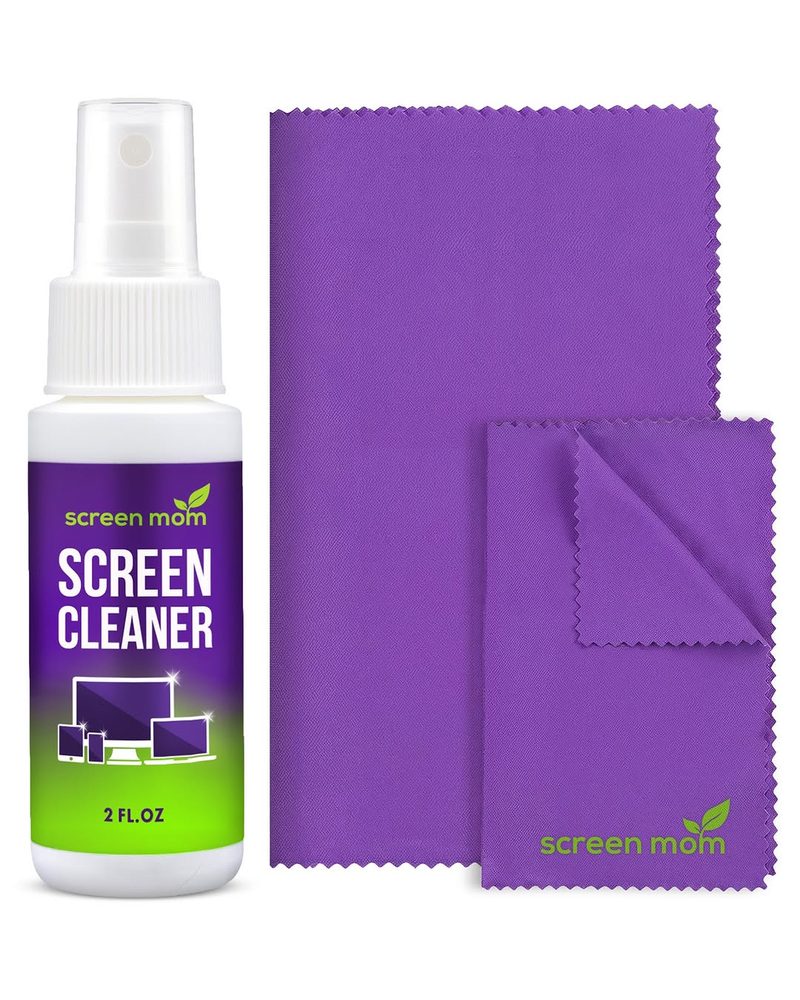
Screen Mom Screen Cleaner Kit
Best Large-Bottle KitBuy if: you prefer large bottle = better value for multiple screens and coating-safe formula
Don't buy if: you can't live with bulkier to store
For households with several screens, a 16 oz bottle makes more sense than a travel-size kit. Screen Mom's alcohol- and ammonia-free formula is safe for coated displays, and the extra-large cloth covers a 27-inch monitor in a few wipes. Based on owner feedback, a single bottle lasts months of regular use.
Pros
- Large bottle = better value for multiple screens
- coating-safe formula
- big cloth included.
Cons
- Bulkier to store
- overkill if you only clean one laptop.
Full specifications
- Large 16 oz spray bottle — lasts many cleanings
- Alcohol- and ammonia-free formula
- Includes an extra-large microfiber cloth
- Safe for monitors, laptops, and TVs
Prices change frequently — click through to see today's price.
Frequently Asked Questions
Can I use Windex on a monitor screen?
No — not on LCD, LED, or OLED monitors. Windex and similar glass cleaners contain ammonia, which damages the anti-reflective coatings on modern displays. Use a dedicated screen cleaner or the DIY distilled-water-and-vinegar mix instead.
Can I use eyeglass or lens cleaner on my monitor?
Usually yes, if it's alcohol- and ammonia-free — the coatings are similar. But dedicated screen cleaners are formulated for larger displays, and a microfiber cloth matters more than the exact liquid. Apply to the cloth, never directly to the screen.
What's the best cloth for cleaning a monitor?
A clean, dry microfiber cloth — lint-free, soft, and non-abrasive. Avoid paper towels, tissues, and old t-shirts, which can scratch. Wash your microfiber cloths regularly; a dirty cloth just smears grime around.
How do I remove fingerprints from my laptop screen?
Power off the laptop so the screen is dark, lightly dampen a microfiber cloth with distilled water (or a 50/50 distilled water and white vinegar mix), and wipe gently in circular motions. Let it dry fully before closing the lid.
How often should I clean my monitor?
A quick dry-wipe once a week keeps dust from building up; a damp clean once a month handles fingerprints and smudges. If you eat at your desk or have kids, you'll want the damp clean more often.
Can I use vinegar on a matte monitor screen?
Better not. Matte anti-reflective coatings are easily damaged by vinegar and alcohol, even diluted. Use distilled water alone or a dedicated screen cleaner on matte screens, and save the vinegar mix for uncoated glass — or skip it entirely if your monitor's manual advises against it.
What should I do if liquid gets into the bezel?
Power the monitor off and unplug it immediately, blot (don't wipe) any visible liquid with a dry cloth, and let it air-dry fully before switching it back on. If liquid has seeped inside the housing or the screen misbehaves after drying, don't power it up repeatedly — take it to a professional.
Conclusion
Cleaning a monitor screen comes down to three rules: use a microfiber cloth, skip the harsh chemicals, and never press hard. The DIY distilled-water-and-vinegar mix handles nearly everything for free — and if you'd rather buy than mix, the WHOOSH! Screen Cleaner Kit is the safest ready-made pick, MagicFiber cloths are the budget essential, and the Screen Mom kit suits multi-screen households. Once your display is spotless, you might appreciate it even more on one of our best budget gaming monitors.