How the too-cold-outside check works
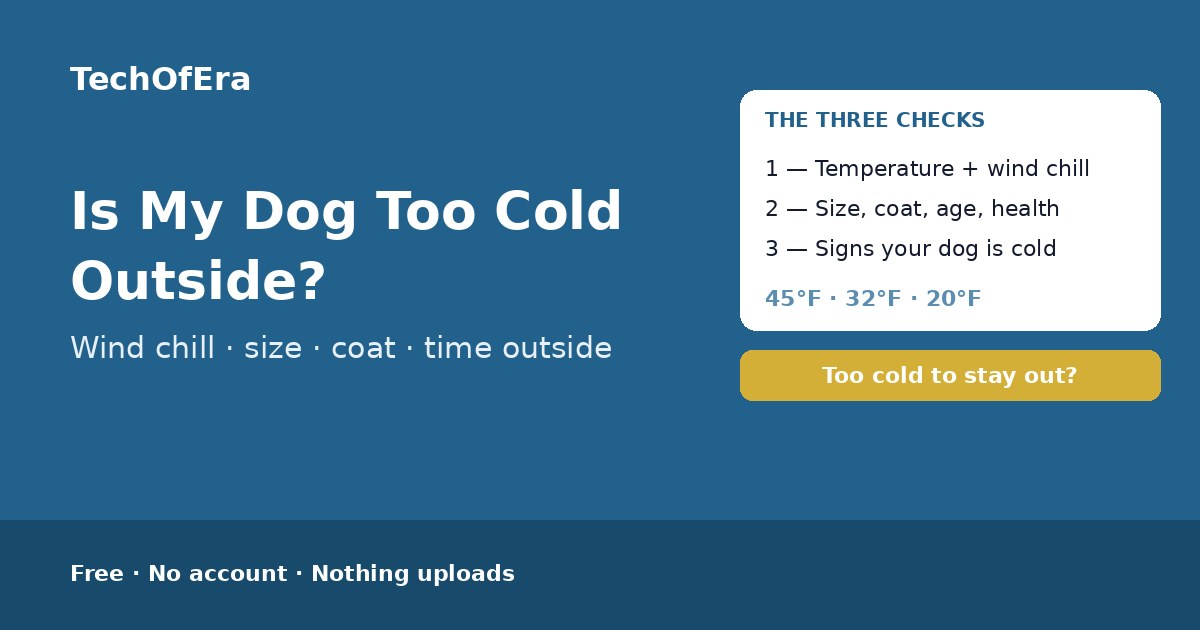
PetMD, the American Veterinary Medical Association and VCA Animal Hospitals agree on the numbers: most dogs are fine down to about 45°F (7°C). Below 32°F (0°C), small, thin-coated, young, old or unwell dogs start getting into real trouble. Below 20°F (−7°C), almost any dog can develop hypothermia or frostbite. But those numbers are for an average dog in still air — and your dog is neither average nor standing in still air. The Tufts Weather Safety Scale, designed by Gary Patronek, VMD, at the Tufts Center for Animals and Public Policy, plots the temperature against the dog’s size and then adjusts for the specific animal — and a wet coat shifts the limits by about 6°C. This checker does the same sums for your dog: it works out the wind chill from the temperature and the wind, takes about 10°F off for a wet coat, moves the band for your dog’s size, coat, age and health, and gives you a verdict for this outing, with a safe-time limit and the gear your dog needs.
To use it:
- Enter the temperature outside. Read a thermometer outside, or check the weather where you are — not the hallway thermostat, which reads the hallway. Enter it in °C or °F.
- Enter the wind speed. Wind chill is what your dog actually feels — the wind strips away the warm air trapped in their coat. Leave it blank if you do not know it, and the checker uses the air temperature.
- Say how big your dog is, and what kind of coat they have. Size moves the cold line further than anything else: a toy dog chills far faster than a giant one, and a thin single coat is a different animal in the cold from a thick double coat.
- Say how old your dog is, and how their health is. Puppies and seniors chill faster than healthy adults, and a health condition or medication can lower cold tolerance further.
- Say whether the coat is wet, and how long you plan to stay out. A wet coat chills a dog about 10°F faster than a dry one, and time outside is half the question — a dog that is fine for 10 minutes is not fine for an hour at the same temperature.
- Tick any signs your dog is showing. Shivering, lifting a paw, whining, slowing down, seeking shelter, or cold ears and paws all mean bring your dog in — the dog is the thermometer that matters most, whatever the numbers say.
What makes this checker different
The pages that rank for this search are guides — PetMD’s and VCA’s cold-weather articles, Compare Pet Coverage’s chart by size and coat, and long articles that give you a table and leave you to do the sums on a freezing doorstep. The one interactive checker in the top results is a size-only chart on a small pet site: it asks for the size and nothing else. There is no free, standalone checker that takes the temperature and the wind, works out the real wind chill, takes the wet coat into account, adjusts for your dog’s size, coat, age and health, asks how long you plan to stay out, and listens to the signs your dog is showing — and gives you a verdict: fine, coat on, bathroom breaks only, bring them in now, or check first because the dog disagrees with the numbers — with a safe-time limit and the gear your dog needs. This page is that answer: ten questions, an instant verdict for your exact dog and your exact weather, the blockers named, and the next steps. It is a self-assessment, so it says plainly what it cannot know: it cannot feel your dog or read your thermometer, and where your dog’s signs disagree with the numbers it says so instead of guessing.
When is this the right check?
Before the morning walk in a cold snap — because the temperature that was fine yesterday can be dangerous today once the wind picks up. When the coat is wet from rain or snow, and the same temperature becomes a different outing. When a new puppy or a senior dog joins the house, and the cold limits you knew for your old dog no longer apply. When someone else walks your dog — a dog walker, a family member, a neighbour — because a long walk in weather your dog cannot handle is the most common way a routine outing turns into a cold-stressed dog. And whenever your dog starts shivering, lifting a paw or slowing down halfway round the block — because that is when a guide leaves you guessing and a checker earns its keep.
Honest limitations
A self-assessment, not veterinary advice
This checker cannot feel your dog or read your thermometer. It cannot check the temperature outside or whether your dog is shivering. If you are worried about your dog, talk to your vet.
The dog’s signs beat the numbers
A dog showing cold stress in weather the numbers call fine is a dog that needs to come in. The bands are guidance for an average dog of that size and coat — your dog’s own signs are the verdict that counts.
Wind chill is an estimate
The National Weather Service formula is for a person standing in the wind, and it is the best public estimate there is for what a dog feels. Sheltered spots, sunshine and how hard your dog is running all move it — which is why the signs matter as much as the sum.
Breed ranges are approximate
The size and coat bands use the usual breed examples — a Chihuahua is toy, a Labrador is large — but mixed breeds and dogs between bands sit between the lines. Where your dog falls between two sizes, use the smaller one: it is the safer reading.
The 45–32–20 bands are guidance, not a guarantee
No dog reads the thermometer. A hardy dog can be fine below the line and a vulnerable dog can chill above it. The bands are where vets say to start paying attention — not a promise that above them is safe and below them is not.
Rules from official sources, dated November 2026
The rules here are the PetMD / AVMA / VCA cold-weather guidance and the Tufts Weather Safety Scale, as they read in November 2026. Guidance changes: recheck with your vet if anything about your dog changes.