How the poinsettia check works
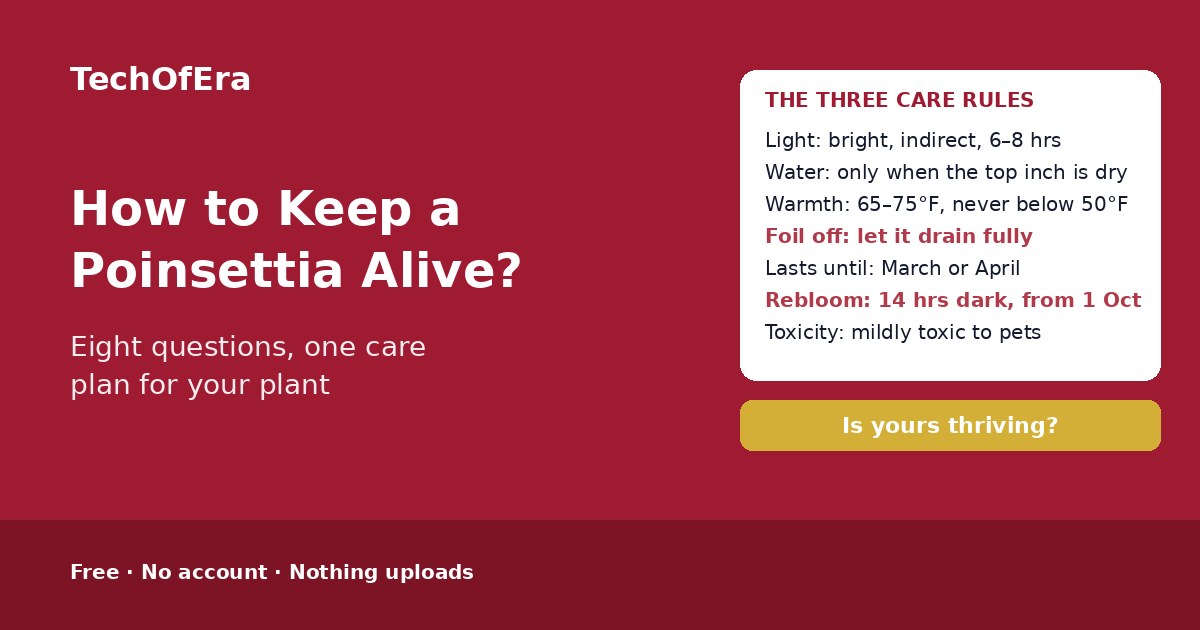
How to keep a poinsettia alive is one of the most-searched Christmas questions, and the guides that rank for it all say the same thing in different words — but none of them scores your plant. What decides whether yours lives is eight things: light, watering, temperature, draughts, drainage, what the plant looks like right now, whether a pet or small child can reach it, and what you want from the plant. The rules are the care guides': bright, indirect light for 6–8 hours a day; water only when the top inch of soil feels dry and let it drain fully; keep the room at 65–75°F (18–24°C) and never below 50°F (10°C); keep it away from draughts, heating vents and cold window glass; and take the decorative foil off (or punch holes in it) so water can drain. A well-cared-for poinsettia lasts until March or April indoors, and kept as a houseplant it can live 10 or even 20 years. Reblooming needs 14 hours of complete darkness a night for 8–10 weeks from about 1 October — and it is hard: most people buy a new plant instead.
To use it:
- Say how much light it gets. This is the first thing that decides whether the plant thrives or fades. Bright, indirect light — near a sunny window, out of direct sun — for 6–8 hours a day. Direct sun scorches the red bracts; a dim corner starves the plant and the colour fades early.
- Say how you water it. The finger test beats any schedule: water only when the top inch of soil feels dry. For most homes that works out to about every 7–10 days — the checker's own estimate, because how fast soil dries depends on your room. When you do water, water thoroughly in the sink and let it drain completely.
- Say what the room temperature is. Poinsettias are tropical plants from Mexico. They like 65–75°F (18–24°C); below 60°F they sulk and drop leaves; below 50°F they take cold damage that does not heal. A cold room or leaves touching cold window glass is a blocker, not a detail.
- Say whether it sits in a draught. Draughts, heating vents, fireplaces and cold window glass all drop leaves. The plant wants one steady temperature, not a blast of hot air followed by a cold draught from the door.
- Say whether water can drain out of the pot. The decorative foil is the usual trap: with no holes, water pools at the roots and rots them. Root rot is the most common poinsettia killer — and the easiest to prevent: take the foil off when you water, let the pot drain, then put the foil back on.
- Say what the plant looks like right now. The symptoms point at the cause. Dropping green leaves mean cold shock or watering trouble; yellowing lower leaves usually mean too much water or too little light; wilting means it is stressed now. A few leaves dropping right after you bring it home is normal settling.
- Say whether a pet or small child can reach it. Poinsettias are mildly toxic if eaten and the milky sap irritates skin and eyes — not the deadly poison of popular myth, but worth keeping out of reach. If a pet eats a large amount, call your vet.
- Say what you want from the plant. Through Christmas is easy with steady care; until spring takes the same care for longer; all year means a rest phase, a spring prune and a repot; reblooming needs 14 hours of darkness a night from 1 October — the hardest goal, and one that often fails even when done right.
What makes this checker different
The pages that rank for this search are guides — The Spruce on how long poinsettias last, Illinois Extension on keeping one alive through the holidays, HGTV on winter care, Gardening Know How and Family Handyman on the year-round routine. None of them scores your plant: none takes your light, your watering, your room temperature, your draughts, your drainage, your plant's condition and your goal — and none gives you a care plan. This page is that answer: eight questions, one health verdict and a personalised care plan, with the fixes in order and the reason shown. It is a self-assessment, so it says plainly what it cannot know: it cannot feel how dry your soil is or check the temperature by your window.
When is this the right check?
When you have just brought a poinsettia home and want to know whether the spot you picked will keep it alive. When leaves are dropping and you do not know whether it is the water, the cold or the light. When the foil is still on and the soil never seems to dry out. When you are deciding whether to try for a second Christmas or buy a new plant. And when there is a cat, a dog or a toddler in the house and you want to know whether the plant is safe where it is.
Honest limitations
A self-assessment, not plant-medical advice
This checker cannot feel how dry your soil is, check the temperature by your window, or see your plant. It scores the answers you give against what the care guides say — it cannot diagnose disease or pests, and it is not plant-medical advice.
Watering frequency is an estimate
How often to water depends on your room's warmth, light and humidity, so the guides disagree: most say start at about once a week and adjust. The checker's "about every 7–10 days" is its own estimate, labelled as such — the rule that matters is the finger test, not the calendar.
Reblooming is hard, even done right
Fourteen hours of complete darkness a night for 8–10 weeks, from about 1 October, with bright days — and a single night's light leak can delay it. Even growers get it wrong. Buying a new plant next year is the honest fallback, not a failure.
Mildly toxic, not deadly
Poinsettias are mildly toxic if eaten and the milky sap irritates skin and eyes — but they are not the deadly poison of popular myth. A nibble usually means drooling or vomiting and recovery; a large amount eaten is more serious, and a vet should be called.
Outdoors only where it never gets cold
Poinsettias only grow outdoors year-round in USDA zones 9–11, and take damage below 50°F (10°C). In summer you can put one outside once nights stay above 50°F — but bring it back inside well before the first cold nights of autumn.
Facts from the care guides, dated November 2026
The facts here are the guides that rank for this question — The Spruce, Illinois Extension, HGTV, Gardening Know How and Family Handyman — as they read in November 2026. Guides change and homes do not: recheck the answers if anything about your plant or your room changes.