How the heating check works
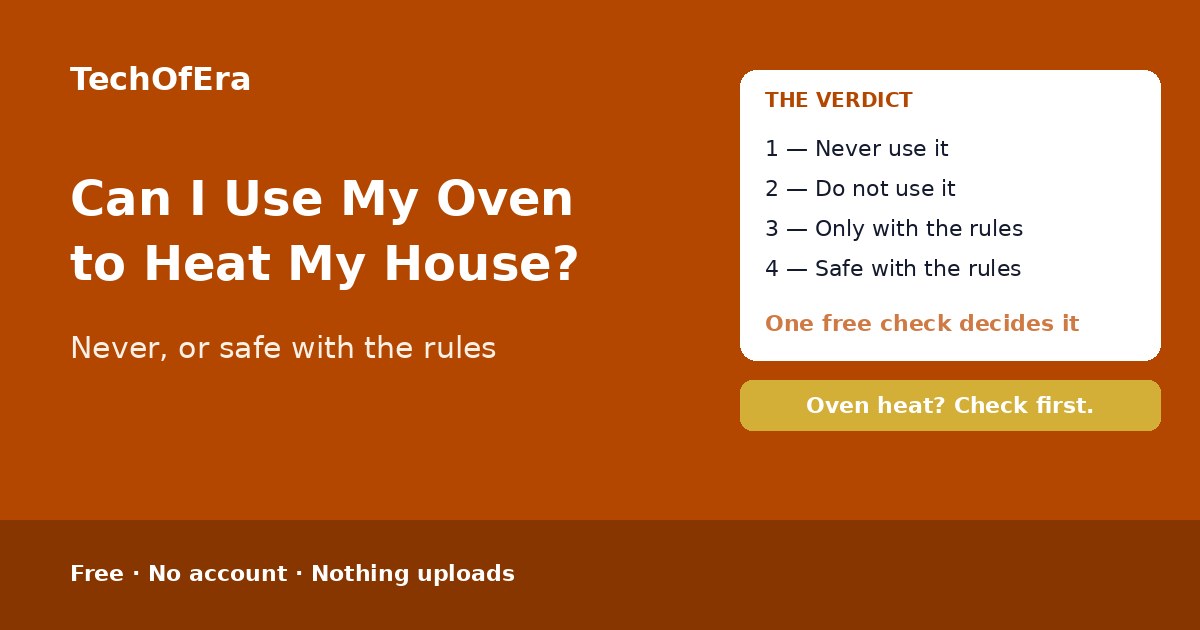
Using an oven to heat a house is a cold-night idea, and it is a dangerous one. A gas oven burns gas, and burning gas makes carbon monoxide — a gas you cannot see or smell. In a closed-up winter house it has nowhere to go, and the people inside cannot tell it is building up: the symptoms are a headache, dizziness and sickness, and the worst cases happen while people sleep. An electric oven is safer in that one way — it makes no carbon monoxide — but it is still not a heater: it is not built to run for hours, it can overheat and damage its controls, and an open door puts a hot surface at the height of children, pets and loose clothing. And neither oven has a fan to spread the heat, so the warmth stays in the kitchen anyway. This checker weighs all of it — the heat source, the home, who is there, how long it would run, whether anyone will watch it, the ventilation, the alarms, and the clear space around it — and gives you a verdict: never use it, do not use it, only with the safety rules in place, or safe with the rules below.
To use it:
- Say what heat source you would use. A gas oven, an electric oven, a gas hob, an electric space heater, an oil-filled radiator, an open fireplace or wood stove, a kerosene or portable propane heater, or the central heating. The source decides the verdict: a gas oven is never safe for heating, an electric oven is not built for it, and a space heater is safe only while someone watches it.
- Say what type of home it is. A house, a flat, a mobile home, or just one room. A small closed room fills with carbon monoxide faster than a large house, and in a mobile home the walls and furnishings are closer to the heat — the 3-foot rule matters most in a small space.
- Say who will be there. Adults only, all awake, children, a baby under 12 months, an older adult, pets, or everyone asleep overnight. Asleep people cannot smell carbon monoxide, feel a fire starting, or switch a heater off — and carbon monoxide poisoning is most dangerous while people sleep.
- Say how long it would run. Under an hour, one to two hours, several hours, or all night. For a gas oven the rule has no time limit — “just for an hour” is still dangerous — but the longer any heat source runs, the more the risks add up.
- Say whether anyone will watch it. Someone stays in the room the whole time, someone checks every hour or so, it would run while everyone is in another room or out, or it would run while everyone sleeps. Never leave a space heater unattended, and turn it off when you leave the room or go to sleep.
- Say what the ventilation is like. Windows and doors shut, a window cracked open, a cooker hood or extractor fan running, or a draughty room. Fresh air dilutes carbon monoxide, but it does not stop it being made — no amount of ventilation makes a gas oven safe for heating.
- Say what alarms there are. A working carbon monoxide alarm in the room, a smoke alarm only, or no alarms at all. A smoke alarm will not warn you about carbon monoxide: only a carbon monoxide alarm does that, and it is the only warning you get about a gas you cannot see or smell.
- Say how much clear space is around it. At least 3 feet (about 1 metre) clear all round, or curtains, bedding, clothes or furniture within 3 feet. Heating equipment is the second leading cause of home fires in the United States, and the clear space is the single biggest fire-safety step for any heater.
The four verdicts, and what each one means
Never use this to heat your home
A gas oven, a gas hob, or a kerosene or portable propane heater. These make carbon monoxide, and the CDC, Ready.gov and the U.S. Fire Administration all say never — with no exception for a short while. Turn it off now, open a window, and heat one room another way.
Do not use it for heating
An electric oven, which is not built to run for hours and can overheat — or a space heater or a fireplace left running while nobody is watching it, or while everyone sleeps. Switch it off and use a proper heater instead.
Only with the safety rules in place
A fireplace or wood stove with someone awake and watching it, or an oil-filled radiator left on overnight. It can heat a room, but only with 3 feet clear all round, a working carbon monoxide alarm, and someone watching — never while you sleep.
Safe to use for heating, with the rules below
An attended electric heater with clear space, or the central heating itself. Keep 3 feet clear all round, plug it straight into the wall, never into an extension lead, and switch it off when you leave the room or go to sleep.
What makes this checker different
The pages that rank for this search are guides — an article on the dangers of using an oven as a heat source, a fire-service warning, a guide to better heating alternatives. They all say the same thing in prose: never use an oven to heat your home. None of them asks what heat source you would use, who is there, how long it would run, whether anyone will watch it, or how much clear space there is — and none of them gives you a verdict for your situation, or tells you what is safe to use instead. This page is that answer: eight questions, an instant verdict, the blockers named, and the safer alternative. It is a self-assessment, so it says plainly what it cannot know: it cannot smell carbon monoxide, test your oven, or see what is sitting next to the heater.
When is this the right check?
When the heating has failed on a cold night and the oven looks like the answer — because the answer is never, and this checker tells you why, and what to do instead. When you are thinking of leaving a space heater on overnight — because the answer is to warm the room before bed and switch it off. When you have lit the fire and wonder whether you can leave it — because the answer depends on who is watching it and how much clear space there is. And when there is no carbon monoxide alarm in the room — because that is the one thing that warns you about a gas you cannot see or smell, and the checker will not let you forget it.
Honest limitations
A self-assessment, not fire-service advice
This checker cannot smell carbon monoxide, test your oven, or see what is sitting next to the heater. If the carbon monoxide alarm sounds, or anyone has a headache, feels dizzy or sick, get everyone out into fresh air and call the emergency number — do not stay to investigate.
The verdict is only as good as the answers
If the alarm is broken, the chimney is blocked, or the heater is older than you think, the checker cannot know. Check the alarm monthly, get the chimney swept every year, and read the heater's manual before you run it for hours.
“Just for an hour” is not an exception
Burning gas makes carbon monoxide from the moment the gas is lit, and it builds up in a closed room within the hour. A cracked window dilutes it; it does not stop it being made. The rule has no time limit, and this checker applies it that way.
An electric oven is not the safe version
It makes no carbon monoxide, but it is still not a heater: it is not built to run for hours, it can overheat and damage its controls, and an open door is a burn and trip hazard. The warmth stays in the kitchen anyway — a proper heater does the job better and more safely.
Small homes fill up fastest
A flat, a mobile home or a single closed room fills with carbon monoxide faster than a large house, and the walls and furnishings are closer to the heat. The 3-foot rule and the alarm matter most where the space is smallest.
Rules from official sources, dated November 2026
The rules here are the CDC guidance never to heat a house with a gas oven, the Ready.gov warning against using a gas stove or oven to heat a home, the U.S. Fire Administration rules on the 3-foot clear space and never leaving a space heater unattended or running while you sleep, and the National Fire Protection Association finding that heating equipment is the second leading cause of home fires in the United States, as they read in November 2026. Guidance changes: recheck with your local fire service if anything about the home changes.