Best Portable External Hard Drives & SSDs for 2026
Your photos, videos, games, and work files keep growing, and internal storage on laptops and consoles fills up fast. A good portable external hard drive or SSD is the simplest way to back everything up, move files between machines, or expand a console's library — and in 2026 the choices are better than ever, but also more confusing.
This guide covers the portable drives genuinely worth buying right now, based on their published specifications and what owners consistently report. We split the picks between high-speed portable SSDs and high-capacity traditional hard drives (HDDs). Pick your camp from the buying guide, then jump to the roundup.
Our Top Picks
Our Top Pick
Samsung T7 Shield
Best Overall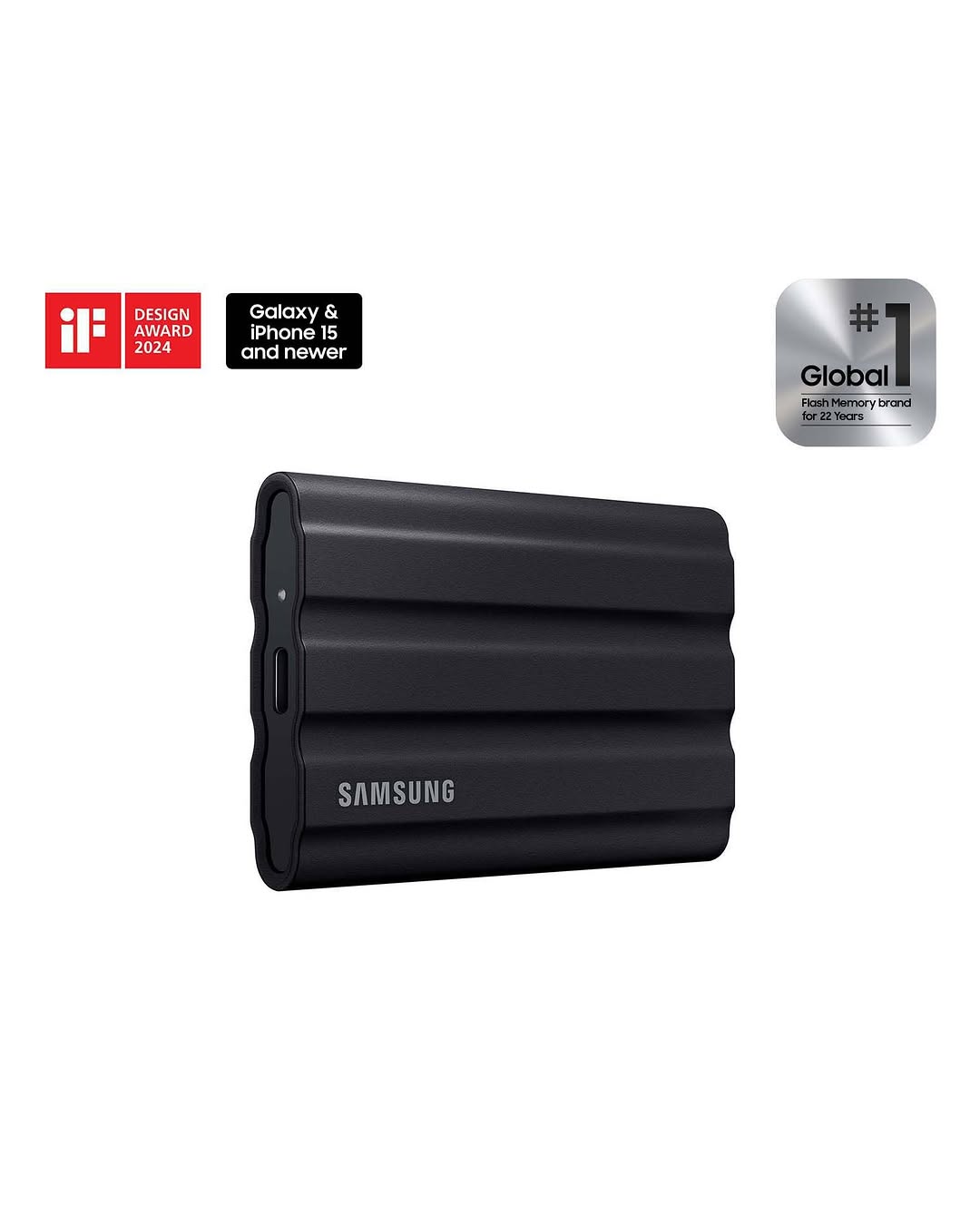
Based on specifications and owner feedback, this is the best balance of speed, durability, price, and brand reliability in a portable SSD — an excellent choice for backups, photo and video storage, and expanding a PS5 or…
Check Price on AmazonQuick Comparison
| Product | Key Specs | ||
|---|---|---|---|
| #1 | Samsung T7 ShieldBest Overall | Capacity: 1 TB, 2 TB, 4 TB · Interface: USB 3.2 Gen 2 (10 Gbps), USB-C · Rated speeds: up to 1,050 MB/s read, up to 1,000 MB/s write | Check Price |
| #2 | Samsung T9Fastest Portable SSD | Capacity: 1 TB, 2 TB, 4 TB · Interface: USB 3.2 Gen 2x2 (20 Gbps), USB-C · Rated speeds: up to 2,000 MB/s sequential read/write | Check Price |
| #3 | Crucial X9 ProBest Value SSD | Capacity: 1 TB, 2 TB, 4 TB · Interface: USB 3.2 Gen 2 (10 Gbps), USB-C · Rated speeds: up to 1,050 MB/s read/write | Check Price |
| #4 | SanDisk Extreme Portable SSDBest for Travel | Capacity: 1 TB, 2 TB, 4 TB, 8 TB · Interface: USB 3.2 Gen 2 (10 Gbps), USB-C · Rated speeds: up to 1,050 MB/s read, up to 1,000 MB/s write | Check Price |
| #5 | WD My PassportBest Portable HDD for Most People | Capacity: 1 TB, 2 TB, 4 TB, 5 TB, 6 TB · Interface: USB 3.2 Gen 1 (5 Gbps), USB-C · Rated speeds: HDD-class, around 100–130 MB/s sequential | Check Price |
| #6 | Seagate Backup Plus SlimBest Budget Portable HDD | Capacity: 1 TB, 2 TB, 4 TB, 5 TB · Interface: USB 3.0/3.2 (5 Gbps), USB-C adapter included · Rated speeds: HDD-class, around 100–140 MB/s sequential | Check Price |
Samsung T7 Shield
Best OverallBuy if: you prefer up to 1,050 MB/s read and 1,000 MB/s write over USB 3.2 Gen 2
Don't buy if: 10 Gbps Gen 2 interface caps speeds at half the ceiling of the Gen 2x2 Samsung T9 is a dealbreaker for you
Based on specifications and owner feedback, this is the best balance of speed, durability, price, and brand reliability in a portable SSD — an excellent choice for backups, photo and video storage, and expanding a PS5 or Xbox library. If you only buy one drive from this list, this is the one.
Pros
- Up to 1,050 MB/s read and 1,000 MB/s write over USB 3.2 Gen 2
- IP65 dust and water resistance with 3-meter drop rating
- Capacities of 1TB, 2TB and 4TB with a 3-year warranty
- Best balance of speed, durability and brand reliability for backups and console library expansion
Cons
- 10 Gbps Gen 2 interface caps speeds at half the ceiling of the Gen 2x2 Samsung T9
- 3-year warranty is shorter than the 5-year cover on the T9 and SanDisk Extreme
- No 8TB option for very large media libraries
Full specifications
- Capacity: 1 TB, 2 TB, 4 TB
- Interface: USB 3.2 Gen 2 (10 Gbps), USB-C
- Rated speeds: up to 1,050 MB/s read, up to 1,000 MB/s write
- Ruggedness: IP65 dust and water resistance, rated for drops up to 3 m
- Warranty: 3 years
Prices change frequently — click through to see today's price.
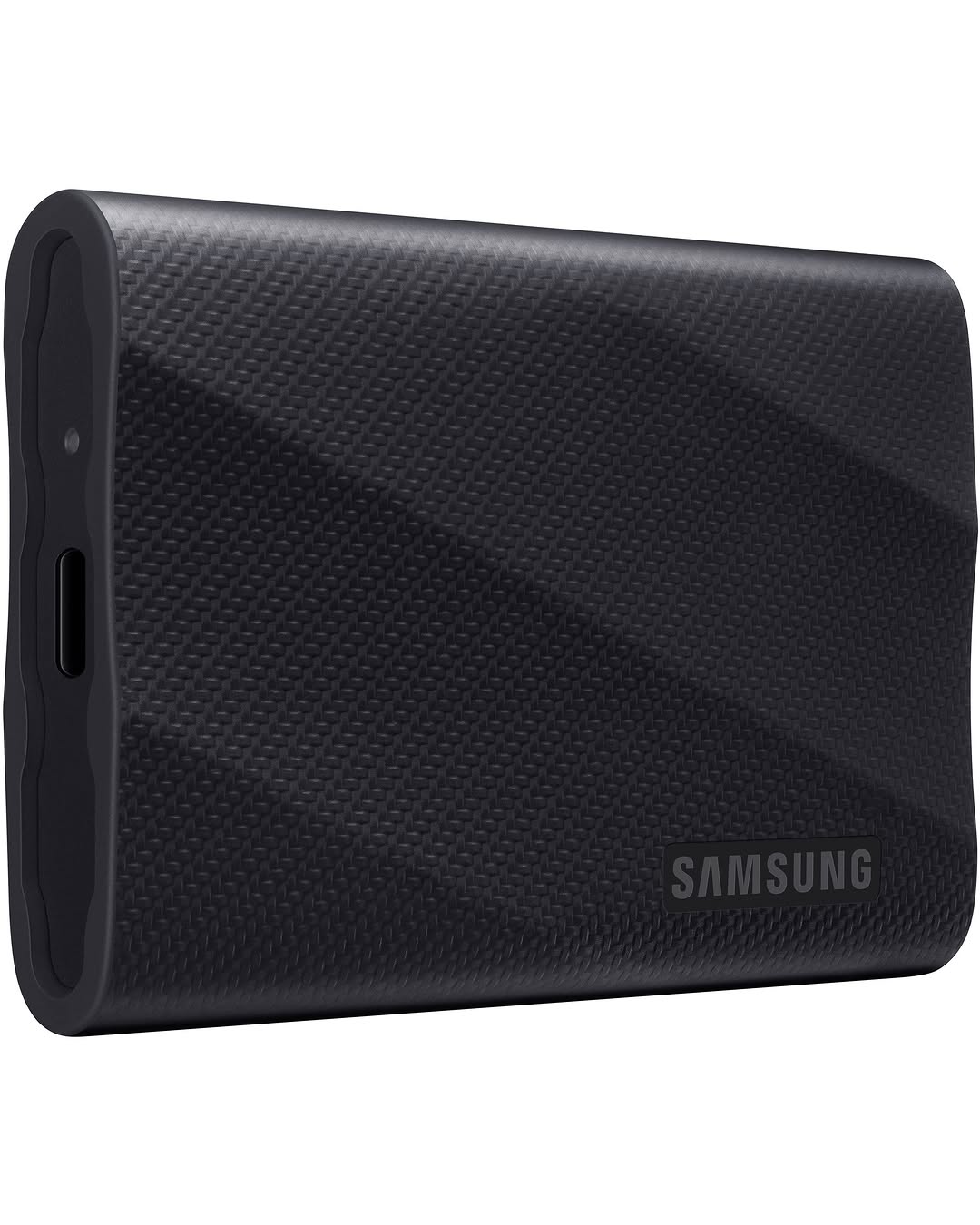
Samsung T9
Fastest Portable SSDBuy if: you want up to 2,000 MB/s sequential read/write over USB 3.2 Gen 2x2 - the fastest drive in this guide
Don't buy if: you can't live with needing a Gen 2x2 port for full speed - on a plain 10 Gbps port it runs no faster than the T7…
The T9's 20 Gbps interface is a genuine step up if you edit 4K video directly from an external drive, with a five-year warranty and thermal management for long writes. The honest caveat: many laptops still lack Gen 2x2 ports, and on a 10 Gbps port the T9 runs no faster than the T7 Shield. Check your machine's ports before paying the premium.
Pros
- Up to 2,000 MB/s sequential read/write over USB 3.2 Gen 2x2 - the fastest drive in this guide
- IP65 rating with Dynamic Thermal Guard for sustained long writes
- 5-year warranty, the longest alongside the SanDisk Extreme
Cons
- Needs a Gen 2x2 port for full speed - on a plain 10 Gbps port it runs no faster than the T7 Shield
- Costs a premium over the T7 Shield for speed many laptops cannot use
- No 8TB capacity option
Full specifications
- Capacity: 1 TB, 2 TB, 4 TB
- Interface: USB 3.2 Gen 2x2 (20 Gbps), USB-C
- Rated speeds: up to 2,000 MB/s sequential read/write
- Ruggedness: IP65-rated, Dynamic Thermal Guard
- Warranty: 5 years
Prices change frequently — click through to see today's price.
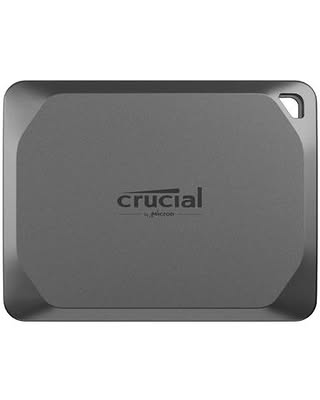
Crucial X9 Pro
Best Value SSDBuy if: you want something that matches the T7 Shield at up to 1,050 MB/s read/write while undercutting it on price
Don't buy if: you can't live with no hardware encryption, so sensitive data needs OS-level encryption instead
Crucial's X9 Pro matches the T7 Shield's speed and undercuts it on price, making it the value pick of this roundup. It is remarkably small and light, and owner feedback consistently praises its reliability. The main trade: no hardware encryption, so use your operating system's built-in encryption if you store sensitive data.
Pros
- Matches the T7 Shield at up to 1,050 MB/s read/write while undercutting it on price
- Remarkably small and light with a drop-resistant steel core
- IP55 dust and water resistance with a 3-year warranty
Cons
- No hardware encryption, so sensitive data needs OS-level encryption instead
- IP55 offers lighter water protection than the IP65-rated rivals
- 3-year warranty versus 5 years on the T9 and SanDisk Extreme
Full specifications
- Capacity: 1 TB, 2 TB, 4 TB
- Interface: USB 3.2 Gen 2 (10 Gbps), USB-C
- Rated speeds: up to 1,050 MB/s read/write
- Ruggedness: IP55 dust and water resistance, drop-resistant steel core
- Warranty: 3 years
Prices change frequently — click through to see today's price.
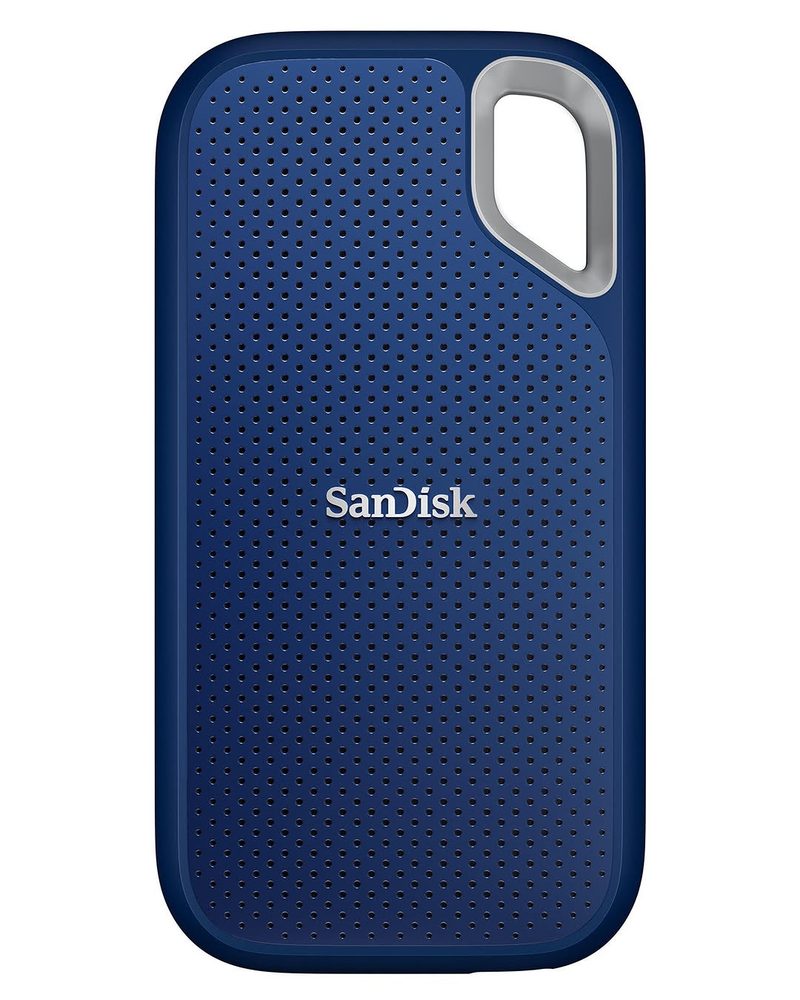
SanDisk Extreme Portable SSD
Best for TravelBuy if: you're looking for up to 1,050 MB/s read and 1,000 MB/s write over USB 3.2 Gen 2
Don't buy if: the Extreme line had widely reported firmware-related disconnect problems is a dealbreaker for you
The Extreme has long been the go-to SSD for photographers and travelers, and the current generation keeps that with an IP65 rating, a carabiner loop, and capacities up to 8 TB. One honest note: the Extreme line had widely reported firmware-related disconnect problems a few years ago, since resolved with firmware updates — update the drive's firmware when you first plug it in.
Pros
- Up to 1,050 MB/s read and 1,000 MB/s write over USB 3.2 Gen 2
- IP65 dust and water resistance, 3-meter drop protection and a carabiner loop for travel
- Capacities up to 8TB, the largest SSD option in this guide
- 5-year warranty
Cons
- The Extreme line had widely reported firmware-related disconnect problems - update the firmware on first use
- Same 10 Gbps speeds as cheaper rivals, so you pay for ruggedness and capacity rather than pace
- No Gen 2x2 high-speed option
Full specifications
- Capacity: 1 TB, 2 TB, 4 TB, 8 TB
- Interface: USB 3.2 Gen 2 (10 Gbps), USB-C
- Rated speeds: up to 1,050 MB/s read, up to 1,000 MB/s write
- Ruggedness: IP65 dust and water resistance, 3-meter drop protection
- Warranty: 5 years
Prices change frequently — click through to see today's price.
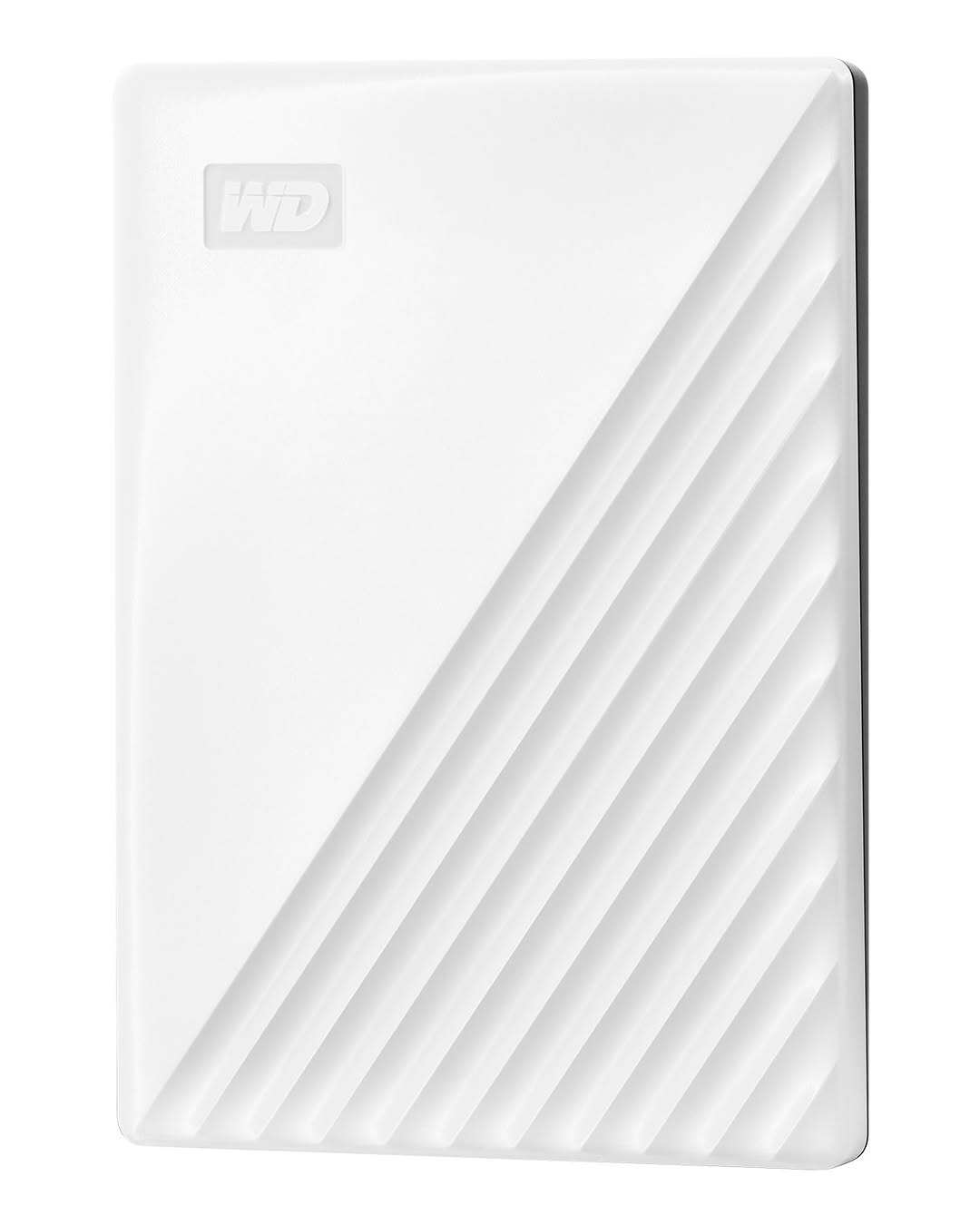
WD My Passport
Best Portable HDD for Most PeopleBuy if: you need up to 6TB of capacity at the lowest cost per terabyte in this guide
Don't buy if: you won't accept HDD-class speeds around 100-130 MB/s - large transfers take minutes, not seconds
It is a traditional spinning hard drive, so set your expectations: large transfers take minutes, not seconds, and never move it while it is writing. For faster transfers or a drive you edit from directly, pair it with one of the SSDs above — this one is best used as one copy of your data, never the only copy.
Pros
- Up to 6TB of capacity at the lowest cost per terabyte in this guide
- 256-bit AES hardware encryption with password protection
- USB-C interface with a 3-year warranty
Cons
- HDD-class speeds around 100-130 MB/s - large transfers take minutes, not seconds
- Spinning drive must not be moved while writing, or it can fail outright
- SMR recording can slow sustained writes sharply when copying hundreds of gigabytes at once
Full specifications
- Capacity: 1 TB, 2 TB, 4 TB, 5 TB, 6 TB
- Interface: USB 3.2 Gen 1 (5 Gbps), USB-C
- Rated speeds: HDD-class, around 100–130 MB/s sequential
- Security: 256-bit AES hardware encryption with password protection
- Warranty: 3 years
Prices change frequently — click through to see today's price.
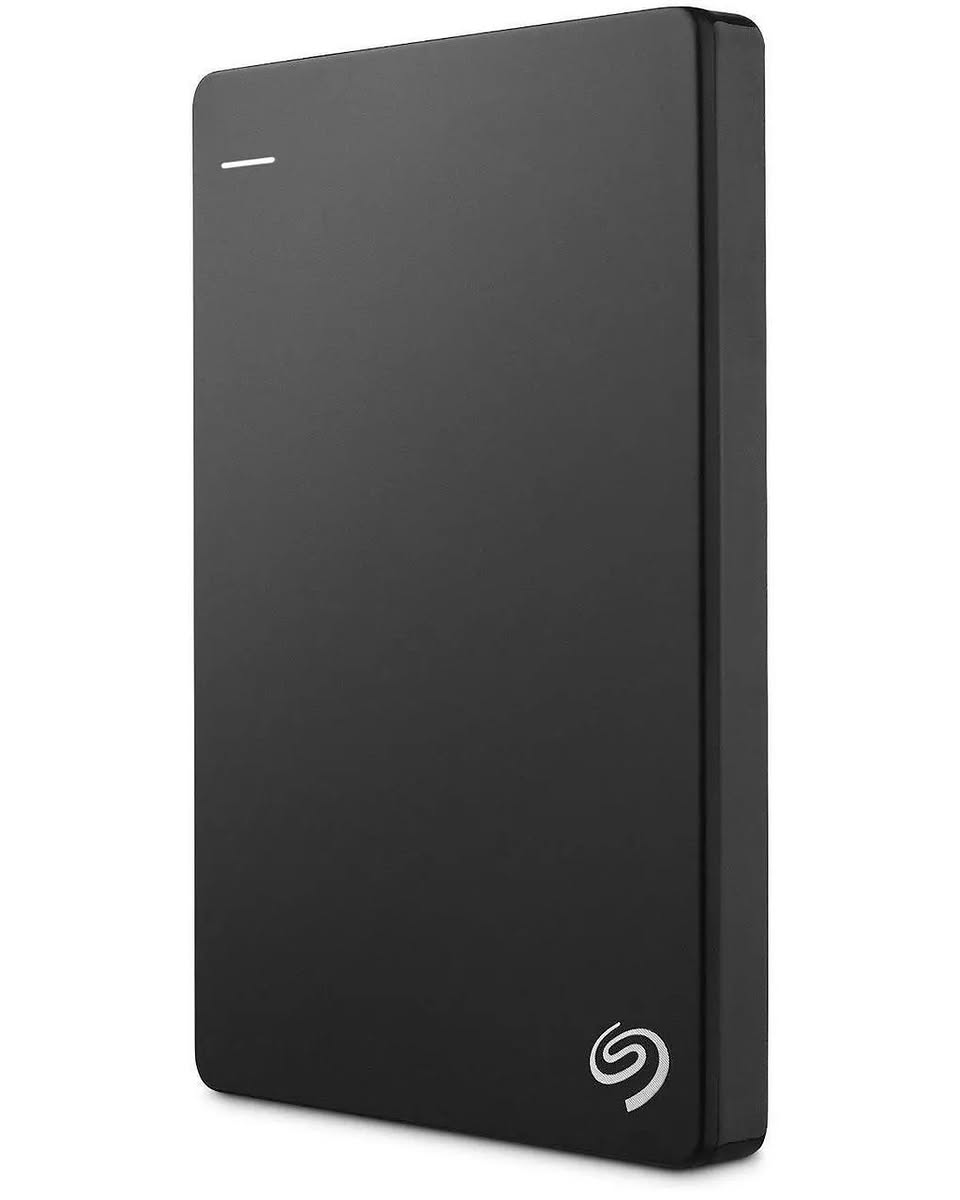
Seagate Backup Plus Slim
Best Budget Portable HDDBuy if: you want something that undercuts almost everything else per terabyte in a thin aluminum shell
Don't buy if: you can't live with 2-year warranty — the shortest in this guide
The Backup Plus Slim undercuts almost everything else per terabyte in a thin aluminum shell. The included Toolkit software handles automatic backups, and Seagate's Rescue Data Recovery Services are a valuable safety net for a budget drive. A great first backup drive or cheap media library — just treat it gently and note the shorter two-year warranty.
Pros
- Undercuts almost everything else per terabyte in a thin aluminum shell
- Seagate Toolkit software handles automatic backups
- Rescue Data Recovery Services included as a safety net
- USB-C adapter included in the box
Cons
- 2-year warranty is the shortest in this guide
- HDD-class speeds around 100-140 MB/s with the same spinning-drive fragility
- SMR recording slows down during long sustained write sessions
Full specifications
- Capacity: 1 TB, 2 TB, 4 TB, 5 TB
- Interface: USB 3.0/3.2 (5 Gbps), USB-C adapter included
- Rated speeds: HDD-class, around 100–140 MB/s sequential
- Extras: Seagate Toolkit backup software, Rescue Data Recovery Services
- Warranty: 2 years
Prices change frequently — click through to see today's price.
Buying Guide: How to Choose an External Drive
SSD vs. HDD: speed or capacity?
This is the single most important decision. Portable SSDs (solid-state drives) have no moving parts, so they are dramatically faster — typically rated up to 1,050 to 2,000 MB/s — and survive drops that would kill a spinning drive. The trade-off is price per gigabyte: an SSD costs several times more per terabyte than an HDD. A portable HDD is the value king: 4–6 TB of backup space for a fraction of the cost, but much slower transfers, and you must treat it gently while it is running.
USB-C and speed ratings: what actually matters
Nearly every drive worth buying now ships with USB-C. The labels that follow it are what matter: USB 3.2 Gen 1 (5 Gbps), Gen 2 (10 Gbps), and Gen 2x2 (20 Gbps). A drive "rated up to" 2,000 MB/s only reaches those speeds on a Gen 2x2 port — on a plain 10 Gbps port it tops out around half that. Always check what your computer's port supports. For Thunderbolt 3/4 and USB4 ports, speeds go higher still, but Thunderbolt-class SSDs remain expensive and only make sense for heavy video workflows.
Ruggedness: IP ratings and drop resistance
If your drive will live in a backpack or go on shoots, ruggedness matters more than a few hundred extra megabytes per second. Look for an IP rating: IP65 means the drive is dust-tight and protected against water jets, while IP55 offers solid dust protection with lighter water resistance. Rubberized bumpers and stated drop-survival ratings (often around 2–3 meters) are the other things to look for. An HDD dropped while spinning can fail outright, so ruggedness matters even more for traditional hard drives.
How much capacity do you need?
For a laptop backup or a modest photo library, 1–2 TB is enough. For 4K video projects or a console game library, 2–4 TB is the sweet spot. If you are archiving years of media, portable HDDs now reach 5–6 TB in a pocketable form, and desktop drives go far beyond that. Buy slightly more than you think you need: drives perform best and last longer when they are not filled to the brim.
SMR vs. CMR: a quick note on HDDs
Most affordable portable hard drives now use shingled magnetic recording (SMR), which overlaps data tracks to squeeze in more capacity. SMR drives are perfectly fine for backups and media storage, but sustained writes — copying hundreds of gigabytes at once — can slow down sharply as the drive reorganizes data. If you regularly write very large files in long sessions, know that a portable SSD or a CMR-based desktop drive will hold its speed far better.
Best External Hard Drive for Gaming
Gamers have different priorities: fast load times, console compatibility, and enough capacity for a growing library. If you mainly need a drive for PS5, Xbox, or PC games, see our dedicated best external hard drive for gaming guide, which covers game-ready drives, console rules for external storage, and which models are worth the premium.
Frequently Asked Questions
Should I buy an external SSD or a traditional external hard drive?
Buy an SSD if speed, silence, and durability matter to you — video editing, frequent large transfers, or a drive that travels in a bag. Buy an HDD if you need the most capacity per dollar for backups and media archives. Many people end up with both: a fast SSD for active work and a big HDD for backups.
Will these drives work with both Windows and Mac?
Yes. Every drive on this list works with Windows, Mac, and most modern consoles, but most ship formatted for Windows (NTFS/exFAT). macOS can read NTFS but cannot write to it without extra software, so Mac users should reformat the drive to APFS or exFAT before loading it with files. Formatting erases everything, so do it first.
How fast is "up to 1,050 MB/s" in real life?
Manufacturer speed ratings are best-case numbers measured in ideal conditions. Real transfers are usually somewhat lower and depend on your port, cable, and file sizes. As a rule of thumb, a 10 Gbps SSD moves large files several times faster than a portable HDD — copying a 50 GB game folder takes under a minute on a good SSD versus several minutes on an HDD.
Can I use a portable SSD or HDD with my game console?
Yes — PS5 and Xbox Series X|S support external USB drives for storing and playing last-generation games, though current-generation titles must run from the internal SSD. On PS4, you can play games directly from a compatible external USB drive — see our USB storage for PS4 guide. If you are building a PC gaming setup around your new storage, our gaming PC under $1,000 guide is a good next read.
How long do portable drives last?
Most consumer portable drives deliver 3–5 years of typical service, though plenty last longer and some fail early — which is why no single drive should be your only copy of anything irreplaceable. The biggest killers are drops while running (for HDDs), heat, and yanking the cable mid-transfer. Safely eject the drive and keep a second copy of important files, ideally off-site.
Conclusion
For most people in 2026, the Samsung T7 Shield is the right answer: fast enough for almost anything, tough enough for real life, and reasonably priced. Step up to the Samsung T9 if your ports and workflows can use 2,000 MB/s speeds, grab the Crucial X9 Pro if you want similar performance for less, or pick the SanDisk Extreme if you like its travel-friendly design and long warranty. And when you simply need the most terabytes for the least money, the WD My Passport and Seagate Backup Plus Slim remain the value champions.
Whatever you choose, buy the drive for the job you actually do — and keep a second copy of anything you cannot afford to lose. Check current prices on Amazon with the buttons above, since deals on these drives rotate constantly.
What is the best travel external hard drive?
For travel, the Samsung T7 Shield is the safest pick: pocket-sized, bus-powered, and rated to survive drops and splashes. The SanDisk Extreme Portable SSD is a strong alternative with a similar rugged design and a handy carabiner loop.
What is the best portable hard drive for everyday use?
The WD My Passport remains the best all-round portable hard drive for everyday backups — good capacity per dollar, compact, and widely compatible. If you want SSD speed in the same pocketable size, the Crucial X9 Pro is the better pick.
What are the best external hard drives of 2025?
The standout external drives of 2025 were the Samsung T7 Shield for rugged portability, the Samsung T9 for raw SSD speed, and the WD My Passport for affordable high-capacity HDD storage. All three remain excellent buys in 2026.
What is the best external hard drive in 2026?
In 2026, the Samsung T7 Shield is the best external hard drive for most people — fast, rugged, and reasonably priced. The WD My Passport is the best budget pick if you need terabytes of storage, and the Samsung T9 is the fastest portable SSD on this list.