Can candle wax come out of your carpet — or is it stuck for good?

Most candle wax does come out of carpet — but the method turns on the details: the wax type, the carpet fibre, how much spilled, whether it has hardened, and what heat you have. Answer eight questions and this checker gives you a verdict for your exact spill, a step-by-step method and a risk score out of 100 — free, in your browser, nothing uploads.

  • Ice, scrape, iron method
  • 8 questions, instant verdict
  • Risk score out of 100
  • Free, no account, nothing uploads
Can candle wax come out of your carpet — or is it stuck for good?

Check whether the candle wax will come out of your carpet

Try a preset:
0 of 8 answered

Your result

Answer the questions Your verdict appears here as you answer. Risk score: — / 100
Your step-by-step method

Say whether the wax has hardened and the method for your spill will appear here.

Blockers

Things that do not fit

Things to check

Still to confirm

What to do next

    Your method, step by step

    Your result summary


    Answer the questions above — the verdict updates live.

    Privacy you can verify, not just trust

    Checking whether wax will come out of your carpet by uploading your home details to a website would be backwards — the check should never be the leak. This one can't: your answers are checked with plain JavaScript on your device, and they never leave the device — the only third-party requests are the site's own analytics, which count page views. Don't take our word for it:

    New cross-origin requests during use: 0
    1. Press F12 to open developer tools, then the Network tab.
    2. Answer a question above. Watch: apart from the site's analytics, nothing new is requested — no uploads, and no data ever leaves your device.
    3. Extra credit: disconnect your internet after this page loads — the checker still works.

    How candle wax removal from carpet works

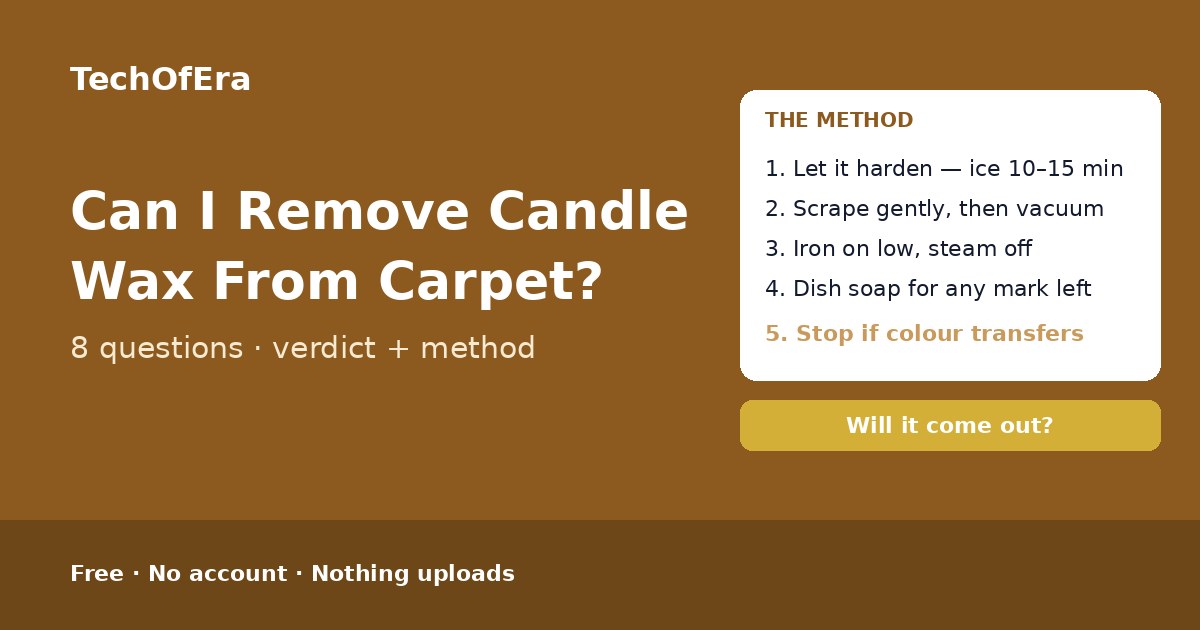
    The wax-removal method fits on one card, and every guide that ranks for this search gives the same five steps: let the wax cool and harden (or harden it with a sealed bag of ice for 10–15 minutes), scrape off the bulk with a blunt knife or spoon, vacuum the flakes, lift the thin layer that is left with an iron on its lowest setting, steam off, over a plain white cotton towel or unprinted paper towels — and finish with dish soap and warm water for any mark that is left. The details matter: never touch soft, warm wax, because it spreads deeper into the pile; never iron a paper bag, because paper and heat do not mix and the bag can overheat and burn the carpet; never use newspaper, because the ink transfers when it is warm; and never use a hot iron on wool, or hydrogen peroxide on wool or dark colours. Coloured wax leaves a dye mark that needs its own treatment after the wax is gone, and soy wax and wax melts leave a greasy mark from the fragrance oil. This checker runs your spill’s exact details against that method, and names every risk.

    To use it:

    1. Say whether the wax has hardened. Still warm or soft means wait — nothing can be done yet. Cooled and hard means it is ready to scrape; already scraped means only a thin layer is left.
    2. Say what kind of wax it is. Plain paraffin lifts easiest; soy and beeswax need more patience; coloured wax needs a dye step afterwards; wax melts need a grease step.
    3. Say what kind of carpet it is, and what colour. Synthetic is the most forgiving; wool needs a hair dryer instead of an iron; Berber loops fray if you scrape hard; light carpets show dye marks most clearly.
    4. Say how much wax there is, and what heat and cloth you have. A few drips are the easiest job; a palm-sized patch needs section-by-section work; a pool bigger than a hand is usually a professional job. An iron is the usual heat, a hair dryer is the safer one for wool, and without either the freeze-and-scrape route plus a carpet cleaner is the way.
    5. Say how much the carpet matters. A standard carpet is a reasonable home job; an expensive, heirloom or wool rug, or a carpet in a rented home, is worth a professional if the spill is big or coloured.

    What makes this checker different

    The pages that rank for this search are guides — home and cleaning sites that all give the same five steps for the average spill. That is the right method for a plain wax drip on a synthetic carpet, but it is not the whole question: the method changes with the wax type, the carpet fibre, the colour, the size of the spill, whether it has hardened, and what heat and cloth you have — and a valuable wool rug with coloured wax is a different job from a plain drip on a beige synthetic carpet. There is no free, standalone checker that takes your spill’s exact details and gives you a verdict for it: remove it now, try this method with care, wait for it to harden, or call a professional — plus a step-by-step method written for your spill and a risk score out of 100. This page is that answer. It is a self-assessment, so it says plainly what it cannot know: it cannot see your carpet, the wax or the backing, and where the guidance depends on a detail it does not ask about — how deep the wax has sunk, for example — it says so instead of guessing. This is a different question from our candle safety checker, which asks whether a candle is safe to leave burning overnight — that one is about fire safety, not cleaning wax out of a carpet — and from our washing-machine checker, which asks whether an item can go in the wash, not how to get wax out of a fitted carpet.

    Wax type and carpet: the quick reference

    Wax typeCarpetBest methodWatch out for
    Plain paraffinSyntheticIce, scrape, ironLet it cool fully first
    Plain paraffinWoolIce, scrape, hair dryer on lowNever use a hot iron on wool
    Soy waxSyntheticScrape, iron, dish soapFragrance oil can leave a greasy mark
    Soy waxWoolScrape, hair dryer, dish soapTest the soap in a hidden spot first
    BeeswaxSyntheticIce, scrape, iron on lowBeeswax melts hotter — keep the iron low
    BeeswaxWoolScrape, hair dryer, carpet cleanerCall a pro if the mark stays
    Coloured waxSynthetic (light)Ice, scrape, iron, dish soap, then rubbing alcoholDye can spread — change the paper often
    Coloured waxWoolIce, scrape, dish soap onlyNever use hydrogen peroxide on wool
    Wax meltsSyntheticScrape, iron, dish soapScented oil leaves a greasy mark
    Wax meltsBerber loopIce, scrape gently, hair dryerLoops fray — never pull at the pile
    Birthday-candle dripsAny carpetIce and pick offUsually no iron needed
    Large spillAny carpetIce, scrape, iron in sectionsCall a pro if it covers more than a hand

    When is this the right check?

    As soon as wax spills on the carpet — run the checker while the wax is still cooling, because the first answer (whether it has hardened) decides whether you wait or start. When you have already scraped the bulk off and a thin layer is left — because the heat step is where most mistakes happen. When the wax is coloured, or the carpet is wool, Berber or light — because those are the spills where the standard method needs changing. When the carpet is valuable or in a rented home — because the checker will tell you plainly when the spill is past a safe home attempt. And after you notice colour transferring, or the pile changing texture — stop, and call a professional rather than scrubbing harder.

    Honest limitations

    A self-assessment, not cleaning advice

    This checker cannot see your carpet, the wax or the backing. It cannot check the fibre, whether a cleaner is safe for your carpet, or how deep the wax has sunk. If you are unsure, check the carpet maker’s care instructions — do not guess.

    The lowest iron heat is a minimum, not a target

    The iron goes on its lowest setting, steam off, for a few seconds at a time — but less heat is always safer, and where your carpet’s maker asks for no heat at all, follow the maker. A carpet that only just survives the iron is not the same as one with room to spare.

    Spot-test every cleaner first

    This checker does not ask which cleaner you will use, so its verdict does not cover it. Test any cleaner in a hidden spot — dab it on, blot with a white cloth, and check for colour transfer — before using it on the spill.

    A dye mark is a different stain from the wax

    Removing the wax does not remove the dye. Coloured wax often leaves a shadow after the wax itself is gone, and that needs its own treatment — dish soap first, then rubbing alcohol on a hidden-area test. Do not scrub it.

    Stop at the first sign of trouble

    This checker does not ask what the carpet looks like while you work, so its verdict does not cover it. If colour starts to transfer, or the pile changes texture, stop and call a professional — a damaged patch costs more than a clean.

    Guidance from cleaning sources, dated November 2026

    The method here is the guidance from Family Handyman, Reader’s Digest, Runrug, Angi and Apartment Therapy, as it reads in November 2026. Guidance changes: recheck with your carpet’s maker if anything about your carpet changes.

    Frequently asked questions

    Can I remove candle wax from carpet?

    Yes, in most cases. Let the wax cool and harden first — never touch soft, warm wax, because it spreads deeper into the pile. Harden it with a sealed bag of ice for 10–15 minutes, scrape off the bulk with a blunt knife or spoon, vacuum the flakes, then lift the thin layer that is left with an iron on its lowest setting, steam off, over a plain white cotton towel or unprinted paper towels. Finish with dish soap and warm water for any mark that is left. Call a professional for a large spill, a valuable or heirloom rug, or a dye mark that will not lift — the average professional carpet clean costs $120 to $230.

    Should I use an iron or a hair dryer to remove wax from carpet?

    An iron on its lowest setting, steam off, is the usual tool — press it for a few seconds at a time over a plain white cotton towel or unprinted paper towels, moving to a clean area as the wax soaks in, and never let the iron touch the carpet itself. A hair dryer is the safer choice for wool, because a hot iron can damage wool fibres, and for heat-sensitive synthetics such as olefin, which can melt at high heat. Hold the dryer a few inches away on high heat, keep it moving, and blot the softened wax with a white cloth as it lifts. Never iron a paper bag: paper and heat do not mix and the bag can overheat and burn the carpet.

    Can I remove candle wax from carpet without an iron?

    Yes. Harden the wax with a sealed bag of ice, scrape off the bulk with a blunt knife or spoon, and vacuum the flakes — that alone clears most of a small spill. For the thin layer that is left, treat it with a carpet cleaner labelled for your carpet fibre, applied to a white cloth (never poured straight on the carpet), and blot from the edge of the mark inwards. A hair dryer borrowed from a neighbour works as the heat step if you can get one, and a dry-cleaning solvent made for carpets can work on small spills too.

    Will ironing damage my carpet?

    It can, if the heat is too high or the iron touches the carpet. Always use the lowest setting, steam off, with a plain white cotton towel or unprinted paper towels between the iron and the carpet, and press for a few seconds at a time. Test any cleaner in a hidden spot first. High heat can melt sensitive synthetic fibres such as olefin, and a hot iron can damage wool — for wool, use a hair dryer instead. If the pile changes texture, or colour starts to transfer, stop and call a professional carpet cleaner.

    How do I get coloured wax dye out of carpet?

    Remove the wax first, then treat the dye separately — the dye is a different stain from the wax. Dab the mark with 1 teaspoon of clear dish soap in 1 cup of warm water, blotting until no more colour comes away, and change the paper or towel often so dye does not spread back onto the carpet. If a mark remains, test rubbing (isopropyl) alcohol on a hidden area first, then dab it on with a white cloth and blot. On light synthetic carpet only, a little 3% hydrogen peroxide can lift the last of the dye — test it first, and never use it on wool or dark colours.

    What should I do first when candle wax spills on carpet?

    Nothing — yet. Let the wax cool and harden first. Working melted wax spreads it deeper into the fibres and makes the job much harder, so never try to wipe or scrape soft, warm wax. Let it cool on its own, or hold a sealed bag of ice over it for 10–15 minutes until it feels hard and brittle. Keep the ice in the bag, because meltwater soaks the pile and the backing. Once the wax is hard, scrape it off gently with a blunt knife or the back of a spoon, vacuum the flakes, and then use heat to lift what is left.

    Does this work on wool or Berber carpet?

    Yes, with the gentler route. Wool is more absorbent than synthetic carpet, so wax sinks in deeper and dye is harder to lift — never use a hot iron on wool, use a hair dryer instead, and never use hydrogen peroxide on wool. Berber is a loop pile whose loops fray and snag easily, so scrape with a blunt plastic scraper, not a knife, using light pressure and working from the outside of the patch towards the centre, and never pull at the pile. For a valuable wool rug, or a Berber carpet with a large or coloured spill, a professional cleaner is the safe choice.

    When should I call a professional carpet cleaner?

    Call a professional when the spill is bigger than a hand, when the carpet is expensive, heirloom or wool, when coloured wax has left a dye mark that will not lift after one soap treatment, or when the carpet is in a rented home and a stain could cost part of your deposit. The average professional carpet clean costs $120 to $230, and steam cleaning runs around $300. Tell the cleaner the wax type, the carpet fibre and how big the spill is — and do not scrub it, steam it or pour solvent on it first, because a failed home attempt can set the dye or damage the pile and make the professional job harder.

    Does this checker guarantee the wax will come out?

    No. This checker is a self-assessment: it runs your answers against the wax-removal guidance from Family Handyman, Reader's Digest, Runrug, Angi and Apartment Therapy as it reads in November 2026, entirely in your browser, and nothing you enter leaves your device. A web page cannot see your carpet, the wax or the backing — it cannot check the fibre, whether a cleaner is safe for your carpet, or how deep the wax has sunk. The only third-party requests are the site's own analytics, which count page views. Test any cleaner in a hidden spot first, and stop if colour starts to transfer or the pile changes texture.