How the winter washing check works
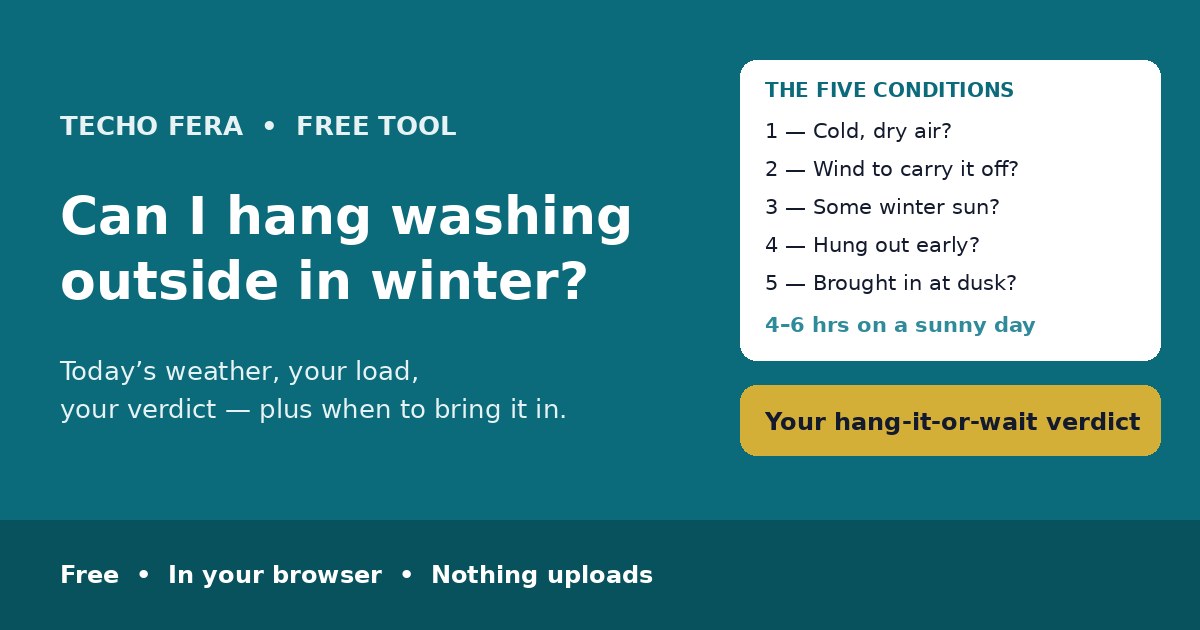
Wet washing can dry outside even below freezing — but a damp, still afternoon will leave it wetter than it started, and a heavy load hung out at 3pm will still be wet at dusk. This checker asks eight questions — the temperature, the wind, the sky, how damp the air feels, the time of day, what you are hanging, and how well it was spun — and turns the answers into a verdict, an estimated drying time, and the moment to bring it in, in the order you should do the job.
To use it:
- Check the temperature. Below freezing is fine if the air is dry — the water in the fabric freezes, then turns straight into vapour. Damp air is the real problem, not cold. If you do not know the temperature, say so — the checker will not guess, it will tell you to check first.
- Feel the wind. Wind carries the vapour away from the fabric, and it is worth more than a few degrees of warmth. Still air is the slowest part of any winter day.
- Look at the sky. Winter sun still adds energy, even when it feels weak. Rain or snow on the line adds water faster than cold air can take it away — if it is raining or snowing, the answer is to keep the washing inside.
- Feel how damp the air is. Clothes can dry faster on a cold, dry day than on a warmer, humid one. If the air feels clammy or foggy, the washing will struggle, whatever the temperature.
- Say what time it is. Winter days are short and drying stops at dusk. Hang washing out early — after lunch, you will almost certainly be finishing it inside.
- Say what you are hanging. Light things dry fastest; jeans, bedding and duvets take the longest and are the most likely to need an indoor finish. A mixed load dries unevenly — bring the light things in as they finish.
- Say how well it was spun. An extra spin cycle removes water before the line, so there is less moisture left to freeze or evaporate. It takes real time off the drying.
- Read the verdict — and the plan. The verdict tells you whether to hang it out, whether to finish it inside, or whether to wait. The plan lists the steps in order, so you can walk through them one by one.
What makes this checker different
The pages that rank for this search are long guides from home-advice sites — 104homestead, Homes & Gardens, EcoWatch, Grit and others. Every one of them explains sublimation and lists the same tips, and every one of them leaves you to judge your own day. None of them asks what the temperature is outside your window, how much wind there is, what time it is, or what you are hanging — and none of them tells you how long your load will take, or when to bring it in. The drying-forecast sites answer a different question: they pull a weather forecast and tell you whether it will dry. This page is the answer for the person standing at the back door with a basket: eight questions, five verdicts, an estimated drying time against the daylight left, and a plan that changes with the conditions — including the rain-or-snow stop, the finish-it-inside plan for heavy loads, and the frozen-fabric warning. It is a planning aid, so it says plainly what it cannot know: it cannot see your sky, and where your answers are uncertain it says so instead of guessing.
When is this the right check?
On a cold morning when you are standing with a basket and wondering whether the line is worth it — because the answer depends on the wind and the damp, not just the temperature. When the washing froze stiff on the line yesterday and you want to know whether today will be any better. When you have heavy things — jeans, bedding, duvets — and need to know whether they will finish before dusk or need an indoor finish. And when it is already afternoon — because the checker will tell you honestly that the daylight is gone and the rack indoors is the better call.
Honest limitations
A planning aid, not a forecast
This checker cannot see your sky, your washing or your forecast. It cannot tell you the weather outside your window, and its drying times are its own estimates from published winter timings — not a forecast. Check the actual weather before you hang anything out.
Stiff does not mean wet
Washing that feels stiff after a full day on the line is usually ice, not water: bring it inside and the stiffness disappears as it thaws. Check each item is actually dry before you fold it away — anything still damp goes back on the rack, not in the drawer.
Never fold frozen fabric
Do not fold or pull fabric while it is frozen solid — let it thaw naturally first. Frozen fibres are brittle and can be damaged by handling, and a frozen fold creases in ways that do not come out.
One hard exception
Do not line-dry nappy covers with a waterproof (PUL) lining in winter — the lining can crack in the cold and ruin the cover. Dry those inside, whatever the weather.
Damp air beats cold air
The temperature is not the whole story: a cold, dry, breezy day dries washing faster than a warmer, damp one. Fog, drizzle and clammy air slow everything down, and rain or snow stop it outright — the checker weighs all of it, not just the thermometer.
Rules from the line-drying guides, dated November 2026
The rules here are the published guidance as they read in November 2026: 104homestead's Maine timings (4–6 hours on a sunny, breezy day around freezing; 6–10 hours on a cloudy cold day), the Royal Meteorological Society on sublimation in cold, dry air, and the line-drying guides on hanging early, spacing items out, and bringing everything in at dusk. Guidance changes: recheck with those sources if anything about your plans changes.