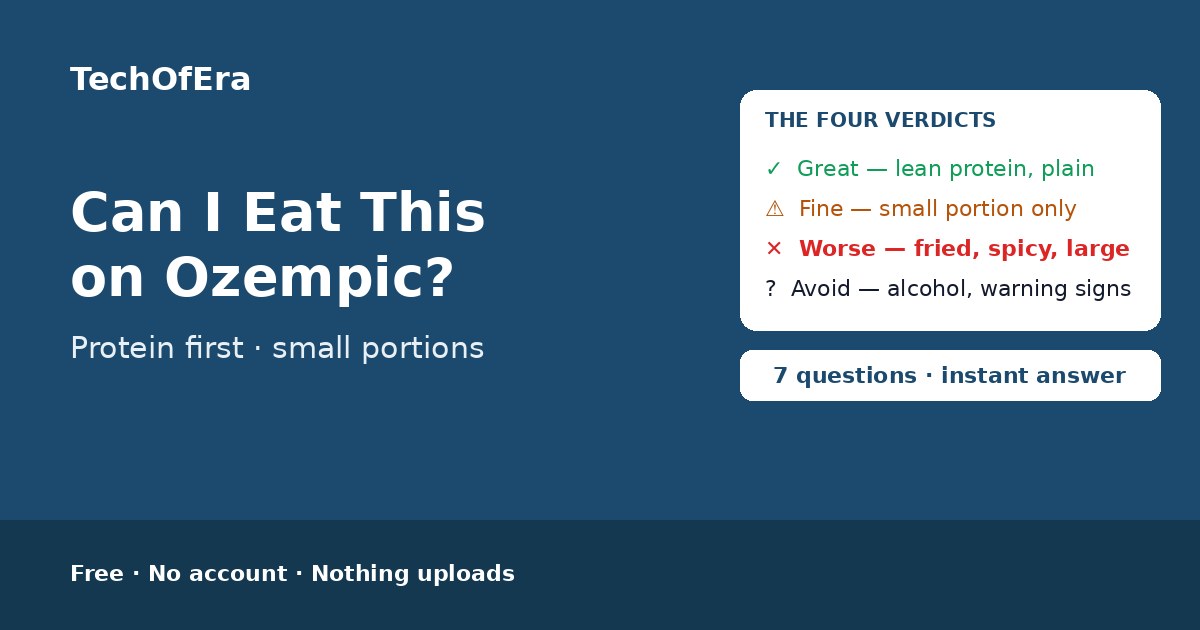
How to decide what to eat on Ozempic
GLP-1 medicines — semaglutide (Ozempic, Wegovy), tirzepatide (Mounjaro, Zepbound), liraglutide and dulaglutide — slow gastric emptying and reduce appetite. Food sits in the stomach much longer than it used to, and you can eat far less than before. That is why the 2025 joint nutritional advisory from four nutrition and obesity societies (the American College of Lifestyle Medicine, the American Society for Nutrition, the Obesity Medicine Association and The Obesity Society) puts protein first: it proposes 1.2 to 1.6 g of protein per kg of body weight a day during weight loss, or about 80 to 120 g a day as a simpler target, because around 40% of the weight lost on semaglutide can come from lean muscle. It also says to get fibre from foods, drink enough fluids, keep alcohol minimal, eat small frequent meals, and do strength training. There is no official Ozempic diet — but the same food can be fine one day and a problem the next, depending on your dose stage, the portion, and how you feel. This checker asks exactly what decides it.
To use it:
- Pick the food. Start with what is actually in front of you — the list covers the foods people on GLP-1s ask about most, from grilled chicken to pizza. If yours is not listed, pick the closest match, and judge a mixed dish by its fattiest part.
- Say how it is served. Preparation changes the food completely: plain grilled chicken is a great choice; the same chicken deep-fried is not. Fried, creamy, very spicy, raw and sweetened are all different foods from plain.
- Be honest about the portion. A large portion is a trigger on its own — the advisory says small, frequent meals. Take about half of what you used to eat, eat slowly, and wait twenty minutes before deciding whether you want more.
- Check in with yourself. How you feel right now changes the answer most: the same food can be fine on a good day and a problem on a queasy one. If you already feel nauseous, only bland food stands a chance — soup, dry toast, a banana, plain oats.
- Remember your dose stage. Side effects are worst in the first weeks and after a dose increase. Be stricter than usual for a few days after a new dose: small portions, plain food, nothing fried, spicy or very rich.
- Watch for the warning signs. Severe persistent stomach pain, repeated vomiting, jaundice or fever can be signs of pancreatitis or another serious complication. Those are not food questions — they mean urgent medical help.
Food situations and what to do at a glance
The table below is built from the same rules as the checker, so it can never disagree with your verdict. Where the food sits — encouraged, fine in moderation, or likely to make you feel worse — decides together with how it is served and how you feel.
| Food situation | Verdict | What to know |
|---|
What makes this checker different
The pages that rank for this search are guides — thorough lists of foods to eat and avoid on Ozempic, the protein targets, and the advice to eat small frequent meals — but they leave you to work out what that means for the food in front of you right now: whether your grilled chicken counts when it comes with a cream sauce, whether a large portion of a good food is still a good idea, whether a queasy morning changes the answer, and whether a dose increase last week matters. The apps that do answer the question are trackers you have to install and log meals into, several with paid features. This page is the answer itself: pick a food, say how it is served and how you feel, and get an instant verdict with the reason named — free, with no account, no install, and nothing uploaded. It is general information, so it says plainly what it cannot know: a web page cannot know your dose, your medical history, or how your body is reacting today, so anything you mark “Not sure” stays on the list until you confirm it.
When is this the right check?
Whenever you are about to eat something and you are not sure how it will land: the takeaway menu on a Friday night, the restaurant dish with a cream sauce, the spicy curry a friend is serving, the large portion at a family meal, the coffee on an empty stomach, the glass of wine at a celebration. Also whenever you feel queasy and want to know what is safe to eat at all — the checker will steer you to bland food and tell you why. And whenever your dose has just gone up and everything feels harder than last week: the checker is stricter for the first few days after an increase, exactly when most people feel the worst. If the answer is “avoid for now”, the checker names the plain, lean version of the same meal that usually works instead.
Honest limitations
General information, not medical advice
This checker works only from the answers you enter. It cannot give medical advice — no web page can know your dose, your medical history, or how your body is reacting today. If an answer is wrong, the verdict is wrong. When in doubt, ask your prescriber or pharmacist.
There is no official Ozempic diet
No authority publishes a list of banned foods for GLP-1 medicines. The rules here follow the 2025 joint advisory, which is expert consensus from a review of the literature, not a feeding trial — and several of its authors report advisory or speaking roles with the drug makers. Treat it as the best available guidance, not a prescription.
Warning signs override everything
Severe persistent stomach pain, repeated vomiting, jaundice or fever can be signs of pancreatitis or another serious complication. Those are not food questions — stop eating and seek urgent medical help.
Protein targets are general
The advisory proposes 1.2 to 1.6 g of protein per kg of body weight a day during weight loss, or about 80 to 120 g a day. With kidney disease the target is different — too much protein can be a problem — so follow the target your own clinician set, not the general one.
Pregnancy changes the treatment, not the food
GLP-1 medicines are not recommended in pregnancy or breastfeeding: stop at least 2 months before trying to conceive and discuss it with your prescriber. The food advice here does not change, but the treatment plan does.
Rules from the advisory and Cleveland Clinic
The rules here follow the 2025 joint nutritional advisory (American College of Lifestyle Medicine, American Society for Nutrition, Obesity Medicine Association, The Obesity Society) and Cleveland Clinic guidance, as they read in November 2026. Guidance can be revised, so re-check if a new edition appears.